Working on clean industrial policy and carbon removal @RockyMtnInst. Climate is our biggest challenge and biggest opportunity. Tweets my own, etc. NC-based
It’s astonishing that the lead architect of the Senate’s energy provisions is a self-described philosopher with no experience in the power sector, no prior affiliation with a credible consulting or research institution, and no service in any regulatory or policymaking capacity.
The U.S. Senate’s reconciliation bill will cause irreparable harm to North Carolina.
It will rip health care away from hundreds of thousands of people and close rural hospitals, take food away from hungry children, and kill thousands of jobs in our booming clean energy economy.
All of this just to pay for tax cuts for already very wealthy people — it’s a disgrace.
I urge Congress to vote against it.
⏰ STARTING IN 30 MINUTES—9am EDT: As Israel-Iran tensions create oil market volatility, what’s next for global energy security? @CSIS experts @clayseigle, @raadie66 & @AdiSurreyEnergy break down the risks and opportunities. Join this timely discussion! 🔗 👇
NEW - DOE’s No 2: Congress needs to move on permitting reform. For @politico Energy podcast, I spoke w/ Deputy @ENERGY Secretary David Turk, who said lawmakers should “lean into the momentum” of actions taken by Biden/Harris to speed clean energy projects https://t.co/i8hUr0727x
Asheville is over 2,000 feet above sea level, and ~300 miles away from the nearest coastline. No place is safe from climate change.
We all suffer the consequences. We must all take action. We are all in this together.
🌉Mid-scale support will help smaller companies bridge from pilot to larger scale
👷Infrastructure support will help de-risk the major challenges around permitting, energy, and storage development.
Winning all around.
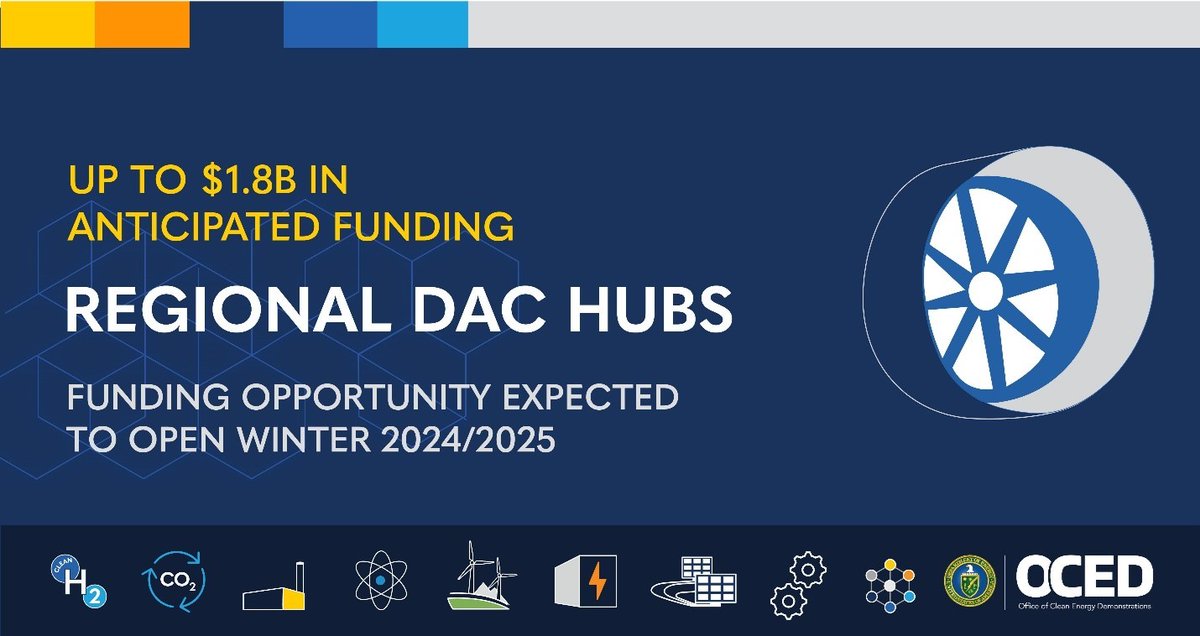
@ENERGY is back to DAC with a new Notice of Intent to fund another $1.8 billion from the Regional DAC Hub Program in three areas:
1. Infrastructure scaling platforms ($250m/project)
2. Mid-scale DAC (2-25k tpa, $50m/project)
3. Large-scale DAC (>25k tbp, $600m)
Great news—SBTi has an opportunity to put carbon dioxide removal (CDR) on the map for a lot of companies to help scale this critical field.
How do you think CDR should be incorporated into #SBTi?
What does the latest @sciencetargets#SBTi update mean for #CarbonRemoval?
Let’s cut through the noise and see what the documents say.
Or – more importantly – what they don’t say anymore.
We all remember April when the SBTi board mentioned considering carbon credits under the standard.
The Terms of Reference that followed in May left #CDR out of scope by listing neutralization milestones and pathways as an item that “may be considered for future revisions of the Corporate Net-Zero Standard”.
In July, the research report on the use of credits didn’t focus on CDR, found that conventional carbon credits have their challenges and opened the door for insetting for Scope 3 emissions.
So, what changed with the latest SBTi update to the Terms of Reference in September that we see in the news now?
The SBTi took a major step towards CDR by removing “neutralization milestones, i.e neutralization pathways” from exclusions.
This means carbon removal can now be properly worked on under the SBTi.
And that work is already starting. The SBTi is organising two CDR workshops in NY and London that will “inform the SBTi’s research on the role of carbon removals as companies work towards their net-zero target date”. Note – towards.
That hints at intermediate targets that would open the removals market up for solid demand.
It is a huge step forward for removals under the SBTi.
Let’s make it count!
The public consultation of the draft V2.0 Standard is scheduled for Q1 2025.
Read more:
https://t.co/dj0TA5Itk8
What a great day talking carbon dioxide removal at Roads to Removal Pennsylvania conference!
Catch up on everything you missed by reading the report here: https://t.co/ux2jEIVjtq
A recording of the event will be available on our website soon!
#EnergyAtPenn#RoadsToRemoval