I've seen countless times where people with DUIs and similar first time offenses don't need clinical treatment, but don't have the right amount of support needed for their situation in life either.
Our program is a perfect fit for these situations.
Real results in behavioral health are a threat to the business models of private equity and publicly traded companies. We must realign incentives. Then prevention and reversal of chronic conditions will focus on results and not LTV of readmissions/recurring treatments.
What are the top two concerns for treatment facility owners? "how can I bill for it," and "how will you get them back to me if they relapse?".
This is why we're helping people escape the closed loop.
Typical addiction treatment providers focus on daily rates for the highest levels of reimbursement possible, and any engagement post treatment is primarily to catch patients at a point of relapse so they can capture the readmission revenue. It's time for a change.
One of the most damaging aspects of the medicalized approach to mental health is the idea that your state of mind is permanent.
But as so many of you will know from the waves of psychiatric drug withdrawal, that’s not true. No state of mind is fixed.
Yes, the suffering that can lead to psychiatric diagnoses and drugs can be immense, but being told that suffering will continue forever through terms such as "treatment-resistant" is another kind of suffering in itself.
It's time to show the world that nobody is permanently broken.
(Video: our founder, Laura Delano, speaking at the MAHA Mental Health & Overmedicalization Summit, May 4, 2026)
Treatment alone is rarely enough. Aftercare is essential, especially during the first 12 months post treatment, as that is where new habits are created to replace the old ones. This is why programs like the one below can be vital for improving long-term results.
Having worked in behavioral health for 27 years, I've seen how people get caught up in the rhetoric of recovery and are unable to break the patterns that keep them stuck in a loop. Now we have a 12 month program to help people recover from anywhere.
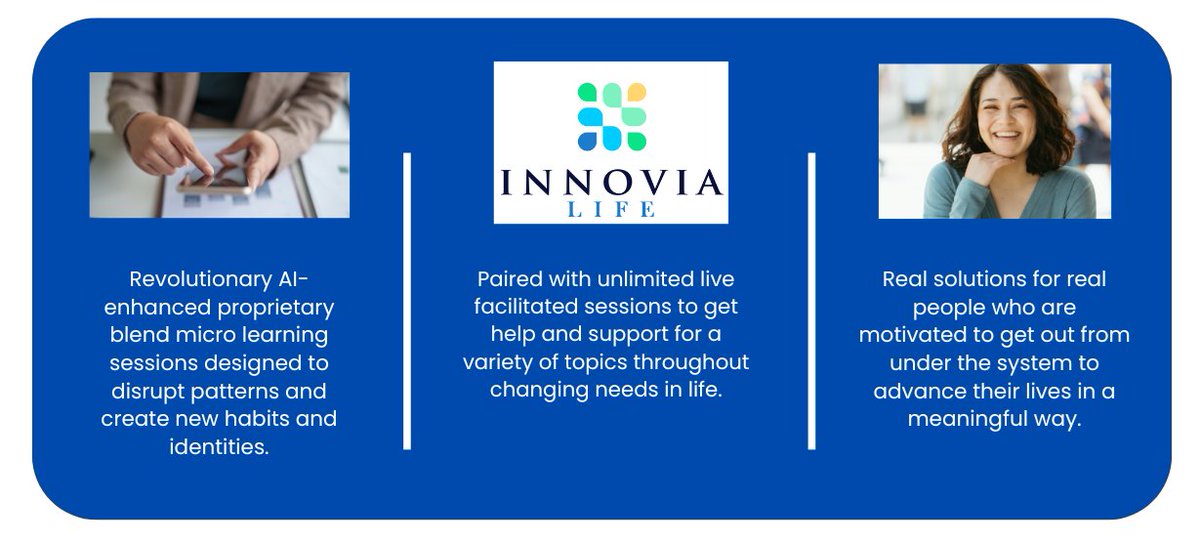
We are excited to share the launch of our new program that offers 12 months of continuous support and guidance for individuals looking to break the old addictive patterns once and for all.
I have an unpopular view of th potential Partity law revisions. There’s more to the story, as access has never been greater, spending more money then ever, yet statistics keep worsening. Something has to change.
Direct contracting for primary and specialty care enables individuals, families, and companies to get better care, more often, for less money than dealing with fee for service reimbursement through traditional insurance plans. Let's start with how we can help you direclty.
@SecKennedy Except it isn't a chronic, relapsing brain disease in the majority of cases. Our system needs more of an overhaul than technical interoperability.
There has been a sense of liberation recently in being able to openly communicate what I really think about certain topics. Rather than just trying to fit in or trying to win someone else's approval, I'd encourage you to communicate more authentically as well.
By some estimates, there has been roughly $15B invested by VCs into mental health over the past ten years. They were right - the problem kept getting worse. If you don't think they're vested in people getting and staying unwell, think again. It's time for a change.
New Episode. We’ve all heard about the opioid epidemic and the number of fatalities that rose for decades. We’re going to dive a bit deeper, though, not at the illegal drug trade, but at the system surrounding opioid addiction, treatment, and recovery.
https://t.co/HdNWLEFr4F
Nearly 70% of vets treated at the VA are prescribed psych drugs.
It's estimated the VA spent ~$184B on mental health from 2001-2024, as suicide rates among young vets rose >2x.
Grateful to @derekblumke for pushing informed consent for vets, and to @johnrich for championing it.