To kick off Donate Life Month, today is #LivingDonorDay and we are so thankful to those that give this selfless and lifesaving gift! The gift of living donation from adult-to-child has helped lower waiting list deaths and allow children a second chance at life. For more information on liver donation, visit https://t.co/2zRHdDW5gp.
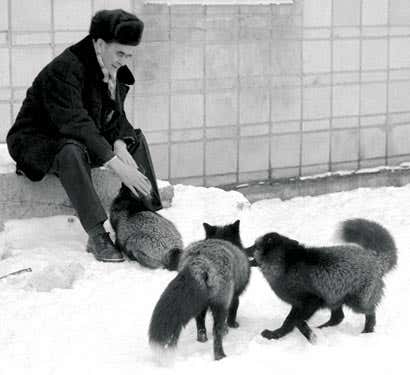
In 1959, Soviet geneticist Dmitry Belyaev launched what The New York Times would later call arguably the most extraordinary breeding experiment ever conducted. But to understand why he did it, you need to know what happened 22 years earlier. In August 1937, Belyaev's older brother Nikolai, a prominent geneticist who worked on population genetics, was arrested by Stalin's secret police.
On November 10, he was executed without trial. His wife and child vanished. Nikolai's crime was practicing Mendelian genetics, the foundational science of heredity that explained how traits pass from parents to offspring through genes. Under Stalin, a charlatan agronomist named Trofim Lysenko had convinced the Soviet government that Western genetics was bourgeois pseudoscience invented to oppress the working class.
Lysenko promoted long disproven agricultural methods he claimed could revolutionize crop yields, and anyone who contradicted him with actual genetic science faced imprisonment or death. By 1948, genetics was officially banned in the Soviet Union. More than 3,000 biologists were dismissed or imprisoned. Dozens were executed. Nikolai Vavilov, one of Russia's greatest geneticists and Lysenko's former mentor, was sent to prison and died of starvation in 1943.
Dmitry Belyaev refused to let his brother's murder stop him. He had been working in fur animal breeding since 1938, and he'd become fascinated by a question Charles Darwin himself had puzzled over. How did wolves, naturally averse to humans and potentially aggressive, transform over thousands of years into dogs?
How did wild animals across multiple species, herbivores and predators alike, develop strikingly similar changes when domesticated? Floppy ears, curly tails, spotted coats, shorter snouts, changes in reproductive cycles. Belyaev had a theory.
He believed that selecting for just one behavioral trait, tameness, would trigger all those physical changes. That genes controlling tameness were somehow linked to genes controlling physical appearance. To test this, he needed to conduct a massive, decades long genetics experiment. In 1952, still under Stalin's rule, he couldn't do that openly without ending up like his brother.
So he disguised it. Working with a colleague at a fur farm near Tallinn, Estonia, Belyaev began a pilot study selecting and breeding the calmest silver foxes. He framed the work as an effort to improve fur quality and increase litter size for the profitable Soviet fur industry, carefully avoiding any mention of genes or heredity in his reports.
After Stalin's death in 1953, Lysenko's grip on Soviet science began to loosen slightly. In 1959, Belyaev moved to the newly established Institute of Cytology and Genetics in Novosibirsk, Siberia, and expanded his work into a full scale experiment. He recruited a 25 year old biologist named Lyudmila Trut to run the day to day operations. The protocol was straightforward but required extraordinary patience. Each month, foxes were tested for their reaction to humans.
A researcher would approach the cage, open the door, and extend a gloved hand. The calmest foxes, those showing the least fear or aggression, were selected to breed. Only the tamest 10 percent of each generation were allowed to reproduce. The results were staggering. By the sixth generation, some fox pups were wagging their tails and seeking attention from handlers like puppies. By the eighth generation, physical changes started appearing that no one had selected for. Floppy ears.
Curly tails. Piebald coats with white spotting. Shorter snouts. Changes in hormone levels and reproductive timing. All from selecting only for tameness. Belyaev had compressed a process that took wolves thousands of years to become dogs into just a few decades. He'd proven that domestication wasn't some mysterious collection of random changes, but rather a cascade of linked genetic transformations triggered by selecting for a single behavioral trait.
#archaeohistories
On World Kindness Day, we recognize the incredible kindness of registered donors, living donors and donor families in giving the gift of life and hope. Register your decision to be an organ, eye and tissue donor at https://t.co/XRmSTeqPN0 and share it with your family and friends!
#donatelife #WorldKindnessDay #OrganDonation
This past weekend was the 10th annual Walk for Children's! Thank you to all that supported the Starzl Network team. There is still time to give! Visit https://t.co/3JA6oRh8UL for more information.
We had a great time at Walk for @ChildrensPgh this past weekend! Thank you to all that walked with us either in person or virtually to help support the Network and our mission!
📢 I am excited to announce the 30-hour ABGC Board Review Bootcamp from Thu June 13 - Thu July 25 for those taking the exam in Aug 2024! We will cover 400+ high-yield concepts across all 5 domains from the new ABGC content outline. 1 scholarship also available. Sign up👇#GeneChat
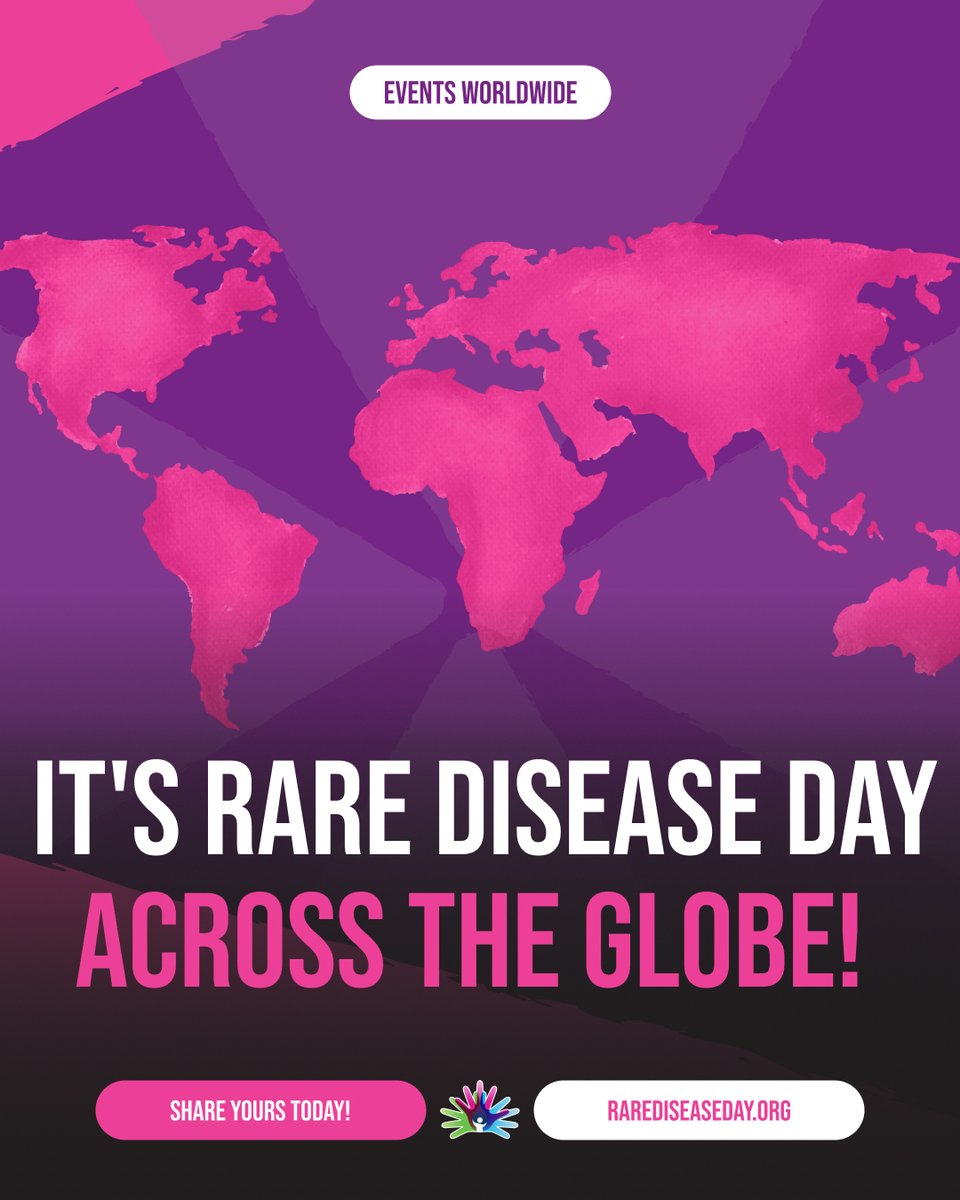
🚨 IT'S RARE DISEASE DAY GLOBALLY! 🚨 Join us marking #RareDiseaseDay 2024! Spread awareness, share stories, and support those living with rare diseases. Together, we make a lasting impact! #ShareYourColours
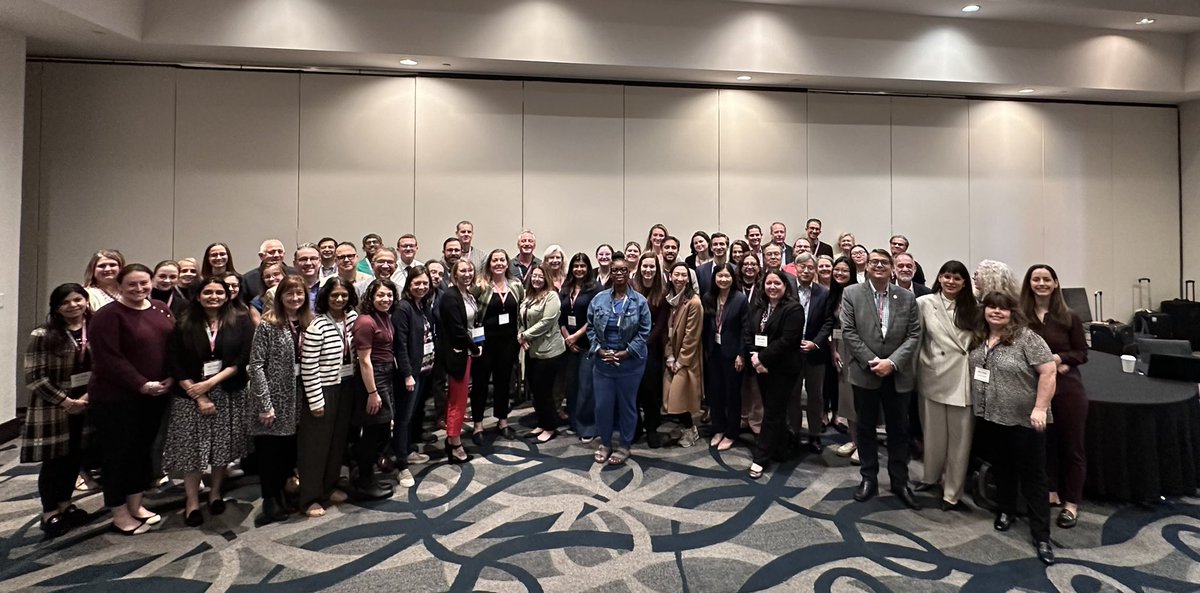
Thank you to all that have attended the 2024 @StarzlT Annual Meeting. We have had a great time #collaborating, getting updates on the #innovative work our teams are doing, and working on our vision for the future. Also sending a big thank you to our co-host, @AdventHealth for Children!