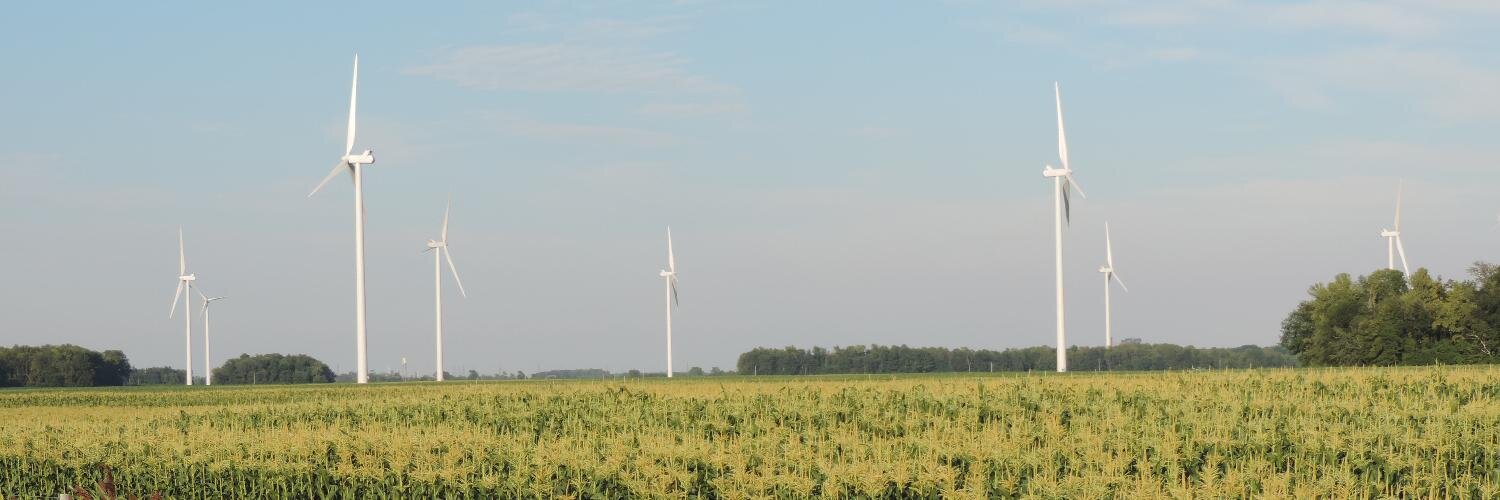
Wind Turbines: Why Some Families Living in Proximity to Wind Energy Facilities Contemplate Vacating Their Homes: An Overview of Findings
https://t.co/1trHVzrTnC
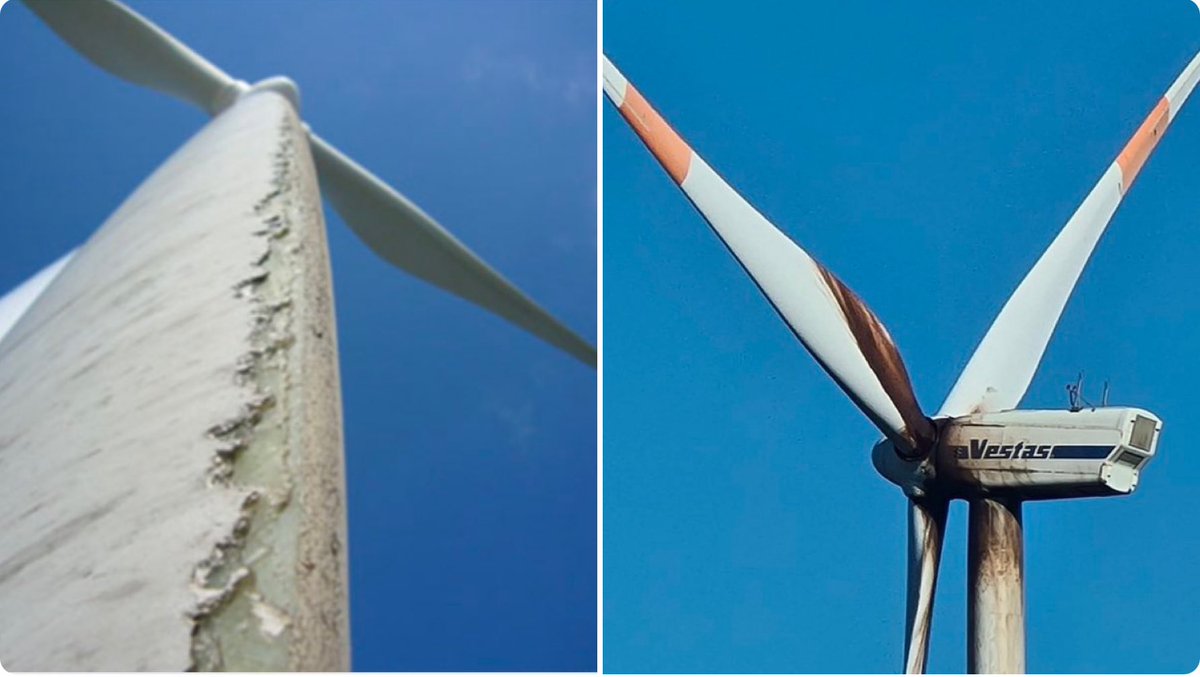
Offshore wind turbines have a blade life before delamination of 5 to 15 years and a gearbox life of around 10 to 15 years in the salt laden offshore environment.
The maintenance difficulty and cost is unimaginable.
Overall, wind turbines are proving to be expensive maintenance nightmares
“Let’s not forget that @NOAA stated in its environmental impact study that @RevWind poses a
“population level event for Atlantic cod”in the area.”
@BOEM also seems unconcerned that the turbines will be audible indoors onshore, evening and nights.
Newport and Martha’s Vineyard could be in for a surprise.
Chart: Revolution Wind, 65 turbines, Danish indoors intrusive industrial/commercial noise metric Lpa,LF (to protect public health from highly annoying noise), windows open. Lpa,LF > 20 dB is highly annoying in Danish regulation. These impacts likely evenings, nights during boundary layering, wind turbine whump-thump noise fluctuations could run 6 to 11 dB over these averages.
Electricity Canada cannot support fed govt new regulations over concerns about affordability and reliability. @IESO_Tweets@ONenergy https://t.co/Sr5KToY78r
Unprecedented mortality levels of marine mammals and not one mention of offshore wind, the largest industrialization of ocean habitat in the history of the North America. How'd we get here? https://t.co/sKgABXx5N1 @windaction@SaveNARW
@ACKCurrent@JulieAnneLeo1@ackharbormaster Hurricane Maria decimated wind and solar installations in Puerto Rico. The destruction was astounding
https://t.co/sE20Rh3lOL
Offshore wind turbines will be bowling pins in a hurricane. Imagine the damage when one travels up the East Coast now that there are industrial wind farms
🚨 All of Nantucket’s south shore beaches have been CLOSED by the town due to the debris washing up from Vineyard Wind’s broken turbine.
“The water is closed to swimming on all south shore beaches, due to large floating debris and sharp fiberglass shards,” per @ackharbormaster
Chatham-Kent staff response to a councillor question about how effective wind power is: "It provides 10% of the power 20% of the time." Even if accurate for C-K, WHY would anyone think that is good performance??? #Parttimepower#unwillinghost#chathamkent
GREAT news! But it shouldn't have to take an act of congress to stop bad projects. The problem is the feds are ideologically committed to building wind (& solar) everywhere. Same is happening offshore. https://t.co/3Xbyppy7ld @SaveNARW@windaction
Fredonia in Western NY State latest to say NO MORE WIND TURBINES. Noise hazard, useless, scam. Meanwhile nearby freeway turbine taken down after 6 years of not operating. #unwillinghost@IESO_Tweets@AMOPolicy@ONenergy https://t.co/6MjMyt9yBh
https://t.co/K7kkLkAMfM
For example, see Final Rule for Avangrid's Park City Wind and Commonwealth Wind: 18% of No. Atlantic right whale "stock", 11% of humpback whales, 29% of common dolphins, 6% of gray seals. That's only during construction (not operation). One project.
FAA to study height of Empire Wind turbines, which exceed obstruction standards #NY: A division of the Federal Aviation Administration has launched a study of the Empire Wind offshore wind farm planned for 14 miles off the coast of… https://t.co/Ig7nVakQCu #windpower#windenergy
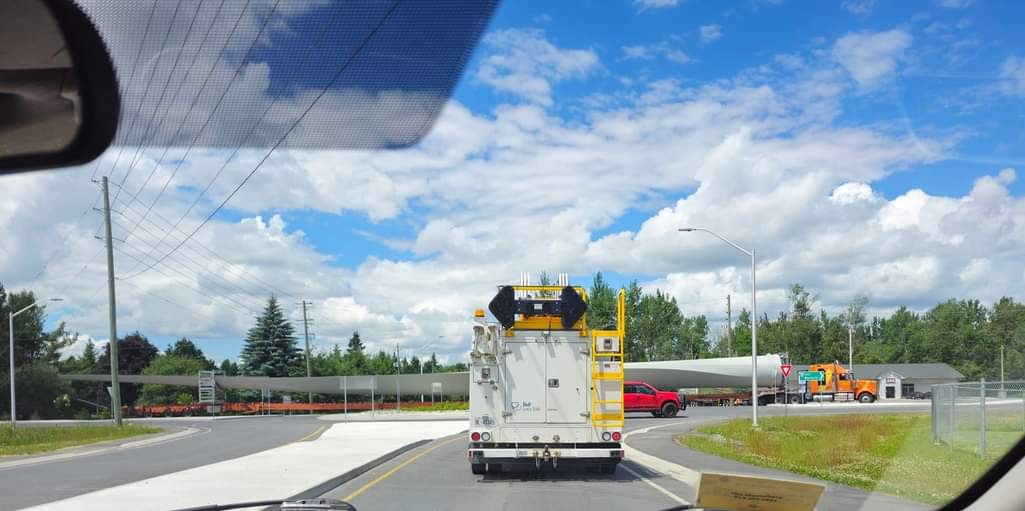
Wind turbine blade transport to Nation Rise gumming up traffic in Kemptville this hour. Replacement for 4-yr-old turbine. Where are the old blades going? (And who thought taking a giant blade through a roundabout was a good idea?) @EdpRenewables
#noise: It will probably surprise no one to hear that NMFS noise exposure limits appear to be much too permissive and noise exposure models inadequate to protect species.
"At 2, 8, and 20 kHz, exposure levels required for 6 dB of TTS (onset TTS exposures) were similar to previous studies; however, at 0.5 kHz, onset TTS was much lower than predicted values. No clear relationships could be identified between auditory brainstem response (ABR) and behaviorally measured TTS. The results raise questions about the validity of current noise exposure guidelines for dolphins at frequencies below 1 kHz and how to accurately estimate received noise levels from free-swimming animals."
Current regulatory guidelines for underwater noise exposures likely under-estimate impacts to dolphins and similar species at low frequencies (i.e., below ∼ 1 kHz), and should be updated to incorporate new data.
cc @pwrhungry@LinowesLisa@RepVanDrewStaff
https://t.co/PoIL9sKEZT
"That’s a problem during wind farm installation, when massive monopiles are pounded into the ocean floor to create the base of a wind turbine. “That piledriving can be very, very, very loud,” said Baumgartner. Piledriving when whales are nearby would cause catastrophic hearing damage. So, it’s essential that this stage of the process only happens when whales are not in the vicinity." Even with the most advanced noise control methods, pile driving is just as loud as seismic airgun ARRAYS.
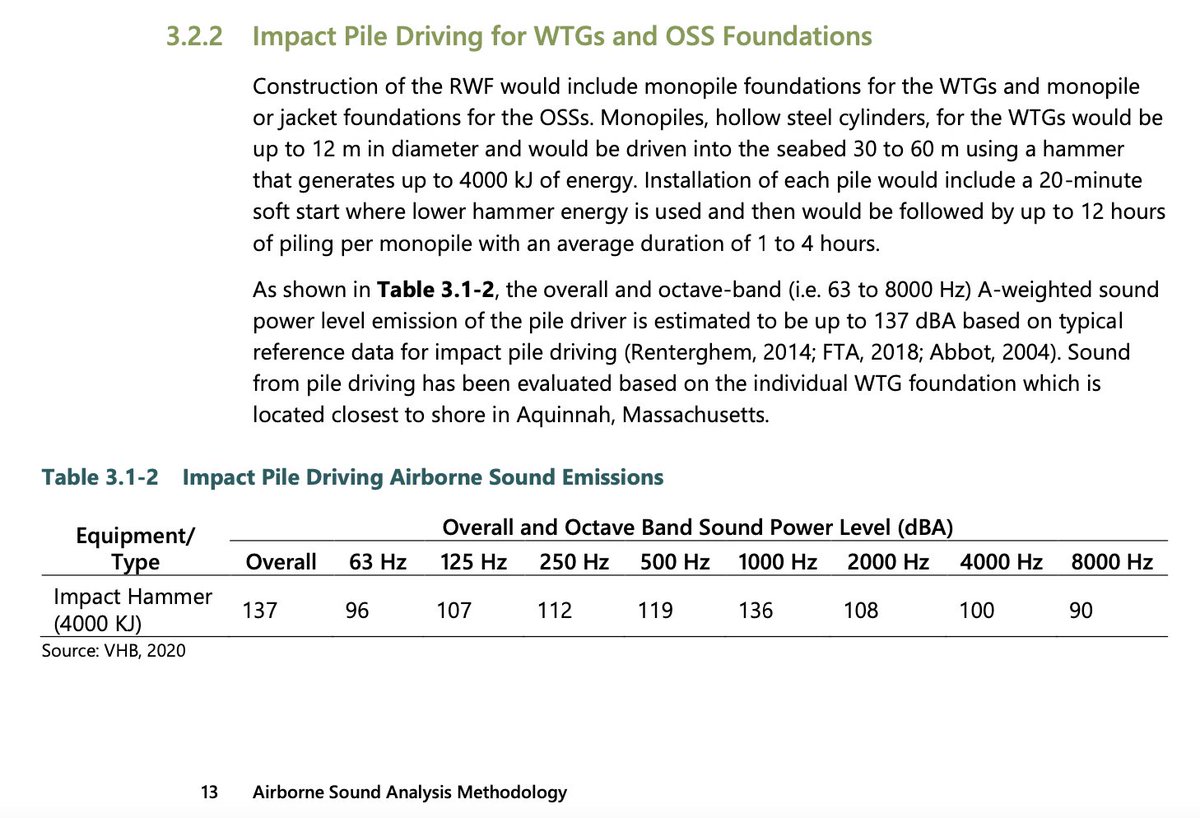
#noise: Pile driving airborne sound power level, Revolution Wind, southwest of Martha's Vineyard. 137 dBA re 1pW. Unweighted Lw similar, however impact energy below 63 Hz is not listed.
The model assumed 6 dB per doubling which is not accurate over water.
https://t.co/cMYT8zppN7
A necropsy was performed but no word on results. Despite the astounding number of whales that have died, @NOAA will tell us that somehow #OffshoreWind surveying activities are not involved.