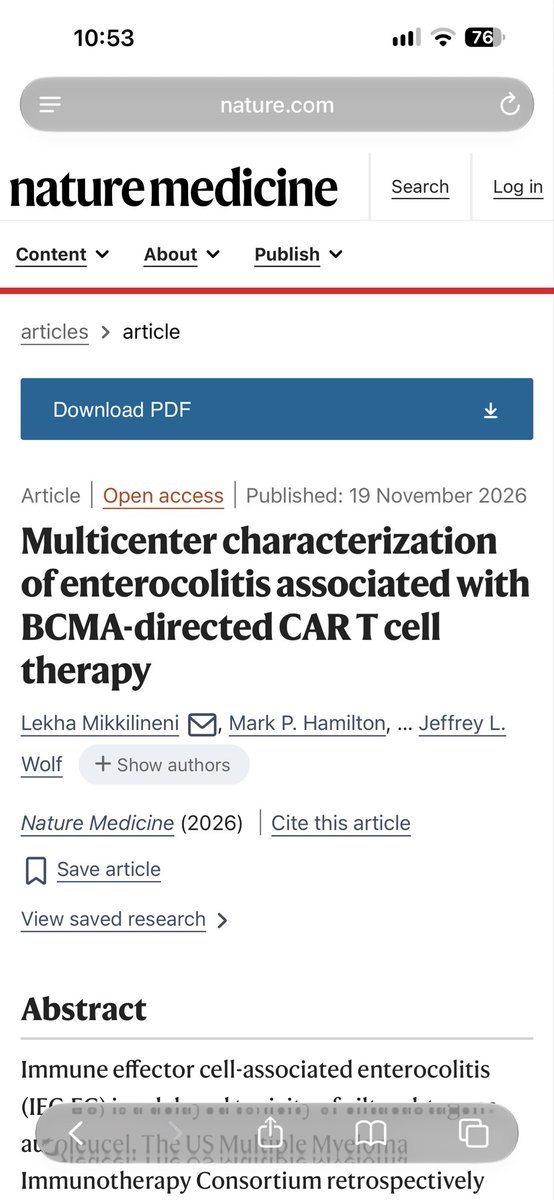
Our @NatureMedicine study of IEC-EC after cilta-cel. This was a true team effort, motivated by our patients, who came to clinic with intractable diarrhea and needed answers. Grateful to be part of this multidisciplinary working group/tumor board.
https://t.co/WUGDcPkXrY
1/12
Persistent diarrhea after cilta-cel can signal a serious delayed toxicity: immune effector cell-associated enterocolitis (IEC-EC).
Our multicenter @NatureMedicine study characterizes this syndrome and proposes a diagnostic framework. | @fredhutch
https://t.co/mbnTYjNKFl
Multicenter characterization of enterocolitis associated with BCMA-directed CAR T cell therapy #mmsm
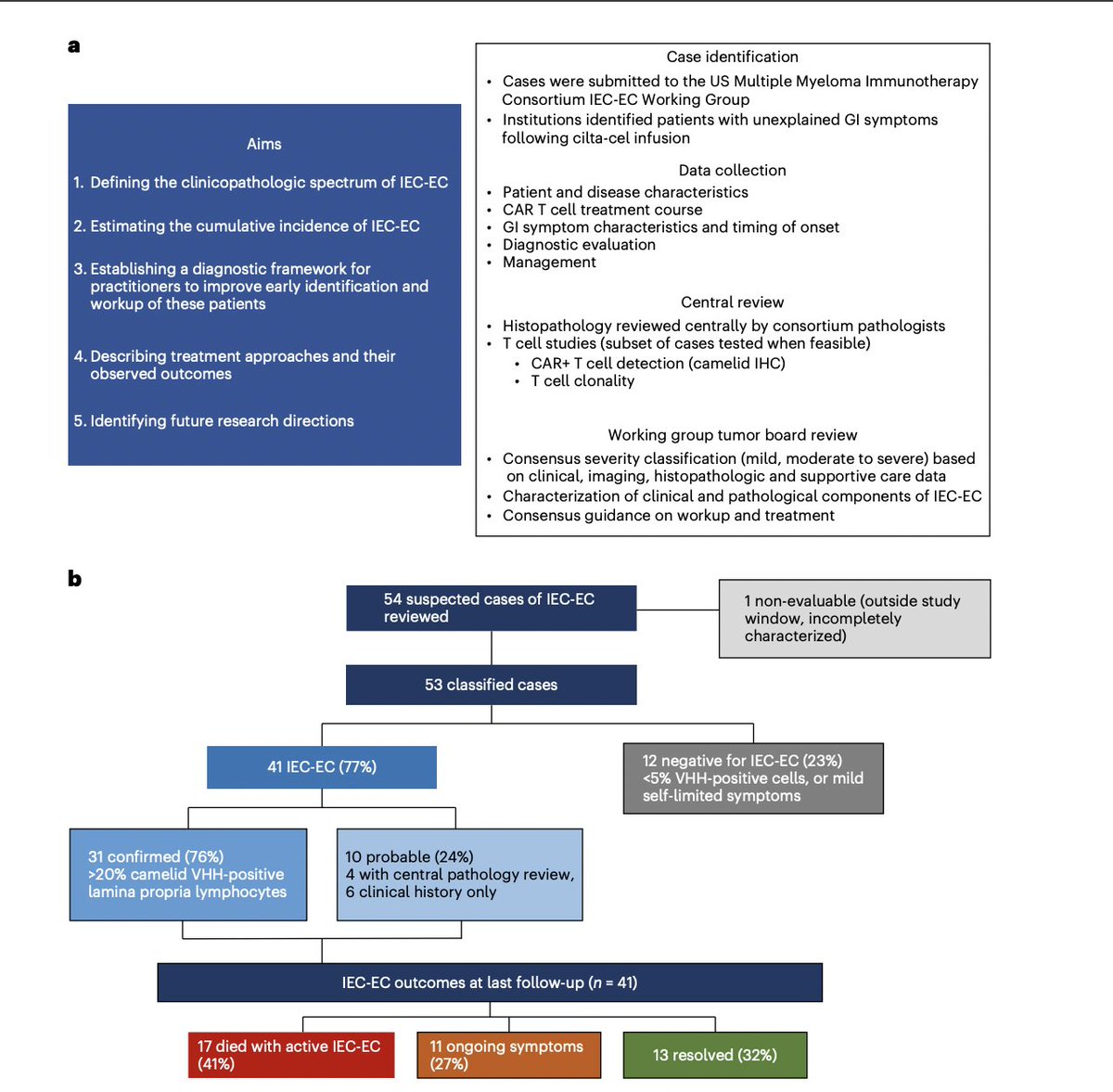
➡️~ 2–3 in 100 people treated get IEC-EC. 3% counting probable cases (39 of 1308) and 2.2% counting biopsy confirmed cases only
➡️~1 in 100 (roughly 0.8–1.2%) may die while having IEC-EC
➡️Median is ~ 2.5 months (75 days) after infusion (range: 2 weeks - ~ 18 months (541 days))
🛑~ 3 in 4 (73%) needed IV nutrition, ~ 1 in 5 (22%) needed ICU care
🛑~ 4 in 10 (41%) died while it was active (that counts all causes, including stroke and parkinsonism)
🛑~1 in 4 patients referred for suspected IEC-EC didn’t have it (12 of 53). Causes were infection, medications, etc.. Also ~ 1 in 3 patients with IEC-EC (37%) had an infection at or before onset
🛑Cause of death with IEC-EC was mostly infection (10 of 17 deaths mostly sepsis or bacteremia)
🛑No pre treatment factor predicted who would get IEC-EC
Compared to clinical trials data, the incidence is ~ double (1.2% in studies👇vs. ~2.5% in this RW data and similar previous RW data)
https://t.co/4oNRn6M6vu
Great work led by @MPH1020! Huge thanks to our MDAnderson pathology, GI, myeloma, lymphoma and translational teams for working together to help diagnose and intervene early in this rare, but serious complication to help patient outcomes! Fantastic work by our trainees as well! @sharlenedong TaniaSainz
Sharing this outstanding collaborative effort to better characterize IEC-EC. Cilta-cel is a transformative therapy for MM pts. Earlier diagnosis and improved management are critical for delivering it safely in earlier lines. Kudos to @LMikkMD for spearheading this effort!
Team science at its best! Proud of our two Nature Medicine papers published today and the incredible collaboration behind them. Understanding complications is how we make CAR T safer and improve outcomes for patients. Congratulations to both teams! #mmsm@UTMDAnderson Mark Hamilton, @LMikkMD@sharlenedong@FVega957
https://t.co/DtQ511zsYK
https://t.co/cd6EkoQnAj
Truly awesome work by the US MM consortium on IEC colitis @LMikkMD and a significant contribution to the field. Thanks to all the authors for this significant effort. Pls read
Our @NatureMedicine study of IEC-EC after cilta-cel. This was a true team effort, motivated by our patients, who came to clinic with intractable diarrhea and needed answers. Grateful to be part of this multidisciplinary working group/tumor board.
https://t.co/WUGDcPkXrY
1/12
Persistent diarrhea after cilta-cel can signal a serious delayed toxicity: immune effector cell-associated enterocolitis (IEC-EC).
Our multicenter @NatureMedicine study characterizes this syndrome and proposes a diagnostic framework. | @fredhutch
https://t.co/mbnTYjNKFl
@NatureMedicine Read it alongside the companion paper led by Mark Hamilton at MD Anderson, showing that IEC-EC is driven by persistent, cytotoxic CAR+ T cells in the gut mucosa and blood.
https://t.co/BotxRJ7gmu
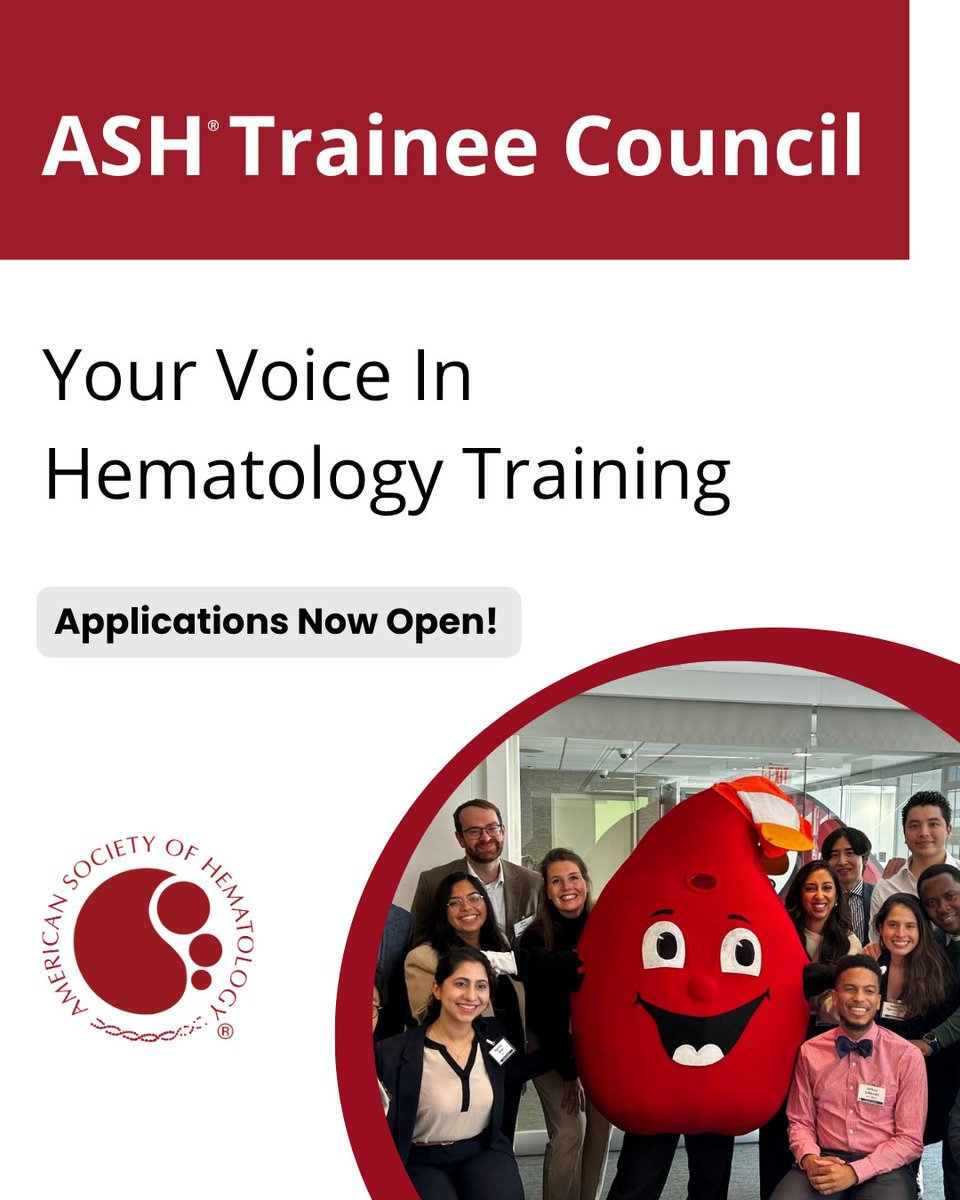
The ASH Trainee Council application is now open!
Be the voice of hematology trainees, lead new initiatives, and help build programs to support the future of hematology throughout the year.
📅 Apply by March 1, 2027 https://t.co/aCSQGKdFi5
#ASHTrainee#Hematology#HemeOnc
Out now in @JCO_ASCO!
Can we better identify which patients with RRMM will experience early treatment failure vs durable benefit from bispecific T-cell engagers?
Across 943 treatment initiations in the US Multiple Myeloma Immunotherapy Consortium cohort, we developed a simple, pragmatic, and reproducible prognostic model: the CHARGE index.
We then externally validated CHARGE in an independent, multicenter cohort from the @IMFmyeloma data registry.
https://t.co/OHPrhfOlLE
🧵 1/
Topline findings 👇
Congratulations to Stanford Cancer Institute members Maximilian Diehn, MD, PhD, and our own David Miklos, MD, PhD on receiving the PMWC - Precision Medicine World Conference 2027 Pioneer and Luminary Award!
ASH CRTI offers hematology fellows & junior faculty a year-long experience spanning research methods, statistical analysis, collaboration, & career development. Start your application today!
LOIs are due by Dec. 17: https://t.co/aiilrVEel1
#ASHTrainee
A major update from ASTCT! New consensus grading criteria refine CRS and ICANS assessments and address emerging toxicities following immune effector cell therapy, supporting standardized toxicity evaluation across clinical trials and practice. https://t.co/sWshCKSBQw
The transition out of pediatric care is when adults with sickle cell disease are most at risk of falling through, #StanDOM's May Chien says. She & Giselle Salmasi are building a care structure to close that gap. https://t.co/4AxZ8rUWkz
In a new NEJM Voices blog post, Don Dizon, MD, reflects on grief and the importance of having our losses acknowledged. Read “Disenfranchised Grief” and sign up for email alerts: https://t.co/f2dtn1Maf4
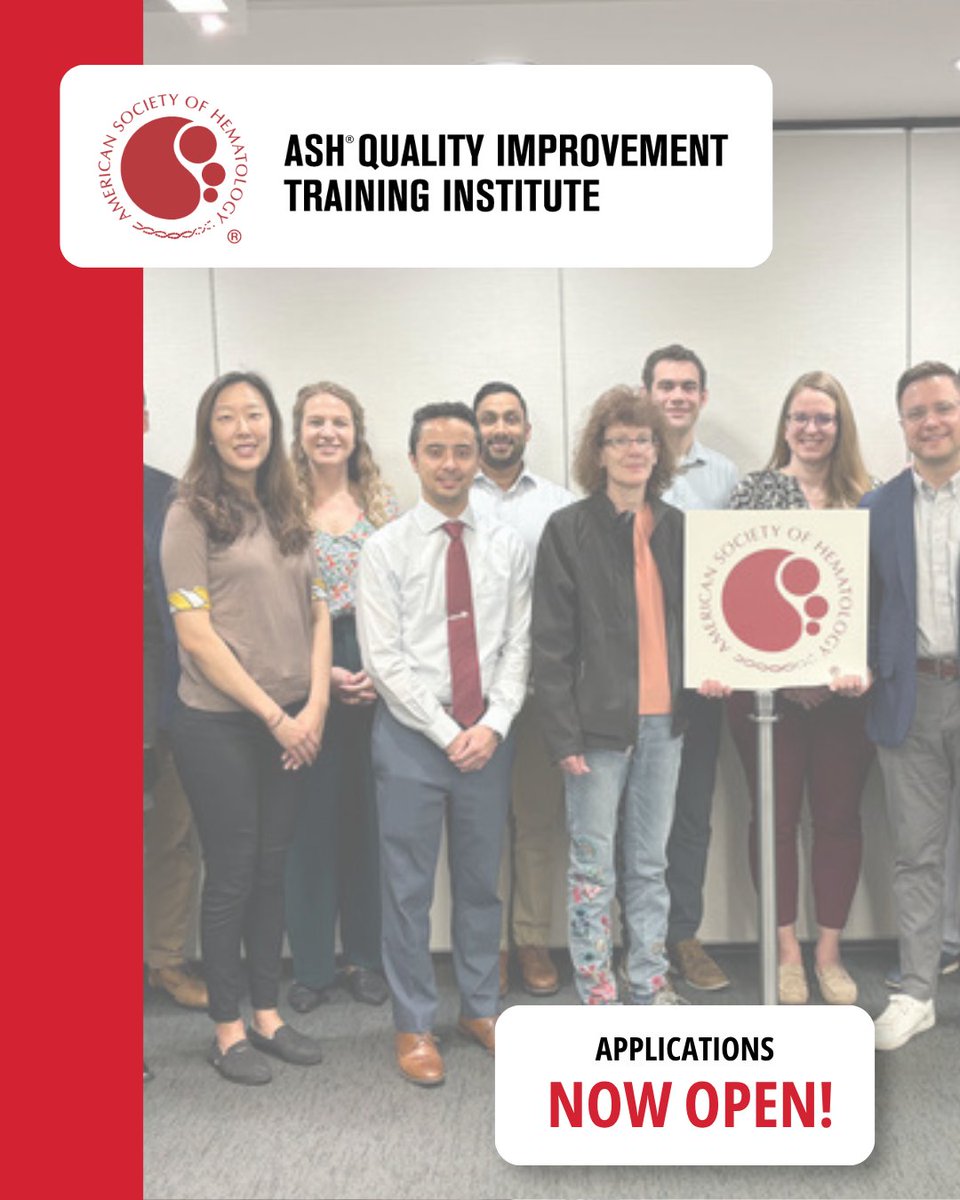
Have a #QualityImprovement idea for hematologic care? Turn it into measurable impact with QITI.
The no-cost, 12-month program provides multidisciplinary teams with QI training, mentorship & dedicated coaching.
Apply by Feb. 1: https://t.co/iqIcCv58kz
#Hematology
Science Saturday: Could what we eat influence how well cancer immunotherapy works? Researchers have long observed an “obesity paradox” in cancer. A new study explored whether body weight itself is responsible or whether diet and the gut microbiome may offer a better explanation.