ME supply is recovering, so why aren't oil prices falling?
I assumed folks has an idea of how price discovery works, but I keep seeing the same argument about supply vs price. It doesn't work that simply. Price is not just a function of supply. More supply doesn't automatically mean lower prices, especially not in the middle of a kinetic conflict where the pace and durability of supply recovery remains uncertain.
I am going to try to make this as simple as possible. For those of you who run balances every day, most of this will be old news, apologies in advance. But there seem to be plenty of people genuinely trying to understand why Middle East flows can normalize while oil stays around $100. This is for them.
<Thread>
The Black Sea is now the world’s deadliest shipping route - FT
"More than 570 vessels have been struck in the Black Sea this year, killing at least 40 sailors, according to maritime security company Ambrey and the International Maritime Organization. That compares with 24 confirmed fatalities in the Hormuz."
https://t.co/6IBpR7LvUB
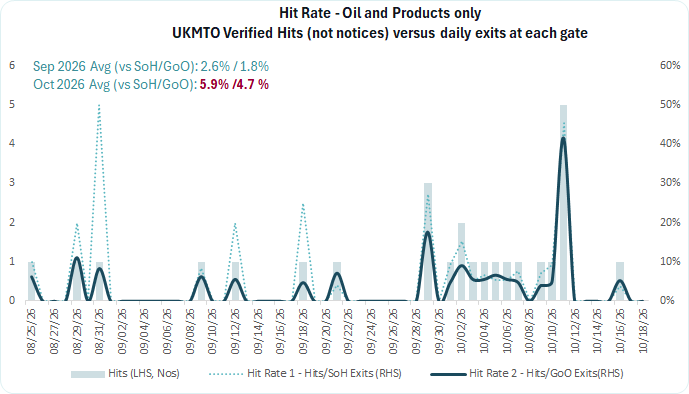
One interesting update is the % of safe transit dropping from 97% to 95% in recent communication, which I highlighted for October last week.
"In recent months, over 95% of ships navigating the Strait of Hormuz have sailed through safely despite the IRGC's unwarranted aggression" - Centcom
https://t.co/RBcBazDYAs
Here's the math on the history:
CENTCOM’s cumulative figures -> implied MBPD exits
Jul 20: 450m bbls -> ~5.6–6.0 MBPD since early May
Sep 19: >1bn bbls-> ~9.0 MBPD
Oct 8: >1.25bn bbls -> ~13.2 MBPD
Oct 25*: >1.5bn bbls -> ~14.7 MBPD
So that puts the last two weeks ~ 14.7 MBPD, directionally consistent with the pick up we saw since Oct 9th/10th (in GoO flows).
*Rounded totals; assumes consistent counting.
And the lawsuits have begun. Can't wait to see the "witness list".
"Case will test the Baltic Exchange’s decision to keep publishing price estimates for shipping oil through the Strait of Hormuz during the war."
@BurggrabenH
https://t.co/SGX1PSRqFE
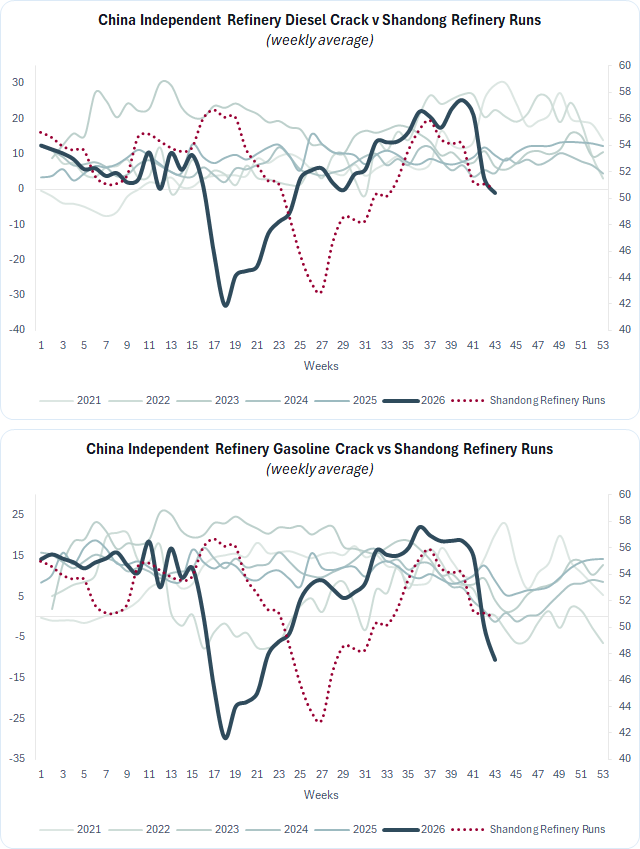
I hear you, and we are conditioned to think in a western way, if an arb is open we are itching to close it. It just doesn’t work that way when there are protectionist policies in place elsewhere. China closing the arb is 0.05% of their GDP (FY annualized); it’s just spitting in the ocean. And this is not to discount the fact that China has a massive surge in exports for September. And still have a lot of unused export quotas for bal year. The q is will they be allowed to use it - they will if everything returns to “normal”. But unlikely in a long road case.
Keep an eye on China - it can bite both ways. If they decide to continue to replenish oil stock at these levels, ok, it's certainly not for runs, the rally is leaving a trail of dead bodies already....
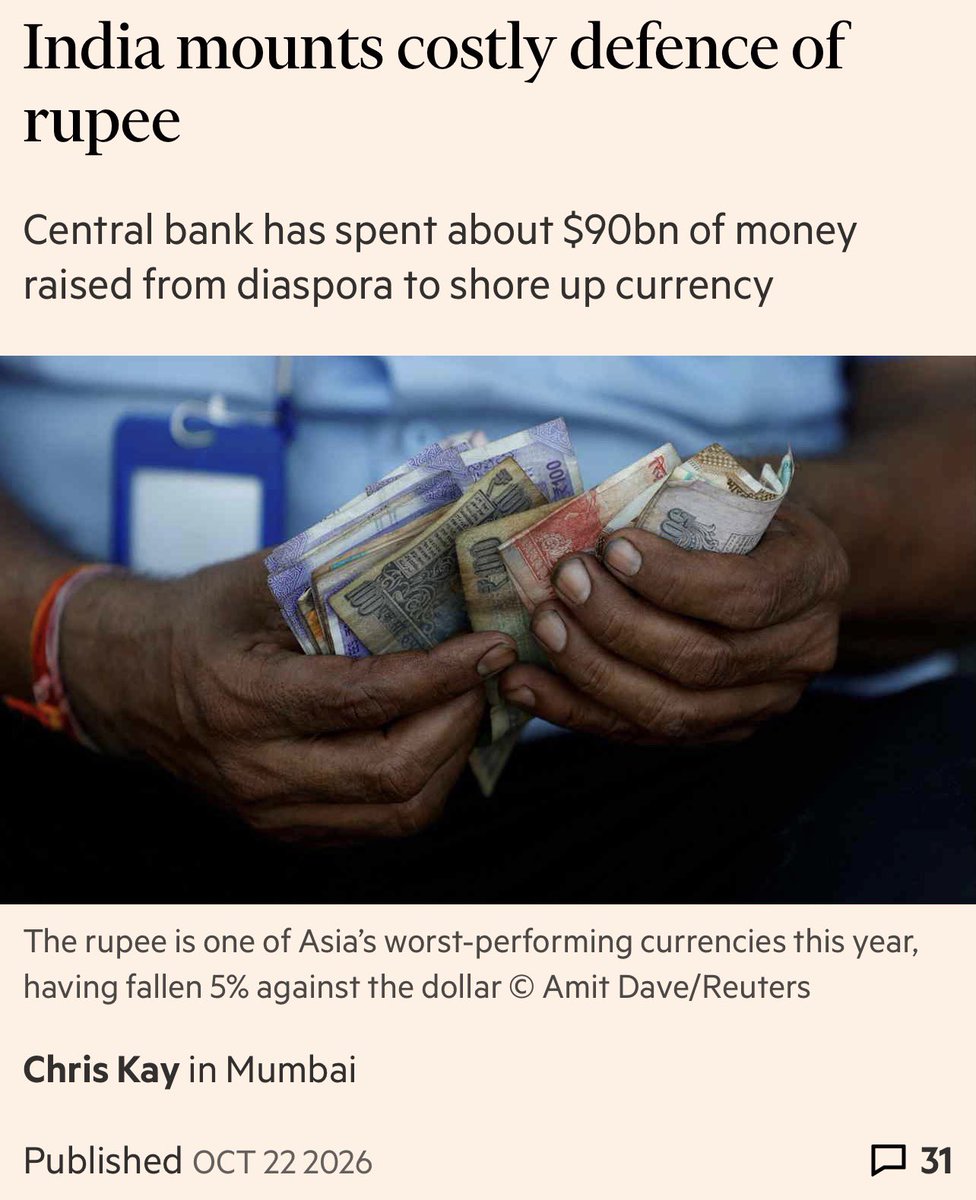
India is mounting an increasingly costly defence of the rupee, deploying tens of billions of dollars and resorting to extraordinary market interventions to protect a currency that has come under pressure from elevated oil prices and investor outflows.
The central bank since June has already used about $90bn of the more than $140bn it raised from India’s diaspora to prop up the rupee, including through sales to the spot market and currency swaps to absorb surplus liquidity.
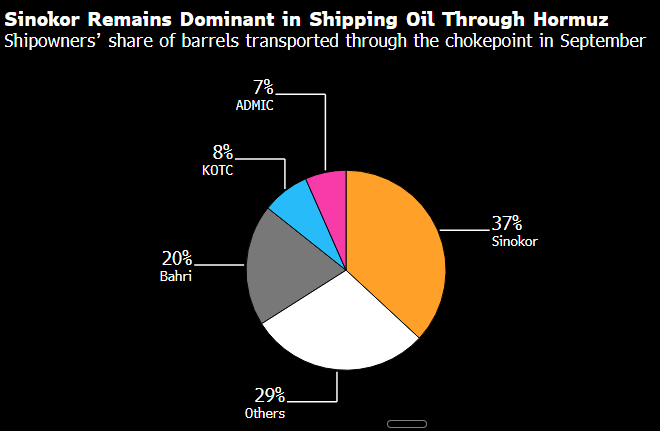
The UAE-Sinokor shuttle system is how the SoH started to turn into a sieve in the early days of the war.
Bloomberg: "Sinokor, owned by tycoon Ga-Hyun Chung, gained prominence from the early weeks of the Iran war, having amassed a huge tanker fleet in the run up to the conflict through purchases or time charters.
When Hormuz was all but closed off, those tankers were snapped up at exorbitant rates by producers who needed to load oil or risk running out of storage space and then being forced to undertake costly shutdowns."
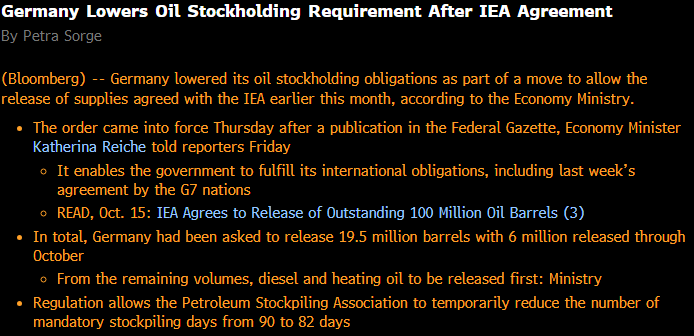
OECD Europe still has not fulfilled its Mar 2026 commitments under the IEA (still short ~96 Million BBLs from my calculations). The IEA compelled its members to fulfill these obligations earlier this month. Imagine if they had released all these barrels already.
Protectionist policies are starting to well up globally. It's every guy's barrel for himself. Except of course the US. Let's see what happens over the next 60 days.
Germany Wants to Stop More Oil Refinery Closures as Costs Mount.
"Germany will seek to stem the loss of oil refining capacity, as closures hurt fuel suppliers, consumers, and the chemicals manufacturing sector."-
Economy Minister Katherina Reiche
If only we could go back in history....
https://t.co/yznx1B6MG7