The Clerk & Recorder position is extremely important because it plays a key role in ensuring our elections are secure and trustworthy.
At one of the debates I attended, a question was asked about same-day voting and paper ballots. Both candidates responded that moving in that direction would be too expensive. That answer made me think about the costs associated with our current voting system.
The Dominion voting machines were implemented while I was serving as a county commissioner. At the time, we were told they would make elections faster and more efficient. I believed that argument and supported the change. If I remember correctly, the initial cost was around $145,000, although that number is only an estimate because I do not recall the exact amount. In addition, there is an annual contractual cost for maintenance and software updates, which I believe is somewhere between $35,000 and $60,000 per year.
This raises an important question that our candidates should research and answer: What are the actual costs of maintaining our current voting system?
For example, if Montezuma County has 12 precincts and each precinct employed five people to count ballots at $20 per hour, would that cost less than operating the Dominion machines? I do not know the answer, but it would be helpful for the candidates to examine the numbers and share their findings with voters.
We were told these machines would speed up election results, yet today we see places like California taking weeks, and sometimes more than a month, to finalize election results. It makes you wonder whether the promised efficiencies have been fully realized.
In my own election for State Representative, the Post Office lost 376 ballots in Dolores County. Those ballots were never found. Incidents like that show a point of unreliability.
Based on the points I have outlined, I disagree with both Clerk and Recorder candidates on this issue. I believe we should have same-day elections and paper ballots to ensure a more reliable voting process. It is one of the most important functions of government it doesn't matter how much it costs.
With the proposed sales tax in Montezuma County, one argument I often hear is that everyone will end up paying it. What is often left out of that discussion is that local residents will pay the most because they live here year-round. Every day, when you buy groceries, fuel, household items, or pay certain bills, you would be paying the additional sales tax. In contrast, someone just passing through town might stop for gas, buy a Snickers bar and a bag of chips, and then leave.
It would be helpful for voters to know what this tax would actually cost the average local resident each year. Would it be $500? $1,000? More? Those are important questions. For example, if someone purchases a $60,000 pickup truck, the additional tax could add a significant amount to the final cost.
Another concern is whether a higher sales tax could make local businesses less competitive. Would some residents choose to make major purchases in Farmington or Durango instead? That is something worth considering.
One thing that is certain is that government will grow bigger. Before asking taxpayers for more money, we should take a hard look at the county budget. Some departments may need to reduce spending, while critical services such as the Sheriff’s Department and the Road Department may need additional funding. That is where the conversation should begin.
People also need to understand that this proposed sales tax would apply to almost everything, including monthly utility bills. That means the tax would not just affect occasional purchases, it would become an ongoing expense that local residents would pay month after month.
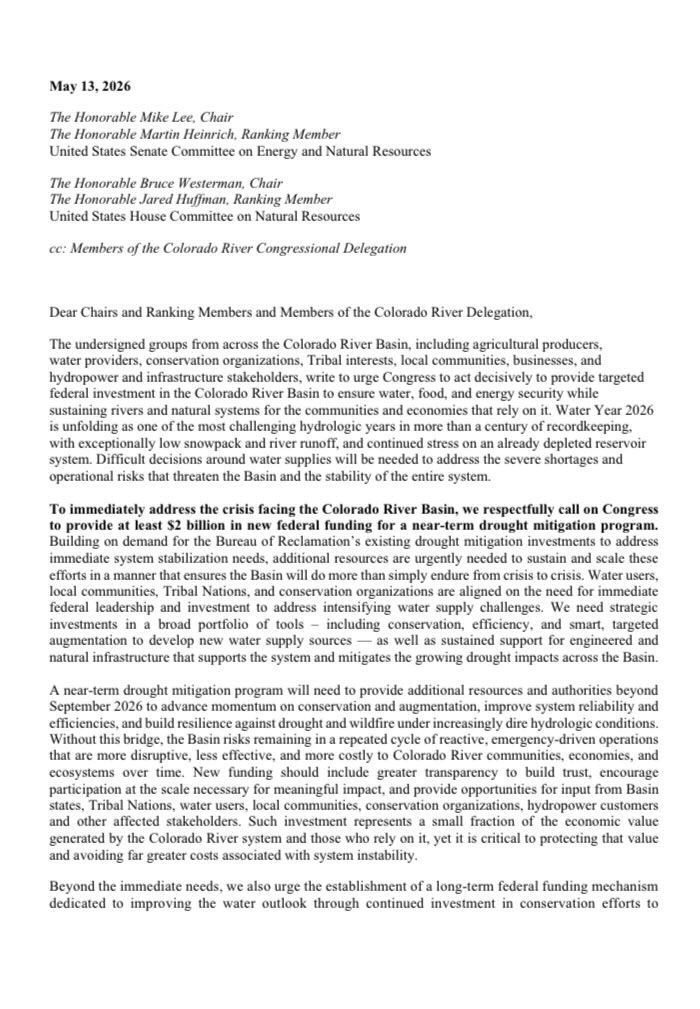
The dire ‘math problem’ of the Colorado River
I asked Anne Castle how far western states’ leaders are from really addressing the crisis.
Her answer: Nowhere near.
https://t.co/bjcgf8dkxl
We’ve Seen This Playbook Before
HB26-1430 is an attempt to get in front of the voters and water down what the people are trying to do with Initiative 175. This isn’t some coincidence. You’ve got a citizen-led effort saying loud and clear: “Road money should go to roads.” And instead of letting that question go to the ballot and letting the people decide, the legislature rushes in with a bill that tries to muddy the waters before people ever get the chance to vote.
Now here’s the part that should sound real familiar, because we’ve seen this exact same playbook before.
Back in 2024, Colorado voters were fed up watching their property taxes skyrocket. So what did they do? They stepped up and pushed Initiatives 50 and 108 to the ballot, real, constitutional protections that would’ve let the people decide how to rein in rising taxes. Those initiatives had already gathered the signatures. They were headed to the ballot. The people were about to get their say.
And what happened next? There was a deal negotiated with the petitioners. The legislature rushed into a special session and passed HB24B-1001, telling everyone they had “fixed” the problem. They said the bill would deliver relief, cap government growth, and make the initiatives unnecessary. Sound familiar? They lied to you, they did not fix anything. Your taxes skyrocketed in the last two years.
Because now we’re hearing the same thing again. With HB1430, they’re saying, “Don’t worry about Initiative 175, we’ve handled it.”
And now here we are again.
Instead of respecting the ballot process, the legislature is stepping in early with a complicated bill designed to give the appearance of solving the problem. HB26-1430 doesn’t do what Initiative 175 does. It doesn’t lock funding into roads. It doesn’t guarantee anything. It just reshuffles the deck and keeps the money right where they can still move it around and spend it on whatever they want, including their own preferred programs.
That’s the pattern. When the people push for real, structural change, the response isn’t to let voters decide, it’s to step in with something that sounds similar, looks like a solution, and ultimately keeps control right where it’s always been.
So this isn’t just about transportation funding. And it wasn’t just about property taxes back in 2024. This is about whether we trust the people to make decisions, or whether we try to outmaneuver them before they even get the chance.
We’ve seen how this story ends if people aren’t paying attention. The question now is whether we’re going to let it happen again, or whether the voters are going to take a stand and tell the government what finally needs to be said. “WE WANT OUR DAMN ROADS FIXED.”
“Also, when March looked like June, what are June and July going to look like?” @R_EricKuhn added. “I could easily see that 1 million becomes 1.5 million acre-feet by March of 2027.”
https://t.co/YQB84cpv8l
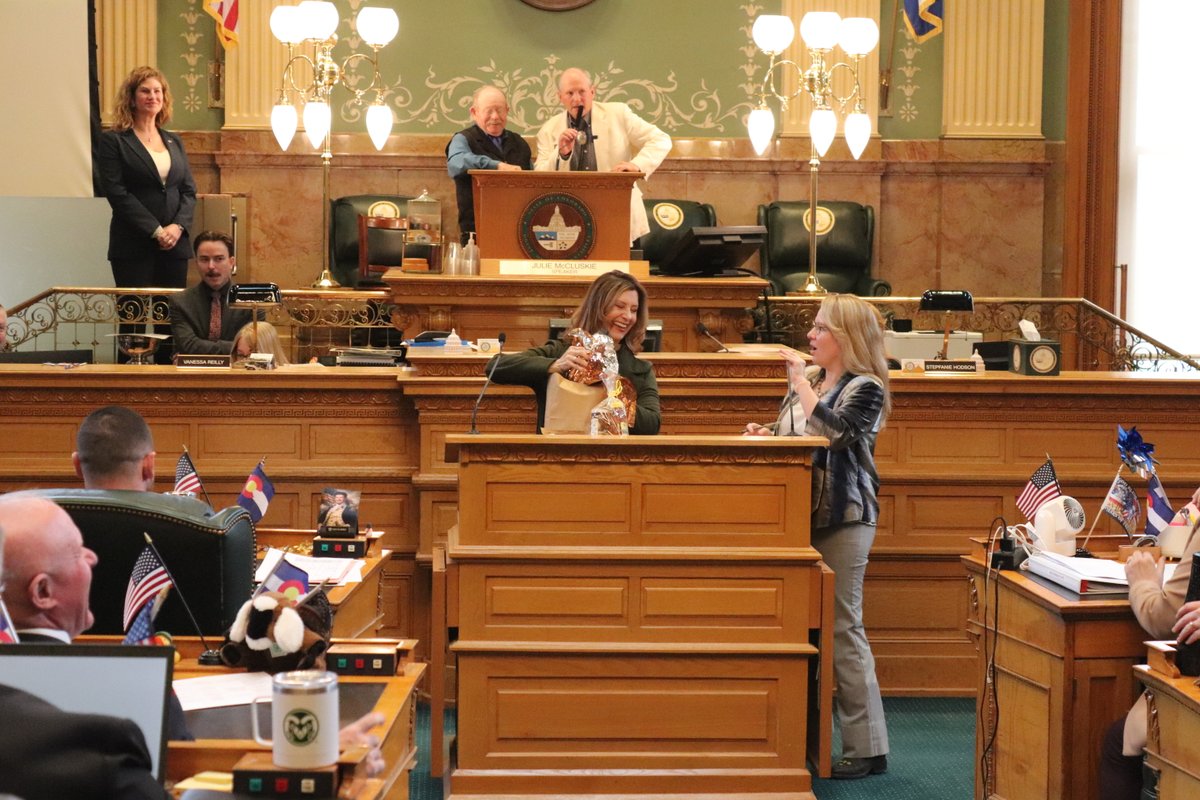
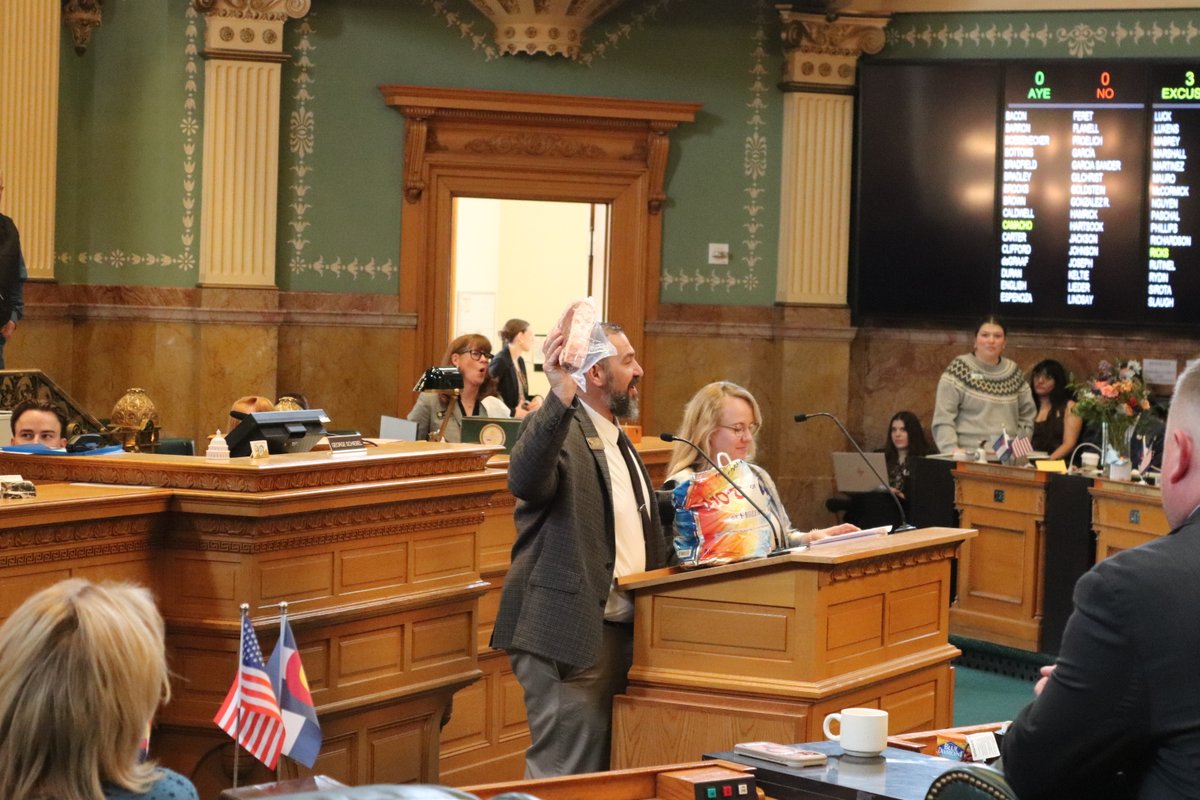
Today was Auctioneer Day at the Capitol! Hear from our own Rep. @LSuckla, who served as one of the lead auctioneers this morning on the House floor, and take a look at some of the many valuable items donated by members of the House Republican Caucus.
“The biggest issue is that Lake Powell and Lake Mead were relatively full in 2002,” @R_EricKuhn said. Now, both Lake Powell and Lake Mead are at critically low levels, and the water scarcity is increasing the likelihood of multi-state litigation.
https://t.co/XNCXFld32v
MY SECRET IS OUT...My name is Scott Shamblin, and I'm running for State Representative (HD61-CO).
I'm tired of rising costs and the dangers of Denver coming into my city.
Let's work together and fix our home!
Andy Mueller, @ColoradoWater GM on #ColoradoRiver crisis. Bureau selecting Basic Coordination EIS in June, ROD in July, AZ filing in Supreme Court before December, attempt to extend Federal authority into Upper Basin projects, "unspecified action" in EIS
https://t.co/eXJqcQh4M7
Hypothetically…….. I’m being taxed on money I never made. Let that sink in.
If I bought my property outright for $60,000 in 2009
Now the county says it’s worth $246,000.
Did I sell it? No.
Did I make a profit? No.
Did I get a check for $246,000? No.
But my taxes jumped like I did.
That’s the problem.
This isn’t income.
This isn’t cash.
This is a number someone decided on paper — and now I’m being billed for it.
If my stock portfolio doubles, I don’t pay taxes until I sell.
If my income doesn’t increase, I don’t magically owe more income tax.
So why does owning a home work differently?
Why am I being taxed on unrealized gains?
A house isn’t just an investment — it’s where people live. And this system means you can do everything right, pay off your home, and still get squeezed harder every year because of a number you never turned into money.
You don’t truly own something if you can be taxed out of it.
This isn’t about “services” or “inflation.”
It’s about being charged for value you never received.
And people are starting to notice.
This needs to be on everyone’s mind✔️