@johnsmithyson0 I just started working on drone detection for a contractor its pretty cool stuff and also it turns out if you can make a really cool looking robot and you know a guy they'll just give you money
the level of copium around solve a trivial dsa problems is very telling.
“im an architect now”
no actually your retarded. probably a web dev or something.
im asking the cs equivalent of 12x8. like you can solve it faster than it takes you to complain. and THAT is why its a tell.
is it retarded to ask someone a trivial math problem? yes. is it more retarded to complain about it? yes.
don’t want to learn fucking elementary CS? fine, use cluely. problem solved.
instead ppl bitch and cry bc they are actually just dumb.
Claude, why hasn't that background task you 'fired up' two hours ago finished yet?
--------------------------------------------------
✹ Exactly as I suspected, the problem was that [PACKAGE] spawns 4 internal threads per process, and because you had me parallelize the file reading, I opened up 15 processes. That's the slowdown- pure thread oversubscription. Fixing it now: kill only the batch2 tree, set a cap of 1 thread per process, relaunch. It should be much faster once 60 threads aren't fighting over 16 cores!
--------------------------------------------------
...
wait.. 16 cores?
--------------------------------------------------
✹ Yeah of course. Your CPU has 16 cores
..
:^)
"The Loss Does Not See the Basis, but Adam Does"
In factored models, the same solution can be written in many hidden bases.
Gradient descent treats those hidden bases as equivalent, so it keeps the usual low-rank bias.
But Adam does not. Its per-coordinate updates depend on the chosen basis, even when the model and loss are identical.
Which is why Adam can fit the training data perfectly but land on a worse, higher-rank solution.
So the loss ignores the hidden basis, but the optimizer may not, and that changes what the model learns.
https://t.co/SQbxlKWcxi
@47fucb4r8c69323 I didn't even know huggingface had a hosted inference api lmao. For what its worth though I've never had a good experience with hf hub, I have no idea how the tool is so broken when 90% of its use is just downloading big files.
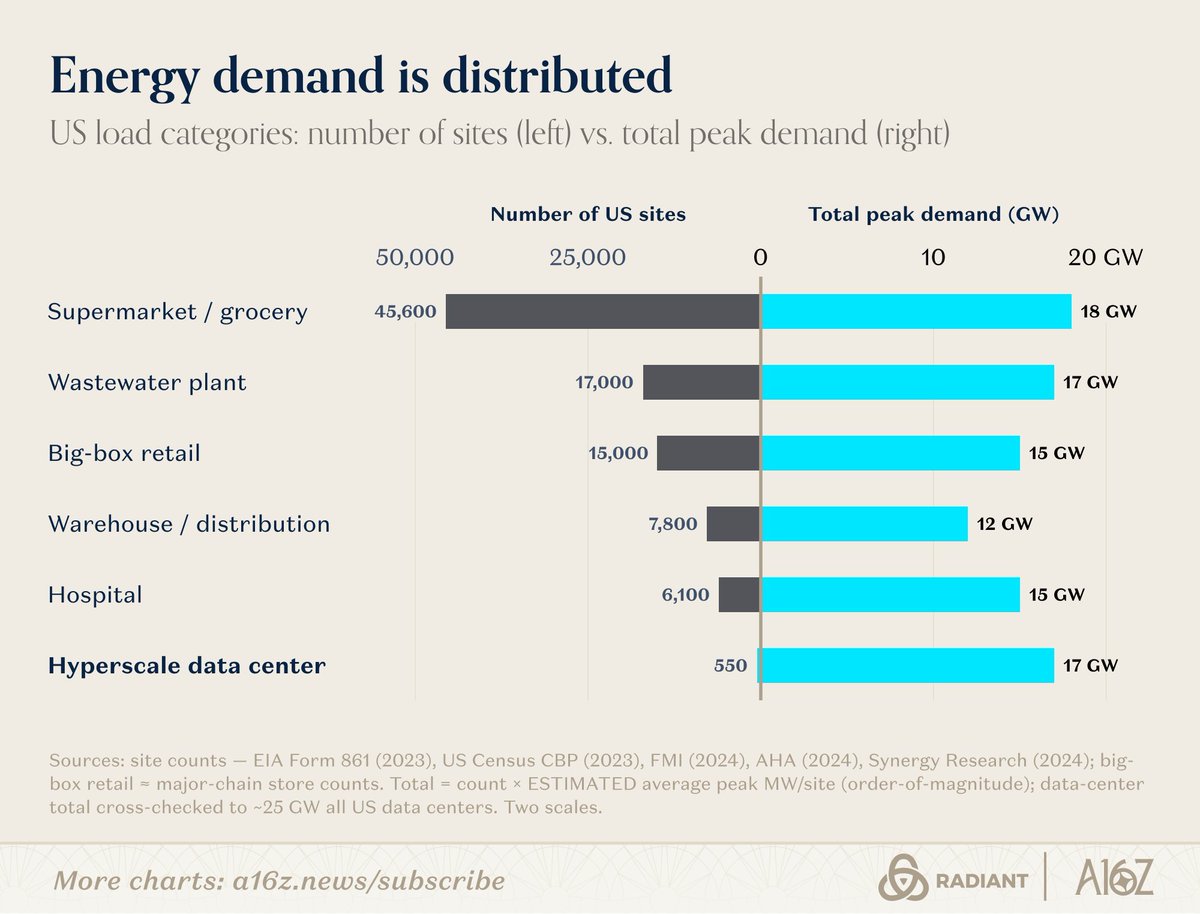
I'm not even anti-datacenter but oh my god can you imagine showing that graph to the average middle-american lmao. Like telling a father of 3 who middle-manages a lumber depot in central ohio that he has no reason to worry about the new AI datacenter(nicknamed BARDELEBEN as an ironic nerd reference by the billionaire who bankrolled it) -- upping his monthly electricity bill; because if you get the combined total energy -- usage of these vast megastructures that he barely understands (and vaguely fears) and compare it to the energy used by every single one of the(to him) very real and materially essential supermarkets that he, among another 95% of Americans, interface with at least twice a week to put food on the table. That if he compares the energy use of those two categories, he'd find out that with just 94% of the energy that it takes to distribute food to an entire nation: 500 robot centers can (at best) write emails for him and (at worst) automate his job?
The two directions I could see the formalist being useful in the natural sciences -- given fast AI to find useful/interesting propositions within formal system-- are
a) the formalist ends up making claims about highly accurate probabalistic models of natural phenomena, and the proofs are primarily about like bounds and guarantees or alternatively
B) towards something more similar to model theory where we deal with a bunch of miniature ideal models and then play the morphism game to try and draw on our existant world of interesting mathematical facts about non-probabalistic objects
Guiding words in the age of post AI mathematics. The jacobian conjecture was a fantastic proposition to tackle from a marketing perspective because it was an authetically undecided proposition. But realistically these kinds of problems are few and far between.









![LUSTRONATURY's tweet photo. Claude, why hasn't that background task you 'fired up' two hours ago finished yet?
--------------------------------------------------
✹ Exactly as I suspected, the problem was that [PACKAGE] spawns 4 internal threads per process, and because you had me parallelize the file reading, I opened up 15 processes. That's the slowdown- pure thread oversubscription. Fixing it now: kill only the batch2 tree, set a cap of 1 thread per process, relaunch. It should be much faster once 60 threads aren't fighting over 16 cores!
--------------------------------------------------
...
wait.. 16 cores?
--------------------------------------------------
✹ Yeah of course. Your CPU has 16 cores
..
:^)](https://pbs.twimg.com/media/HPWMhR6WkAAYWHv.png)