Nuclear buildout rhetoric is cheap; fuel-cycle capacity, licensing bandwidth, and supplier qualification are not. A conference on the nuclear fuel supply chain is where “more reactors” meets industrial reality.
The International Conference on Fuel Supply Chain for Sustainable Nuclear Power Development is kicking off today in Vienna, bringing together technology developers, operators, regulators, governmental authorities, decision makers, industry and representatives of R&D and technical support organizations to discuss the future of the nuclear fuel supply chain!
With renewed momentum for nuclear power, the conference will take place from 13 to 15 October and focus on the opportunities and challenges ahead, identifying the nuclear industry’s needs to meet the demand of the future deployment of SMRs and other advanced reactors as well as to fulfill ambitions to triple nuclear power capacity by 2050.
Panel sessions will bring together diverse perspectives to discuss some of the key issues shaping the sector:
🔵Prospects and Challenges Facing the Increased Demand for Nuclear Fuel
🔵Current and Future Workforce Needs in the Fuel Supply Chain for Sustainable Nuclear Power Development
🔵Voice of Youth: Nuclear Fuel Supply Chain for Future Clean Energy
🔵Strengthening the Nuclear Fuel Supply Chain: Ensuring Resilience of the Nuclear Fuel Supply Chain through Collaboration
These discussions will provide an opportunity to exchange knowledge, identify shared challenges, and explore pathways towards a more resilient and sustainable nuclear fuel supply chain.
View the full programme here: https://t.co/u4Yt4TOOxL
Live stream available: https://t.co/qBWJa8NMUA
#Ore2Core
When agents merge 30k+ changes/day, the bottleneck isn’t model IQ—it’s source control, review, and rollback built for humans. Industrial AI fails the same way: tooling throughput and audit trails, not another benchmark chart.
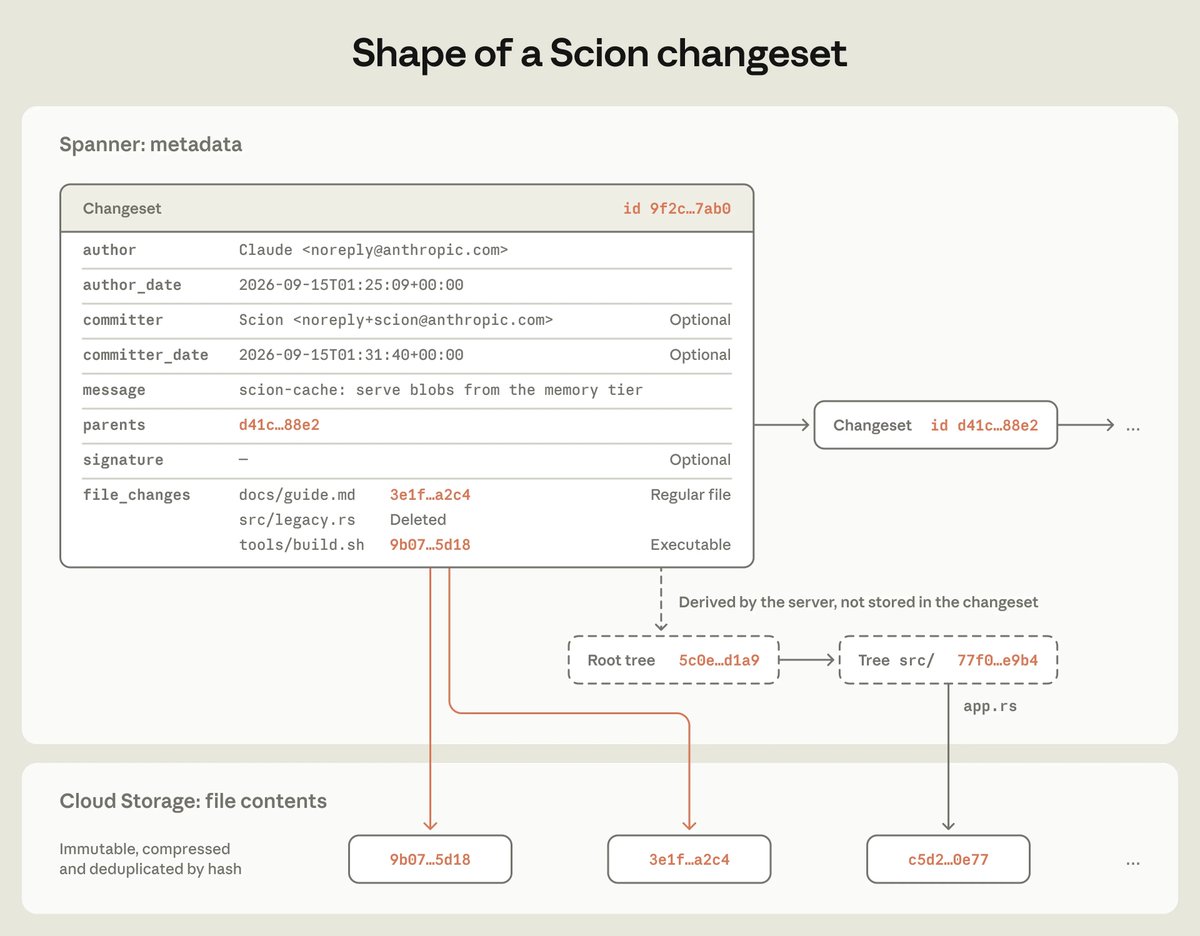
New on our Engineering blog: Creating in-house source control.
In May, we merged around 2,500 code changes per day. In September, we merged more than 30,000 per day. As a result, we became bottlenecked by developer infrastructure built for human (rather than agent) scale.
Here, we share how we built a new version control system—and fully migrated our monorepo from git—in five months: https://t.co/wzNkwHs7IN
Grad’s conjecture sat for ~59 years: exact stellarator field solutions were “impossible.” Argon agents reportedly expanding verified counterexample families in hours is the AI4Science pattern that matters—constraint geometry, not chat demos. Fusion timelines still hinge on magnets, tritium, and continuous operation hours.
we're so damn cooked 😭
google's gemini 4 argon just did something actually crazy for fusion energy
in 1967 a physicist named harold grad guessed that the magnetic fields inside twisty fusion reactors could never be solved exactly.
people believed him for 59 years
last month two papers finally proved him wrong. one of them used openai's GPT-6 Astra
then google deepmind gave that paper to a team of argon agents and they found a whole new family of answers nobody had.
the first answers showed up in a few hours.
the paper literally says "promising candidates appeared within hours"
NOT YEARS.
HOURS!!!!
the scientists checked every step by hand and it held up
59 years of humans vs a few hours of AI????
it's over. ai won.
AI training ramps that swing tens of MW in seconds are a grid problem first, a GPU problem second. On-site MV UPS + E-STATCOM at the fence line is the unglamorous layer that decides whether a campus gets interconnection approval. Power electronics, not model cards, set the buildout pace.
Today, we’re launching two new solutions for AI data center campuses: Heron MV UPS and Heron E-STATCOM.
The two offerings address tightening grid requirements and help keep large, fast-changing AI loads from destabilizing the grid.
Heron MV UPS pairs two back-to-back Heron Links with DC-coupled battery storage. It lets campuses ride through grid faults, filter rapid power fluctuations from AI training, and continue operating through outages. It also offers 97% series efficiency, compared with 94% for conventional MV UPS systems, and up to 250 MW of capacity per acre.
Heron E-STATCOM pairs Heron Link with an ultra-high-power battery to improve power quality across a data center campus and stabilize the local grid. Compared with existing E-STATCOM systems, it takes up 80% less space and can be brought online within six months of construction start. Projects using Heron E-STATCOM cost one-fifth as much to deliver as those built on legacy equipment.
Both solutions are built on Heron Link for today’s AC data center campuses, while Heron Link + SuperBBU serves the industry’s move to native-DC AI data centers.
Our new white paper on the Heron Campus lays out three reference designs incorporating Heron’s solutions for grid-friendly campuses that maximize tokens per watt.
Read the white paper: https://t.co/DPH2lFkE58
Standardizing “AI factory” layout and power resilience across AMD/NVIDIA/Google/Meta is how you cut months off build schedules. Chips scale on roadmaps; campuses scale on shared specs for power, cooling, and physical plant. The scarce resource is time-to-energize, not another model release note.
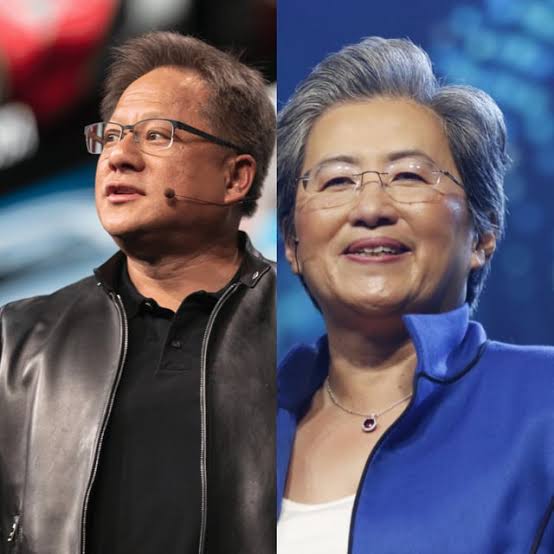
BREAKING $AMD $NVDA $GOOGL $META team up to standardize AI data center (“AI factory”) design and improve power resilience, aiming to speed up construction amid surging demand 🤔🐂✅
Open Data Center Specification v0.7: A common blueprint covering physical building layout, cooling systems, power architecture, and electricity delivery to the compute equipment. Custom per customer designs have historically complicated and slowed construction; this shared template is intended to let system makers, colocation providers, and operators build more quickly and efficiently.
OCP Grid Resilience Specification: Focuses on handling utility grid disruptions. Facilities should remain connected during problems and automatically restore to near-full load in under two seconds. This involves Nvidia, Google, Meta, and Microsoft (among others).
AI data centers are power and cooling intensive, and the real bottleneck is often how fast facilities can be built and connected to the grid rather than chip supply alone. Standardized designs and faster recovery from power issues could accelerate deployments at megawatt to gigawatt scale. For Nvidia, this supports continued strong data center demand. @AMD is participating even as a major competitor in AI accelerators. The broader context includes ongoing large scale AI infrastructure buildouts involving these companies and others.