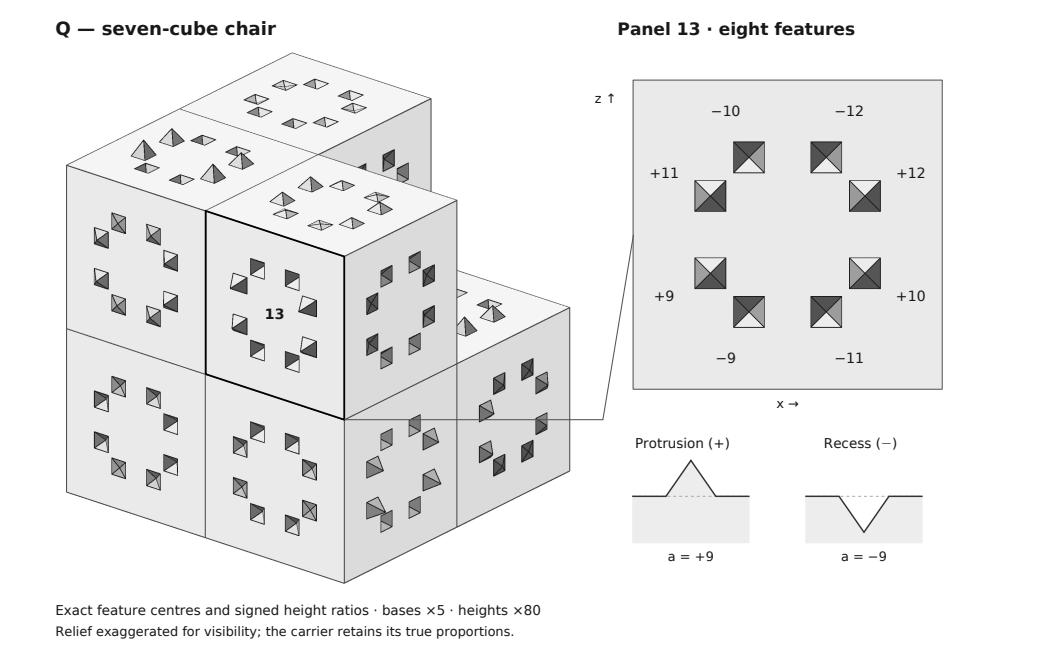
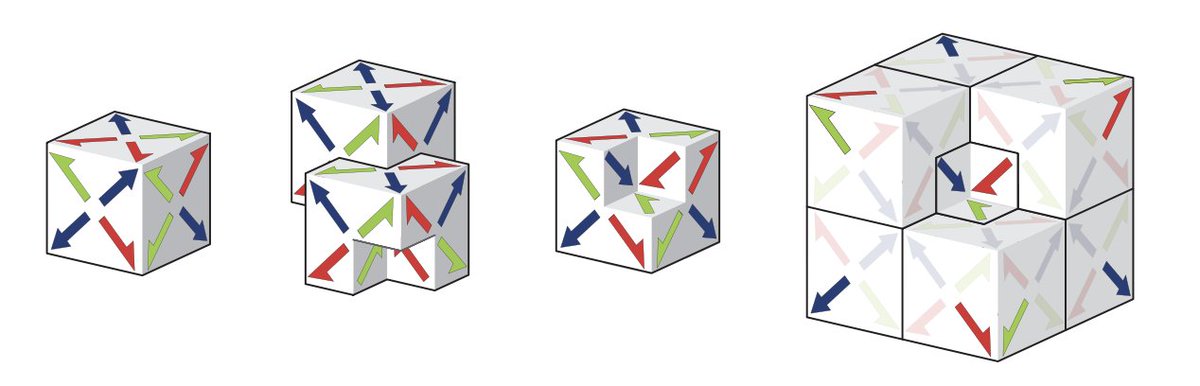
Breaking math news: The first-ever 3D Einstein tile, an object that tiles space in a never-repeating pattern, has been found by independent researcher Ioannis Tsiokos using GPT Astra. Resembles a chair. Mathematicians have de-slopped the proof. @kkakaes: https://t.co/KOMjtwluoH
@sebastemp@ylecun@Noahpinion yeah, to be fair when managing people you often have the case of "I told you to do X, why in the world didn't you consider Y?", so even grown adults are guilty of following instructions instead of stopping and thinking "wait, does the way I'm tackling this even make sense?"
I haven't seen a single LLM be good at "wait a second, this doesn't make sense," like any human can do.
E.g., if the task is "send a message to X person", it needs to realise:
1) is the person awake now?
2) the person maybe doesn't speak english?
3) the message doesn't make sense given the person's profile
4) etc.
I'd love to hear if there is research on this. The closest thing I found is Pragmatic Reasoning, but is not the same thing
Slow mo speeds (100mm/s)…
We designed and built our own print heads too, which takes away the logistical stressors of sourcing heads from Europe at 5x the cost. This is our first test of the new head.
fixing peer-review crisis in research:
1. If you submit, you review
2. Use fast classifier like Laya to match reviewers to papers
3. Reviewers are anonymous, but they get marketplace-style reviews from the other reviewers of the same paper
@trq212 having Claude brainstorm with me, occasionally ask questions, and let it plan only through a todo-list is very useful for quick exploratory tasks. It allowed Opus 5.5 find for me families of infinite solutions to the 3D einstein tiles:
https://t.co/TLfpxMcWq0
these 3 families of solutions are examples. They come from one general Lean theorem: bend space in any tiny way that respects Chair44's symmetries and you get a new tile. So there are infinitely many families of infinite solutions
Breaking math news: The first-ever 3D Einstein tile, an object that tiles space in a never-repeating pattern, has been found by independent researcher Ioannis Tsiokos using GPT Astra. Resembles a chair. Mathematicians have de-slopped the proof. @kkakaes: https://t.co/KOMjtwluoH