Join McKetta Department of Chemical Engineering as an assistant professor, tenure-track, starting Fall 2026. Ideal candidates have research connections to biotechnology and/or materials engineering. Learn more, and apply: https://t.co/TYGmwakLni.
In his lecture "Engineering Biology to Develop a Taste for Waste" at #AIChEAnnual October 29 in San Diego, Hal Alper will address how #metabolic engineering and synthetic biology are improving how we deal with waste. https://t.co/MNwgmpFkUt @LabAlper#synbio
In an effort to re-circularize plastic waste in upcycled technologies, @LabAlper of @UTAustin will screen 1000s of untested enzymes that can degrade common plastics. @TexasChE
https://t.co/hocGsAMlgF
New @NatureComms review on the challenges and opportunities for using bio-based approaches to solve the plastics problem. @TexasChE
https://t.co/3rULAeJSw6
New @NatureComms paper published today on the de novo production of a suite of halogenated molecules produced using E. coli. 26 halogenated compounds produced including many new-to-nature.
https://t.co/LZcDMYCMRz
We are thrilled to be working with @bit_Biome on a collaboration to find new plastic degrading enzymes and microbes! @soichirotsuda
https://t.co/3dguNuUgBQ
A sustainable future is biological. How can we engineer biology to make what we need? We worked with @LabAlper@jgi to explore accelerating biological design with flux enhanced cell-free systems. #syntheticbiology
https://t.co/b2tQX96Jn9
Excited to see our collaboration with @MichaelCJewett@JGI published. Here we combine metabolic engineering with cell-free biology to produce pre-optimized, flux enhanced cell extracts for rapid prototyping of pathways
https://t.co/zlAY4CIAzx
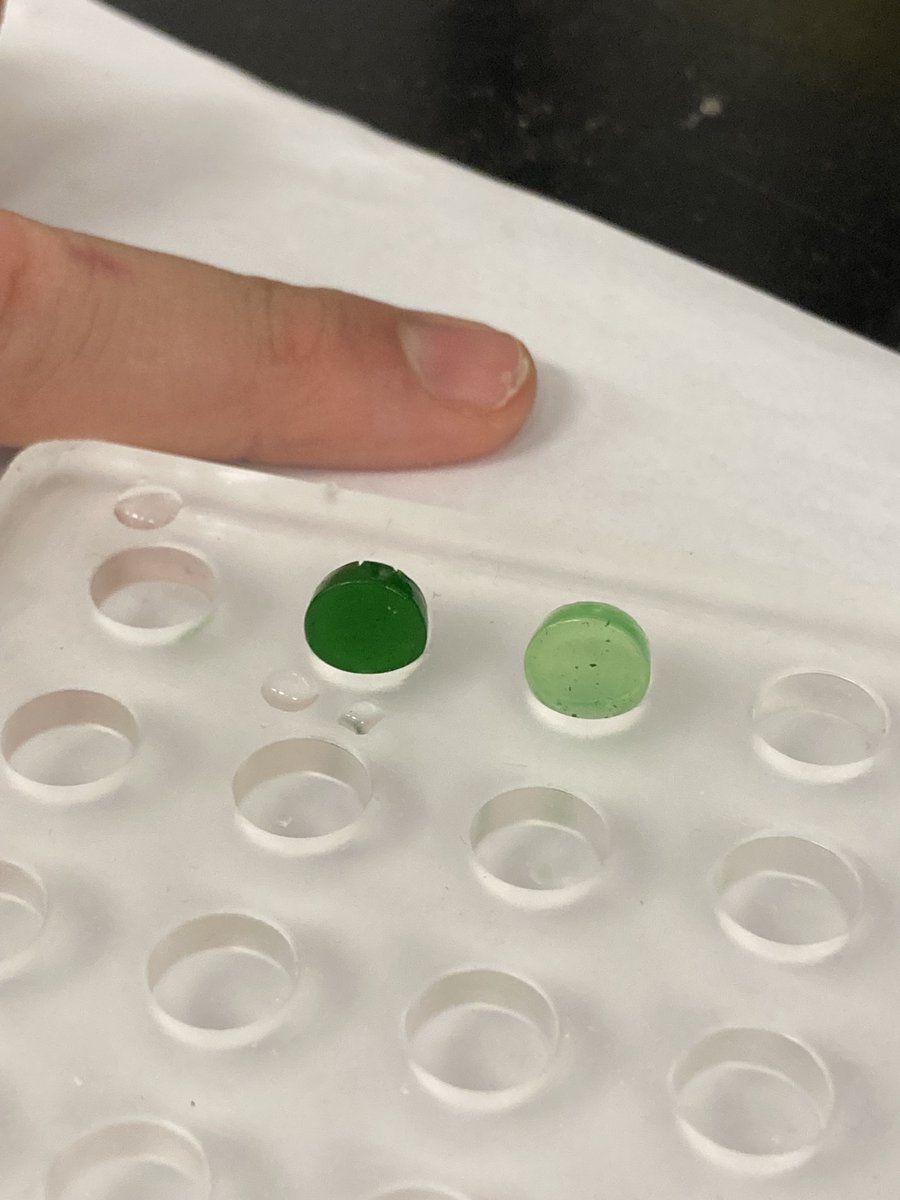
Our latest @NatureComms paper features a tripartite consortium for producing phenylpropanoids (including eugenol). Modular consortia can overcome enzyme promiscuity limitations. These consortia also work in Engineered Living Materials. @NelsonLabUW@NSF
https://t.co/jc2ZMA5JfZ
Three university teams and an industry performer will take initial steps to lessen risks associated with biomanufacturing capabilities in resource-limited environments, including space, as part of the DARPA B-SURE program #UF#UTAustin#WUSTL#Space_Tango https://t.co/3mn4pRD4Rt
Our lab has been collaborating with the @LabAlper, @NelsonLabUW, and @AyokunleOlan among others to make engineered living materials! Imagine a building material that can photosynthesize, make chemicals, and repair itself! https://t.co/245KGvxltu
We're excited to announce the publication of our most recent article that utilizes microfluidic droplet screening to identify differential itaconic acid production phenotypes in yeast. Read it here: https://t.co/w5WG2phtKV
Three university teams will explore and take initial steps to mitigate risks associated with manufacturing capabilities that rely on biological processes in space as part of the DARPA B-SURE program #UF#UTAustin#WUSTL https://t.co/b46H9lxu0D