Personal views on the state of the world and occasional bits of science, especially axon degeneration and research culture. Much more science at 🦋 @colemanlab
Not all grant rejections are equal. Some are more devastating than others. As a researcher, how do you keep going in those moments?
The latest Science Without Anguish blog post discusses a topic we need to talk about much, much more!
https://t.co/ziZ7KBAb96
@demrescommunity Wow! Thanks for this. Absolutely fits what I see. Another cause to consider: the false narrative that paper and grant reviews are an objective reflection of ability, leaving many wrongly believing they are “not good enough”. https://t.co/Vw3pE1igMs blog on this topic coming soon.
@alifarhat79 Simplistic misrepresentation of academic research. Many discoveries are made in Europe and elsewhere in the world but commercialised by the US. A lot more is done in US by foreign researchers trained elsewhere. Characterising it as primarily US research is completely misleading.
How does the thalamus support consciousness?
Our new study uses resting‑state fMRI to show nucleus‑specific thalamocortical connectivity changes during anaesthesia and in disorders of consciousness.
#Neuroscience#Consciousness#fMRI#Thalamus
https://t.co/mg0XDtPhbJ
@BetterResearch The role of imposter syndrome in ECR mental health problems is particularly sad because it is largely a consequence of how most of us talk only about our successes and keep quiet about our rejections. How many ECRs wrongly think this only happens to them? It's just not true!
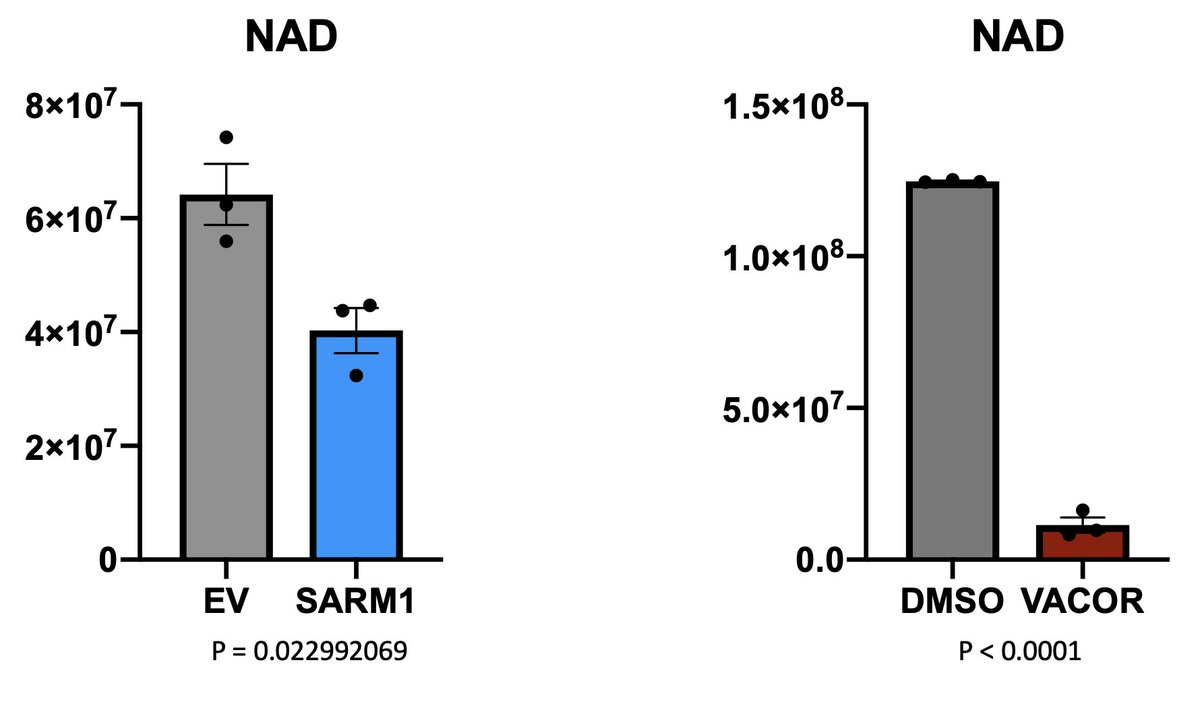
@sciqst Increasing SARM1 expression also lowers NAD (Fig, left). While less striking than the effect of activating SARM1 (right), activating it on a background of increased expression is likely to be particularly harmful.
Delighted to announce the latest preprint from our amazing team: https://t.co/sj0dvM1OeF
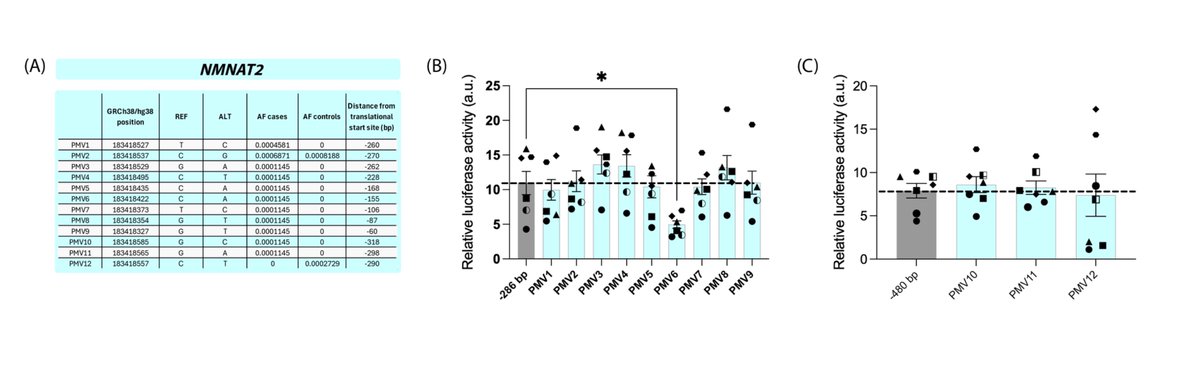
Laura Carlton and Emma Wilson report luciferase mapping of the human NMNAT2 and SARM1 promoters, naturally-occurring human gene variants within them and their functional consequences.
1/5
@sciqst Lowering NMNAT2 expression increases axon vulnerability to stresses eg, impaired axonal transport or mitochondria. https://t.co/jwQGxl3sPQ and https://t.co/menP3fUOcf.
It also flips nicotinamide riboside from raising NAD to lowering it in some axons. https://t.co/Qt4Vnm26GL
Congratulations to Laura Carlton & Emma Wilson on these exciting findings, their first primary research articles as first & senior author respectively. Also thanks to Heba Morsy for in silico promoter analysis.
We look forward to working constructively with reviewers.
5/5
Importance: These findings support disease association studies to link programmed axon death to specific human diseases. It is essential to move beyond the limitations of animal models and work in humans to understand where best to apply drugs blocking programmed axon death. 4/5
@HedgieMarkets Pretty much sums up the current state of journal publishing. Rubbish like this gets through while respectable and honest science gets desk rejected. Our latest experiences this week. Journal publishing isn’t working.
Delighted to say that our paper identifying a novel role for protrudin in endosomal fission has been published:
Protrudin acts at ER-endosome contacts to promote KIF5-mediated endoso... https://t.co/9rdRuNZ6rY
@TheCIMR@juliakleniuk
Today in Science Without Anguish:
'It's not what you know, it's who you....trust'.
When knowledge is really trust in disguise. And it's not absolute, it’s greyscale.
Why knowing this helps us cope when our knowledge is challenged. https://t.co/vhpalIUDuf