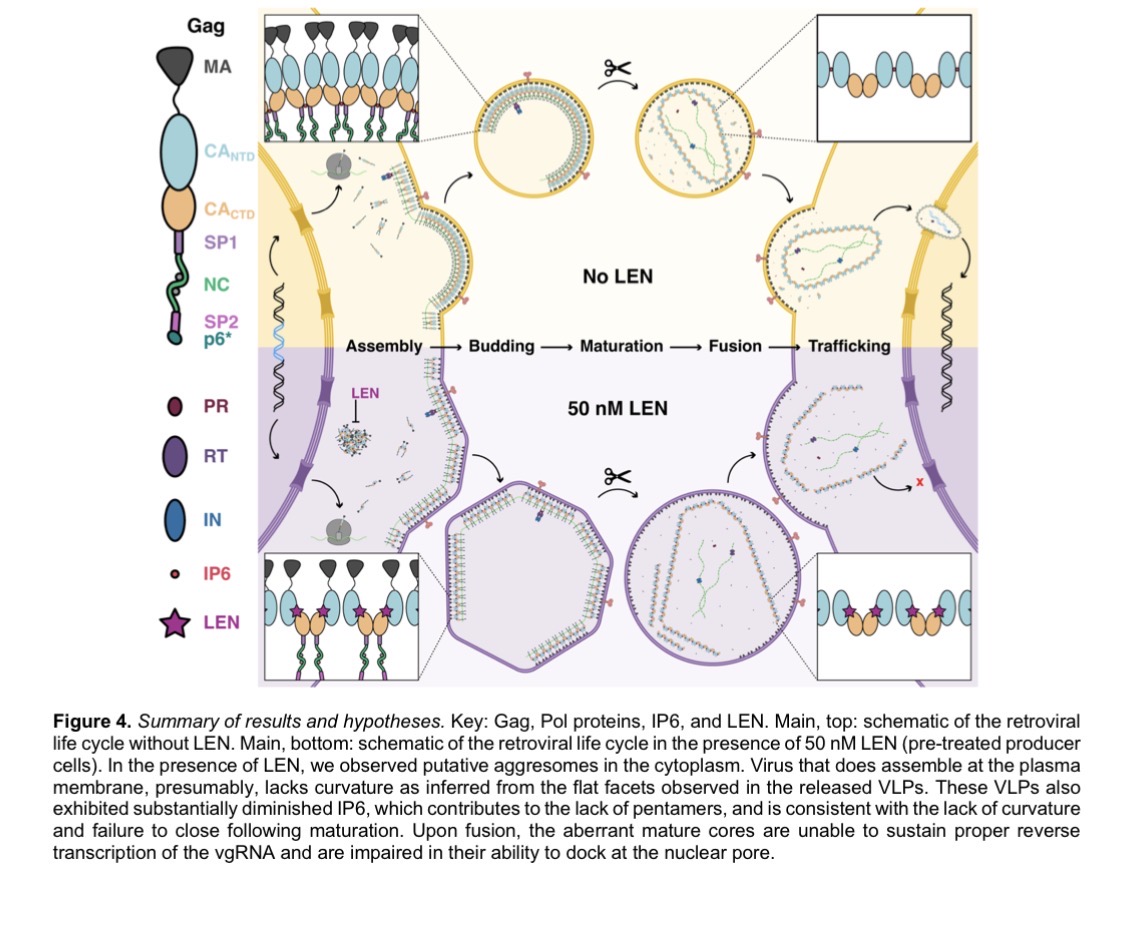
Can disrupting virus assembly stop HIV-1 infectivity?
Our new bioRxiv preprint from the Robert A. Dick lab reveals a previously unrecognized “premature” capsid lattice state that blocks the production of infectious virus!
🔗 https://t.co/1hlvs9kfEL
Ph.D. shouldn't be about publishing in high-impact journals but mastering skills to solve problems, mentoring, leadership and coming-up with new ideas.
MIT engineers engineered bacteria to produce hyperspectral signals that can be detected as far as 90 meters away. Their work could lead to the development of ba…
Source: MIT News | Massachusetts Institute of Technology
Shared via the Google app https://t.co/D3AQftImYH
Excited to share that my research has been selected for funding by the Schmittau-Novak SNIPS Small Grants Program at @CornellCALS 🎉 Grateful for this opportunity & excited to get started. Stay tuned for updates! 🌱🔬 @Cornell@CornellCALS
Biology papers be like "The nucleus is part of the cell and contains a lot of DNA. Polycomb Repressive Complex 2 (PRC2)-mediated deposition of H3K27me3 establishes domains of facultative heterochromatin, silencing gene expression in a developmentally regulated manner."
Reached the point where I happily wake up at 5:30 AM, go to sleep at 10:00 PM, work all day long, and eat just one piece of pizza.
I guess I am finally on the right track as a PhD student in STEM!
This kind of naive thought is attractive because it makes the problem amenable to fashionable technology (AI). The real problem is we barely understand what many diseases even are
And that’ll require basic science, which will seem esoteric or irrelevant until it really isn’t