LARC joins over 40 organisations and movements in endorsing the 13 Priorities for the Equitable Access to Land Bill. We support a people-centred approach to land reform that advances equitable access to land, secure tenure, dignity, participation, and accountability.
"It effectively criminalises landlessness through the back door. In a country where millions occupy land out of necessity, that is not a technical fix. It is a return to a punitive framework the Constitution explicitly rejected."
Housing is a human right, not a crime. Buhle Booi warns that the Draft PIE Amendment Bill risks criminalising landlessness and undermining the rights of vulnerable South Africans. Click the link below to read more. ⤵️
#AmandlaMagazine#RightToHousing#SocialJustice
https://t.co/F4OHyQoilR
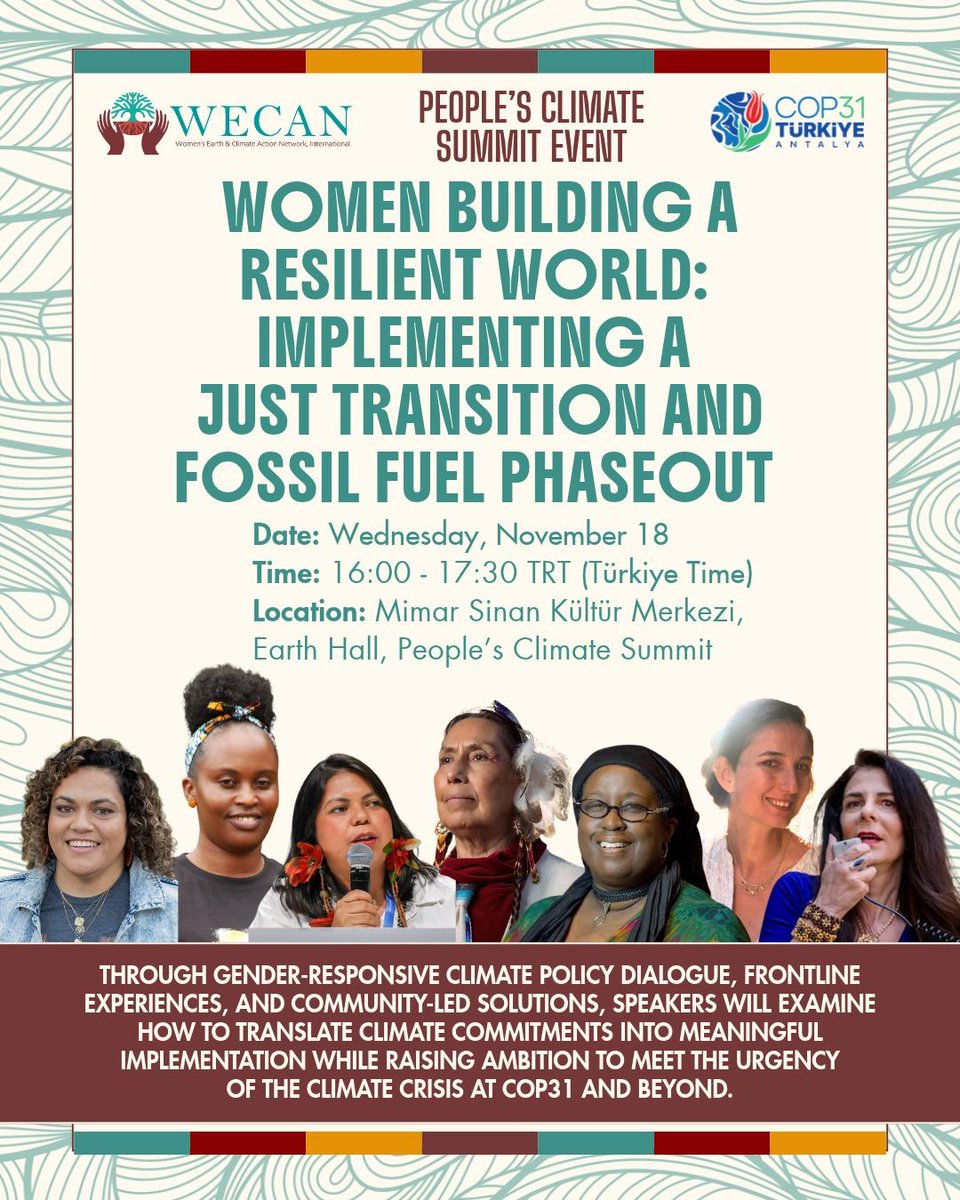
Through #gender-responsive climate policy dialogue, frontline experiences & community-led #solutions, speakers will examine how to translate #climate commitments into meaningful implementation while raising ambition to meet the urgency of the climate crisis at #COP31 & beyond.
What does land reform mean beyond the transfer of land?
At today’s Unstuck Colloquium, contributors challenged us to consider the many dimensions of land justice.
Nomzamo Zondo of the Socio-Economic Rights Institute (@SERI_RightsSA) reflected on land as fundamental to human dignity, belonging and community. She argued that South Africa cannot fulfil its constitutional promise to heal the divisions of the past without addressing dispossession.
Melita Ngcobo of Abahlali baseMjondolo spoke about the everyday realities of insecure housing, inadequate services and communities excluded from decisions affecting their lives. Her message was clear: “Nothing about us without us.”
Natalie van Reenen, Senior Economist in the Microeconomic Policy Unit at National Treasury, brought an economic perspective, arguing that redistribution must remain central to land reform while also creating opportunities for agricultural development, food security, employment and economic growth.
Their contributions raised a critical question: how do we ensure that land reform delivers not only redress for historical injustice, but also dignity, security and meaningful opportunities for those who have been excluded?
The conversation continues. Join us LIVE on TikTok: https://t.co/DhZYkA2J4G
#Land
#MandelAndLand
#MandelaAndLandExhibition
Discover the Postgraduate Diploma in Public Law focusing on Local Government at @UWConline
APPLY NOW: https://t.co/NyCiJE7QHO
Applications close on 29 November 2026
#IamUWC@uwcalumni@UWC_DOI@UWCLawFaculty
The Real Democracy
The 'Just Access' podcast is back with 'The Real Democracy', a seven-episode audio series for South Africa’s 2026 local government elections. It examines the state of municipalities, its capacity, infrastructure and finance from the perspective of PARI’s research.
The state works for capital
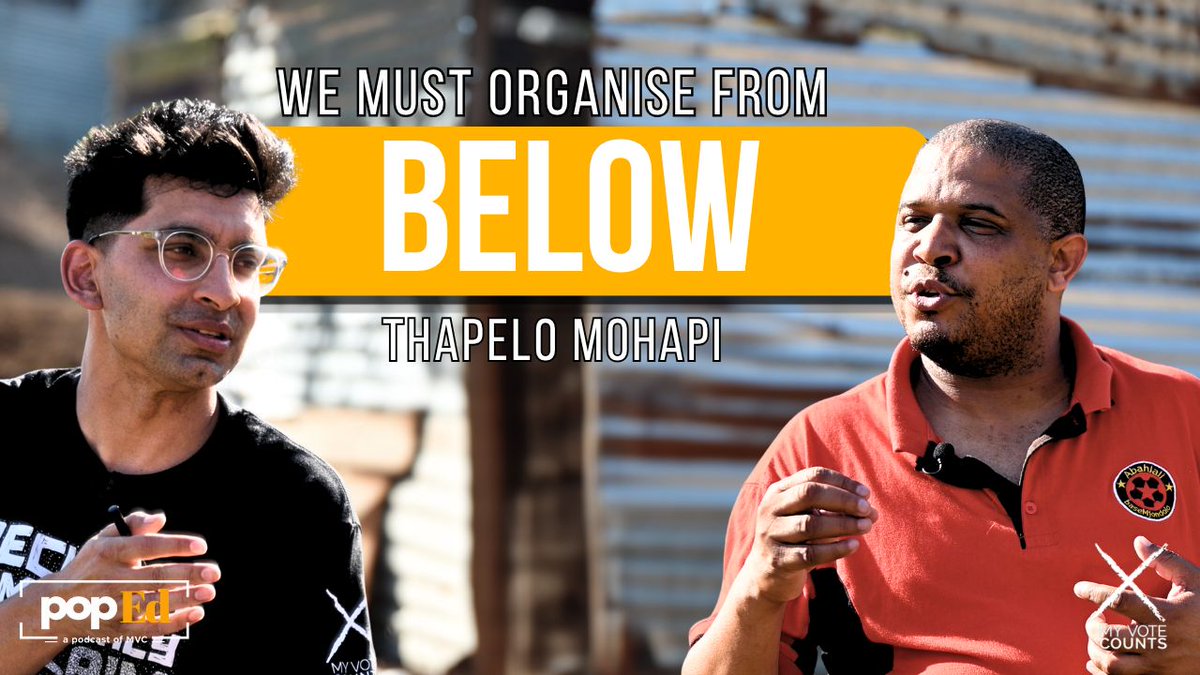
Episode 6, the final episode of popEd is out now.
This week we're in conversation with Thapelo Mohapi, General Secretary of Abahlali baseMjondolo, about land, democracy, political education, and what it takes to build people's power from the ground up.
We talk about eKhenana Commune, the struggle for land and housing, and why organised communities are so often treated as a threat. Thapelo reflects on the social value of land, how communities can govern themselves collectively, and why meaningful democracy depends on people participating in decisions that shape their own lives.
He also shares lessons from grassroots organising: why political education matters, how solidarity is built through shared struggle, and what it takes for movements to endure in the face of repression and violence.
🎙️ popEd Episode 6: The state works for capital
Watch the full episode on YouTube here: https://t.co/TML5vFsQy6
IEC LAUNCHES NATIONAL RESULTS OPERATION CENTRE
🎥YouTube: https://t.co/y2AYVijKbz
Opening the NROC, CEO Sy Mamabolo emphasised that the launch represents more than technical readiness. The NROC will serve as the central hub for the auditing & announcement of election results.
Have traditional council elections happened in your community?
Do you know what should happen during the election process, who should be represented and how you can hold your traditional council accountable?
@StopTheBills
Find out more in our pamphlet below👇
Nkosi Bambilzwe Sigcawu doing the welcome address at the launch of a R2 billion Integrated Land Reform and Rural Development Support (ILRRDS) Programme.
Nkosi Sigcawu acknowledged all Traditional Leaders present at the launch, indicating that their villages have vast land open full potential on working the land with the assistance of the ILRRDS Programme.
#GovernmentAtWork #governmentza #dlrrdatwork #govzaupdates @governmentza@gcismedia @vukuzenzelegcis @mzwanelenyhontso @sabcnewsonline
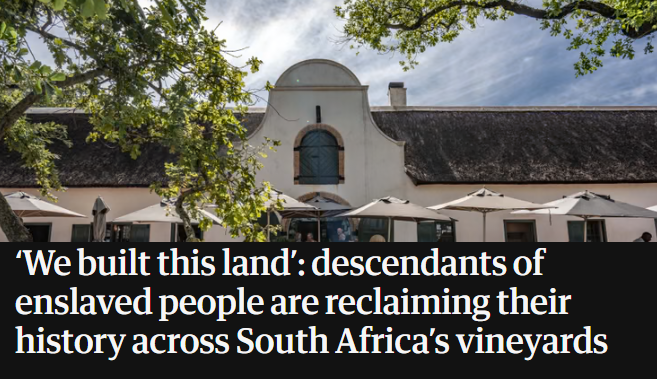
A few notes on the Cape wine industry and its slavery roots.
Did you know that prominent Afrikaners like Christo Wiese, Michael Jordaan, and the Rupert family own historic wine farms built on the back of slave labour?
The loss of slave labour and disputes over compensation from the British government angered many Boer farmers, leading directly to the start of the Great Trek in 1835.
[There is a willful ignorance among most Afrikaners about the horrific legacy of their ancestors.]
But the British are not innocent. Companies like Thomson, Watson and Co made large profits by processing slave owners' claims after abolition in 1934. Those profits were plowed back into Cape Town real estate, benefitting some of their descendants to this day.
But history (and economics) are never neat black and white dichotomies:
1) Without the expertise of European colonists a vibrant wine industry that employs ~300,000 (directly and indirectly) would not exist.
2) The Dutch did not create the slavery networks that brought slaves to the Cape. They leveraged longstanding networks:
- Arab-Swahili traders (East Africa/Madagascar)
- West African kingdoms
- Local Indian merchants (Bay of Bengal)
- Bugis/Makassar Rulers & Balinese Kings (Batavia / Indonesia)
99% of the slaves that ended up at the Cape were first enslaved by their own people.
Can South Africa’s Constitution and laws help address persistent inequality?
The Wits School of Law launches Professor Cathi Albertyn’s new book, Equality Law and Transformation in South Africa, which examines the role of equality law in challenging inequality and bridging the gap between constitutional promises and reality.
🔗 Read More: https://t.co/mI4tWq8pq8
#WitsForGood #witslaw
⚖️ Beyond the Order: Designing and Defending Structural Remedies that Hold
Winning in court is rarely the end of the fight. How do we ensure that court orders translate into meaningful, lasting change for communities and learners?
Join the Equal Education Law Centre at the Public Interest Law Gathering 2026 for a panel discussion exploring the organising, monitoring and advocacy needed to ensure that structural remedies are implemented and justice is realised in practice.
🎙️ Panelists:
* Buhle Booi – Head of Political Organising and Campaigns, @NdifunaUkwazi
* Nontsikelelo Dlulani – Deputy General Secretary, @equal_education
* Nkosinathi Sithole – Head of Legal, @SERI_RightsSA
Moderator: Tshegofatso Phala – Executive Director, Equal Education Law Centre
📅 Monday, 26 October 2026
🕑 2:00pm
📍 Chalsty Auditorium, University of the Witwatersrand
Join us as we reflect on what it takes to move beyond judgments and make justice a lived reality.