The billionaire who is trying to give away all her money — and can't.
In 2019, MacKenzie Scott divorced Jeff Bezos and received $36 billion worth of Amazon stock. The world expected one of three things to happen: she would either embrace a life of luxury, build a media empire, or create a traditional philanthropic foundation complete with galas, speeches, and endless publicity.
She did none of those things.
Instead, she began giving her money away — and doing so at a pace that completely defied the conventional rules of philanthropy.
No applications.
No fundraising events.
Her team operated almost like a detective agency, searching for organizations doing extraordinary work while barely keeping their doors open.
A food bank that had served its community for 20 years but was constantly on the verge of bankruptcy.
A rural hospital serving multiple counties with equipment dating back to the 1990s.
A prisoner reentry program operating out of a rented church basement.
When Scott's team found organizations like these, they would send a simple message that sounded almost too good to be true:
"We've been following your work. We believe you're doing important and valuable work. We'd like to help."
Then the money would arrive.
Millions of dollars.
No strings attached.
No restrictions.
No lengthy requirements.
Many nonprofit directors called emergency board meetings because they could hardly believe what had happened.
A children's hospital in Detroit immediately doubled its mental health staff.
A Native American college received more funding than it had accumulated during its previous 150 years of existence.
Food banks finally had enough resources to help everyone who came through their doors.
Then came 2020.
While much of the world was still debating how to respond to the pandemic and social upheaval, Scott accelerated her giving. In a single year, she donated $4.2 billion to organizations helping communities survive one of the most difficult periods in recent history.
Domestic violence shelters overwhelmed by a surge in demand received funding that allowed them to double their capacity.
She held no press conferences.
Instead, she published brief blog posts that read more like reports than public relations campaigns: who received funding, why they received it, and what they planned to do with it.
The traditional philanthropic world was stunned.
Where were the fundraising galas?
Where were the buildings and scholarships named after the donor?
MacKenzie Scott had rewritten the rules.
Yet the strangest part was that even after giving away more than $19 billion, her wealth continued to grow. Amazon stock appreciated faster than she could distribute the money.
It was like trying to empty an ocean with a bucket.
Year after year, organizations that had long since stopped hoping for major donors suddenly received transformative support.
Small colleges educating future leaders.
Climate initiatives.
Refugee assistance programs.
Community organizations serving those most in need.
Every gift carried the same message: trust.
Trust that the people who had dedicated their lives to solving a problem knew better than any billionaire how the money should be spent.
Her personal life changed over the years, but the pace of her philanthropy never truly slowed.
The organizations she supported grew into powerful forces for good.
Thousands of lives were transformed, and most of those people will never know who MacKenzie Scott is or whom they should thank.
While other billionaires bought rockets, built palaces, or erected monuments to themselves, she demonstrated that wealth can be used differently — without spectacle, self-promotion, or a need for applause.
You can simply look at an enormous fortune and ask:
"Who needs this more than I do?"
And then keep giving, year after year, without fame or recognition.
Just with the quiet knowledge that somewhere, someone's life became a little better.
I lived in Los Angeles for 13 years @spencerpratt can help clean up LA. I really hope he wins. This video tells you why so many agelenos are tired of the status quo
@BillAckman@smaxbrown@X Hope you win, and hope your daughter has a speedy recovery and you probably should have used the individual real name so other future employers are aware
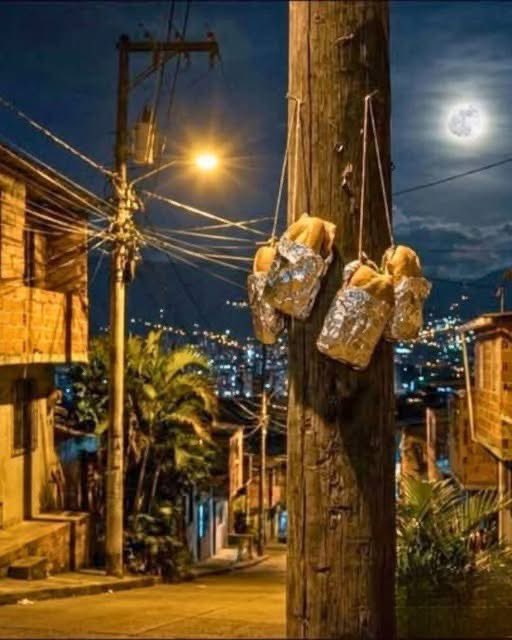
In Medellín, Colombia, there is a corner of the Manrique neighborhood where, every night at exactly 3 a.m., sandwiches used to appear.
Always the same way: wrapped in aluminum foil, inside a plastic bag, hanging from a lamppost.
No one knew who left them.
The unhoused people in the area waited for them. If you arrived at 3:15, there were none left.
It happened every single night. For six years. From 2016 to 2022.
Never a single absence. Not in the rain. Not on Christmas. Not on New Year’s Eve.
Then, in 2022, suddenly, the sandwiches stopped appearing.
“What happened to the sandwich man?” people asked.
A social worker named Carolina began to investigate. After weeks of asking around, a night security guard told her, “I saw him. He was an elderly man, came on a motorcycle. He hung up the bag and left. Without saying a word.”
Carolina posted an appeal on Facebook, looking for the man who, for six years, had left sandwiches every night for those who had nothing. In two days, it was shared more than 8,000 times.
Then a comment appeared:
“I think it was my father. But he died five months ago.”
The woman was named Lucía. Her father, Hernán, was 68 years old. He worked in construction. He didn’t have much money. But every night he prepared eight sandwiches. And he left them on that corner.
Why?
In 2015, Hernán lost his son, Sebastián, who died on the street, right there in Manrique. He was 19 years old. A fragile boy, struggling with addiction. Hernán had searched for him for years. But he hadn’t been able to save him.
“If someone had given him food… maybe he’d still be alive today.”
So, two weeks after the funeral, Hernán began. Every night. Without ever missing one. Sometimes with just bread and butter, when the money wasn’t enough.
In six years, he made 17,520 sandwiches.
He never wanted to know who ate them. He used to say, “If I know them, I’ll start choosing who to give them to. This way, they’re for anyone who needs them.”
When the story went viral, many people wrote:
“I ate those sandwiches for four years. They saved me.”
“They were the only thing I ate on some days.”
“Today I have a home, a job. But I might not be here without those sandwiches.”
One month later, at dawn, 43 people gathered at that corner. All of them had eaten Hernán’s sandwiches. They lit candles. Brought flowers. Lucía was there, in tears.
“My father couldn’t save my brother. But he saved so many others.”
One of them said, “Those sandwiches kept me alive. Waiting for them every night gave me a reason to hold on. Today I’ve been clean for two years. I exist because of him.”
That’s how a group was born: “Hernán’s Sandwiches.”
Forty-seven people take turns. Each one prepares sandwiches one night a month. They leave them in the same place. At the same hour.
Two years have passed. And the sandwiches have never stopped appearing.
On the lamppost there is a plaque: “Here, for six years, a father left 17,520 sandwiches for children who were not his. Because he could not save his own. Hernán, your son would be proud of you.”
Lucía comes back every month. Always at 3 a.m. To check. And she always finds a bag.
Because true love, even in silence, leaves a trace that never disappears.
And you… what would you be willing to do, every night for six years, to honor someone you couldn’t save?
I drive Uber. Night shift mostly. Last week picked up an old man at 11 PM. He got in and said: "I need you to drive me to five places tonight. I'll pay you $500. Cash. But you can't ask why until we're done." Handed me five addresses. First stop: a house in the suburbs. He sat in the car. Stared at it for ten minutes. Crying silently. "Okay. Next one." I drove.
Second stop: elementary school. Empty. Dark. He got out. Walked to the playground. Sat on a swing. Stayed there twenty minutes. Came back to the car. "I taught here. 43 years. Best job I ever had." Third stop: diner. He went inside. Ordered coffee. Sat alone in a booth. Didn't drink it. Just sat. Looking around. Fifteen minutes. Came back. "My wife and I had our first date here. 1967." Fourth stop: cemetery.
He got out at the cemetery. Walked to a grave. Stood there. Talking to it. Couldn't hear what he said. Thirty minutes. When he came back his eyes were red. "My wife. Three years today." Fifth stop: hospital. He asked me to park. Wait. "This is the last one." He looked at me. "Now I'll tell you why. I have stage four cancer. Weeks left. Maybe days. Tonight I wanted to see my whole life. One last time. Before I can't anymore."
I started crying. Right there. "The house - that's where I raised my kids. The school - where I found my purpose. The diner - where I fell in love. The cemetery - where I said goodbye. And here. The hospital. Where I'm checking in tonight. Hospice floor. I'm not going home." He handed me $500. "Thank you for driving me through my life. You're the last stranger who'll ever be kind to me. I wanted it to be gentle. You made it gentle."
I refused the money. "I can't take this." He insisted. "Please. I have nobody to leave it to. My kids don't talk to me. I have no friends left. You gave me three hours of kindness. That's worth more than $500 to me." He got out. Grabbed his small suitcase. Turned back. "What's your name?" "Marcus." "Thank you, Marcus. For being the last good thing." He walked into the hospital. I sat in my car. Sobbing. For an hour.
Couldn't stop thinking about him. Went back next day. Asked for him. "Mr. Patterson. Room 412." Brought flowers. Knocked. He was in bed. Smiled when he saw me. "Marcus. You came back." "Couldn't leave it like that. Are you okay?" "Dying. But I got to see my life last night. So yes. I'm okay." We talked for two hours. About his wife. His students. The kids who stopped calling. The life he lived.
I visited every day for two weeks. Brought coffee. Read him the news. Sat in silence sometimes. He told me everything. The regrets. The joys. The moments he'd relive. "I thought I'd die alone," he said one day. "But you're here. A stranger who became family in my last days. That's a gift." I held his hand. "You're not dying alone. Not anymore." He cried. "Thank you for seeing me. When I was invisible."
Mr. Patterson died on a Tuesday. 3:17 AM. I was there. Holding his hand. His last words: "Tell people. Tell them to look at strangers. Really look. Everyone's dying. Some faster than others. But we're all heading somewhere. Be kind on the way. You were kind. You saved my last days." He closed his eyes. Heart monitor flatlined. I stayed another hour. Couldn't let go. He died with someone. That mattered.
His funeral had six people. Me. Three nurses. A lawyer. One former student who saw the obituary. That's it. A man who taught for 43 years. Loved a woman for 52. Lived 81 years. Six people. I spoke. "Mr. Patterson taught me something in his last two weeks.
Every stranger is someone's whole world. Every Uber passenger has a story. Every person you pass is living and dying and hoping someone sees them. He paid me $500 to drive him through his life. But he gave me something worth more. The knowledge that kindness to strangers isn't extra. It's everything. Because we're all strangers. Until someone stops. Looks. Listens. Stays." I keep the $500 in my glove box. Never spent it. It's a reminder.
Anyone who thinks the California government has a revenue problem is mathematically illiterate or part of the fraud.
California does not have a revenue problem. It has a spending problem. Politicians and their henchmen stealing tens of billions of dollars PER YEAR from our pockets.
Ask yourself why they can’t pass an audit! Ask yourself why they change the reporting rules on your pension! Do you start to see a pattern?
Endless reams of money keep falling through the cracks with no accountability into the waiting hands of thieves.
When is enough, enough?
California will soon start to lose its grip on being the most vibrant state in America. The billionaires will leave. The millionaires and middle class will too.
And once they are done taxing us of everything we have, and none of us are left, they will tax you.
Now, if you’re frustrated about crime, healthcare and education you should be. I am, too: our approach to these issues is trash. Our results on these issues are also trash.
So fix the problem: kick out the people who run the kleptocracy. Elect real leaders who are competent, firm, tough and high agency.
But no matter what you do, if you keep asking for politicians to take people’s money, you are firmly part of the fraud not part of the solution…and everyone sees you.
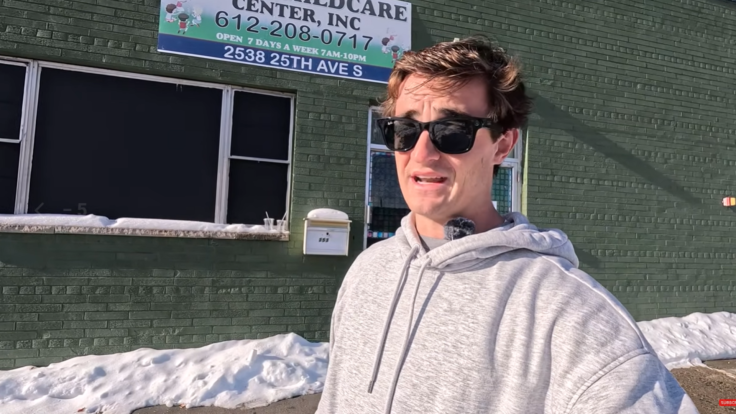
The Minnesota Somali fraud exposes everything that is wrong with government. Politicians and their administrators spend other people’s (taxpayers’) money to advance their own interests —getting themselves and their party elected and reelected by supporting an ethnic group which votes as a block — under the guise of supporting a purported good, in this case child daycare, autism care and ‘healthcare’ broadly defined.
When this fraud is combined with a system which allows one voter to ‘verify’ up to eight other voters who do not have to show state or federal ID, at best you destroy the American people’s confidence in our democratic voting system, and, at worst, you have rigged elections.
The only way this stops is for the people responsible to suffer severe criminal consequences and for there to be a Federal internal audit system where private citizen bounty hunters who find fraud earn rewards equal to a percentage of the grift identified.
The time to fix our broken system is now.
You are about to see hundreds of Nick Shirley imitators flood social media and YouTube.
They will go all over the country trying to expose the insane fraud and wasteful spending. The incentive to capture millions of views is too great to be ignored by a generation of young people who treat views like oxygen.
Nick’s single video will spawn thousands more.
But what is fascinating about that development will be the realization that a decentralized DOGE effort can’t be defeated by bureaucrats and politicians.
These establishment people could stop DOGE because it was a centralized organization that had a clear leader. Take down Elon and resist DOGE for the first few months…that was the winning strategy.
You can’t resist or defeat a decentralized onslaught of hundreds of young people running around with cameras though. And Nick just showed a generation how many views they can get if they can uncover fraud and wasteful spending.
Sunlight is the best disinfectant and the sun is about to get VERY bright.
🚨🇺🇸NICK SHIRLEY'S FRAUD VIDEO HITS 75 MILLION VIEWS - FOX NEWS AIRS HIS FOOTAGE- THE INSTITUTIONAL MEDIA GATEKEEPERS JUST LOST
75 million views. Still climbing by the hour. 400,000 likes. 150,000 reposts. Fox News running his footage on national television.
Nick Shirley just proved the entire thesis: One guy with a camera documenting fraud beats every newsroom in America combined.
Here's what just changed permanently:
Traditional media ignored the Minnesota story for years. MSNBC, CNN, local stations- they all knew about welfare fraud allegations. Nobody investigated. Too politically sensitive. Too much work. Not worth the risk.
Then Nick Shirley walks to addresses, knocks on doors, films empty buildings billing millions, and gets 75 million people watching in days.
Fox News didn't break the story. They're airing footage from a YouTuber because he did the journalism they didn't.
That's the power shift documented in real-time.
Institutional media had monopoly on investigation and distribution. You needed newsroom resources, editorial approval, broadcast access. Now you need an iPhone and the ability to read public records.
Nick found $110 million in fraud on day one. Put it on YouTube. The algorithm did the rest.
The incentive structure just got established:
75 million views = significant ad revenue. More importantly = proof that fraud investigation content scales. Every creator just saw the formula work at massive scale.
Next week: hundreds of imitators descend on every major city looking for their viral fraud expose. Because Nick just showed them the map and the treasure's real.
That's the beginning of institutional media becoming aggregators of citizen journalism rather than primary sources.
The barrier to entry just collapsed:
You don't need:
- Journalism degree
- Newsroom budget
- Editorial approval
- Broadcast license
- Corporate backing
You need:
- Public records access (free)
- Camera phone ($1000)
- Ability to walk to addresses
- Willingness to knock on doors
Nick proved the economics work. Now watch what happens when a generation realizes fraud investigation pays better than content creation and requires less creativity.
This is the DOGE army that can't be stopped:
Centralized reform efforts get bogged down in bureaucracy. But 1,000 Nick Shirleys documenting fraud simultaneously? No institution's built to counter that.
Every empty building exposed forces response. Every viral video creates political pressure. Every imitator makes the fraud harder to hide.
The decentralized investigative swarm just proved it works at scale. 75 million views is the proof.
Welcome to the new media. Too big to ignore. Too distributed to stop. Too economically viable to quit.
Source: YouTube analytics, Fox News
I’ve been a mechanic for 30 years. I’ve seen it all. But last Friday, a woman pulled in driving a beat-up 2005 Honda Odyssey. It sounded like a bag of marbles in a blender. She had three kids in the back, all under the age of six. The car was packed with bags. Not grocery bags—suitcases.
"It's making a noise," she said, trying to keep her voice steady. "I just need it to get to my sister's in Denver. That's 400 miles." I popped the hood. It wasn't good. Alternator was shot, serpentine belt was hanging by a thread, and the water pump was leaking. Parts and labor? Minimum $800.
I walked back to the waiting room. She was counting change out of a Ziploc bag to buy the kids a soda from the vending machine. She looked terrified. "Ma'am," I said. She jumped. "Is it bad? I have... I have $60."
I looked at her. I looked at the kids. I saw the bruise on her arm she was trying to hide with a long sleeve. I knew that look. She wasn't just visiting her sister. She was escaping. If I told her the truth, she’d be stranded here.
I took a deep breath. "Well," I said, wiping my greasy hands on a rag. "It's a simple fix. Loose wire. And... uh... there was a recall on these belts. Manufacturer pays for it. You're actually lucky you came in."
Her shoulders dropped about five inches. "Really?" "Yep. 'Standard Warranty Policy.' Takes about two hours. Why don't you take the kids to the diner next door? On me. We have a... coupon."
I spent the next three hours replacing the alternator, the belt, and the pump. I filled the gas tank. I put new wipers on. I paid for the parts out of my own retirement jar.
When she came back, I handed her the keys and a receipt that said $0.00. "You're good to go," I said. She looked at the receipt, then at me. She knew. You don't get a full tank of gas from a loose wire. She grabbed my hand, squeezing it hard. She didn't say thank you. She just whispered, "You just saved my life."
I watched that van limp onto the highway, running smoother than it had in years. My boss walked up behind me. "You didn't charge her, did you? That's coming out of your paycheck, Mike." "Take it," I said, lighting a cigarette. "Best money I ever spent."
Some repairs aren't about cars. They're about giving someone the mileage they need to start over.
Anonymous
I own a small bakery. We aren’t famous, but we pay the bills. Last Tuesday, a woman came in. She was gripping her purse so tight her knuckles were white. She looked at the display case for a long time—too long. She pointed to the smallest plain vanilla cupcake we had. 'Just that one, please,' she whispered. 'Could you… could you put a tiny candle on it? It’s my daughter’s 6th birthday.' I looked at her shoes. They were wet. It was raining outside, and she had walked here. I looked at her eyes. Red-rimmed. I knew that look. It’s the look of a parent who has to choose between rent and a party. 'I’m sorry,' I said, putting on my best acting face. 'I actually have a huge problem. See this 8-inch chocolate cake with the unicorn frosting?' She looked at the expensive cake on the counter. 'My new decorator messed it up,' I lied. 'The icing is… uh… uneven. I can’t sell it. I was about to throw it in the trash. Would you do me a favor and take it off my hands? No charge. It saves me the guilt of wasting food.' She stared at me. She knew. The icing was perfect. She started to cry, right there in front of the croissant tray. 'Are you sure?' she asked. 'Please,' I insisted. 'You’re doing me a favor.' She walked out with a cake that would have cost $65, holding it like it was gold. Yesterday, I found a card slid under my door. It was a drawing from a 6-year-old girl. A unicorn with a big smile. And in wobbly crayon letters: 'Thank you for making my mommy happy.' Best profit I’ve made all year.
Ed, an 88-year-old veteran, retired from General Motors in 1999 but lost his pension and health coverage in GM's 2012 bankruptcy. His wife, ill at the time, passed away seven years ago. He sold their home and properties to survive, now works 40 hours weekly to make it through.😒💔
The cadets at @WestPoint_USMA live a life of commitment, courage, and character every single day. Today, on Thanksgiving, my gratitude goes out to them wherever they are.
My request for you is to watch this video so you can hear and fully understand the cadets' love of community and country.
God bless them.