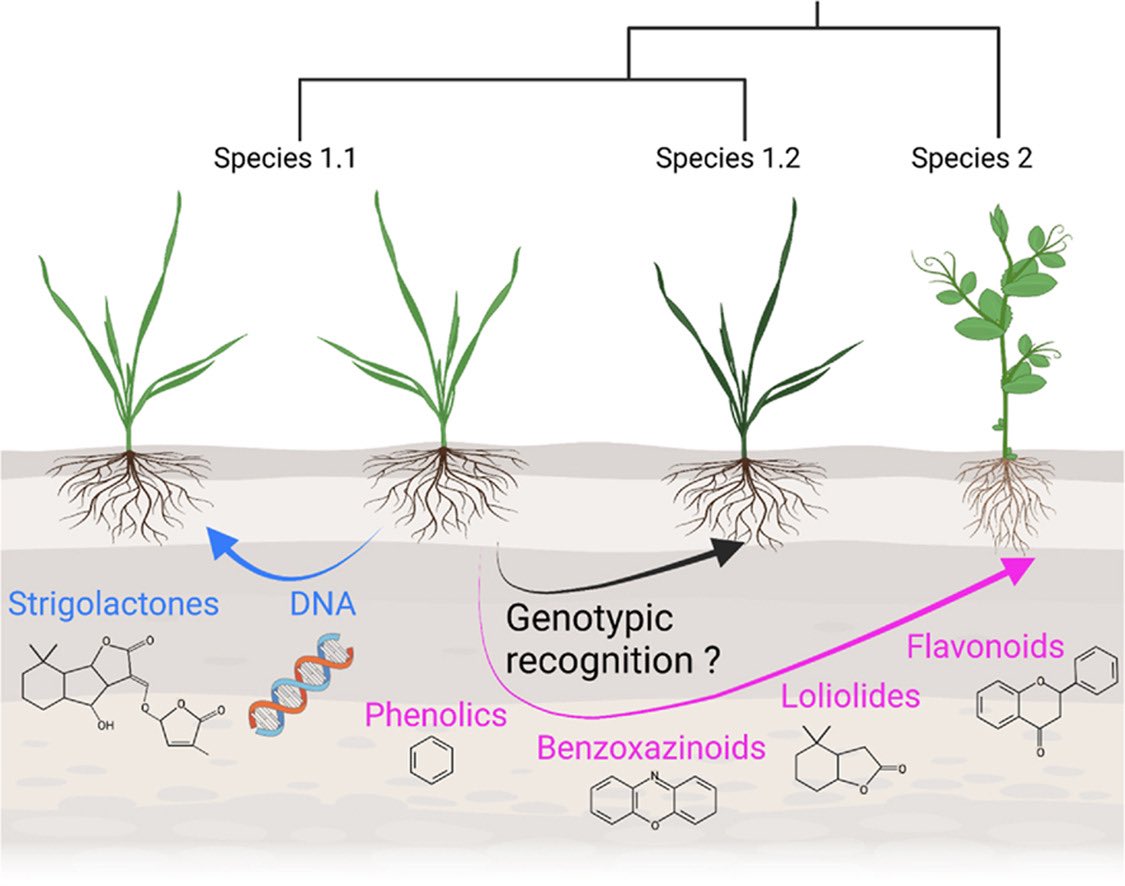
I am really happy to share my first paper on plant-plant interactions. It is the result of very interesting discussions. Thanks to @LouisMeteignier, but also Elsa Ballini and Jean-Benoît Morel.
Feel free to read it :
https://t.co/L1WChHJ6FA
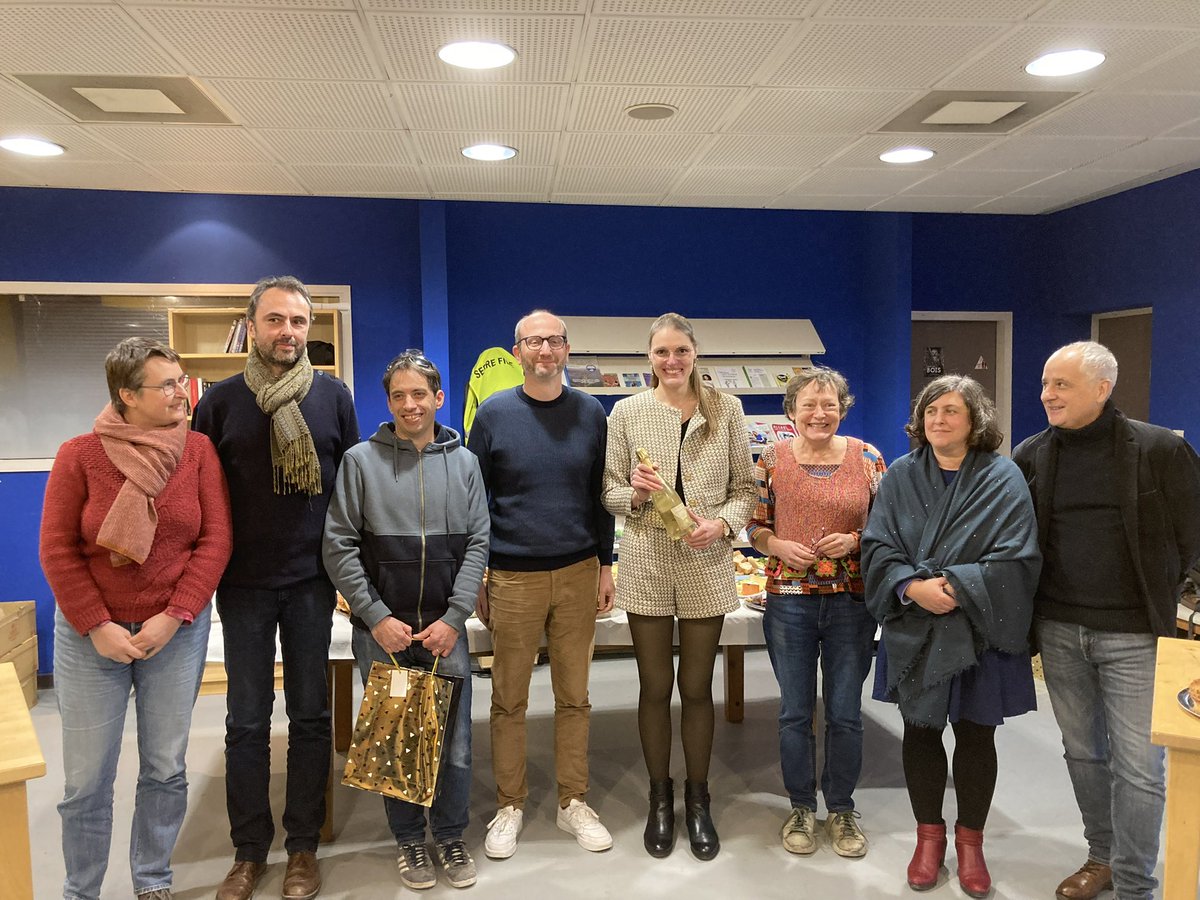
I am truly delighted to announce that I defended my PhD thesis this week ! 👩🎓
A beautiful experience marking the culmination of my student journey. 🌾
I would like to express my deepest gratitude to everyone who has supported, guided, or inspired me along the way. 🫶
[#phimPhD] Laura Mathieu soutiendra sa thèse sur l'analyse des interactions plante-plante modulant la sensibilité à la #septoriose dans des mélanges de blé! 🌾Venez nombreux 👏🥂
🗓️17/12, 13h30, amphi 208, Institut Agro de Montpellier
💻Visio: https://t.co/Jyck8YTTu8
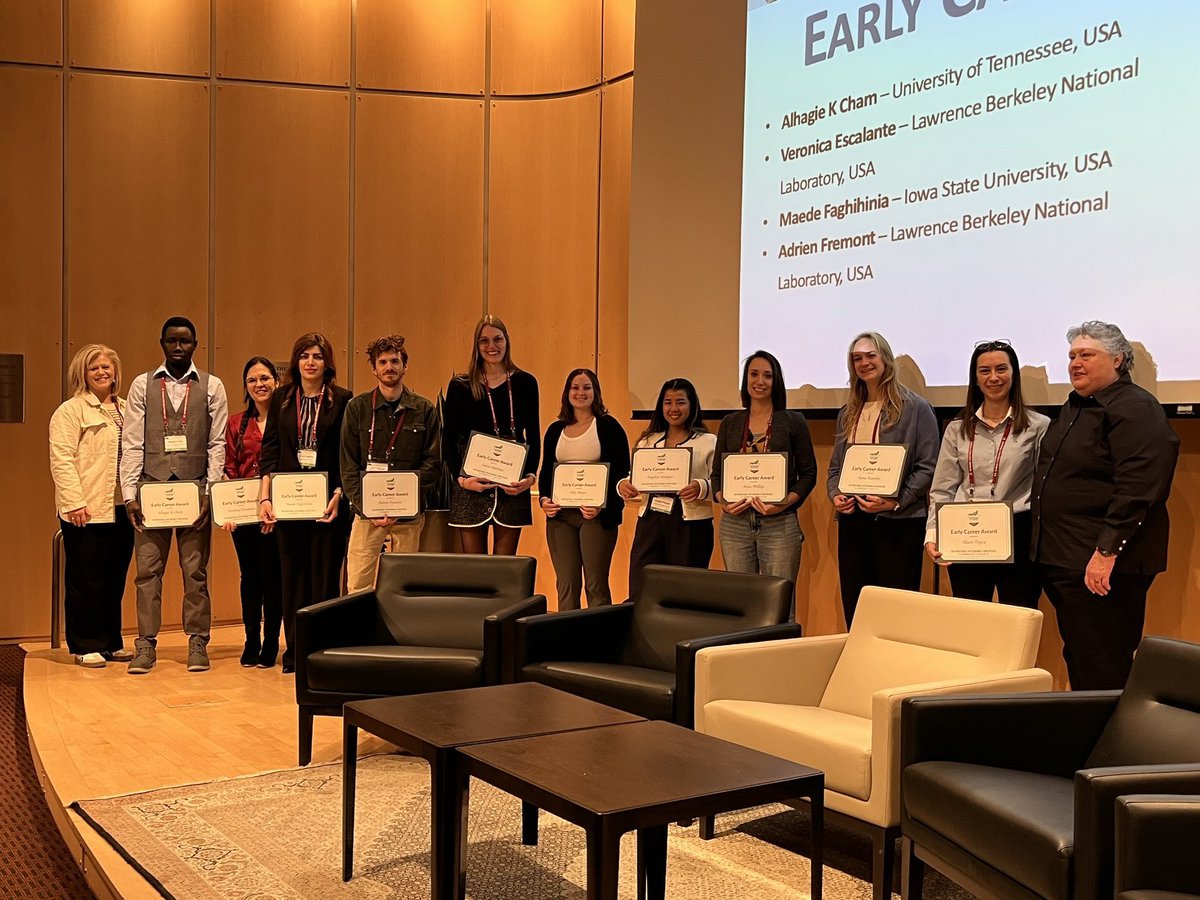
This week, I had the opportunity to attend the International #Phytobiomes Conference, my first congress in the US, and the honor to present my work. I am deeply grateful to the @PhytoBiomes Alliance for awarding me the Early Career Award.
#Phytobiomes2024
“Reducing herbivory in mixed planting by genomic prediction of neighbor effects in the field” by Sato et al. We applied the concept of genomic prediction for mixed planting in Arabidopsis thaliana, providing a proof-of-concept to increase plant resistance, yield, or other traits.
New article from @FonesLab in which we propose #Zymoseptoria as a model for epiphytic plant-microbe-microbes interactions: "Life on a leaf: the #epiphyte to pathogen continuum and interplay in the #phyllosphere" - including cool pics of Zymo being weird😁https://t.co/hOtrl6w0ru
Le déclin des pollinisateurs a des impacts majeurs sur les systèmes de reproduction des plantes. Des plantes qui pratiquaient jusqu’ici la fécondation croisée évolueraient vers un système de reproduction autonome, s’affranchissant de l’interaction avec leurs pollinisateurs ⬇️





![PHIM_research's tweet photo. [#phimPhD] Laura Mathieu soutiendra sa thèse sur l'analyse des interactions plante-plante modulant la sensibilité à la #septoriose dans des mélanges de blé! 🌾Venez nombreux 👏🥂
🗓️17/12, 13h30, amphi 208, Institut Agro de Montpellier
💻Visio: https://t.co/Jyck8YTTu8 https://t.co/iZZSsezHfQ](https://pbs.twimg.com/media/GdPnCJ0WoAE8nJH.png)





