Barbados Meta Vibe draw complete!
Winner: Bond “007” - Congratulations!
Finalists: Cleve, Bond, Jingy, Yusuf, Freddy, Micheal, Dante, Luka, Marvin, Camo.
Thanks everyone! Season 2 Oct 2026.
Barbados Meta Vibe: Seasonal content series using Meta smart glasses to capture/share Barbados vibes, exploration tips, hidden gems & local faves. Season 1 (Gen 2 glasses) ends now. Season 2 launches Oct 2026 with Meta display glasses. April-Oct 2026: ongoing tips/videos.
#BarbadosMetaVibe #MetaGlassesDraw #BarbadosGiveaway.
Magical Xmas dawn on Barbados Alleynes Bay beach: Camo ignites coals at 5am, grilling 30 succulent Tuna, Marlin, Mai Mai over flames. Nuru’s tantalizing feast—steaming corn, fluffy couscous, spicy curry chicken, cheesy macaroni pie, crispy fritters, fiery potatoes, golden fish cakes, juicy meatballs—delights locals in a joyous morning banquet, all captured via Meta glasses!
Watch Nuru’s message at the end: Crave authentic Swahili fishcakes? Order to the beach Tuesdays/Saturdays (west coast)—contact her!
Food Sponsored by Barbados Meta Vibe, prepped by Camo & Nuru. 🎄🏖️🍴THANK YOU!
Barbados Meta Vibe is on holiday break—back soon with more vibes! 🎉🏖️
#barbadosmetavibe #barbados #fishfry #giveback #onelove
Just boarded the snorkeling tour boat and spotted three massive tarpon—looked like 5ft sharks to me! Decided to skip snorkelling and watch from the boat; didn’t want to faint if one swam at me. Check out the cool Video of the tarpon! 🐟
#SnorkelingFail#TarponTerror#SharkMistake #BoatDay #FishFears #barbados #barbadosmetavibe
JOIN THE COLEEN CUNNINGHAM
FOUNDATION 🥯 Bagel Fundraiser
FOR THE BENEFIT OF THOSE WITH
Atypical Parkinsons Diseases
NOVEMBER 2ND • 11-1 PM AT THE ROCKVILLE JCC 🇺🇸
IN PARTNERSHIP WITH BETHESDA BAGELS
This Friday we will be holding an in-person Support Group for anyone affected by MSA in Coventry, Warwickshire and the surrounding areas. The meeting will be run by our MSA Nurse Specialist, Emma Saunders.
If you would like to RSVP please email [email protected]
CCF Coleen Cunningham Foundation Press Release
Melbourne, Victoria – September 9, 2025 – The CCF Coleen Cunningham Foundation is partnering with researchers at the Alfred Hospital and Monash University to recruit participants for a groundbreaking study: “Assessing Cognitive Trajectories in Progressive Supranuclear Palsy Using Remote Computerized Reaction Time Tasks.”
This innovative research evaluates computerized cognitive testing to detect decline in Progressive Supranuclear Palsy (PSP) more effectively than traditional pen-and-paper methods. The study aims to map individual cognitive trajectories in PSP patients, enhancing future research and clinical trials for investigational treatments.
Study Involvement:
• Two in-person visits (90 minutes each) at Alfred Hospital or Monash University (99 Commercial Road, Melbourne, VIC): history, physical exam, and cognitive assessment.
• Home-based testing every 2 months for 12 months on a smart device (10-12 minutes per session).
• Quality-of-life questionnaires.
Eligibility:
• Neurologist-diagnosed PSP.
• Age 40+.
• Available for two assessments 12 months apart.
• English proficiency for consent and activities.
• Reliable smart device with internet; willing to register on secure platform.
• No other major neurological/psychiatric conditions.
Interested PSP patients or caregivers: Contact Dr. Timothy Siejka at [email protected] or 0418 347 620.
Ethics approved by Alfred Human Research and Ethics Committee (413/25).
The CCF Coleen Cunningham Foundation supports this vital PSP research to advance patient care and outcomes.
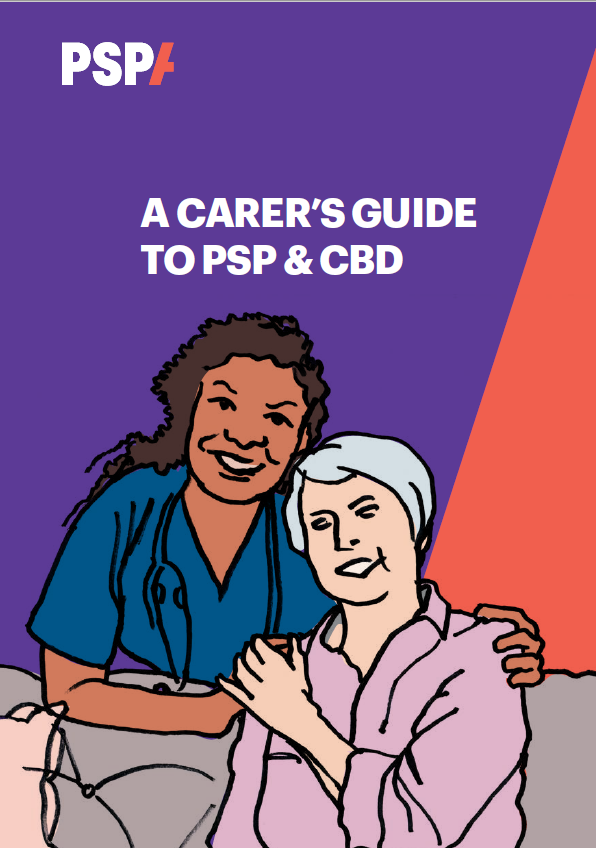
Please share our Carer’s Guide to PSP & CBD with families you support. The guide features advice from family carers and provides support, knowledge, and encouragement. The guide is available to download from our website here: https://t.co/Vc2wuotjMx #CarersGuide#FamilyCarers
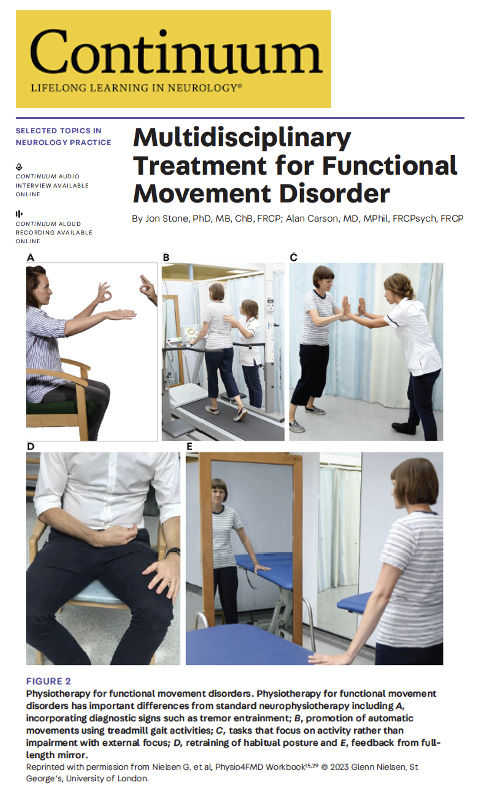
Do you know the 2025 updates on the diagnosis and treatment of functional neurological and movement disorders? Do you know all the most recent tips and tricks for examination and for proper diagnosis Functional neurological disorder occurs when the brain’s software is glitching and not when the brain is physically damaged. Carson and Stone nail it in their new paper in this just published issue of AAN's Continuum.
Key Points:
- Functional movement disorder is best diagnosed w/ a rule-in approach that highlights differences between voluntary and automatic movement.
- Multidisciplinary treatment combining FND-focused physiotherapy, occupational therapy, speech therapy, psychological therapy and pain management.
- All these specialities have been shown to improve outcomes.
- Successful therapy depends on patient understanding, agreement w/ the diagnosis and readiness to actively participate in treatment.
My take: Functional neurological and movement disorders are tricky to diagnose and to treat in clinical practice. One of the best tips I can offer is to see folks many times and always come to visits w/ an 'open mind.' Here are 5 points that resonated w/ me. 1- Functional neurological disorder happens when the brain’s software is glitching and not when the brain is physically damaged. 2- The diagnosis is made by spotting positive signs that show movement can return to normal, not just by ruling out other diseases. 3- Recovery works best with a team including therapists, doctors and counselors all working together along w/ the person w/ disease 4- Progress takes practice, patience and active participation much like learning a new skill. 5- Relapses can happen, however planning ahead and knowing what works for an individual can help keep symptoms in check. This paper is the 11th of 11 in the awesome new AAN Continuum on Movement Disorders. Thanks for spending the last 11 days reviewing the Continuum issue w/ me. As the guest editor I am signing off, sending big thanks to the authors of each paper and hoping you are enjoying the issue.
https://t.co/7hd8w4QG3a @AANmember@ContinuumAAN@movedisorder@FixelInstitute@ParkinsonDotOrg@fneuroforum@LyellJ
Couldn’t agree more. Levodopa is like food for a #Parkinson patient and should be available to every PD patient irrespective of their income or the country they live in. Call for action
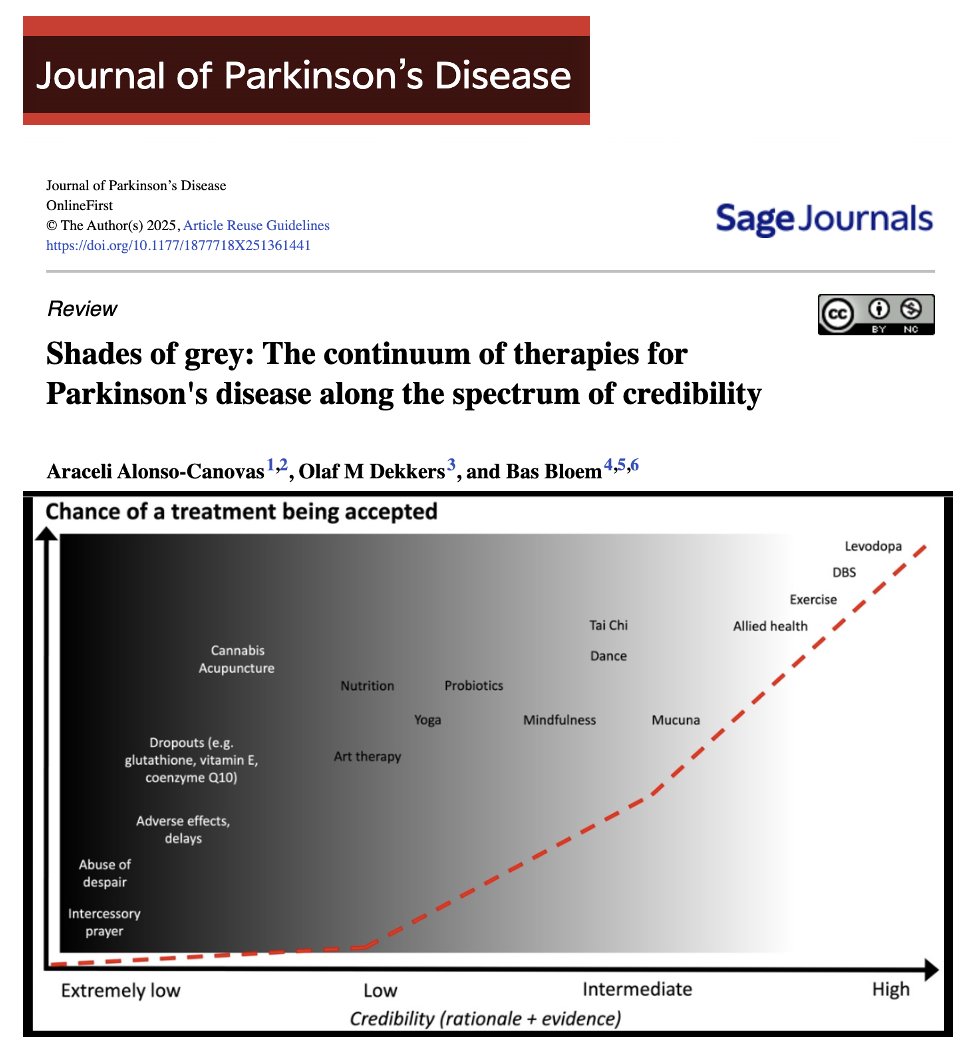
Not everything labeled alternative therapy for Parkinson's is snake oil. Should we be rethinking Parkinson’s therapies in 'shades of grey.' A new paper just published in the Journal of Parkinson’s Disease by Alonso-Canavas, Dekkers and Bloem challenges the outdated black and white thinking when it comes to Parkinson’s therapies. Instead of labeling treatments as either evidence-based vs. alternative, they propose a spectrum of credibility grounded in science, patient perception and real-world impact. This piece could reshape how we think, counsel and communicate w/ people with Parkinson’s.
Key Points:
- Not all alternative therapies are equal.
- The authors propose a credibility spectrum that considers scientific rationale, evidence rigor and patient perception.
- Some formerly alternative treatments, like exercise, are now mainstream.
- This example shows how credibility can evolve with science.
- Clinicians must engage in honest and nuanced conversations to empower shared decisions and to avoid dismissing potentially helpful therapies.
My take: I love this paper. Why are we so dismissive of alternative therapies for Parkinson's. Let's be more open minded and appreciate the shades of grey. Here are 5 points about this paper that really resonated w/ me. 1- Not everything labeled alternative is 'snake oil.' Some therapies just need more study. 2- Your belief in a treatment matters, however it doesn’t replace safety and science. 3- Talk openly with your health care team about everything you’re using, inclusive of herbs, supplements, yoga, prayer and more. 4- Treatments like mucuna, tai chi, and mindfulness land somewhere in the middle so let’s research and discuss, and not dismiss. 5- We need to protect people with Parkinson’s from expensive scams, without so quickly closing the door on many promising options.
https://t.co/qnKl3pFJBI @ParkinsonDotOrg@FixelInstitute@journal_PD #Parkinson
What are the key 2025 updates on progressive supranuclear palsy (PSP) and corticobasal syndrome (CBS)? Will they expand our frontiers of both diagnosis and care. The latest AAN Continuum article by Dr. Nikolaus McFarland reminds us that PSP and corticobasal degeneration are no longer rare curiosities. These two entities may be clinical chameleons requiring sharp diagnostic skills along w/ a team-based approach to care.
Key Points:
- New diagnostic criteria now recognize broad phenotypes of both PSP and CBS.
- The subtypes enhance our early detection capacity, however also complicate specificity.
- Advanced imaging techniques like MRI and evolving PET tau tracers are aiding diagnosis, however, not yet perfecting diagnosis.
- Treatment remains symptomatic, w/ a strong push for multidisciplinary care models focusing on gait, speech, cognition and caregiver support.
My take: We need to follow cases carefully and at each visit to be sure we have arrived at the correct diagnosis. It can be a trickier journey that one may imagine. There were 5 points that resonated w/ me about this article. 1- PSP and CBS are not just Parkinson’s mimics. They affect movement, speech, thinking and behavior and they do it in unique ways. 2- Frequent backward falls, trouble looking down and rocketing out of a chair are all early warning signs of PSP. Difficulty w/ skilled movement and unilateral myoclonus may also be clues. 3- CBS frequently starts with one alien limb that won’t follow commands, leading to clumsiness and associated w/ stiffness. 4- These diseases can be tough to diagnose early, however brain scans and expert clinicians can make a difference. 5- While we don’t have a cure yet, therapies like physical therapy, speech therapy and caregiver education can greatly improve quality of life. Let's spread awareness and push for earlier recognition and better support for all the families facing these two tauopathies.
https://t.co/TwiL1OekNX @FixelInstitute@ParkinsonDotOrg@AANmember@ContinuumAAN #parkinson #PSP #CBD @CurePSP
Navigating public spaces with FTD can be challenging. AFTD’s Awareness Cards are designed to make it easier.
With two versions, one for care partners and one for individuals diagnosed with bvFTD or PPA, these discreet cards help explain the effects of FTD to servers, receptionists, law enforcement, and others.
👉 Click here to download the cards: https://t.co/GlgLhRmqRB
Level Up: Fluctuating cognition and confusion w/ Parkinson's and/or Alzheimers features? Is Dementia with Lewy Bodies 'the overlooked diagnosis?' Bhavana Patel shines a light on the second most common neurodegenerative dementia in the hot off the press AAN Continuum issue. Today, I review the 2nd paper of 11 in this new Continuum AAN Movement Disorders issue.
Key Points:
- Patel stresses that DLB is not the same as Alzheimer’s.
- Think fluctuating cognition, visual hallucinations, REM sleep behavior disorder and parkinsonism.
- These symptoms are the clinical cornerstones that separate DLB from other dementias.
- Early diagnosis is important.
- Prodromal DLB including MCI, delirium-onset and psychiatric-onset should be recognized before iatrogenic harm unfolds, like antipsychotic sensitivity when aggressively administering these drugs.
- The α-synuclein skin biopsy and CSF seed amplification assays are reshaping how we detect synucleinopathies.
- Better imaging is likely coming soon.
My take: We can do better on educating clinicians and families about dementia w/ Lewy bodies. There is a high suicide rate in this population, so let's get to it. Here are 5 points that resonated w/ me. 1- It’s not just memory loss. DLB frequently starts with attention lapses, executive dysfunction and vivid hallucinations. Memory problems may come later. 2- Beware of good days and bad days. If cognition fluctuates dramatically, think Lewy bodies. 3- There is an antipsychotic danger zone. People with DLB can in some cases be extremely sensitive to many antipsychotic medications. 4- Sleep may be filled w/ kicking and punching. Acting out dreams or REM Sleep Behavior Disorder can be an early clue, frequently before any memory changes. 5- Diagnosisis is frequently delayed. DLB is commonly misdiagnosed as Alzheimer’s or psychiatric illness and early specialist referral can be life-changing. This Continuum article is a must-read for health care practitioners and anyone caring for a loved one with dementia symptoms that don’t quite fit Alzheimer’s. Patel’s work moves us one step closer to getting these diagnoses right.
https://t.co/IRJVAXyYXQ #LewyBodyDementia #Neurology #Parkinsons @AANmember@ContinuumAAN@FixelInstitute@ParkinsonDotOrg@lewybody@AANmember
Don’t miss Niemann-Pick Type C masquerading as PSP. In movement disorder clinics, not everything that looks like progressive supranuclear palsy (PSP) is PSP. Name one treatable mimic? Niemann-Pick Type C (NPC). This is a genetic cholesterol storage disorder that can present with eye movement problems, falls, dystonia, and even cognitive issues, just like PSP. But unlike PSP, some forms of NPC are treatable with disease-modifying therapy, miglustat. We need to stay sharp and screen early, especially in younger patients or those with a family history.
Key Points:
- NPC can mimic PSP, particularly in young-onset or atypical cases.
- Genetic testing and biomarkers like oxysterol levels or filipin staining can confirm the diagnosis.
- Miglustat, a disease-modifying therapy, may slow progression in NPC making early recognition critical.
My take: Think about Neimann-Pick Type C and don’t miss it when it presents like PSP. 1- Not all movement or balance problems in adults are due to aging or Parkinson’s, some are rare and treatable. 2- Niemann-Pick Type C can look a lot like PSP, with trouble moving the eyes, walking or thinking clearly. 3- It’s a genetic disease that causes harmful buildup of cholesterol in brain cells. 4- There’s a medicine called miglustat that can help if we catch it early. 5- If your doctor says it’s PSP, but symptoms started young or don't quite fit, ask if it could be something else like NPC.
https://t.co/NtBDUWN3Z5 @movedisorder@FixelInstitute@CurePSP #PSP
Is it time to repurpose drugs for Parkinson’s? The future of Parkinson’s care could already be in our medicine cabinets. We just need the courage to look. We’ve had remarkable success treating the symptoms of Parkinson’s, but not so much in slowing it down. A new study from Norway by Tuominen and colleagues gives us a fresh roadmap for repurposing existing drugs to treat and to potentially modify the course of this disease. Is it time to ask: Should drug repurposing be a core part of The Parkinson’s Plan? https://t.co/e9eKnkGsxz? My answer is a resounding YES.
Key Points:
- 23 drugs were linked to lower 8 year mortality in Parkinson's.
- A robust Norwegian registry study found promising associations between specific medications and longer survival.
- Safety has already been established. Repurposed drugs are already FDA-approved, meaning we know a lot about their dosing, tolerability and safety.
- We need repurposing clinics now. The next step isn’t just trials, it’s dedicated drug repurposing clinics to rapidly and responsibly identify real world impact.
My take: There were 5 points that resonated w/ me about this study and I definitely believe drug repurposing should play a role in the Parkinson's Plan. 1- We are sitting on a treasure chest of approved drugs that might help slow Parkinson’s, but we haven’t opened the lid yet. Repurposed drugs have known safety profiles, which means we can move faster and smarter than in traditional drug development. 2- Not all Parkinson’s is the same and some drugs may work better in specific subtypes of the disease. We will need better tracking of milestones such as falls, dementia and mortality to know what’s working. 3- Correlation isn’t causation. Just because a drug is linked to better survival doesn’t prove it works. Clinical trials and prospective studies will be essential. 4- The time for action is now. We must invest in real world data, build repurposing clinics and making this a central pillar of The Parkinson’s Plan. 5- Let’s stop throwing darts in the dark and start aiming w/ precision. The future of Parkinson’s care could already be in our medicine cabinets. We just need the courage to look.
https://t.co/ntKgPm4iEl @ParkinsonDotOrg@FixelInstitute #Parkinsons
Some experience from drug repurposing in cancer:
https://t.co/eR7QBWxTR0
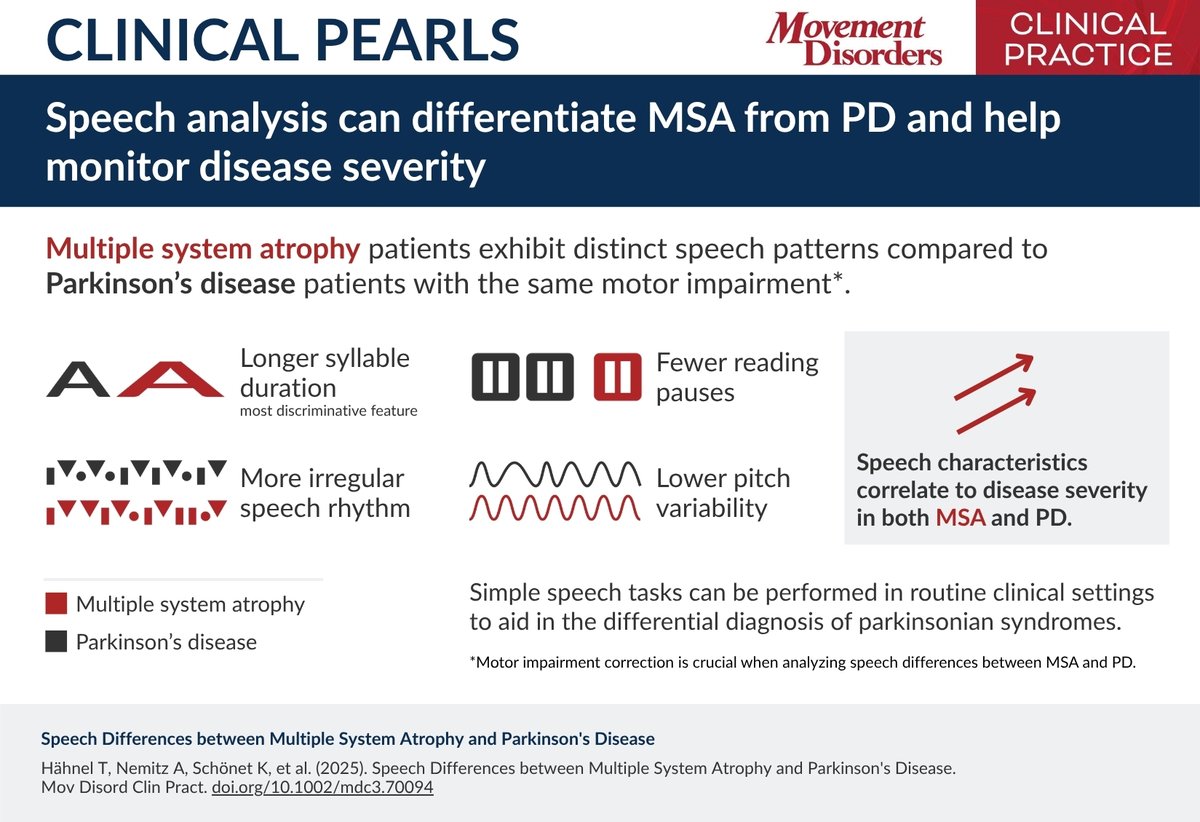
Exciting research from the University of Auckland has found distinct brain markers to help differentiate Parkinson’s disease and multiple system atrophy (MSA) early on. This breakthrough could help to diagnose between Parkinson’s disease and MSA.
https://t.co/6WSrHlC72h