The first description of an archaeal Type V BREX system, plus the identification of its viral anti-BREX, by former colleague Julia Gordeeva. Cool work!
https://t.co/MND65ay4Em
Our new paper on archaeal anti-CRISPRs is out in @Nature (@SpringerNature)! 🔗 https://t.co/aybSYrTfBK
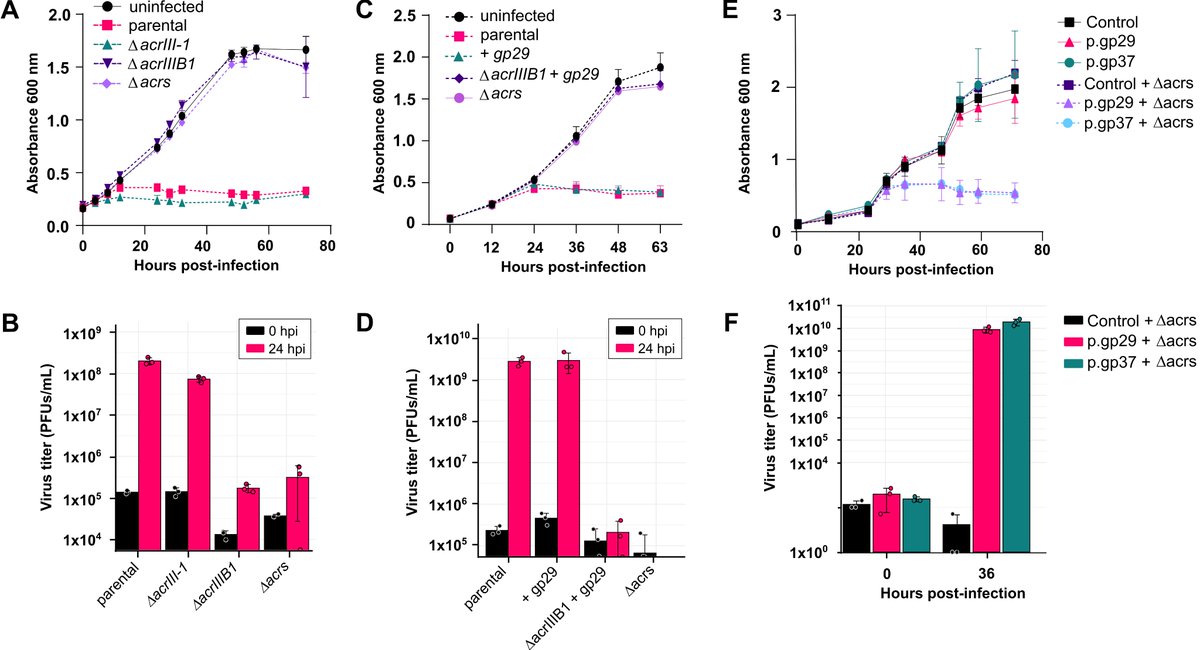
Using a native virus–host model (SIRV2–S. islandicus), we show that overexpression in foreign hosts can lead to false positives.
🧵(1/n) #CRISPR#archaea#antiCRISPR#virology
Therefore, in complex systems, proteins can serve multiple roles. Our findings highlight the importance of studying viral functions in their full biological context, and not just in overexpression setups. (10/n)
Interested in the complexity of gene expression in Archaea? We have three open postdoc positions focussing on the coupling of transcription and translation using functional genomics, structural biology and molecular biology in Finn Werner's lab at UCL. Links below!
This story started 5y ago with my lab. Spearheaded by fearless 1st authors @theopi and Olivia Leland. Theopi is now a PhD student at @BrownUniversity. Olivia is a physics PhD student at @BrandeisU, a self-taught biologist, and made us love soft matter. A (very long) thread (1/24)
Happy to see our paper “Regulatory sequence-based discovery of anti-defense genes in archaeal viruses” was featured at Editors’ Highlights webpage: https://t.co/Wv9VEojVN9. Congrats and many thanks to all authors.