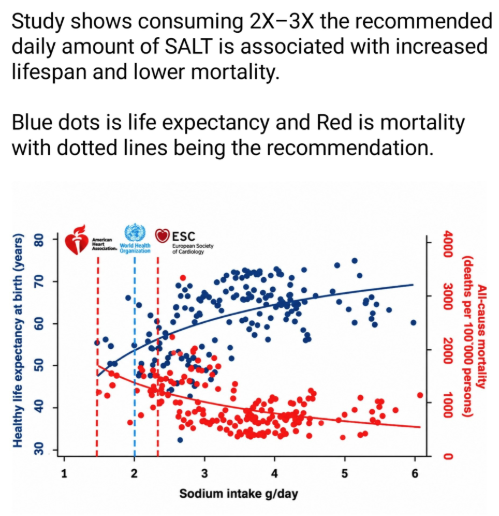
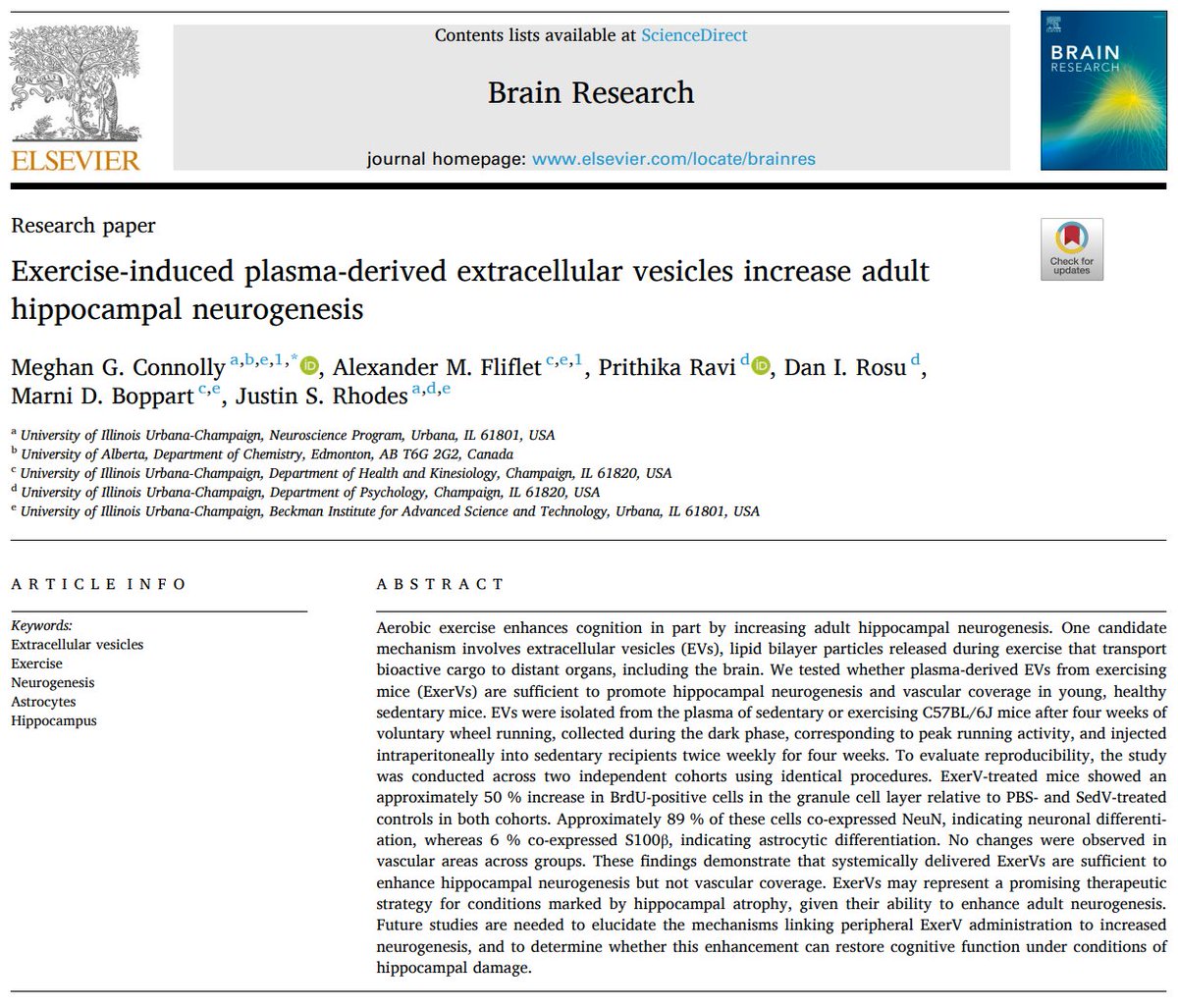
Less than 42 minutes of daylight predicts dementia better than booze intake, being fat, & TBIs
The sooner you take your light diet seriously, better off you’ll be stiff arming brain atrophy
I love strength and conditioning. It’s something I’m deeply passionate about, and I understand the risks involved when unqualified individuals take responsibility for developing young athletes without the necessary education, experience, or understanding to guide them properly.
It’s disrespectful to families who trust you with their children, and it’s reckless when that lack of knowledge potentially jeopardizes a young athlete’s health and long-term development.
Working with kids is a responsibility that should never be taken lightly.
By my rough estimate, 90% or more of the times that someone at the gym has proactively come up and asked me for advice, because they saw how much I was lifting or admired my physique or whatever, they haven't followed that advice.
It gets damn close to 100% when it's unsolicited advice. It doesn't matter how right you are, how little they know, how much more accomplished you are than them in the gym as far as lifting or physique or whatever other metric you want to use - even about matters of basic safety, not obscure high level optimization.
If someone isn't paying you to coach them, the chances of them listening to anything you have to say are extremely low.
St. Louis will get two future second round picks and cash considerations in return. The Horned Frogs are one over on their roster allotment, so someone will be waived in the next 48 hours. Hate the system but love the player.
Magnesium appears to work less like a vitamin D booster and more like a regulator that helps keep vitamin D in a healthy middle range.
Magnesium is often sold as the mineral that activates vitamin D, but the liver and kidney enzymes that do that job are iron-based, and a 2018 review by Uwitonze and Razzaque describes magnesium as a supporting player that the whole vitamin D enzyme system appears to depend on. Shortfalls are common, and US survey data summarized by the NIH show that about half of Americans get less magnesium from food than they need. In national survey data from 2001 to 2006, people who took in more magnesium were less likely to be low in vitamin D, although that kind of study cannot show cause and effect.
Vitamin D blood tests measure 25-hydroxyvitamin D in nanograms per milliliter. The Institute of Medicine judged a level of 20 to be enough for bone health in nearly everyone, while the Endocrine Society's 2011 guideline treats anything under 20 as deficient and 21 to 29 as insufficient, which is why 30 is often described as the target. The Institute of Medicine also found that higher levels were not consistently linked to more benefit, and some outcomes showed risks at both the low and high ends.
Qi Dai and colleagues at Vanderbilt tested whether magnesium itself shifts these levels by randomly assigning 180 adults aged 40 to 85 to magnesium or a placebo for 12 weeks, with doses fitted to each person's diet that averaged about 205 milligrams a day and ranged from 77 to 390. Compared with placebo, people who started near 30 saw a small rise of about 2.8, people who started at 20 gained about 1.6, which was too small to call a real change, people starting at 40 barely moved, and people who started around 50 fell by about 6.9. The active hormone form of vitamin D that the kidneys make did not shift.
This was an add-on to a colorectal cancer prevention trial of mostly people with past colon polyps, very few participants started out deficient, and the small rise near 30 still needs confirming, so the results cannot show that magnesium fixes low vitamin D. What they do suggest is that magnesium helps the body manage vitamin D in both directions, which is a good reason to get enough of it from food rather than to treat it as a supplement fix. Adults need roughly 310 to 420 milligrams a day, and pumpkin seeds, chia seeds, almonds, spinach, cashews and black beans are among the richest sources, with a single ounce of pumpkin seeds supplying about 156 milligrams.
Sources: Dai et al., American Journal of Clinical Nutrition, 2018; Uwitonze and Razzaque, Journal of the American Osteopathic Association, 2018; Deng et al., BMC Medicine, 2013; Ross et al., Journal of Clinical Endocrinology and Metabolism, 2011; Holick et al., Journal of Clinical Endocrinology and Metabolism, 2011; NIH Office of Dietary Supplements, 2026.
We're 3-5 games into the season guys... What are we doing?????
Coaches, y'all can whine & gripe about "the current state of things," all you want, at some point you have show some character & be the adult in the room, or your profession will become Glorified AAU coaches.
TCU is finalizing a deal to add former Saint Louis big man’s Robbie Avila, sources confirmed to @TheFieldOf68.
The Billikens didn’t have a roster spot to add him for this season.
TCU compensating him well, and he will obviously be a big boost for Jamie Dixon and the Horned Frogs.
Did you get up this morning, & eat the breakfast you had planned?
Those that do, will have a better day.
Decide on breakfast, the night before.
Eat on purpose.
I'm so done with athletes and coaches cursing in press conferences and media availabilities. Kids are watching this stuff. It's not classy. Is it that hard to keep your language clean when the mics are in front of you?
Indeed, also, you demand more technique out of the kid you've coached 3 years, vs. the kid you've coached 3 months, regardless of their age & strength levels.
Entirely agreed. Technique only needs to be so good that you A. Remain injury-free, B, Progress the intended metrics, C, Perform at the required level.
C, Requires technique to neither be too sloppy or perfect since both will leak performance.
D, The good enough range is wide.
If you use conjugate training Max Effort days, You can wave your ME days, just like Dynamic Effort days.
Try:
Week 1: 90% at 3-6 sets by 1 rep
Week 2: 95% at 1-3 sets by 1 rep
Week 3: New PR
It works well, assuming your assistance work is getting due attention.
1/2
Öğretmenlerin %90'ının inandığı "öğrenme stilleri" teorisi yeni yapılan kontrollü deneyde yine çöktü:
Çocuğa "kendi stiline" (görsel/işitsel) uygun ders anlatmak hiçbir başarı artışı sağlamıyor. Asıl farkı yaratan, içeriği herkese hem sesli hem görsel sunmak.
Tell me you coach without telling me you coach.
I woke to a parent email subject line: “Quick question.”
It was not quick. It was 14 paragraphs. It was not a question.
Good morning.
Adults who got the most magnesium from food had about 38 percent lower odds of depressive symptoms than those who got the least.
Magnesium sits at the center of how brain cells handle excitatory signals. It helps stabilize NMDA receptors, the glutamate channels that can overfire when the mineral is scarce, and a 2020 review by Botturi and colleagues described magnesium as one of the nutrients most consistently tied to mood biology. Shortfalls are common. US survey data summarized by the NIH show that about half of Americans get less magnesium from food than they need, and a 2019 analysis of national survey data found that people in the highest magnesium intake group had roughly half the odds of depression compared with the lowest group.
A new cross-sectional analysis from the Aidai Cohort Study put that link to a large Japanese sample. Yoshihiro Miyake and colleagues assessed a year of diet with a detailed food questionnaire in 10,316 adults aged 20 to 95 and scored depressive symptoms with a standard questionnaire, treating scores of 16 or higher as elevated. About 15 percent of the sample met that threshold. After adjusting for age, sex, smoking, alcohol, activity, body weight, chronic disease, prior depression, employment, education and income, each higher quarter of magnesium intake tracked with lower odds of depressive symptoms, and people in the highest quarter had 38 percent lower odds than those in the lowest. The pattern held in people under 65 and over 65, and in both men and women.
That finding sits inside a broader literature. A 2024 dose-response meta-analysis of observational studies covering more than 50,000 adults found that the highest magnesium intake was linked to about a 34 percent lower risk of depression, with each extra 100 milligrams a day associated with a 7 percent lower risk. An open-label trial of 126 adults with mild to moderate depression also reported that about 248 milligrams a day of magnesium chloride improved mood scores within two weeks, though that trial had no placebo arm.
Because Aidai captured diet and mood at a single visit, low mood could change what people eat rather than the reverse, food questionnaires are imprecise, and the study did not test supplements. The association is consistent across large observational samples and a small trial, but it does not prove that magnesium itself lifts mood.
Sources: Miyake et al., Clinical Nutrition ESPEN, 2026; Hajhashemy et al., Nutrition Reviews, 2024; Sun et al., Journal of Affective Disorders, 2019; Tarleton et al., PLOS ONE, 2017; Botturi et al., Nutrients, 2020; NIH Office of Dietary Supplements, 2026.
Few are willing to say it out loud..
But modern youth sports the way they lay are an arms race to see who can peak first.
Adults would rather drink the endorphin soup from a 12u label (that means nothing) than lay a real foundation that will serve their kids for life.
🇺🇸