Tomorrow night we're having an end of batch party for p26 & yc alum! People are asking about the vibes so here's some inspo from the last @Fondocom x @imagineagi yc party we had at Cityscape 💃🏽 Link in comments 🤩
Last time we got 700 Founders above the clouds of SF.
Tomorrow at 7PM we are running it back on Cityscape, the tallest skybar in the city with panoramic view
with organized by @Fondocom, and co-hosting with @ElevenLabs, @cartainc, @sprintoHQ, @pavoot_com, @userlens_hq
Come race Porsche 911s with us at Pier 30 this saturday.
1000+ founders raised more than $1M+. Three 911s. A racing track we're building from scratch on the San Francisco waterfront. Open bar. DJs. Food trucks. The whole thing.
We're turning Pier 30 into an F1-style party.
Saturday June 6th. 1:30-6 PM. Pier 32 at the Embarcadero.
RSVP approval required. Driving slots are limited.
Organized by @imagineagi
with @fondohq, @TrustVanta , @awsstartups, @rippling, @composio, @conduitai, @hyperspell, @cladlabs, @getreflex, @mindstudioai, @joinergo, @EntelligenceAI. @PlanetScale
Link below 👇
We (@slashapp) raised a $100M Series C at $1.4 billion valuation to build the world's most powerful business banking platform.¹
The round was led by @RibbitCapital, and co-led by @khoslaventures & @GoodwaterCap.
And we're releasing Twin: the world’s first AI private banker.
We are launching multi-member team content for B2B companies!
Most companies try LinkedIn GTM with one founder posting alone. It only shows one voice to the public using the same network. Therefore, it results in limited reach.
What actually works: coordinated team effort. Multiple execs, aligned content, ripple effect.
$31M in revenue generated across 40+ clients.
https://t.co/awjLe1DRvk
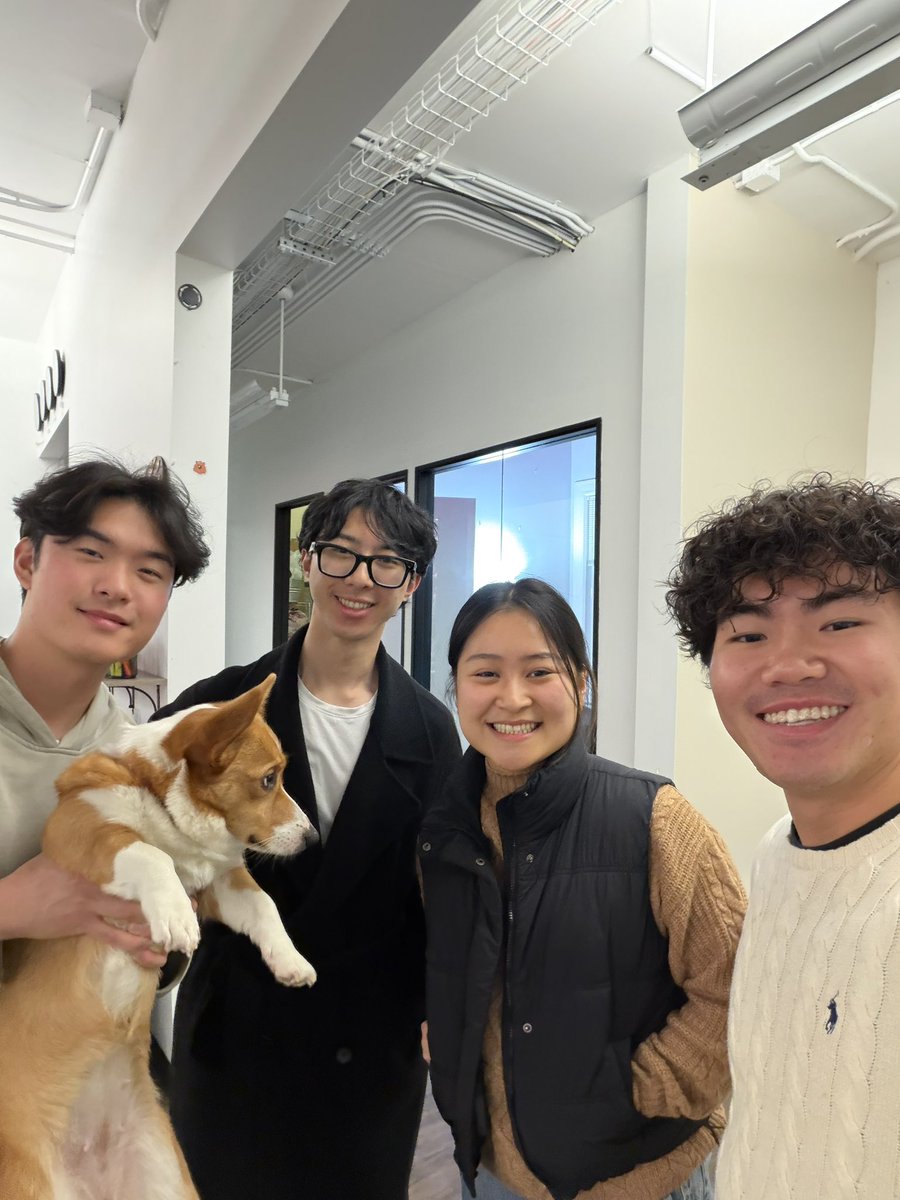
How to work with a $108M-raised startup (and meet their corgi):
1Investor @bhbryant gave intro
2Leave Thanksgiving mid-meal
3Follow up relentlessly
4Do business between gym sets
5Finally meet their office corgi
The half-eaten Italian food was worth it.
@emily_yuan_ , @nico_laqua, and @wuseokjung_ built the first full-stack AI-native insurance carrier.
Now we work together on their content.
Congrats on the $108M, @TheCorgiCompany. If you're a founder, check them out.
At Imagine AI, we don’t cook.
We believe food should be prepared and served on one time plates and cutlery where you don’t need to wash or cook the food. This helps us close deals faster, where the time is of the essence
This is not the joke, and we are not sick. Get better @janaksunil
Founders needs to be relentlessly resourceful.
Not just relentless because that implies brute force. And not just resourceful because that can be passive.
But relentlessly resourceful founders make things happen. They adapt, problem solve, and never wait for permission. They treat obstacles like puzzles, not stop signs.
This mindset difference is everything.
Being relentlessly resourceful is the core competency of early stage entrepreneurship. When the path isn't clear, when the problems are new, when the tools aren’t obvious . This is the trait that separates those who build great companies from those who don’t.
Good news? It’s often teachable. Especially in people who’ve been conditioned by school or big companies to wait for instruction. Once they’re unshackled, some thrive.
China gave workers two more paid holidays this year.
Here's the catch: you have to work extra weekends to get them.
This is called the "Tiaoxiu" system. Compensatory days.
To get that 8-day Spring Festival break, Chinese workers have to come in on specific Saturdays and Sundays before and after. The government announces which weekends you're required to work months in advance.
You're not getting extra time off. You're just rearranging when you work.
What bothers me about this isn't just the policy. It's what it reveals about how we think about human energy.
The system treats people like a zero-sum ledger. Work 8 days, rest 8 days, perfectly balanced.
But that's not how people work. That's how machines work.
Humans don't just need time off. We need predictable time off. We need regular rest. We need to know when we'll have freedom so we can actually plan our lives.
China's system optimizes for industrial productivity metrics while ignoring human sustainability metrics.
And it works. Their economy grew rapidly under this model.
But at what cost?
As someone building tools that affect how people work, this terrifies me. Because it shows how easy it is to create systems that look good on metrics—13 paid holidays!—while fundamentally disrespecting human autonomy.
Optimization without consideration for human dignity is just exploitation with better math.
Are the tools we're building actually giving people time back? Or just helping them fill that time with more work?
A Chinese influencer just got banned for selling "elite status."
His name was Hu Chenfeng. He built an empire on one simple idea: iPhone users are better than Android users.
Not as a joke. As a worldview.
He sold "Apple People blessing videos" for 300−400 dollars each. Made $85K/month. Told his followers that owning an iPhone meant you were educated, successful, elite.
Android users? Lower class. Poor. Uneducated.
He even said "college graduates are Android people who can't find good jobs" in a country where youth unemployment hit 20%.
Here's what bothers me about this.
We're building AI tools that can amplify any message at scale. More reach. Faster virality. Deeper engagement.
But amplification doesn't care about truth. It just makes things louder.
Hu Chenfeng used technology to turn a phone brand into a weapon of class division. He monetized insecurity during an economic downturn. He built a business on making people feel inferior.
The tech worked perfectly. That's the problem.
As builders, we need to ask: what are we amplifying?
My friend graduated from Columbia, landed a job at a major Chinese bank, and still felt empty.
He had the salary. The title. The respect.
But every night, he'd come home with ideas in his head and zero energy to do anything about them.
"I write them down," he told me. "Then they just sit there."
He wasn't looking to get rich. He was already doing fine.
He was looking to feel like he was doing something that mattered beyond the 9-to-5.
That's when I told him about Storica.
Not as a pitch. Just as a friend who knew what he was struggling with.
Three months later, he's running a growing social media presence across multiple platforms. He's building passive income. But more importantly?
He's finally sharing what he's learned.
The insights from his finance career. The lessons from navigating two different business cultures. The frameworks he's developed over years.
All the stuff that was dying in his notes app.
Here's what I realized from watching his journey:
Personal branding isn't about ego.
It's about refusing to let your best ideas die with your busy schedule.
It's about recognizing that you've accumulated knowledge that could help someone else, and actually getting it out there.
Your career can be successful and still leave potential on the table.
The question is: what are you going to do about it?
Sometimes you have to turn a "no" into a "yes."
My flight got delayed. 7 hours became 22 hours. Would miss a critical meeting.
Customer service: "Nothing we can do."
I didn't accept it. Asked for a supervisor. Kept pressing.
Result: Full refund + rebooked on another airline + made my meeting.
The lesson? Obstacles aren't roadblocks. They're puzzles to solve.
Most people take the first "no" as final. Winners keep pressing until "no" becomes "yes."
I made a rookie mistake asking my professor for a research position.
"I really need this opportunity. It would mean everything for my career."
His response? A polite email saying the position was filled.
Two weeks later, I watched him accept another student who pitched it completely differently: "I've been working on optimizing VR rendering pipelines. I noticed your lab's bottleneck with real-time physics simulations. I could help you ship that SIGGRAPH paper faster."
That student understood something I didn't.
People don't care about your dreams. They care about their deadlines.
The harsh truth about asking for help:
What doesn't work:
"Remember when I helped you with..."
"I really need this because..."
"You owe me one..."
Gratitude is a burden. The moment you invoke it, people want to drop it. They will either by dismissing you or doing the bare minimum to clear the debt.
What actually works:
"I can solve your problem with X"
"This will make you look good because Y"
"Here's how this helps you achieve Z"
But here's the nuance most people miss:
Some people WANT to feel magnanimous. They need to be the hero of the story, not a participant in a transaction.
For them, the appeal changes:
"I admire your work on X and would love to learn from the best"
"Your guidance would shape the next generation of AI researchers"
The key? Read the room. Or more specifically, read the person.
Professors with NSF grants need productive researchers. Startup founders need builders who ship. Some mentors need to feel like mentors.
Since learning this, my success rate on cold outreach went from 5% to 40%.
Not because I got better at asking. Because I got better at offering.
What's your framework for asking for help?