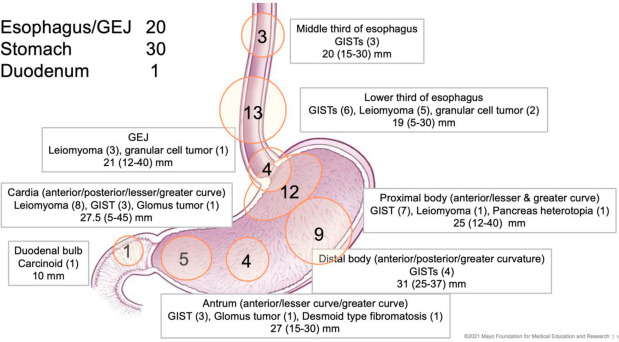
Understanding esophageal anatomy is the foundation of safe upper GI surgery.
The video explains applied anatomy of the esophagus, including blood supply, lymphatic drainage, relations, constrictions, and their surgical significance.
Watch here: https://t.co/9yJEdIduyL
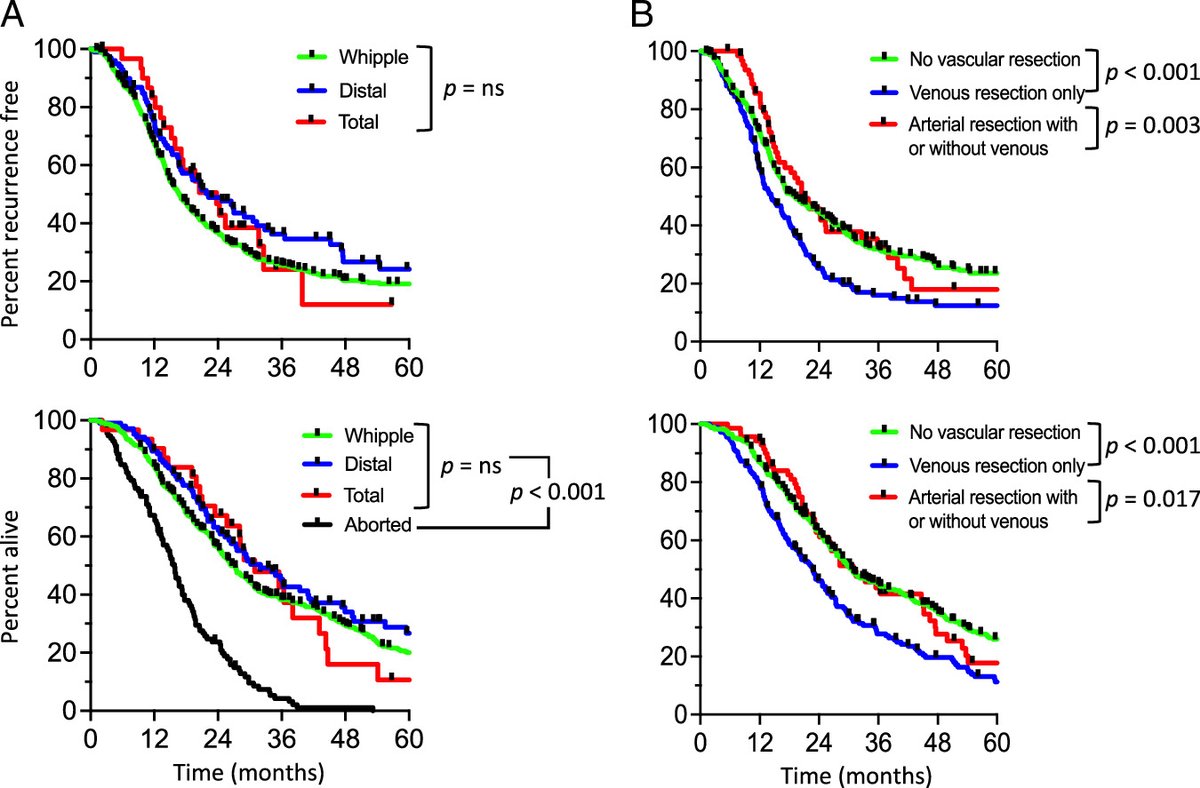
Among patients undergoing resection for pancreatic ductal adenocarcinoma, arterial resection was not associated with worse oncologic outcomes after adjustment for perioperative therapy, although it remained associated with higher 90-day mortality. https://t.co/hvGsG03G4I
The Whipple procedure is one of the most complex operations in gastrointestinal surgery.
This video provides a step-by-step walkthrough of pancreaticoduodenectomy for pancreatic cancer, highlighting the key operative principles and anatomy.
Watch here:
https://t.co/3Z1evMJkcx
📢 #ASCO26 Concomitant publication: A randomised study of encorafenib, cetuximab, and FOLFIRI versus FOLFIRI with or without bevacizumab in BRAF V600E-mutant colorectal cancer: BREAKWATER Cohort 3 @skopetz@TaberneroJosep
https://t.co/AUSb16B4RU
#ASCO26 Axillary Surgery De-escalation May Need a Rethink 👀
The AXSANA/EUBREAST-03 study (n=5,262) suggests that tumor biology matters more than baseline nodal burden in predicting axillary pCR after neoadjuvant chemotherapy.
Patients with ≥4 suspicious nodes had similar nodal pCR rates as those with 1-3 nodes.
🔹 HR- HER2+: 86.1% nodal pCR
🔹 HR+ HER2+: 70.7%
🔹 TNBC: 68.5%
🔹 HR+ HER2-: 30.5%
This challenges the traditional tendency to reserve axillary de-escalation only for low nodal burden patients.
Could biology-driven axillary surgery selection become the next paradigm shift in breast oncology?
📖 Full abstract in comment ⬇️
#OncoTwitter #MedTwitter #BreastCancer #ASCO26 @OncoAlert@myesmo@esmo_open@asco@larvol
https://t.co/wthq81gDJf
Detailed 3D rendering of coronary artery anatomy
(right-dominant circulation) highlighting major branches:
LMCA → LAD + LCx, RCA with PDA/PL branches, diagonals, OM, and LIMA (gold-standard CABG conduit). ❤️🫀"
#CoronaryArtery#CardiacAnatomy#Cardiology
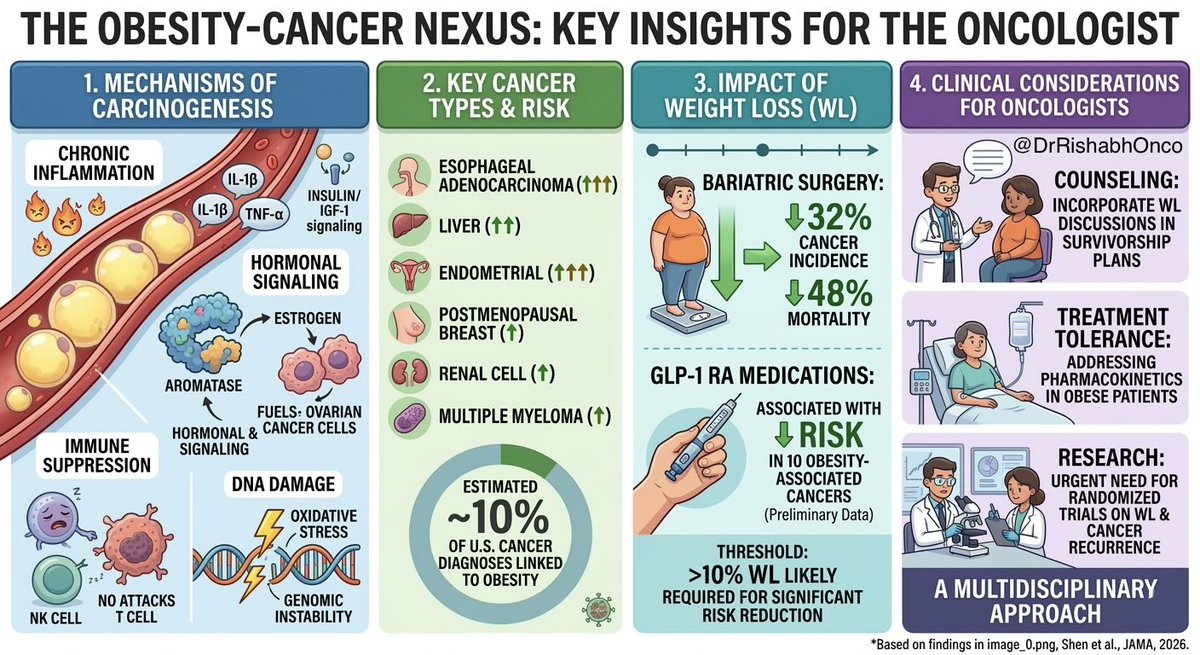
Obesity is not just a risk factor for cancer. It actively drives tumor biology.
A new JAMA Translational Science Review explains how excess adiposity promotes cancer through several biologic mechanisms.
🧬 Key pathways linking obesity and cancer
🔥 Chronic systemic inflammation
⚡ Insulin resistance and IGF-1 signaling
🛡️ Immune suppression and T-cell dysfunction
🧪 Oxidative stress and DNA damage
🦠 Gut microbiome alterations
📊 Cancers strongly associated with obesity include:
Endometrial, postmenopausal breast, colorectal, pancreatic, liver, kidney, ovarian, thyroid, esophageal adenocarcinoma, and gallbladder cancers.
💡 Clinical takeaway:
Meaningful weight loss (often >10% body weight) may be needed to reduce cancer risk. Bariatric surgery and GLP-1 therapies are emerging as potential cancer prevention tools.
🎯 Bottom line:
Treating obesity is also cancer prevention.
📖 Full paper in comment ⬇️
#OncoTwitter #MedTwitter #CancerPrevention #Obesity
@OncoAlert@ASCO@myESMO@JAMAOnc@JAMA_current
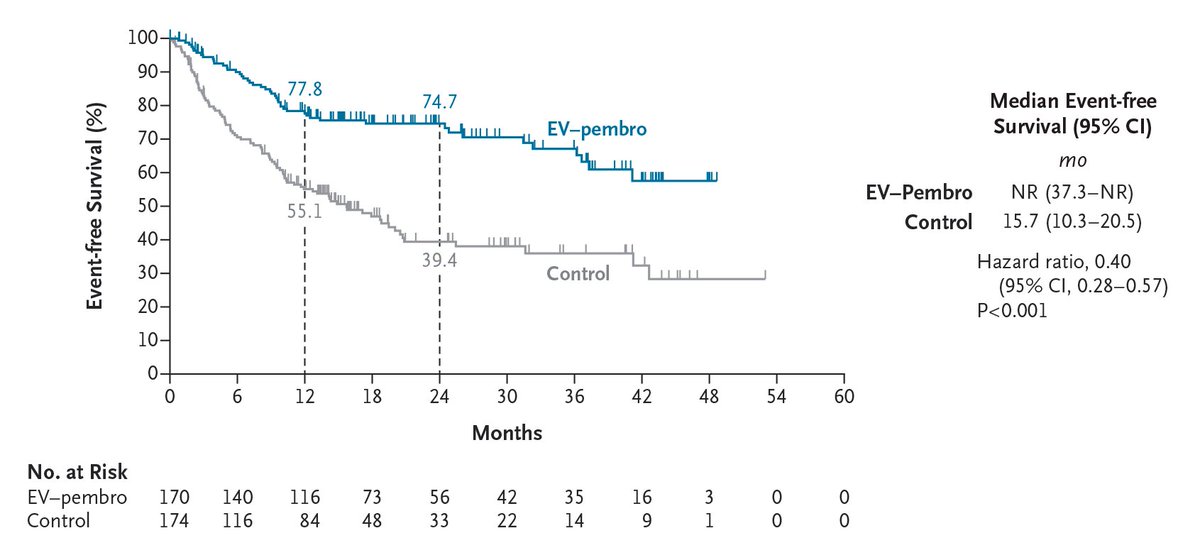
In cisplatin-ineligible patients with muscle-invasive bladder cancer, enfortumab vedotin–pembrolizumab plus surgery led to better event-free survival (74.7%, vs. 39.4%) and overall survival (79.7%, vs. 63.1%) than surgery alone at 2 years. Full phase 3 KEYNOTE-905/EV-303 trial results: https://t.co/6M3xhml0ou
Editorial: Enfortumab Vedotin plus Pembrolizumab as Perioperative Therapy https://t.co/3uNr9TUukQ
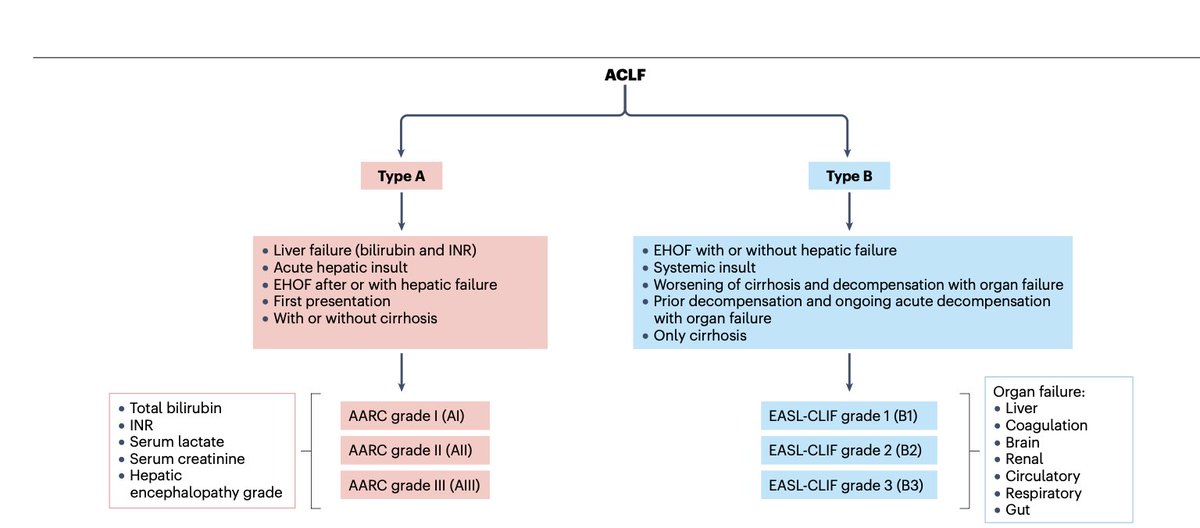
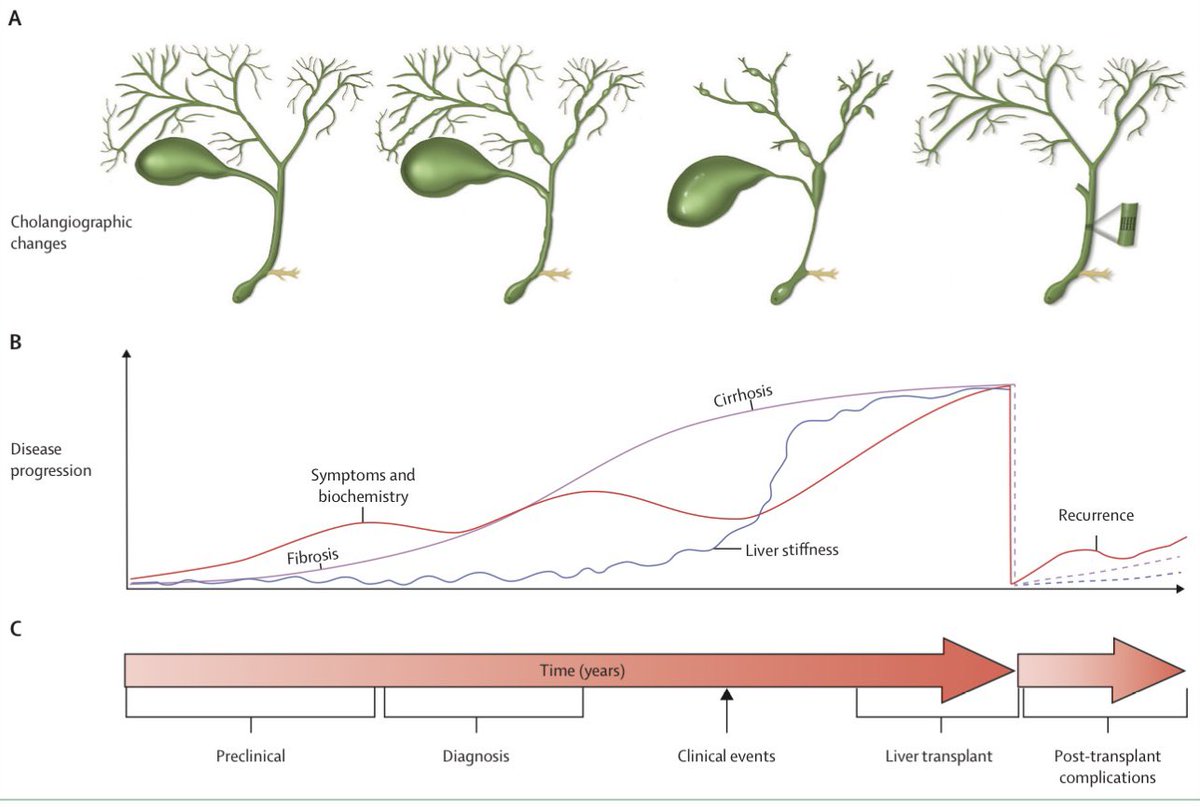
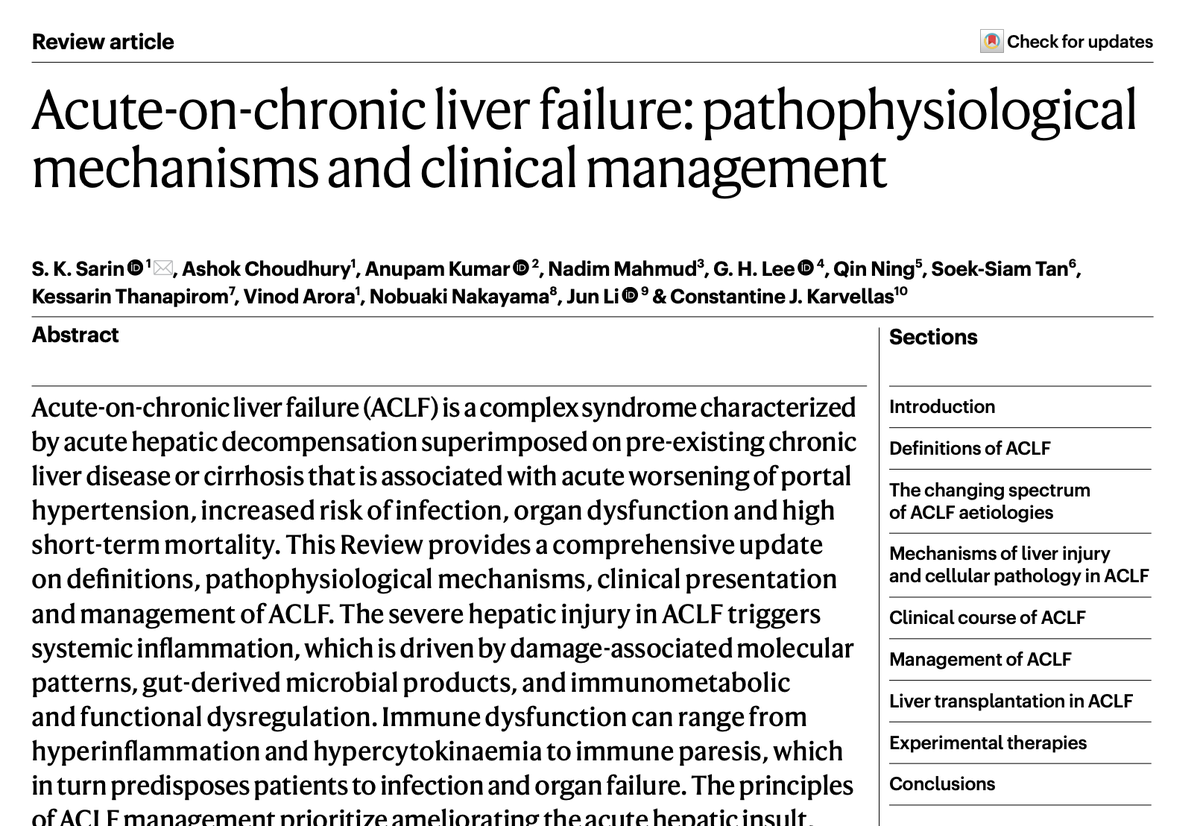
Falla hepática aguda sobre crónica (ACLF), hoy en Nature (2026). Algunas cosas relevantes:
🟣 Nueva clasificación de Kyoto (Nueva Clasificación): Unifica criterios globales. Tipo A: Falla hepática predominante (Ictericia/INR). Tipo B: Falla multiorgánica predominante (Sepsis/Shock)
🟣 La "Ventana de Oro" (7 días): Es el tiempo límite crítico. Si no hay resolución del SIRS o fallo orgánico en la primera semana, el pronóstico es muy malo.
🟣 La fisiopatología clave es el agotamiento metabólico celular (paresia inmune). El soporte nutricional es importante (30-35 kcal/kg)
🟣 Terlipresina: Superior a noradrenalina para recuperar función renal (HRS-AKI). Albúmina: Usar con cautela extrema
🟣 Criterios de Futilidad para Trasplante: Lactato >9 mmol/L, Noradrenalina >1 µg/kg/min, >3 fallos orgánicos o hipoxemia grave.
Pueden encontrarlo completo en: https://t.co/3O93s10lns
#AudioVisualAbstract : Comparative Outcomes of Ileocolon Graft Versus Gastric Conduit Reconstruction in #EsophagealCancer : A Propensity-Matched Analysis of Survival, Quality of Life, and Perioperative Risks
https://t.co/40Vqa1FA2x
@ZaidAbdelsattar@SyedAAhmad5
Artículo Original
Cribado temprano, diagnóstico y monitorización de la recurrencia del carcinoma hepatocelular en pacientes con hepatitis B crónica basados en el análisis de N-glicómica sérica: estudio de cohorte
Su et al.
#LiverX
https://t.co/VTRV4oKk8D
🟩3 vs 6 mo adjuvant 5FU-oxa in CRC
Final results of SCOT non-inferiority trial @JCO_ASCO
5-year OS:
✅All patients, 3mo is non-inferior
✅CAPOX, 3 mo is non-inferior
⚠️FOLFOX, non-inferiority not confirmed
✅Low-risk stage III, 3mo ChT is non-inferior
⚠️High-risk stage III, non-inferiority not confirmed
✅Rectal cancer, 3mo is noninferior
👉https://t.co/lHcWNO8K74
#cancer #oncology #MedX #GI26 @OncoAlert









![Erman_Akkus's tweet photo. 🟦Final OS of JUPITER-06
Toripalimab-cis-paclitaxel vs cis-pacli in advanced esophageal SCC
@Annals_Oncology @myESMO
✅17.7 vs. 12.9 mo11.6–14.1]
HR 0.72 [0.58-0.88]; P = 0.002
✅Not PDL1 dependent
👉https://t.co/EcL2AHsJRf
#cancer #oncology #esophageal #MedX #GI @OncoAlert https://t.co/INngQa8mtj](https://pbs.twimg.com/media/G_IgqVrW0AA4ZA-.jpg)





