Molecular Imaging group working on the Dx and Rx of cancer. Husband, Father, Scientist, Nerd. Opinions are my own. Past President @WMISWMIC and @SocRadiophSci
Theranostics Revolution: Seeing, Targeting, Treating—
Jason S. Lewis will address this topic in a keynote lecture at the AACR Conference on Cancer Biology-informed Radioligand Therapy (January 7-10; San Diego). Learn more:
https://t.co/qcm5TvV9E5
#aacrRLT27@LewisLabMSKCC
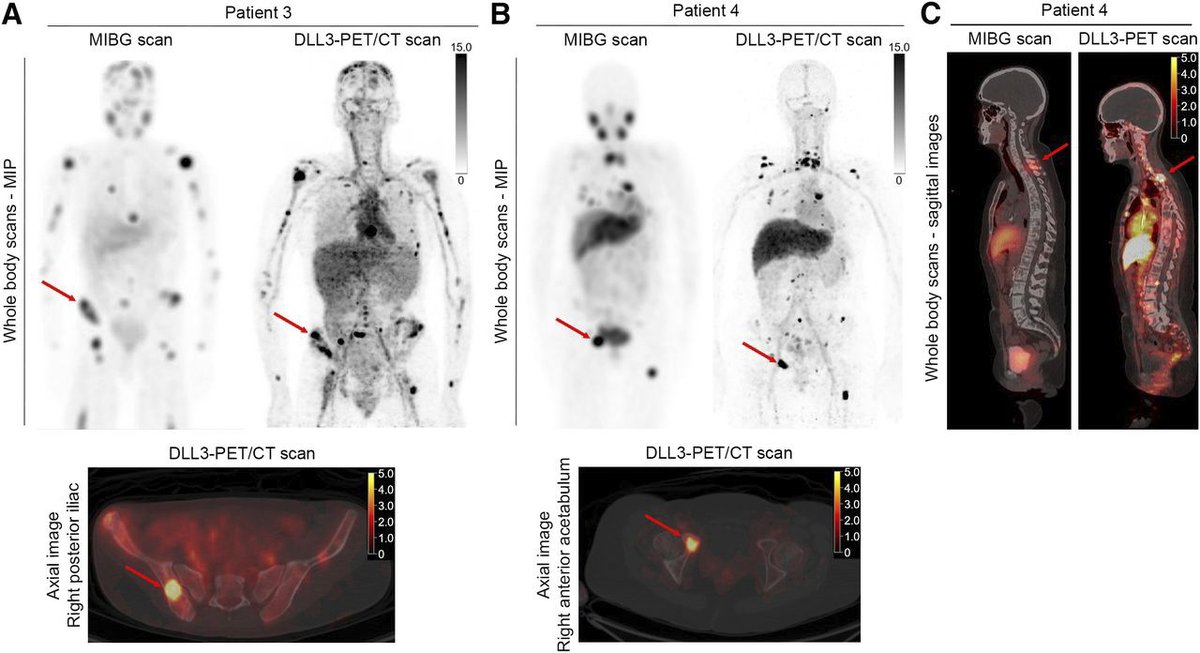
DLL3 represents a clinically accessible therapeutic target in neuroblastoma, and DLL3-directed PET imaging may enable noninvasive identification of patients suitable for DLL3-targeted therapies. Read more: https://t.co/46woyaAmYO
#NuclearMedicine@LewisLabMSKCC
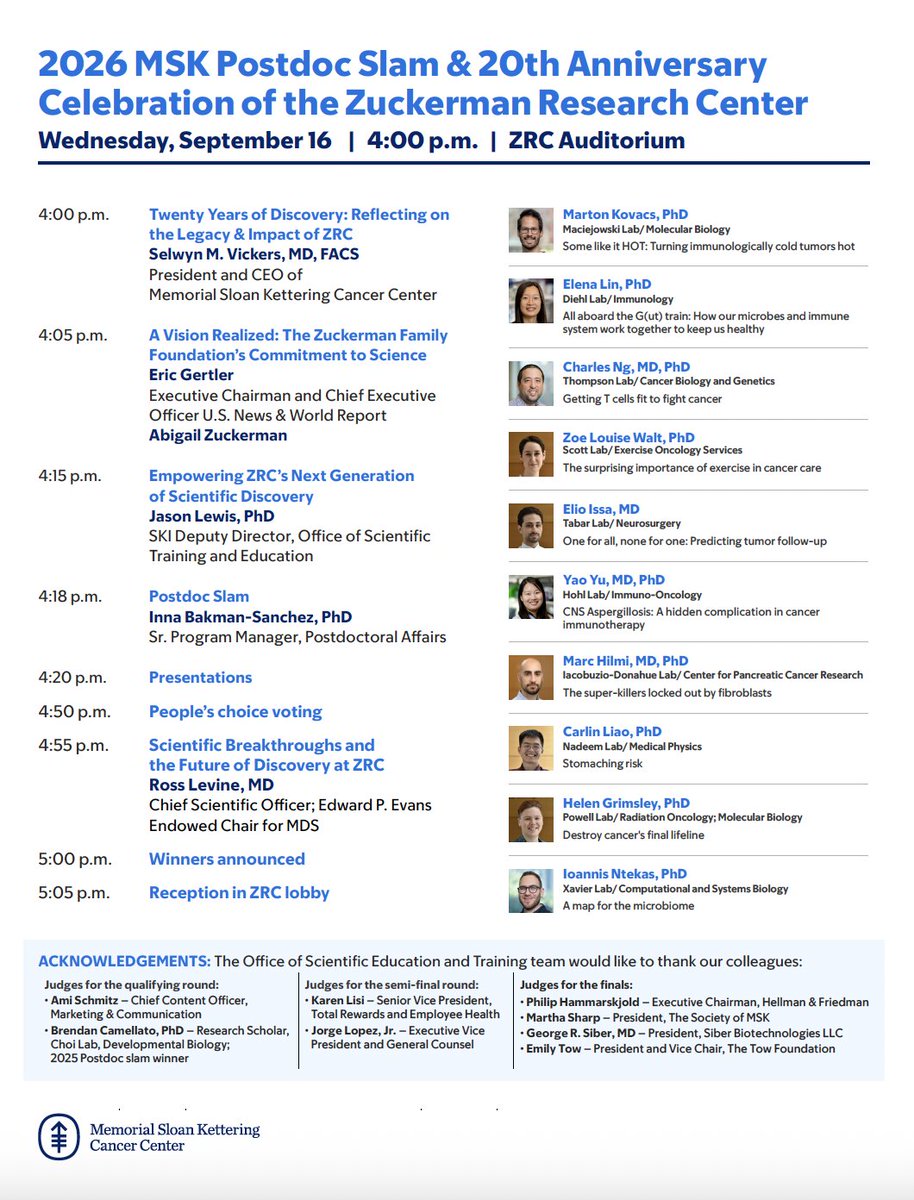
🎉 The MSK Postdoc Slam is extra special this year as we celebrate the 20th Anniversary of the Zuckerman Research Center! @MSKCancerCenter, join us today at 4PM for a showcase of postdoc research, creativity & discovery. Let’s celebrate science & 20 years of impact together! 🎤✨
The FDA has approved Pixclara® (floretyrosine F 18), Telix’s 18F-FET-PET imaging drug for glioma (brain cancer).
Pixclara is the only FDA-approved FET-PET imaging drug for glioma and is indicated for the differentiation of recurrent or progressive glioma from treatment-related change, in conjunction with other diagnostic evaluations, in adults and pediatric patients 1 month of age and older.
FET-PET imaging is already recommended in international clinical practice guidelines, but until now there has not been an FDA-approved product.
Pixclara will provide physicians in the U.S. with greater certainty in brain cancer diagnosis and treatment planning, addressing an important unmet need.
Read more on our website here: https://t.co/v1W6jhEf9e
SELECTED IMPORTANT SAFETY INFORMATION
● Image misinterpretation may occur with PIXCLARA PET. Equivocal findings may occur with PIXCLARA PET, including low-level or atypical uptake patterns, which may result in false positive or false negative interpretations.
● PIXCLARA involves exposure to small amounts of radioactivity; long-term cumulative radiation exposure is associated with increased cancer risk.
● Adverse reactions that occurred in ≥0.5% of patients receiving PIXCLARA were headache (0.5%).
● Adverse reactions that occurred in <0.5% of patients were nausea, injection site reaction, fatigue, and malaise.
● Overall, the safety profile observed in pediatric patients from the clinical study was consistent with the safety profile in adult patients.
This is not the full important safety information. The indications and full important safety information is available at https://t.co/ypq1l6BVo0
The latest paper from our DLL3 work….Cell Surface Expression and PET Imaging Establish DLL3 as a Clinically Actionable Target in Neuroblastoma https://t.co/Py73TQG5Jr
SU2C Pancreatic Cancer Collective Research Team leader, Dr. Julie Sutcliffe, stands up for her patients and the hope that one day people will be cured of cancer. ❤️
When you stand up this summer, you’re supporting cancer research focused on finding cures. Join the #StandUpToCancer movement at https://t.co/0Zneq5ibF5. ☀️ #SummerToStandUp
It's out! The second edition of "Radiopharmaceutical Chemistry." A HUGE thank you to all the amazing contributors — too many to list here. What a pleasure to do this with Brian Zeglis and Bert Windhorst. Third edition in another six years?
https://t.co/tyUqqC9UBh
I am thrilled to announce that I was elected to be the 2028 SNMMI President - one of the coolest things is to follow the footsteps of these 3 SNMMI Past Presidents and the next SNMMI President (in three days) Heather Jacene. @HJacene@CathyCutler1234@SallyWSchwarz Helen Nadel
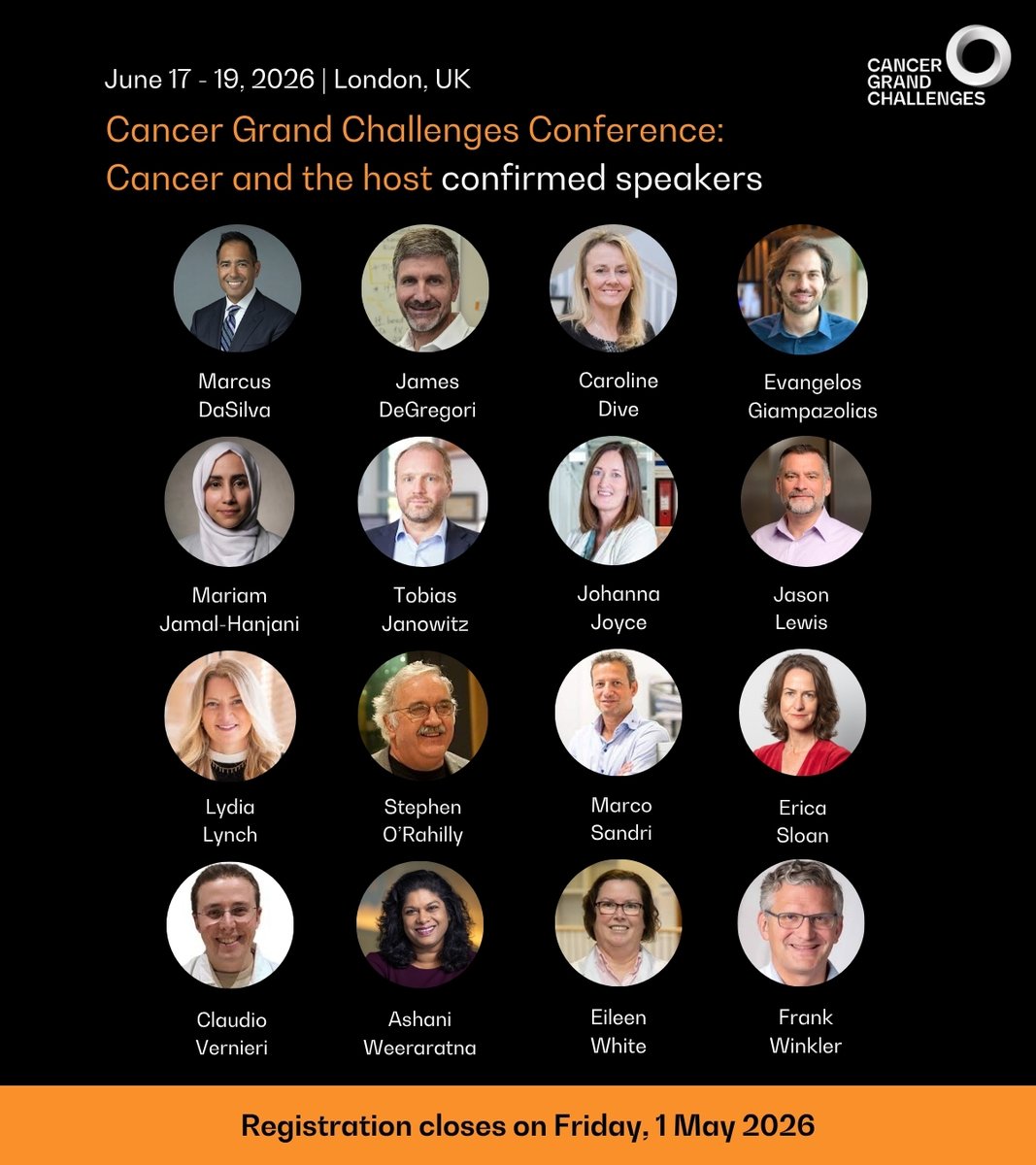
Final places are still available to attend the Cancer Grand Challenges Conference: Cancer and the host
If you’re interested in exploring cancer as a systemic disease and joining thought leaders from across the cancer research spectrum to discuss and debate how the unique biology of each individual shapes cancer development and treatment response, this is a meeting you won’t want to miss.
Register now to secure your place: https://t.co/zhkf9Xkme7
🗓️ Wednesday 17 – Friday 19 June 2026
🚨 Registration closes Friday 1 May 2026
📍 The Royal Society, London
@MarcusDGon, Professor Caroline Dive. CBE, @diggy5353 , @giampazolias, Mariam Jamal-Hanjani, @Joycelab, @LewisLabMSKCC, @lynchielydia , Stephen o'rahilly, Marco Sandri, Erica Sloan, Claudio Vernieri, Ashani Weeraratna, @EileenWhitePhD and Frank Winkler @CR_UK@NCICancerTrials
It’s out “Trop-2.2–Directed Radioimmunotherapy with 177Lu, 225Ac, and 212Pb in a Pancreatic Cancer Model”led by @ECharlesPratt et al https://t.co/Gl0cZ2yPJ2
Our paper "Exploring the 89Zr/177Lu Theranostic Pairing with an Extracellular Matrix–Targeted Radiopharmaceutical against Triple-Negative Breast Cancer" is out. https://t.co/lT20T0btAg The thesis work of @Just_Hachey. Added bonus - we got the cover of CCR!
Wonderful to see Barbara Hertz today on the 85th anniversary of Dr Saul Hertz’s first-in-human radioiodine therapy. A landmark that helped launch theranostics, and targeted precision oncology. Still, we are just at the beginning of the theranostic revolution.
Final call for abstracts! This week is the last chance to submit your abstract for the Cancer Grand Challenges Conference: Cancer and the host
https://t.co/XA5YZP7MSg
🚨 Submit by Friday 20 March for the opportunity to join an outstanding line-up of speakers #CancerGrandChallenges #CancerResearch