🛸#WebMap - 1 million websites as an interactive galaxy, where every star is a website and its size reflects its popularity.
🔭Try it: https://t.co/rzuts1AWjL
🌍📊 #InternetStats brings the digital world to life with animated #statistics on:
🔹 Social media activity
🔹 AI usage & searches
🔹 Internet traffic & emails
🔹 Online commerce & more
Explore the numbers behind our connected world! 🚀
🌐 Website: https://t.co/cwN3mRtCJL
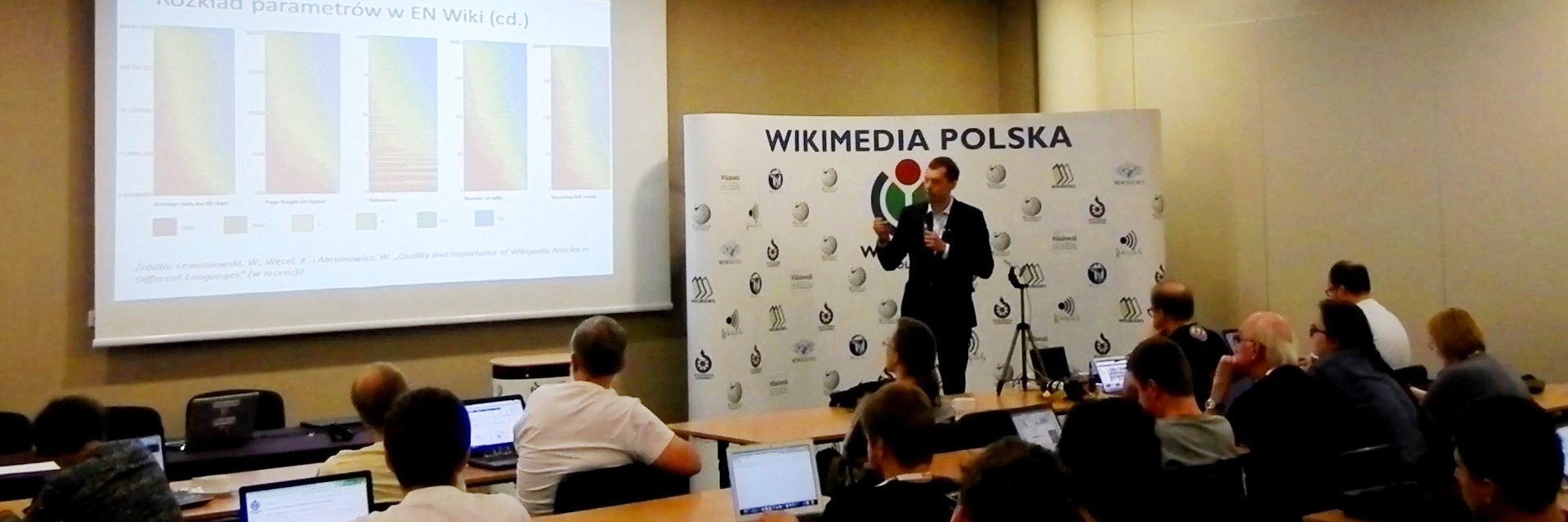
Is a #Wikipedia article equally good in every language? How can we determine which information is most reliable and which sources are worth trusting? These questions were at the heart of a talk delivered at @ASU.
https://t.co/3ibehyfPGt
🤖 Artificial Intelligence in #Sentiment Analysis of Multilingual #Wikipedia: #Classifiers vs. Large Language Models.
🔓 #OpenAccess research by Dr. Milena Stróżyna, Dr. Włodzimierz Lewoniewski, Izabela Czumałowska.
📖 More details: https://t.co/aai34PqDXR
⏳ The #performance of Python 3.14.8 and Python 3.15.0 was compared on computers with the #AMDRyzen 7000 series and the 13th-generation of #IntelCore processors for desktops, laptops or mini PCs. Both interpreters were 64-bit #Python builds. https://t.co/dzn9hLyuli
🧩 A new interactive map of the most popular articles on English #Wikipedia is now available. You can use this tool to search for articles, explore them as colourful puzzle pieces, zoom in, and trace how readers move from one article to another. https://t.co/BEzXTBTaqJ
🏙️ Which cities attract the most attention on #Wikipedia?
📈 Population cannot answer this question directly. Neither can tourist arrivals, airline traffic or the number of Google searches.
📊 A different perspective comes from Wikipedia pageviews: https://t.co/agHKo6PmAX
#Datasets on @kaggle for two document-level sentiment aggregation methods described in this work. Each dataset contains #sentiment labels derived from the #benchmark and from the evaluated models at the level of #Wikipedia lead sections. https://t.co/65EHNv4egn
📢 #BestRef July 2026 update!
🔬4.2 million websites from more than 400 million #Wikipedia references across 300+ language editions were analyzed.
🌍 This update provides a unique view of the sources @Wikipedia relies on most.
🔍 Try it now: https://t.co/4V7DQD3nGa
🌐 Which websites matter most as information sources on #Wikipedia?
📊 More than 400M citations from 68M articles across 300+ language editions were analyzed, taking into account both citation frequency and article popularity.
🚀 Explore more: https://t.co/GW4FWAZyFn
📊 The obvious way to measure popularity of #Wikipedia articles is to count how many people read it.
🌐 #Wikilink analysis asks a different question: how many other articles depend on this page as a reference point?
💡 Measuring Wikipedia by #Wikilinks: https://t.co/o6m8Irv98m
Another highlight of Day 1 at #BIS2026 was the panel discussion with:
🔹 Claudia Loebbecke, @UniCologne
🔹 Martin Ondas, BizMachine
🔹 Tomáš Rosa, Raiffeisen Bank International AG, @CharlesUniPRG
🔹 Adam Wójtowicz, @UEwP
The panel discussion was moderated by Krzysztof Węcel.