There are many moral setbacks in the world: wars, violence, harmful policies.
Yet, many of us still try to create change. Why?
Now out in Cognitive Science, with @TaniaLombrozo and Sana Asifriyaz!
https://t.co/5AUiJa6VOm
Are you a grad student who wants to give a talk at Princeton’s Department of Psychology (in-person or on Zoom, your call), expenses paid?
Nominate yourself or a colleague here! https://t.co/z5UOjgIqRy
Priority given to non-ivy schools and students from diverse backgrounds. International applicants welcome!
The deadline for nominations is Feb 6!
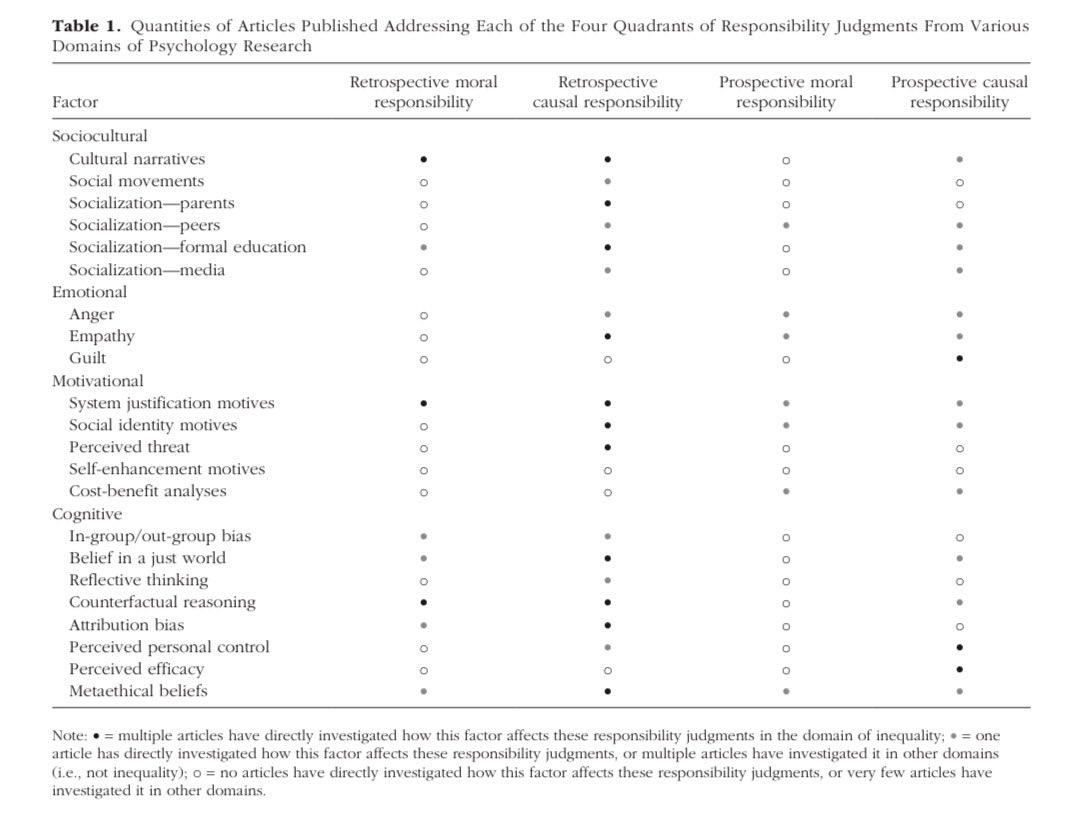
Most existing research focuses on judgments of who or what caused inequality to exist. Far less examines how people decide who can or should help reduce it going forward.
We use this framework to organize existing findings, identify gaps, and provide guidance for future research
I am thrilled to announce that this framework is out!
Who is responsible for inequality?
@TaniaLombrozo and I show that answers depend on whether people are judging causes or obligations, and the past vs the future.
https://t.co/d9Zgkdxvsd
A special thanks to @TaniaLombrozo, my advisor, without whom this wouldn't be possible, for all the guidance and all she taught me!
And shout-out to all my lab mates for their invaluable feedback: @Keremoktar@LewryCasey@Huang_Ham
Read more here: https://t.co/6cRq2pUw9b
Across 9 experiments (+6600 participants), we explored a paradox: How do non-experts judge scientific explanations they can’t fully understand? We found that scientific jargon can increase people’s satisfaction with explanations, even though it makes them less comprehensible.
2/9
Do you want there to be more funding to do research related to climate action? 🌎
I'm working with XPRIZE to make this happen - fill out this survey so we can figure out how to help researchers like you (and enter to win a $50 gift card)
https://t.co/9V74ElKtdV
When do others' opinions shape our beliefs?
Do ⭐ ratings guide purchases,
❤️ likes guide shares, and 📊 polls guide votes?
Our new review covers 300+ studies (!) across psych, phil, & poli sci
w/ @TaniaLombrozo
Article: https://t.co/cletXQqadv
PDF: https://t.co/0tHcJcWzWf
Is AI capable of self-correction?
#PrincetonU's @tanialombrozo reviews this concept of learning by thinking. https://t.co/vpaDCkQzHV (via @SciTechDaily)
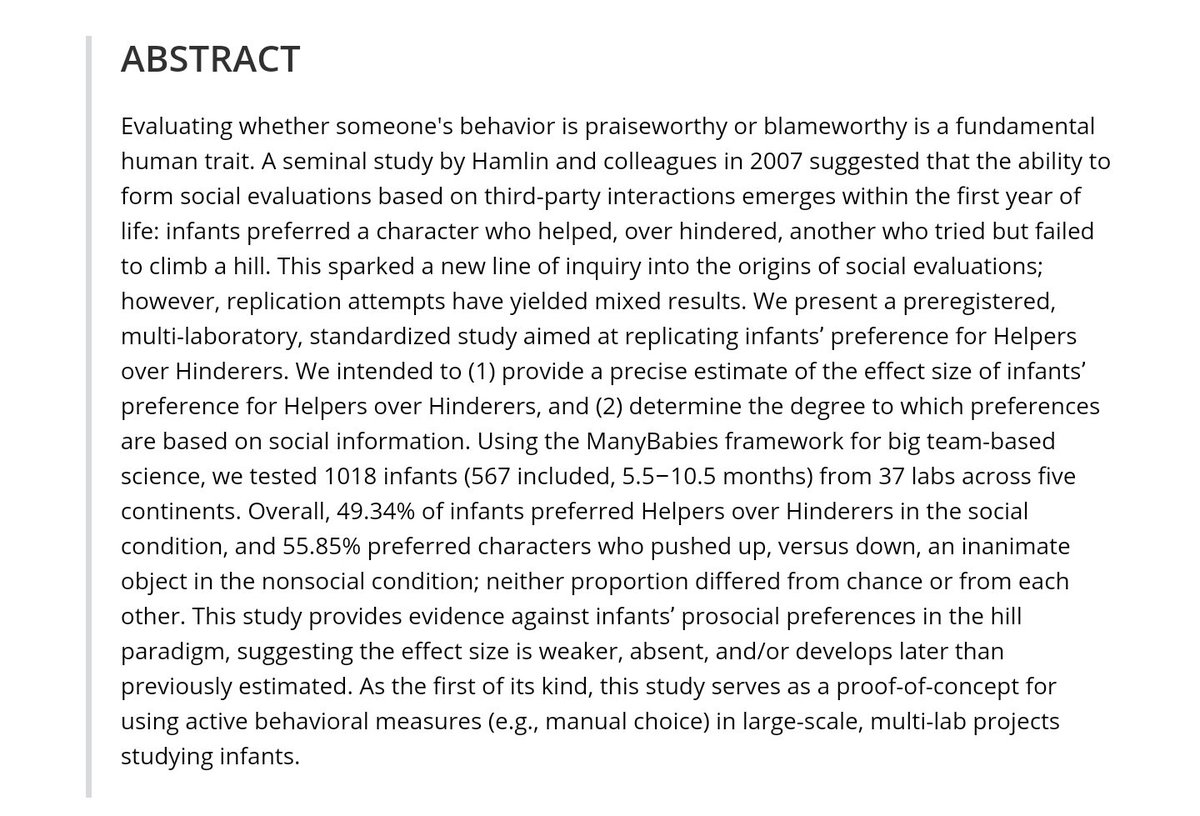
New ManyBabies large scale replication study fails to find support for a classic finding by Hamlin and colleagues from 2007 that babies prefer characters that show prosocial behavior. https://t.co/nm7NqWgbY0
I’ll be considering applications for a PhD student to start in Fall 2025! I’ve been having a blast starting up the Exploration, Learning, and Mind Lab at @UofNH this fall, and I’m excited to grow our lab community. App review begins 1/15. Learn more: https://t.co/PsMimnf9eI
@xphilosopher I think university/department resources go a long way here. At least for myself and several others I know who are in a similar position (funding, advisor and community support) grad school is the best because it offers a huge amount of fulfillment, freedom, and flexibility
Are you a psych grad student who wants to give a talk at Princeton, expenses paid?
Nominate yourself or a colleague here! https://t.co/ZIyovlIj16
Priority given to non-ivy schools and students from diverse backgrounds.
With summer vacation right around the corner, why not pick up my latest paper as summer read? ⛱️😎📜
"Self-serving beliefs about science: Science justifies my weaknesses (but not other people’s)"
1/4
https://t.co/BKlsIvZB2G
Compositional generalization, kinematic modulation, pragmatic intrusion: I bet you have mixed feelings about the jargon in #CogSci2024's talk titles!
Want to know why? Stop by my poster (P2-LL-503) tomorrow to learn how (lay)people react to jargon in scientific explanations!
This week at @cogsci_soc!
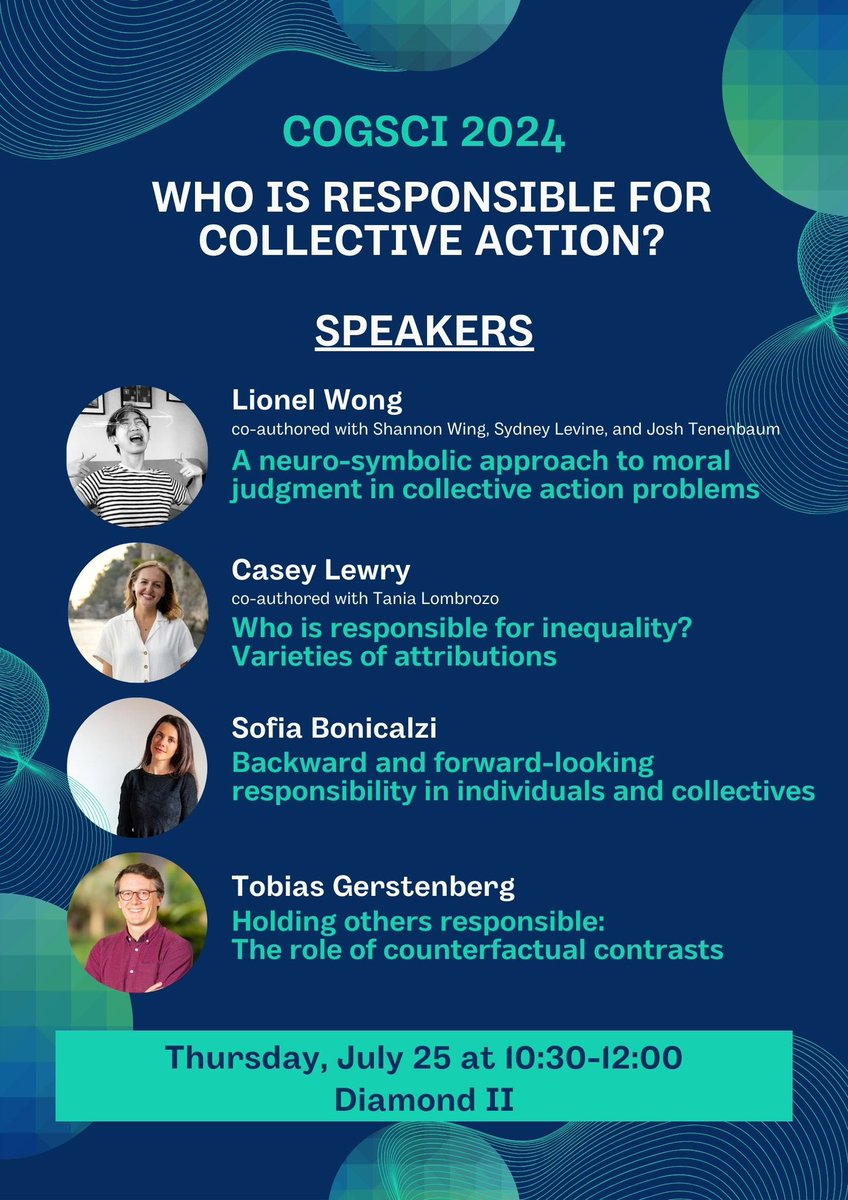
Who is responsible for collective action?
We ask this question from computer science, psychology, and philosophy perspectives, with Lio Wong, @tobigerstenberg, and @BonicalziSofia
This week at @cogsci_soc!
Who is responsible for collective action?
We ask this question from computer science, psychology, and philosophy perspectives, with Lio Wong, @tobigerstenberg, and @BonicalziSofia