BIRTHDAY THINGS...
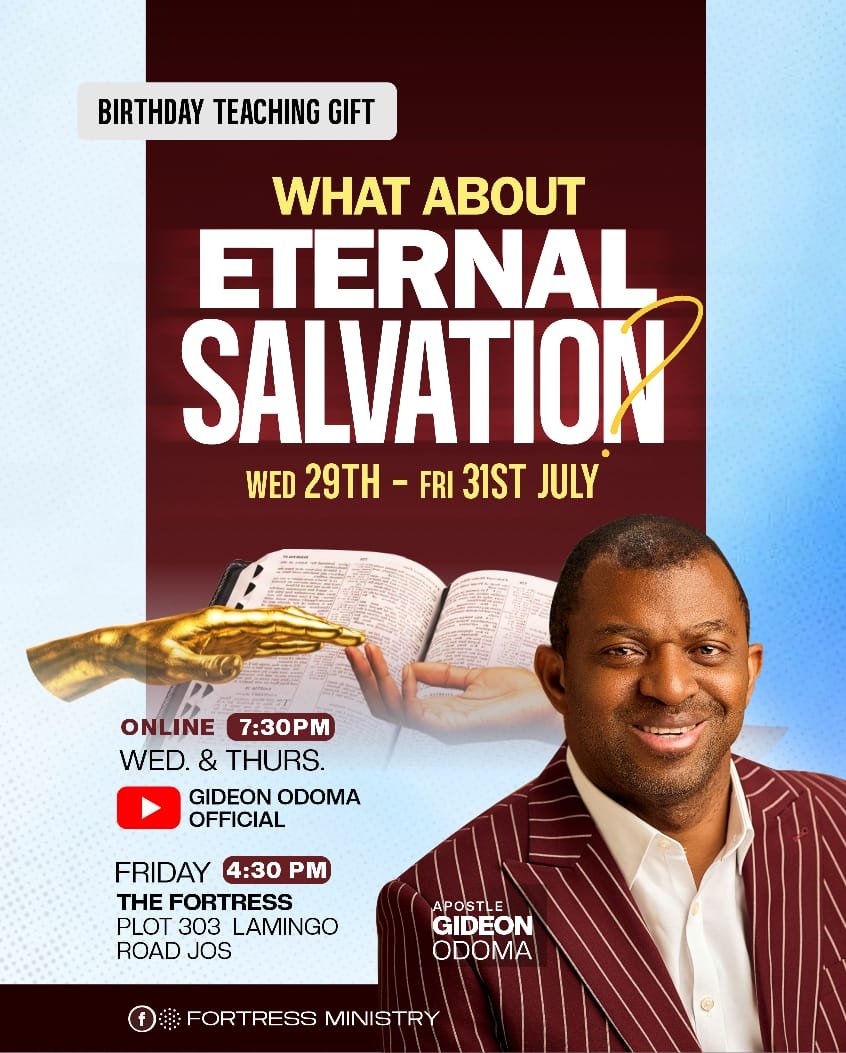
Finally, I get to start something of an explication of the doctrine of salvation, and something of a response to some of the contortions being peddled against those of us who push back at hypergrace.
To be clear: the problem with hypergrace is not simply the belief in OSAS. Properly qualified, Calvinists believe in OSAS. So the issue is deeper than that. OSAS is just a convenient pretense, a cunning smokescreen with which hypergracers seek to arm-twist the church into ceding them a seat at the table, and thereby bully the bride of Christ into investing hypergrace, even if unwittingly, with legitimacy.
It is in the text that Jesus is the author of "eternal salvation." No Christian should deny that. So, believing in eternal salvation is not the contention. The contention is something as sly as it is sinister. It is the sleight of hand, the sophistry by which hypergrace smuggles aberration into the faith. It is the hermeneutical move that flattens the nuanced landscape of biblical doctrine into a strangulated and sterilized wasteland. The land is lush-green, but hypergrace makes it anemic. At its best, hypergrace would plant a full stop where God, in scripture, ordains a comma or a (semi)colon. These are the issues.
It is a matter of doctrinal responsibility to unpack and clarify them. It is incumbent on those of us burdened with the sacred privilege of teaching to hold up the banner of true witness in this day of Marcion-like maneuvers and empty novelties.
There are easily a dozen critical points of departure in hypergrace – points of departure from the historic apostolic faith we inherited, as it came to us through the godly, faithful testimonies and labours of Prophets, Sages, and Martyrs. The vacated and limp novelties peddled by hypergrace must be identified for what they are. Another gospel! Yes, hypergrace is another gospel – one that is (for instance) reluctant to accept God's unambiguous, personal self-identification as both the God of Love and the God of Justice.
All I intend to do for now is not to lay a finger on every one of the myriad errors at the heart of hypergrace. I want to look at the doctrine of salvation, and use the exercise to refute the faulty soteriology of hypergrace.
You are welcome to join us.
Almost everywhere you turn, people have been hurt in the church and many of them are legitimate.
Yet surveying our common experience suggests that most of the responses to hurt in church betray a deeper problem.
#churchhurt#church#ChurchLife
@SpiricocoNg Last week, we kicked off our new series PLACES and it was such a powerful start. We discovered how heavenly places shape what happens here on earth, and it truly shifted our perspective.
@SpinoRaptor24@Ahraz__ you are reading the text with a bias. it clearly states that 'they fled from the tomb, for trembling and astonishment had seized them, and they said said nothing to anyone, for they were afraid"
@SpinoRaptor24@Ahraz__ so the point I am making is this, if Mark recorded that the women told no one, Mark wasn't there with them, how did he know. Obviously the women eventually told someone, who told Mark. And that person will most likely be among the disciples or even they told the gathering of
@SpinoRaptor24@Ahraz__ But thinking about it, if the women said nothing to any man, how did the author know about what happened to them since he was not there?obviously they would have told some others, hence Luke 24:9. so the passages seem more complementary than contradictory
Wicked men often began their journey into wickedness by selfishness.
When Self becomes an idol, hurting and hating others to make yourself happy becomes the norm.
Then bowing to Satan and learning his ways of self-exaltation by trampling on the rights of others becomes the norm.