I feel someone has to say this. @ChrisEvans is one of the mfen hottest men on the face of this planet.
not just because of his impeccable good looks and charm but because of his dedication to helping people as well as How smart and talented he is.
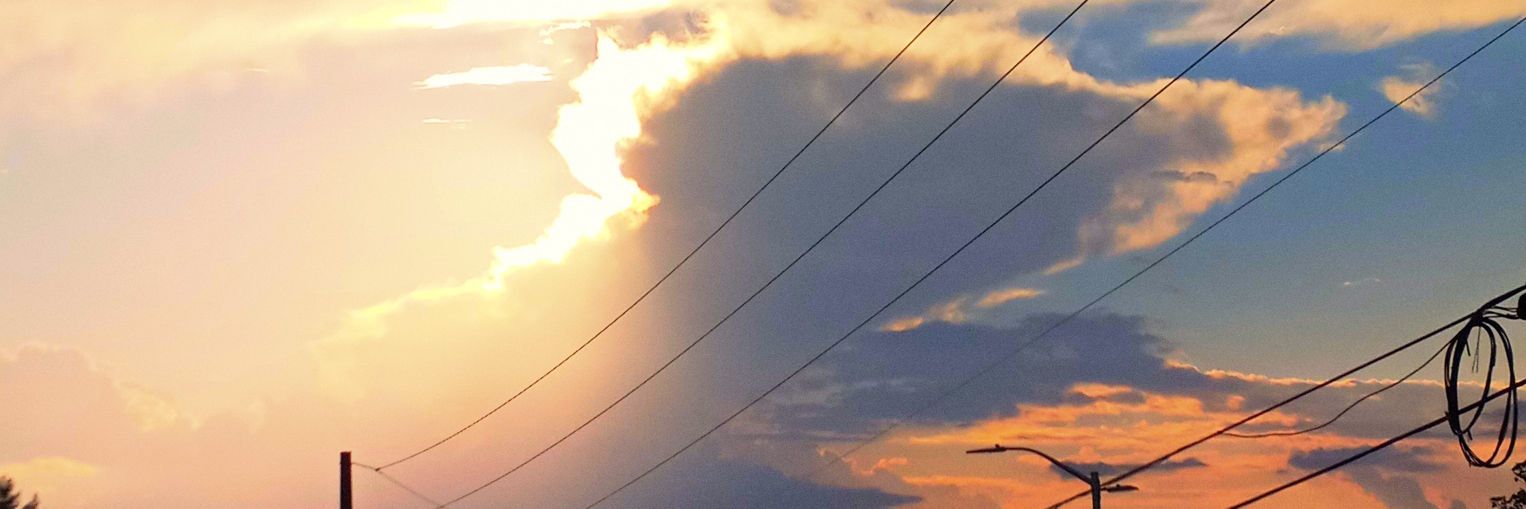
Photographer Elias Marlowe stumbled on this rare shot while sorting through the hundreds of images he captured during the recent aurora spell that swept across the U.S. and Canada. 🌌
He almost scrolled past it again before the shape in the sky made him stop — the auroras had formed what looked strikingly like an angel rising above the treeline. ‘I can’t believe I missed this before,’ he said. ‘It feels like the sky was hiding it in plain sight.’ ✨👼
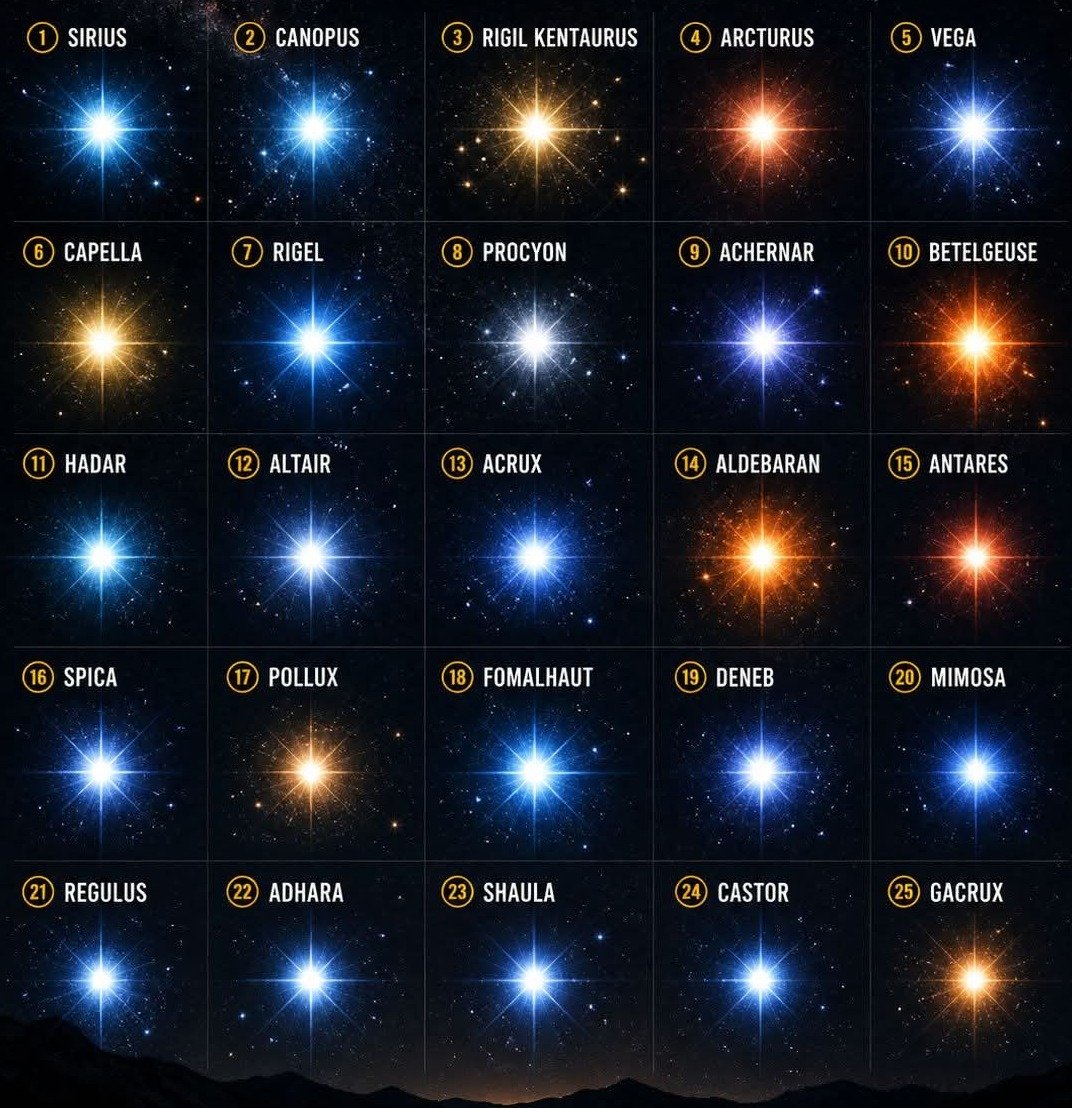
25 BRIGHTEST STARS YOU CAN SEE FROM EARTH
These aren’t just pinpricks of light… they’re blazing cosmic beacons that have guided humanity for millennia From Sirius — the dazzling Dog Star, brightest of them all —
to colossal supergiants whose ancient glow has journeyed thousands of light-years just to sparkle in your backyard tonight Every time you tilt your head upward, you’re catching light that left its star before the pyramids were built, before dinosaurs roamed, sometimes before Earth even existed You’re not merely stargazing.
You’re time-traveling.
You’re witnessing raw stellar power across impossible distances.
You’re touching the living history of the universe itself Look up tonight… and feel the cosmos looking back.
Repetition rewires your brain.
Repetition rewires your brain.
Repetition rewires your brain.
Repetition rewires your brain.
Repetition rewires your brain.
So choose carefully what you repeat.
Sunset on Mars😮
For thousands of generations, every human who ever lived watched the Sun set from the same world. The same horizon. The same sky.
And now, for the first time in history, we are the generation that can witness a sunset from another planet.
A quiet blue glow fading over the dusty plains of Mars — proof of how far curiosity has carried us. On Mars, the Sun appears smaller because the planet is about 1.5 times farther from it than Earth is.
This is what the birth of a sun actually looks like.
James Webb captured this "cosmic hourglass," featuring a protostar only 100,000 years old—a mere blink of an eye in the life of a star.
Hidden in the dark "neck" is an infant star gathering mass from a disk of dust the size of our entire solar system.
We are looking at our own past. This is likely exactly how our Sun looked 4.6 billion years ago. 🌌✨
⚡ Nikola Tesla was right. The universe isn’t solid — it vibrates.
Quantum physics now shows reality is built not from matter, but from vibration and waves.
Nikola Tesla once said, “If you want to find the secrets of the universe, think in terms of energy, frequency and vibration.”
Far from a metaphor, his insight aligns strikingly with what modern physics has revealed. At the quantum level, reality isn’t made of solid particles but of vibrating energy fields.
Every particle—from electrons to protons—has its own frequency, and these wave patterns determine everything from chemical bonds to the colors we see. Light, heat, and sound are all forms of energy defined by vibration and frequency.
Even spacetime itself isn’t still. In 2015, scientists confirmed that black holes can create ripples—gravitational waves—that travel across the cosmos, carrying energy through the very fabric of the universe. Tesla may not have had the equations, but his intuition was remarkably prescient: everything, from atoms to galaxies, moves in patterns of vibration and resonance.
Einstein’s path to the discovery that mass warps spacetime began with a profound thought experiment in 1907, which he later called, the happiest thought of my life.
It started with the question he asked to himself,
"If a person falls freely from the roof of a house, will they feel their own weight?"
When Einstein realized that a falling person would feel weightless. In their perspective, gravity would effectively disappear.
This led to several game-changing realizations;
First one is,
The Equivalence Principle;
He concluded that gravity and acceleration are essentially the same thing. If you were in a windowless elevator in deep space being pulled upward at a constant speed, you wouldn't be able to tell the difference between that and standing still on Earth.
Next one is,
Gravity as Geometry:
Because gravity affects everything exactly the same way regardless of mass, Einstein reasoned it isn't a "pulling force" like magnetism. Instead, it must be a property of the environment itself, which we know now as the fabric of spacetime.
Last but not least,
Warping Spacetime;
If gravity is equivalent to acceleration, and acceleration can curve the path of light, then gravity must also curve light. The only way for light which always takes the shortest path to curve is if the ground it's traveling on spacetime which is itself curved by mass.
For those just looking for fancy science fact it's just one of the discoveries about nature but Einstein himself it was the way of living life.