Bruce Lee’nin 100 bin dolarlık bütçeyle çektiği 'Öfkenin Yumruğu' (Fist of Fury, 1972) filmi dünya çapında 100 milyon dolar hasılat yaptı.
Seyirciler “Asya’nın hasta adamı” sahnesinde o kadar coştu ki bazıları koltukları söktü.
Bruce Lee, yönetmen Lo Wei’yle neredeyse yumruklaşacaktı; Jackie Chan’in anlattığına göre yönetmen karısının arkasına saklanmış.
Final dövüşünde Suzuki’yi uçuran tekme aslında Jackie’ye vurdu ve beklenenden çok daha uzağa savurdu.
Orijinal senaryoda Chen Zhen hayatta kalıyormuş ama Lee ısrar edip “intikamın bedeli olmalı” diyerek ölüm sahnesini koydurmuş.
80'lerde neredeyse her gencin öğrenmek için kendi kafasını kırıp, gözünü morarttığı Nunchaku’yu ilk kez bu filmde kullandı ve popüler olmasını sağladı.
Sonradan Nunchaku “gerçek hayatta (Japon kılıcı) katanaya karşı eşit bir silah değil” diye itiraf ettiğinde hayallerimiz yıkılmıştı.
Park sahnesindeki “Köpekler ve Çinliler giremez” tabelası, o dönem Şanghay’daki gerçek ayrımcılığa dayanıyor ki.
Bu tabelayı kırdığı sahne de yıllar sonra bile hafızlardan çıkmadı.
Klasik ama hâlâ etkileyici bir film.
#BruceLee #FistOfFury #Cinema
GLP-1s are super effective in mitigating appetite - while you're dosing. What happens when you stop dosing? That's when the habits you've built - esp exercise and strength workouts - need to have reached the point of automation and non-negotiability.
https://t.co/zDTYkaWgaF
The retatrudide randomized clinical trial for obesity is published @NEJM, confirming marked potency of this triple receptor GLP-1 drug (also agonist for 2 other receptors, GIP and glucagon). Up to 30% loss of body weight vs placebo.
https://t.co/OPsKFhcaIo
@dantawfik Money shot, worth pondering deeply! "What preserved the youthful molecular profile was structured, sustained training. Filling a step counter and being genuinely trained are not equivalent at the molecular level."
A study put 50 adults thru treadmill, bike and elliptical trials wearing an ECG, a Polar H7 chest strap & 2 wrist devices. Variance to ECG (Gillinov et al., 2017):
Garmin Forerunner 235: 0.81
Scosche Rhythm: 0.75
Fitbit Blaze: 0.67
Some insights about exercising for longevity:
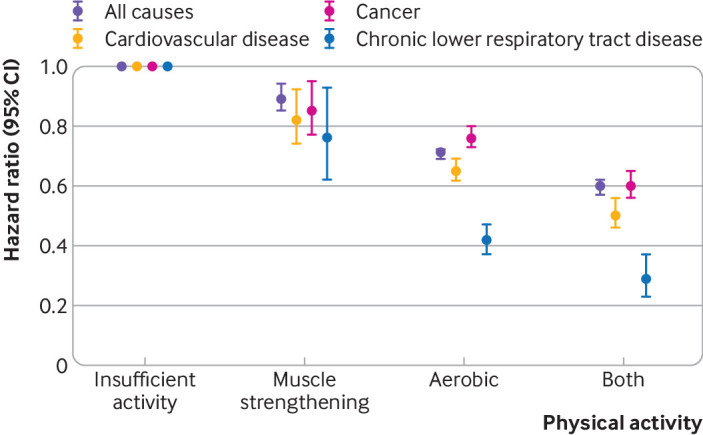
1. Head-to-head, cardiorespiratory fitness is more strongly associated with lower mortality than muscle strength, but both combined is better than one alone (PMID: 29594847; PMID: 32611588).
2. High-intensity interval training (HIIT) is more effective in raising HRV than resistance training (PMID: 39077654).
3. Aerobic exercise improves cardiometabolic risk factors more than resistance training (PMID: 38233024).
4. Aerobic exercise and HIIT are more effective in reducing visceral fat than resistance training (PMID: 21951360)
5. Exercising beyond the minimum guidelines is associated with even lower mortality: roughly 150–300 minutes of vigorous or 300–600 minutes of moderate activity per week (PMID: 35876019).
6. The benefits of vigorous exercise (>60% of max heart rate) peak at about 150 min/week, but for moderate exercise (40-60% mhr) you see benefits up to 900 min/week (PMID: 37091937).
People who drank more coffee had less body fat, less visceral fat, and more lean mass than less-frequent or non-drinkers.
The biggest benefit was seen at 5 or more cups per day.
And for men, every extra cup per day was associated with a ~10 ng/dL higher total testosterone. Higher coffee intake was also associated with better glucose and insulin regulation in men.
This was an observational study, but mechanistic and experimental evidence actually supports coffee's benefits on metabolic and hormonal health. I'm willing to believe there's a real link here rather than draw a conclusion such as "coffee drinkers live healthier lives in general."
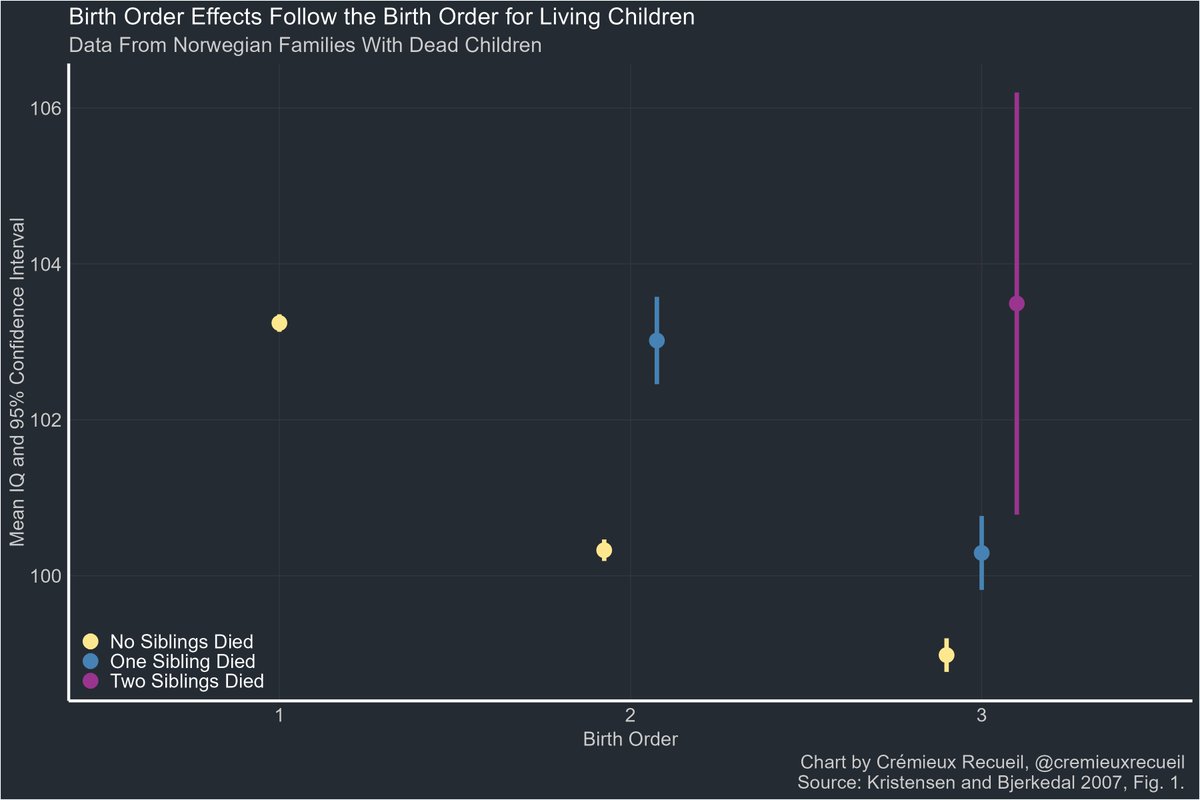
Why are first-born siblings smarter than 2nd-, 3rd-, or later-born siblings?
To figure out the answer, we have to talk about what the answer is not🧵
First, the effect is about social order: if a prior child died young, the biological second child has an IQ like a first-born.
1. Hibiscus isn’t “tea” — it’s an “ACE inhibitor.” It repairs elasticity of your arterial walls, lowering your “vascular age” by up to 6 years in 4 weeks.
2. Green Tea isn’t “antioxidant” — it’s a “methylation booster.” It donates methyl groups to repair your DNA’s “error-correcting” enzymes, stopping mutations before they start.
3. Cacao isn’t “hot chocolate” — it’s a “flavanol flood.” It increases blood flow to the hippocampus, literally repairing memory loss and “brain fog” at the cellular level.
4. Chamomile isn’t “sleepy” — it’s a “nerve-regenerator.” It contains apigenin, which physically binds to GABA receptors to rebuild frayed neural pathways from chronic stress.
5. Ginger isn’t “soda flavor” — it’s a “thermogenic trigger.” It repairs your fat cells’ ability to burn energy, reversing the metabolic slowdown that makes you “cold and stiff.”
Self-respect compounds the same way self-contempt does. One kept promise feels small. Ten create momentum. A hundred change how you see yourself. The brain updates identity from repeated evidence, which means every private decision is teaching you whether your own word deserves to be trusted.
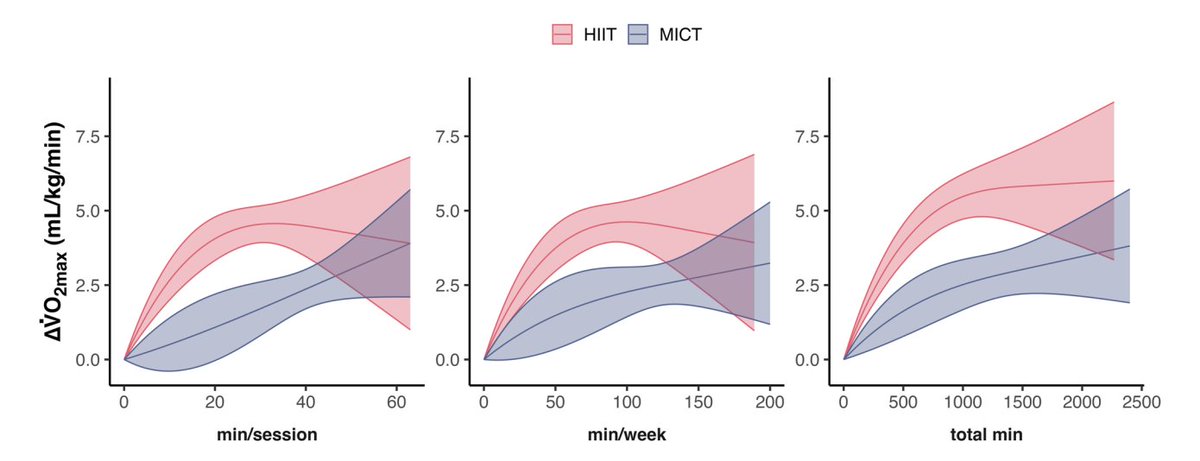
Most people assume more exercise equals more fitness. A dose-response analysis of 69 trials found high-intensity training hits 80% of maximal effect in 11 minutes, while moderate training requires 52 minutes for the same result.
Researchers at the University of Tübingen and Liverpool John Moores University conducted a meta-analysis examining 2,387 participants across 69 randomized controlled trials. The goal was to map the exact relationship between exercise duration and fitness improvements for two different training approaches.
The analysis compared high-intensity interval training, or HIIT, against moderate-intensity continuous training, known as MICT. HIIT involves brief bursts of hard exercise interspersed with recovery periods. MICT is the traditional steady-state cardio most people perform at the gym.
The primary outcome was VO2max, the maximum amount of oxygen your body can use during exercise. VO2max is the gold standard measure of cardiorespiratory fitness and predicts cardiovascular disease risk and all-cause mortality.
Within each training type, session durations varied considerably. HIIT sessions averaged 25 minutes, ranging from very brief protocols under 10 minutes to longer sessions exceeding 40 minutes. MICT sessions averaged 43 minutes, with similar variation.
This variation allowed researchers to model dose-response curves. A dose-response curve shows how much benefit you get from increasing amounts of something. In this case, the dose is exercise duration per session, and the response is the improvement in VO2max.
HIIT and MICT produced fundamentally different dose-response patterns.
HIIT followed a non-linear curve. Fitness gains increased rapidly with the first few minutes of exercise per session, then plateaued. The curve flattened around 23 minutes per session, meaning additional time beyond that point provided minimal extra benefit.
MICT followed a linear pattern within the observed range. Fitness continued improving proportionally with each additional minute of exercise. The curve showed no plateau, suggesting benefits might continue accumulating at even longer durations.
The key finding centers on effective dose calculations.
Researchers calculated ED50, ED80, and ED100 values. These represent the exercise dose required to achieve 50%, 80%, and 100% of the maximal predicted effect for each training type.
For HIIT, 80% of maximal VO2max improvement occurred with just 11.4 minutes per session. The maximal effect required 23.2 minutes per session. For MICT, reaching 80% of maximal effect required 52.4 minutes per session, and maximal effect occurred at 63 minutes.
That represents a 4.6-fold difference in time requirement between HIIT and MICT to achieve similar cardiorespiratory adaptations.
The actual fitness improvements also favored HIIT. High-intensity training increased VO2max by 4.36 mL/kg/min on average, compared with 2.59 mL/kg/min for moderate training. Between-group comparison showed HIIT superior by 1.20 mL/kg/min.
Key findings:
• HIIT achieved 80% of maximal fitness gains in 11 minutes per session
• MICT required 52 minutes per session for equivalent improvements
• HIIT showed non-linear dose response with plateau at 23 minutes
• MICT showed linear dose response with no observed plateau
• Time efficiency advantage persisted across age, baseline fitness, and health status
When researchers isolated only the high-intensity work time, excluding recovery periods, the dose dropped further. Eighty percent of maximal VO2max gains occurred with just 5 minutes of actual hard work per session.
This matters because HIIT sessions include substantial recovery time. Across included studies, recovery comprised 50% of each session on average, with work-to-rest ratios ranging from 1:9 to 5:1.
The dose-response pattern held regardless of participant characteristics. Researchers tested whether the curve shape differed between healthy individuals and those with cardiometabolic risk factors like obesity, pre-diabetes, or pre-hypertension. No statistical difference emerged.
Baseline fitness level and age also failed to moderate the effect. The relationship between exercise duration and fitness gains remained consistent whether participants started with low or moderate fitness, and across the age spectrum examined.
Despite the dramatic differences in VO2max improvements, HIIT and MICT produced comparable effects on cardiometabolic risk factors. Both reduced body fat, blood pressure, triglycerides, and fasting insulin to similar degrees.
This dissociation suggests different mechanisms drive central versus peripheral adaptations.
VO2max is centrally limited by cardiac output, the amount of blood your heart pumps per minute. High-intensity exercise creates elevated cardiac preload and peak output that appears particularly effective for cardiac adaptation.
Metabolic improvements depend more on peripheral factors like total caloric expenditure and glycogen depletion. These can accumulate through either high intensity or long duration, explaining why both approaches produce similar metabolic benefits.
The non-linear HIIT response reveals a physiological ceiling. Once you've provided sufficient stimulus to trigger maximal cardiac adaptation, additional high-intensity volume adds little. The steep early curve shows most adaptation occurs from minimal doses.
The linear MICT response suggests volume-dependent adaptation. Moderate intensity may require accumulation of training stress over longer durations to produce equivalent central adaptations, but shows no apparent ceiling within typical session lengths.
Practical implications require nuance.
These are population-level averages derived from protocols with substantial variation in intensity prescription, work-to-rest ratios, and recovery structure. Individual responses vary.
The 11-minute HIIT estimate includes recovery periods. The actual high-intensity work averages around 5 minutes per session for 80% of maximal effect. But recovery structure matters for tolerability and adherence.
MICT prescriptions in these studies ranged from 50-80% of VO2max or 65-80% of maximum heart rate. Some participants likely exercised above their first metabolic threshold, technically in the heavy rather than moderate domain, which may affect the apparent dose-response.
The findings don't suggest HIIT should replace all other training. Both modalities produced equivalent cardiometabolic improvements despite different time requirements for VO2max. A flexible approach combining both based on time availability and preference may prove more sustainable.
When time is limited, the steep early HIIT curve offers efficient stimulus. Most cardiorespiratory gains come from just a few minutes of hard work. When time allows, accumulating moderate-intensity volume provides comparable adaptation through a different route.
The dose-response framework also identifies a point of diminishing returns. Extending HIIT sessions beyond 20-25 minutes per session provides minimal additional VO2max benefit. Training programs can optimize time investment by recognizing where each additional minute stops mattering.
The decisions about exercise prescription now have quantitative backing. The relationship between time investment and fitness outcome follows predictable curves that differ by intensity. Understanding these curves allows more informed choices about how to structure training for specific goals.
If you’re not convinced to do your HIIT now, you’ll never be.
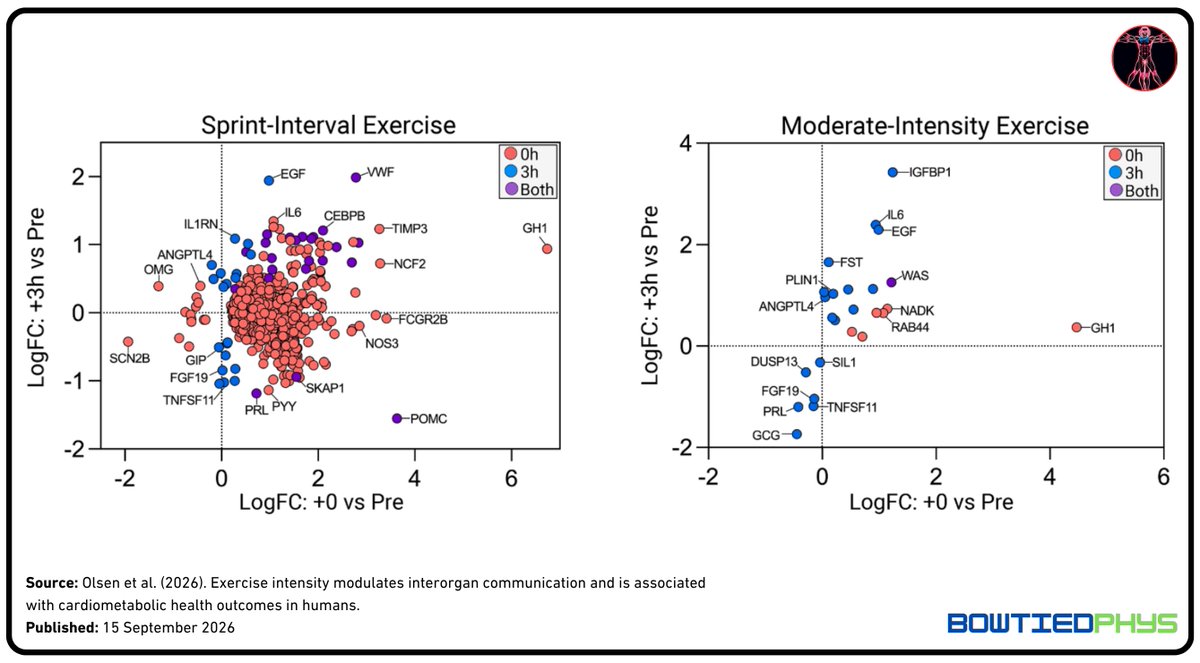
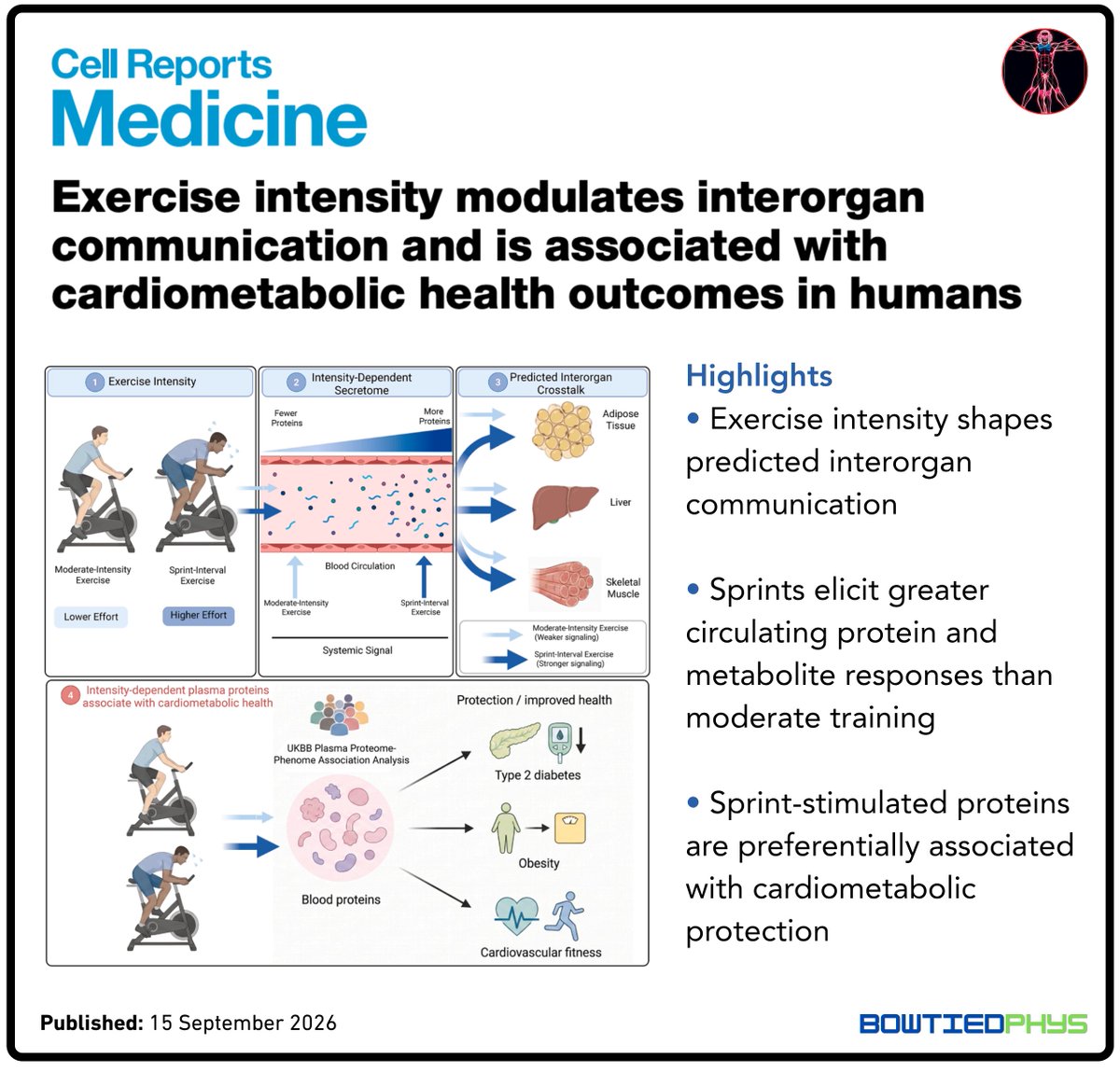
6 rds of 30 sec sprints activated 700+ blood proteins.
90 min of steady cardio changed only 7.
3 min/week. Simple.
A 2026 rapid review in Ageing Research Reviews looked at every meta-analysis ever done on multivitamins and health. The findings: no consistent evidence that daily multivitamins prevent heart disease, cancer, cognitive decline, or death.
The review pulled together results from multiple large-scale meta-analyses, each of which had already combined dozens of individual trials. When you combine the combined results, the signal for benefit is either absent or too small to matter for most outcomes. A few individual studies showed modest effects on cancer incidence in men, but the results were not replicated, and the overall picture was neutral.
The supplement industry has been selling insurance in a bottle for decades, and the science keeps saying the bottle is empty. The nutrients in a multivitamin are real, but they are stripped from the food matrix that makes them work. A vitamin C pill does not behave in the body the same way a red pepper does, because the pepper also contains fibre, water, bioflavonoids, and hundreds of compounds that interact with the vitamin in ways a pill cannot replicate.
The review noted that certain populations do benefit from specific supplements: pregnant women from folic acid, elderly adults from vitamin D, and people with documented deficiencies from the nutrient they are missing. The finding is not that all supplements are useless. It is that the daily multivitamin taken by a healthy person eating a reasonable diet produces no measurable change in any health outcome the researchers tested.
Forty billion dollars a year, spent on a product the research says does nothing for healthy people. The industry knows this. They sell it anyway, and we keep buying it. https://t.co/eqTFmF7Ia3