I did a PhD in the biology of p53 so, given this week's news, I can't resist sharing some facts about it
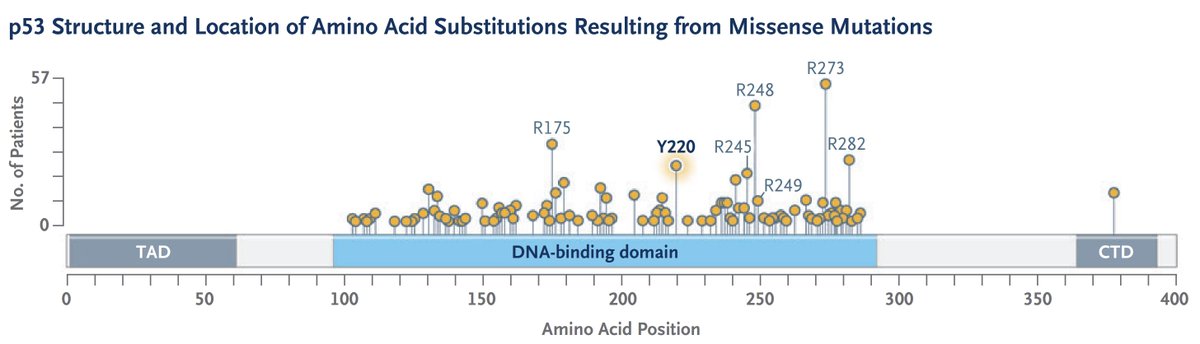
1. Cancers are under intense selective pressure to inactivate p53, and there are >1,000 ways to do it
2. Even one molecule of mutant p53 within the functional tetramer can poison the whole complex — many of the mutations are dominant-negative
3. Some p53 mutations not only disrupt its anti-tumor function, but add new pro-tumor functions (these are the 'gain-of-function' mutations)
We've known all of this for a long time, and it's amazing to see p53-reactivating therapies finally (slowly) having some success in the clinic
देश की बेटियां स्वस्थ और समृद्ध हों, इसके लिए हम कोई कोर-कसर नहीं छोड़ रहे हैं। इसी दिशा में आज सुबह करीब 11:30 बजे राजस्थान के अजमेर में एचपीवी टीकाकरण के देशव्यापी अभियान का शुभारंभ करूंगा। इस पहल का उद्देश्य सर्वाइकल कैंसर की रोकथाम है। इस दौरान कई परियोजनाओं के शिलान्यास और उद्घाटन के साथ ही अपने युवा साथियों को नियुक्ति पत्र देने का भी सुअवसर मिलेगा।
https://t.co/LHT7SdJrGc
📢📢Big day for HIF-2α inhibition — the Belzutifan era is expanding in RCC✅
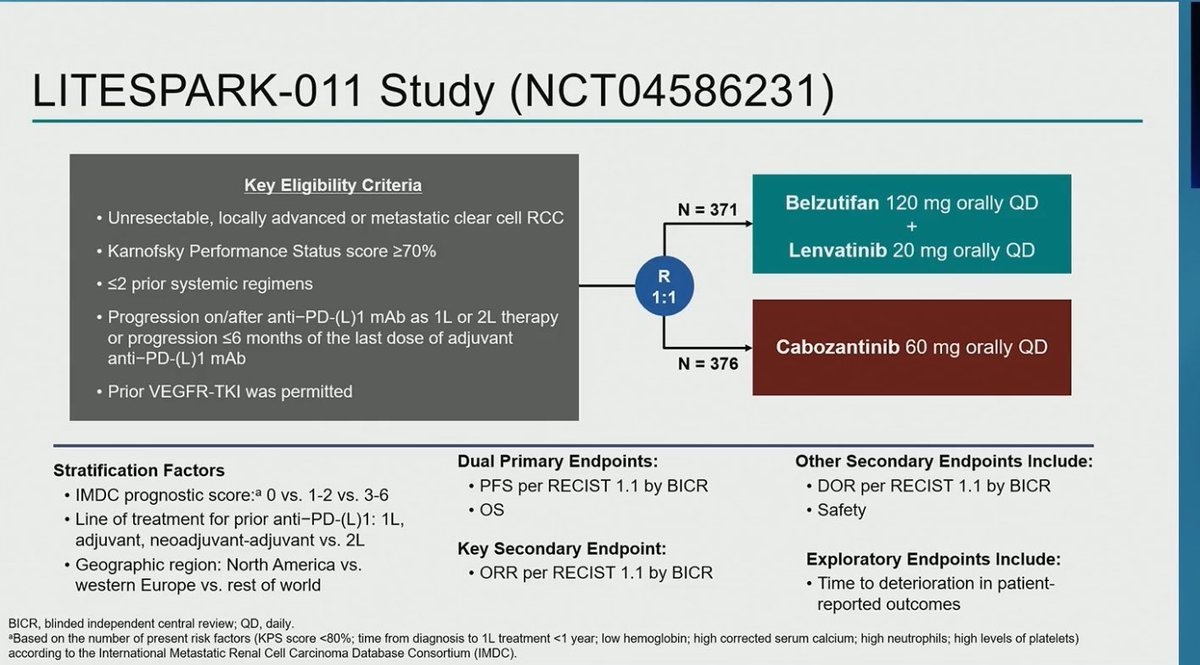
🧬LITESPARK-011 (2L mRCC)
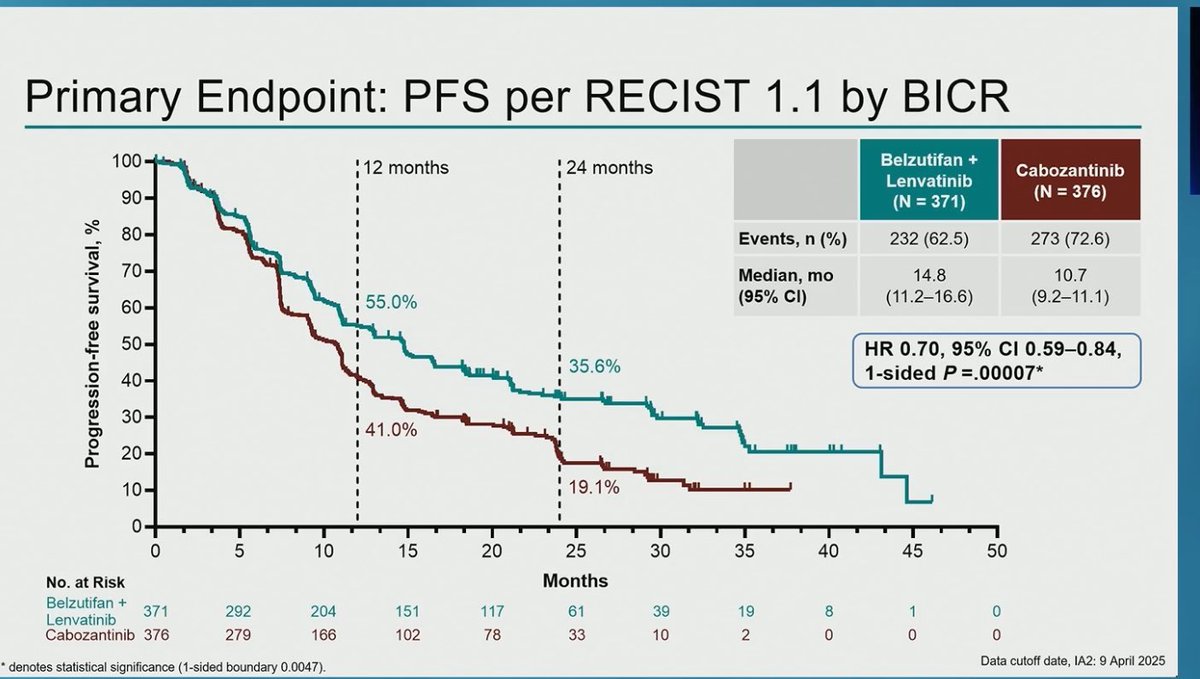
Belzutifan + lenvatinib vs cabozantinib
PFS HR 0.70
24-mo PFS: 35.6% vs 19.1%
Strong and clinically meaningful signal.
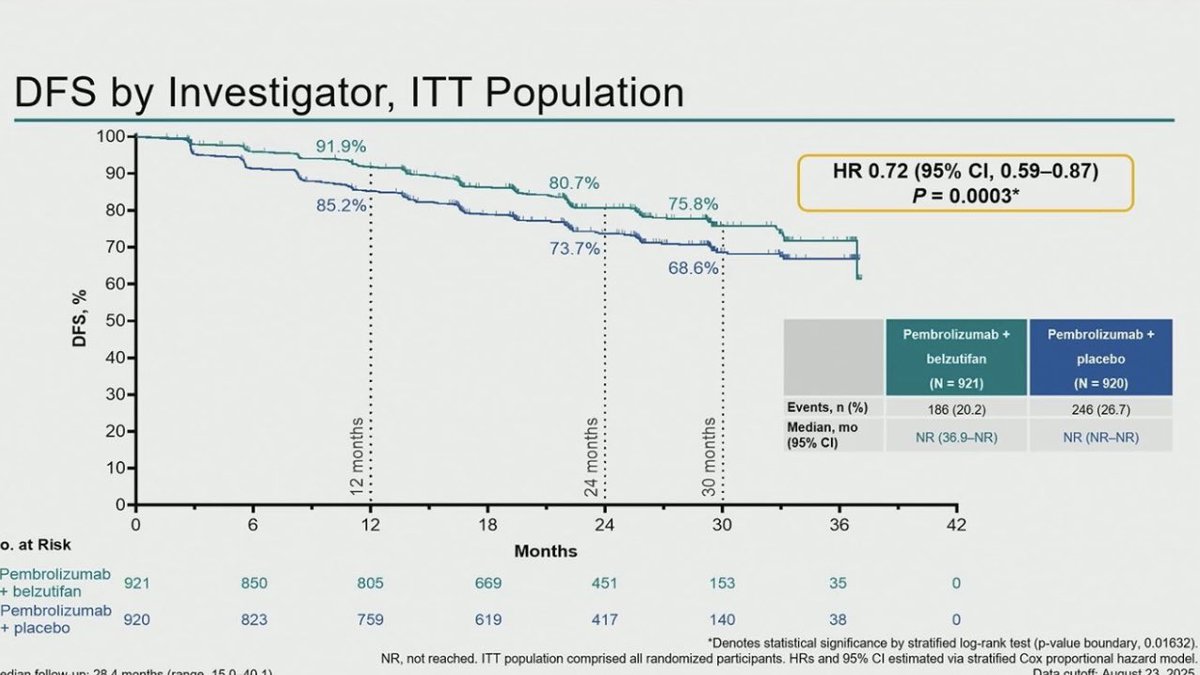
🧬LITESPARK-022 (adjuvant)
Belzutifan + pembrolizumab vs pembro
DFS HR 0.72
~7% absolute gain at 2 yrs
OS immature.
From metastatic to adjuvant —
HIF-2α inhibition is clearly entering prime time. @OncoAlert@OncoReporte@MedwatchKate @MedicalwatchHQ @weoncologists@Uromigos
A brief history of p53-targeting cancer therapies
2003 — Gendicine, a p53 gene therapy, approved in China (but not elsewhere)
2012 — The first small molecule MDM2 inhibitor (RG7112, which works by preventing degradation of p53) enters trials, but did not progress to approval
2013 — Second-generation MDM2 inhibitor (Idasanutlin) reached phase 3, but failed and was dropped
2017 — A dual MDM2/MDMX inhibitor, ALRN-6924, enters trials; it has not since been approved
2020–2021 — A mutant p53 reactivator, Eprenetapopt, fails in phase 3
2023 — An MDM2 inhibitor, Milademetan, fails in phase 3
2024 — Promising phase 1 data for an MDM2 degrader
2026 — Rezatapopt phase 1 data: very promising early data, specific for the p53 Y220C mutation (present in 1% of all solid tumours)
Our work is now published in @Nature.
We introduce the Mouse Cancer Cell Line Atlas (MCCA) and reveal deterministic, tissue-specific rules of KRAS-driven cancer evolution.
Huge thanks to the entire team & collaborators.
https://t.co/vjiwCcHnQl
Real world intracranial efficacy of trastuzumab deruxtecan (T-DXd, HER2 ADC) in HER2 mutant NSCLC @JTOonline. Systemic RR 54.8%, PFS 7.2m, OS 18.3m across lines. As 1L, RR 72.2%, OS 22.1m. Intracranial RR 74.1% in 27 pts. ILD seen in 14% (4 fatal).
https://t.co/QMJ38D4Qf2
@PTarantinoMD@chadinabhan The field’s mistaken belief that higher payload potency would translate to better clinical efficiency delayed progress by at least a decade
When a phase 1 trial is published in @NEJM, you can bet it will be impactful. Here, the p53 reactivator rezatapopt showed an ORR 20% among 77 pts with TP53 mutant (Y220C) advanced tumors. Are we getting closer to drug the most undruggable of all mutations? https://t.co/lpkvWiNNmu