Second Glue Coast EP, Douglas, on all the streamers today. But catch them live! Buy a cassette! Buy a shirt! Mosh your big body! Have big feelings!
https://t.co/KNdHP7xFn7...
Red Bull, Microsoft, Walgreens, and Car Freshener Corporation are hiring IP positions! Check out these listings and more in this week's I ❤️Trademarks Newsletter: https://t.co/dJFuoxMHLs
Want us to publish your listing? Email us: [email protected]
Advancing scholarship at the intersection of intellectual property and technology.
@LinfordInfo , Associate Dean for Academic Affairs and the Loula Fuller & Dan Myers Professor, and FSU Law recently hosted the two-day Florida Intellectual Property & Technology Law Workshop.
The event featured leading scholarship from @dbambauer (@UFLaw), Mark Edward Blankenship Jr. (@StThomasLaw), @brianrdowning (@umlaw1854 ), @Prof_Schuster (@universityofga ), and FSU Law professors Jake Linford and Justin Sevier, Charles W. Ehrhardt Professor of Litigation.
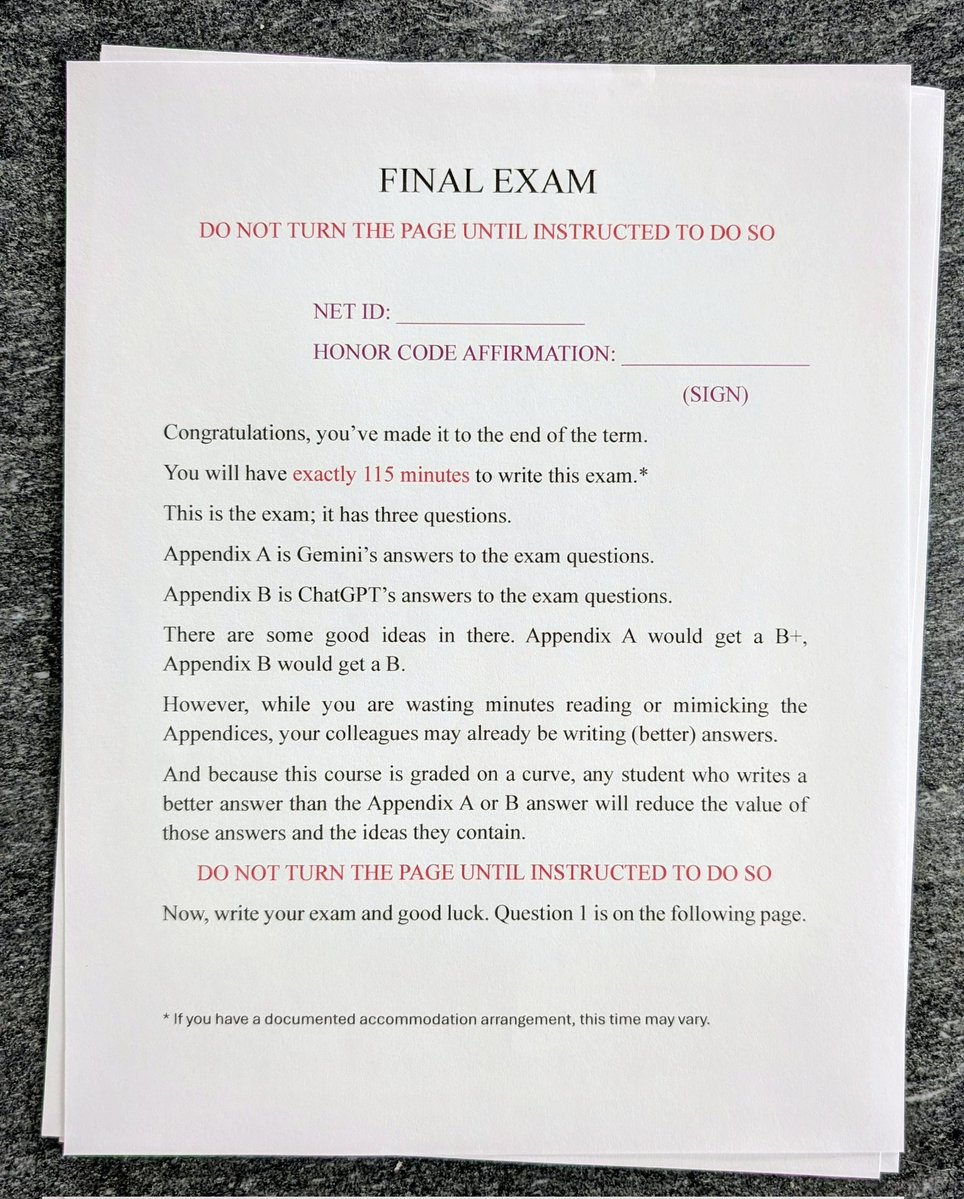
I know there are many (understatement) approaches to AI use where students are being evaluated, and that there is variation between disciplines and levels of study, but I thought I'd share one and perhaps stoke the debate.
Anyone (including my students) is welcome to comment...
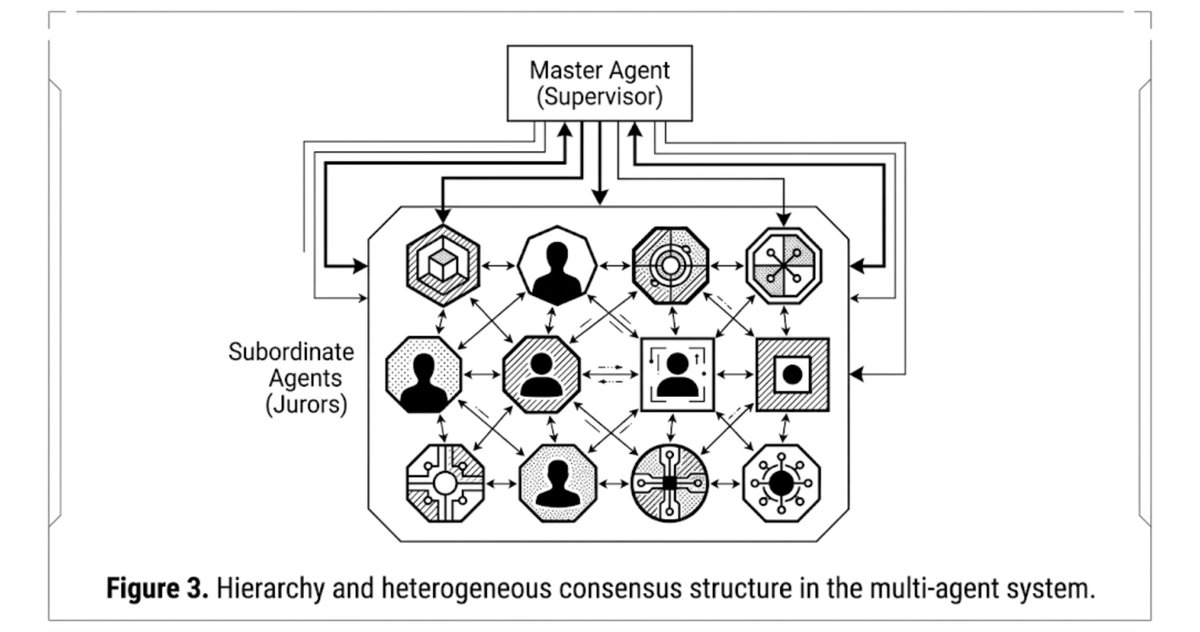
My recent testing of hierarchical configurations of agentic AI has produced disturbing results.
I begin w/ a spec similar to Ersoz (2026) but now above the AI agent jurors there is now an AI agent "judge."
The jury pool is heterogeneous (various models, differentiated canons).
Morgan & Morgan lawyer gets pro hac application denied on grounds that he misused AI in another case.
Michael Morgan sought to appear in a case in Massachusetts, where he is not admitted.
He disclosed that he had been sanctioned in federal court in Wyoming because he "signed motions in limine without reading them and, as a result, permitted the filing of motions citing eight non-existent cases that had ben hallucinated by Morgan & Morgan's in-house Artificial Intelligence platform."
Mass. court was "troubled by Morgan's demonstrated failure in the Wyoming case to live up to the ethical standards required of trial lawyers."
"Trial lawyers cannot file legal papers supported by fake citations."
"Doing so inadvertently is no excuse."
@LinfordInfo, Associate Dean for Academic Affairs AND Loula Fuller & Dan Myers Professor at FSU College of Law, was quoted in a @YahooNews article about a high-profile LDS Church trademark lawsuit.
He explains the legal issues surrounding branding and “Mormon” usage in the case.
Read: https://t.co/HR0aNDCxRd
A modest proposal: If you submit a manuscript with a made-up citation—not a bungled or misspelled reference—you receive a 5-year ban on having your work reviewed at that journal.
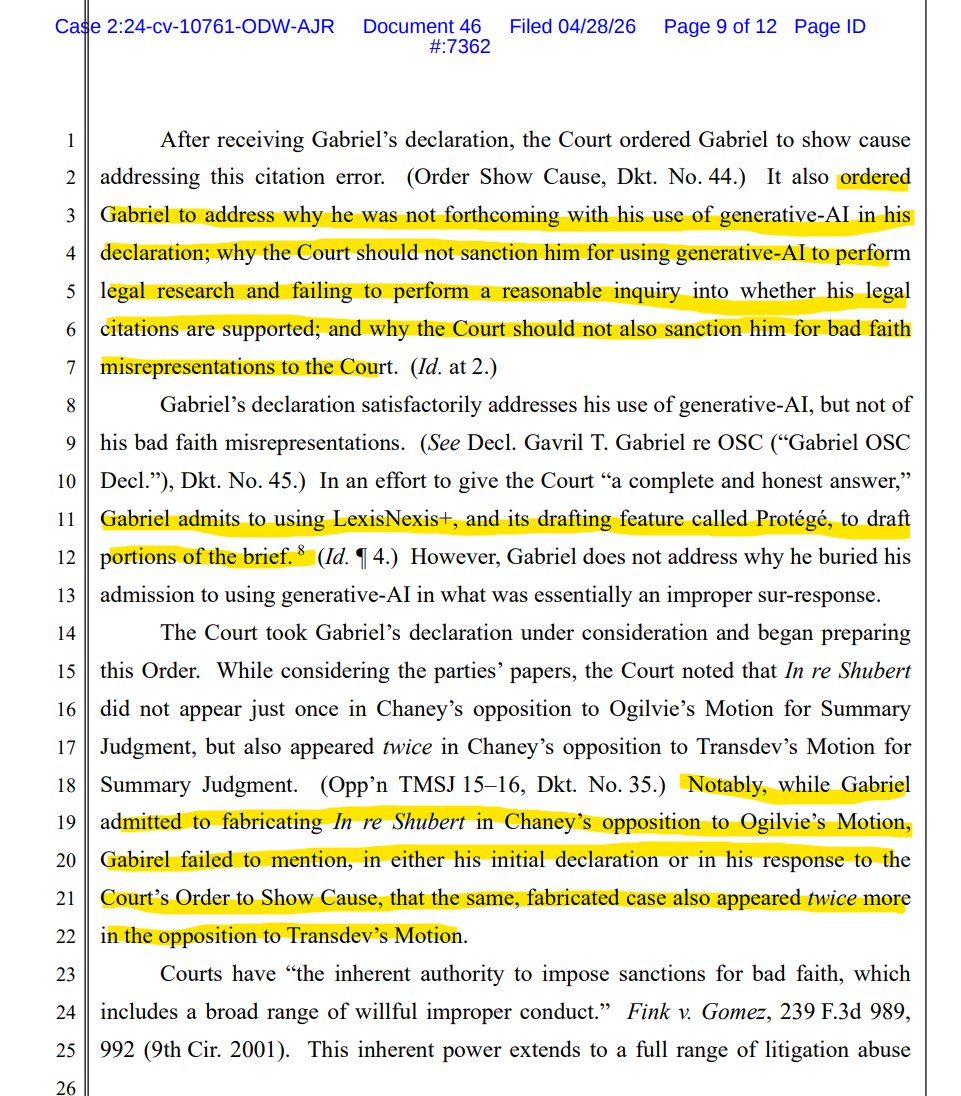
Another lawyer cites a fake, AI-hallucinated case, blames Lexis Protege.
"Unfortunately the Court must, once again, discuss sanctions related to the use of generative-artificial intelligence."
This lawyer cited a fake case and initially tried to play it off as an inadvertent citation error.
The court ordered him to show cause to "address why why was not forthcoming with his use of generative-AI," among other things.
The lawyer "admits to using LexisNexis+, and its drafting feature called Protege, to draft portions of the brief."
But he did not address why he didn't own the problem better. And he did not address the fact that he cited the same fake case twice more in other briefing.
Court says the "impositions of sanctions for submitting generative-AI hallucinations is so well-documented at this point that the Court finds the failure to verify citations after using generative-AI rises to the level of bad faith."
And the lawyer's "attempts to hide his misconduct" made things worse.
Sanctions:
-$2,500
-Ordered to file declaration in every case in C.D. Cal. explaining how he used AI to draft briefing in this case and detailing the Court's findings.
-Ordered to email that declaration to every judge in C.D. Cal.
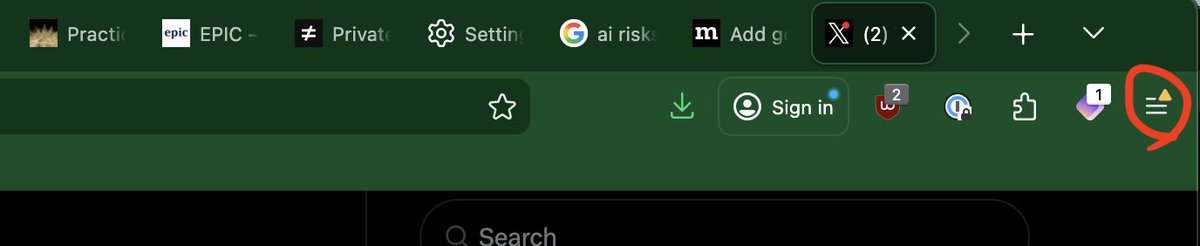
I'm in Firefox, but I'll share instructions I'm told work for Chrome as well.
First, go to settings (in the drop-down menu when you click on these three lines in the upper right)
The Justice Department fired assistant US attorney Rudy Renfer the day after he said he was resigning over his error-riddled AI-generated brief at a hearing over the matter. https://t.co/g7YWsNCwl3
"Attorneys should ask themselves whether the time and effort they will save by using generative AI to draft a legal document is worth the damage their career and professional reputation will suffer if they do not ensure the document’s accuracy."
If you're thinking about using gen-AI to "write" books, this 🧵 is for you.
I’m a highly experienced editor who’s been in the biz a long time. Recently I’ve had manuscripts come to me where the author has used gen-AI – not for writing, I’ve been assured, but for
New paper! LLMs Corrupt Your Documents When You Delegate
LLMs are enabling a new way of working: delegated work, where users supervise an LLM as it edits documents on their behalf.
Delegation requires trust: does the LLM complete tasks without introducing errors?
We simulate delegation across 52 professional domains and find that LLMs Corrupt Your Documents When You Delegate. 🧵1/N
A new paper introduces the cognitive error that every ChatGPT user is making without realizing it.
They call it the LLM Fallacy.
"Individuals misinterpret LLM-assisted outputs as evidence of their own independent competence, producing a systematic divergence between perceived and actual capability."
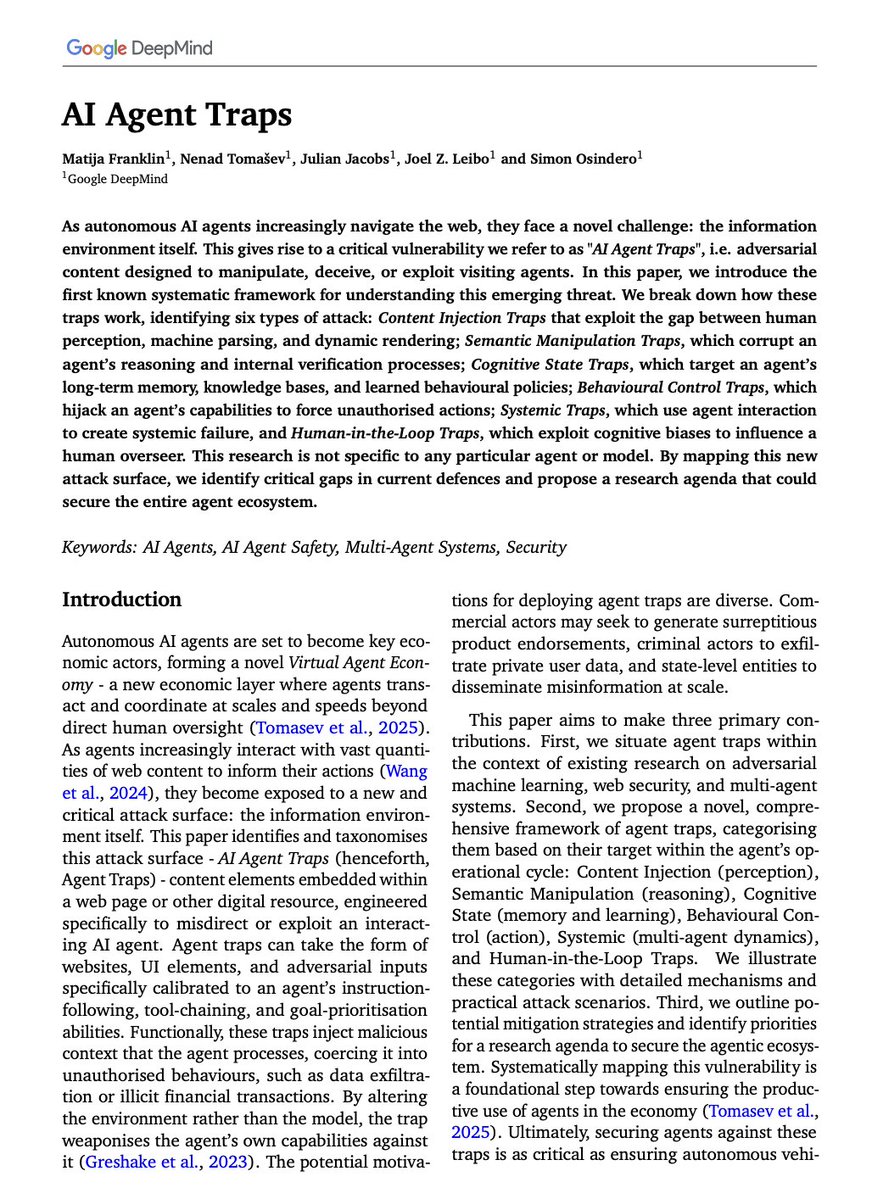
Google DeepMind just dropped the most terrifying cybersecurity paper of the year.
They just mapped the attack surface that nobody in AI is talking about.
Websites can already detect when an AI agent visits and serve it completely different content than humans see.
- Hidden instructions in HTML.
- Malicious commands in image pixels.
- Jailbreaks embedded in PDFs.
This “detection asymmetry” means a site can serve normal content to you, and malicious, hidden content to your agent.
The agent doesn’t know it’s being tricked. It simply processes whatever it receives and acts on it.
Here’s the attack surface nobody is talking about:
→ Indirect Web Injection: Malicious instructions hidden in HTML comments, CSS tricks, or white text on white backgrounds.
→ Multimodal Steganography: Commands encoded directly into image pixels, invisible to humans, but fully readable by vision models.
→ Document Jailbreaks: Override instructions embedded deep inside PDFs, spreadsheets, and calendar invites.
→ Memory Poisoning: Injecting false information that persists across future sessions.
→ Exfiltration Attacks: Tricking the agent into sending your private data to attacker-controlled endpoints.
→ Multi-Agent Cascades: The worst-case scenario, Agent A gets compromised, passes the “poison” to Agent B, then to Agent C. The entire pipeline gets infected because agents trust each other’s data.
The most sobering part of the DeepMind report? The defense landscape is failing, badly.
Input sanitization doesn’t work because you can’t “sanitize” a pixel. Prompt-level instructions to “ignore suspicious commands” fail because the attacks are designed to look legitimate.
And human oversight? Impossible at the speed and scale these agents operate.
If you ask an agent to research 50 websites, you can’t verify whether each site served the agent the same content it served you.
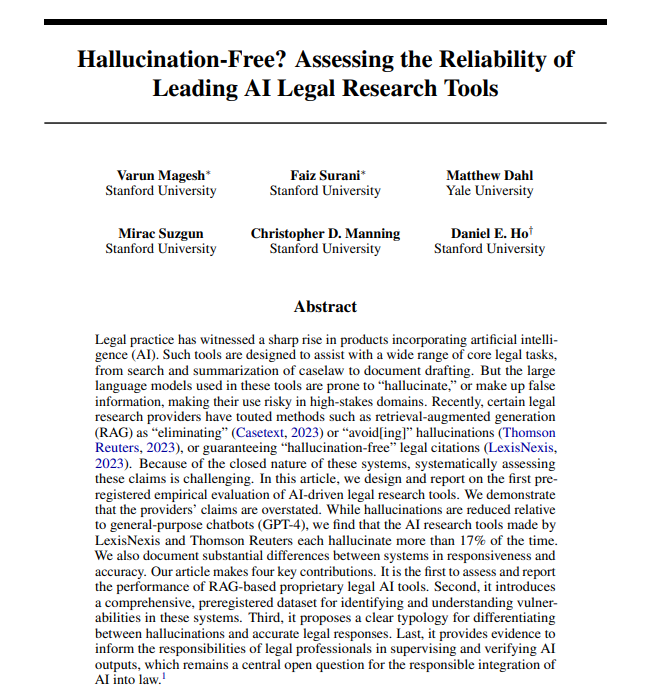
Stanford just tested whether LexisNexis and Thomson Reuters’ AI legal research tools are really “hallucination-free,” as they claim.
Spoiler: not even close.
Here’s what the study found.
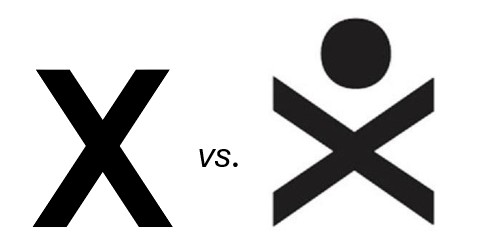
New post up on Patently-O: The Federal Circuit just ruled that mark dissimilarity alone can be dispositive in likelihood of confusion cases. X vs. stick figure - that's all it took. Worth the read if you work in trademark law. https://t.co/uIXqZgdzP7
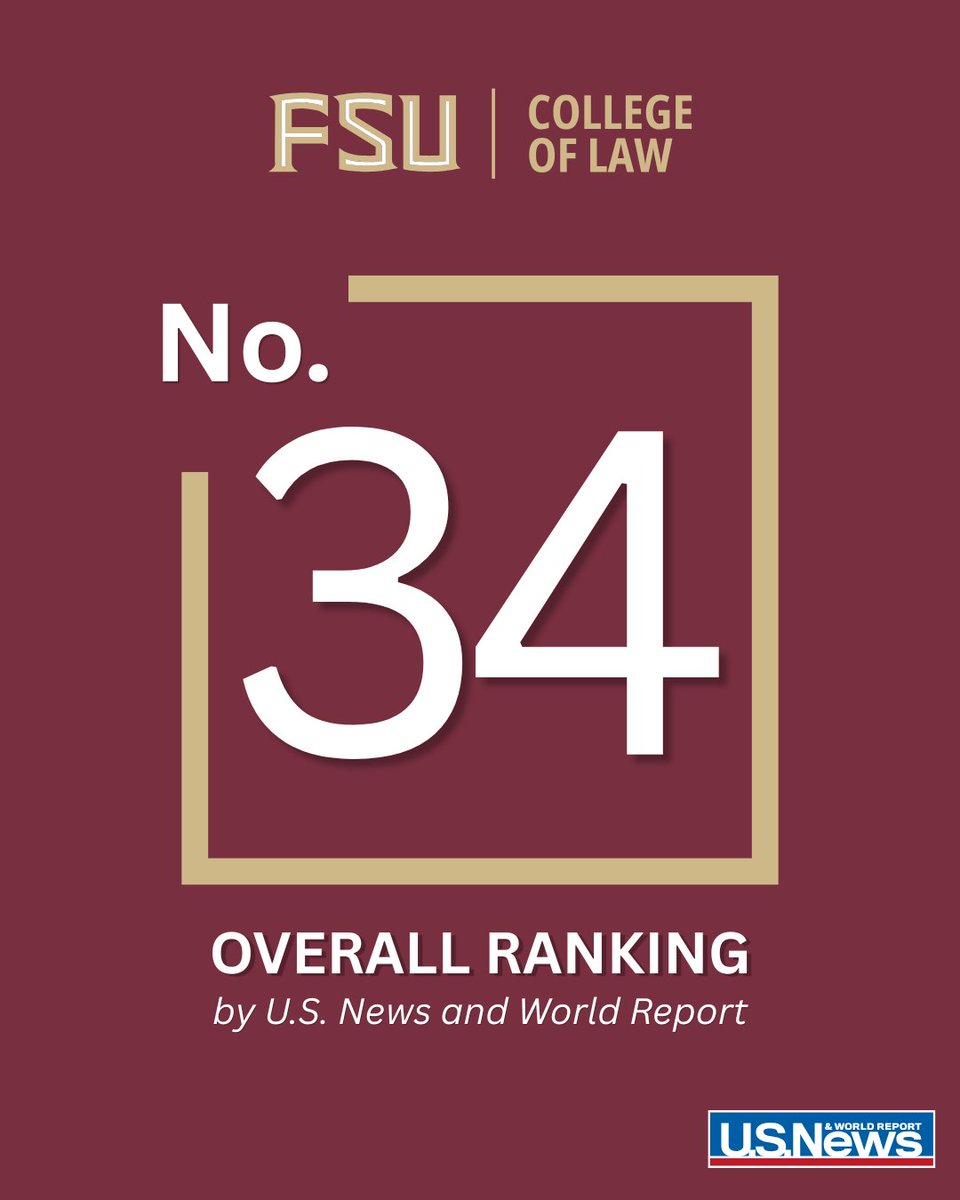
We are climbing the ranks and have reached our highest U.S. News & World Report ranking in history!
We’ve jumped 4 spots to secure the No. 34 position overall in the nation. We are also officially a Top 15 public law school at No. 14 and received Top 25 recognition for five of our legal specialties.
Thank you to our faculty, students, and alumni for their dedication to making FSU Law one of the nation’s best law schools.
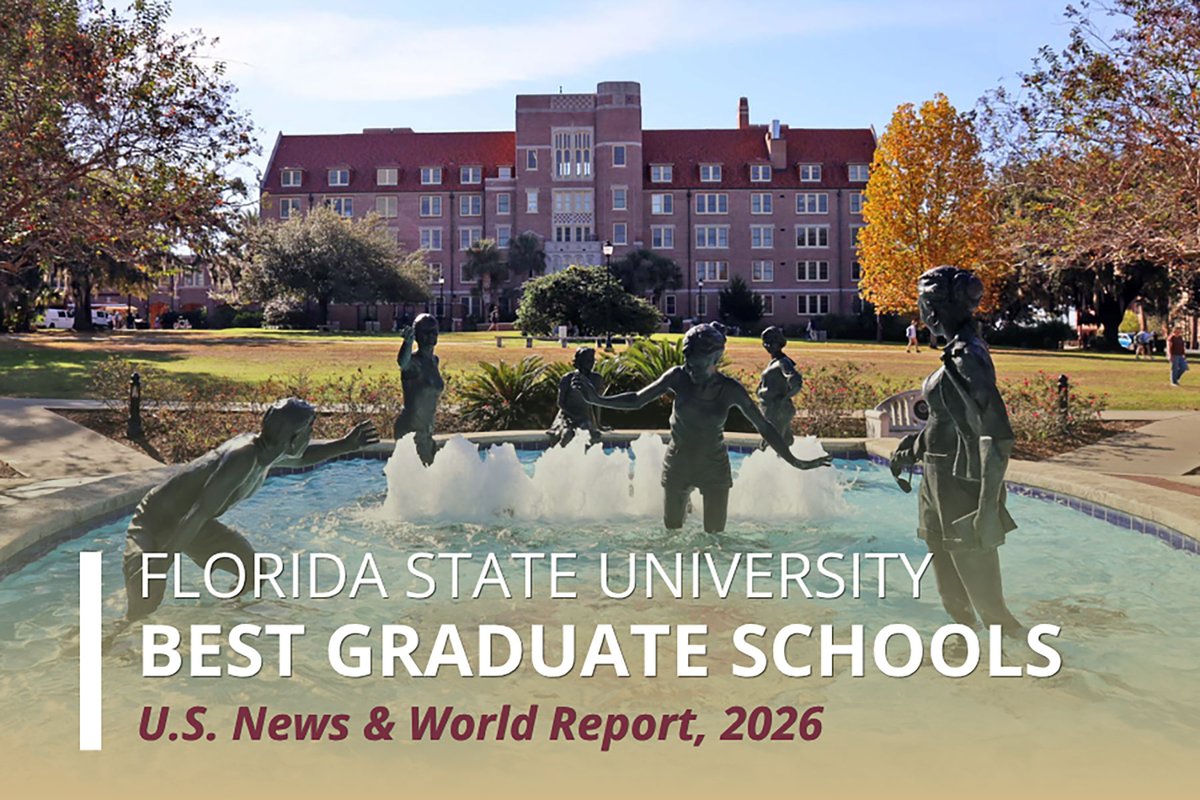
Florida State University graduate programs continue to shine in the 2026 U.S. News & World Report’s edition of Best Graduate Schools, highlighting the university’s excellence across multiple disciplines.
Six programs ranked No. 1 in Florida, with 16 Top 25 finishes among public universities! https://t.co/x7FtM5lgjL