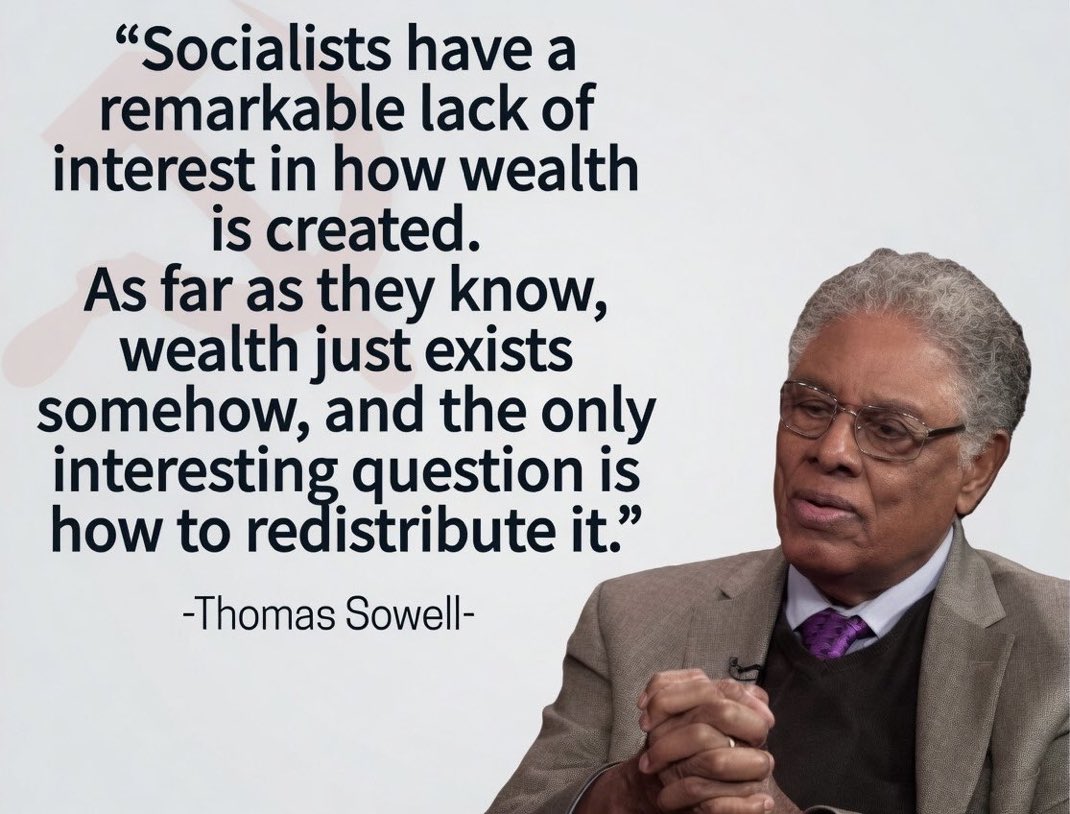
“The whole political vision of the left, including socialism and communism, has failed by virtually every empirical test, in countries all around the world. But this has only led leftist intellectuals to evade and denigrate empirical evidence.”
— Thomas Sowell
Segunda Ley de la Termodinámica
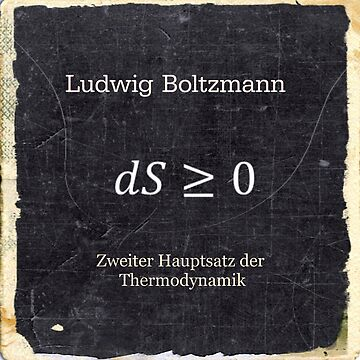
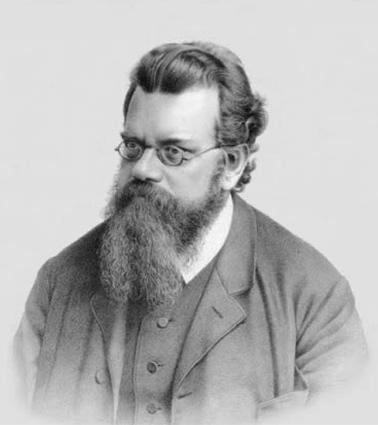
En un laboratorio austero de finales del siglo XIX, un físico austriaco llamado Ludwig Boltzmann observaba con fascinación y melancolía cómo el universo parecía tener una dirección irrevocable. Las tazas de té se enfriaban, los aromas se dispersaban, los relojes se paraban. El orden siempre se deshacía. Jamás al revés. De aquellas observaciones surgió la Segunda Ley de la Termodinámica: en un sistema cerrado, la entropía, o la medida del desorden, de la aleatoriedad, de la energía inutilizable, tiende a aumentar de forma inexorable. El orden no es el estado natural; es una conquista frágil que exige energía constante y estructuras complejas para mantenerse.
Un cristal puede romperse en mil pedazos; los pedazos jamás se reordenan solos en un cristal. Un huevo se rompe y se derrama; nunca vuelve a su forma perfecta. Para combatir esta tendencia universal se necesita un flujo constante de energía externa y mecanismos sofisticados de organización. Sin ellos, todo sistema tiende al equilibrio térmico, al caos molecular, a la máxima entropía.
Esta ley física, una de las más irrefutables de la ciencia, no se detiene en los laboratorios. Se manifiesta también en las sociedades humanas, que no son más que sistemas complejos de millones de individuos con sus propios incentivos, información y deseos.
A lo largo del siglo XX, los regímenes socialistas planificados intentaron desafiar esta ley con arrogancia prometeica. Creyeron que un puñado de planificadores centrales podía imponer orden perfecto sobre economías inmensamente complejas por medio de decretos, cuotas y planes quinquenales. Diseñaron un gran sistema cerrado: el Estado lo controlaba todo, desde los precios hasta los destinos individuales.
Pero la entropía humana, el impulso natural de cada persona a minimizar el esfuerzo propio y maximizar el beneficio personal cuando los incentivos están distorsionados, comenzó a crecer de inmediato. La información se dispersaba, los incentivos se corrompían, la coordinación se volvía imposible. Para combatir ese desorden creciente, los planificadores necesitaron inyectar cada vez más «energía externa»:
- propaganda masiva
- policía secreta
- campos de concentración
- gulags
- Stasi
- vigilancia total.
La represión no era un accidente; era el precio termodinámico de mantener un orden antinatural. Sin ella, el sistema volvía rápidamente al caos.
El colapso de la URSS en 1991 fue un ejemplo clásico de aumento brutal de entropía. Cuando la coerción falló, el orden impuesto se desintegró en hiperinflación, escasez generalizada, mafias, corrupción y desindustrialización. Venezuela repitió el experimento décadas después con resultados aún más visibles: de país rico en petróleo a nación donde la gente rebusca comida en la basura. El sistema cerrado se había saturado de desorden.
En contraste, el capitalismo de mercado funciona como un sistema abierto termodinámicamente eficiente. No intenta imponer orden desde arriba. En su lugar, utiliza precios, competencia y propiedad privada como mecanismos disipativos de información y energía. Los precios actúan como señales que canalizan recursos hacia donde más se necesitan. La competencia castiga el error y premia la coordinación. El fracaso empresarial es entropía localizada que se disipa rápidamente, permitiendo que nuevos experimentos surjan. No se necesita un gulag para que la gente trabaje: el beneficio propio, alineado con el servicio al prójimo a través del intercambio voluntario, genera orden espontáneo.
La izquierda cultural contemporánea repite el mismo error termodinámico en otro plano. Intenta imponer por decreto un «orden social justo», equidad de resultados, diversidad obligada, lenguaje purificado, pensamiento correcto, sobre sociedades complejas. Cuando la entropía natural de las diferencias humanas, las preferencias individuales y los incentivos reaparece, responde con más coerción:
- cultura de la cancelación
- vigilancia digital
- adoctrinamiento en las escuelas
- leyes de odio.
Nuevamente, represión creciente para combatir el desorden que ellas mismas generan.
La Segunda Ley no es cruel; es indiferente. Simplemente nos recuerda una verdad incómoda: el orden social valioso no se decreta, se cultiva. Requiere sistemas abiertos que disipen la entropía de forma continua y local, en lugar de acumularla hasta el colapso. Los experimentos que ignoran esta ley terminan siempre igual. Primero con promesas de paraíso planificado, luego con cárceles para mantener la ilusión, y finalmente con ruinas humeantes cuando la energía de la coerción se agota.
AOC vient d'expliquer qu'on ne peut pas "gagner" un milliard de dollars. Que c'est mathématiquement impossible. Que tout milliardaire est forcément un voleur, un abuseur de lois du travail, un payeur sous-évalué.
Ce niveau d'ignorance économique de la part d'une élue qui légifère sur l'économie devrait nous faire hurler.
Reprenons depuis le début, parce qu'apparemment c'est nécessaire.
Un milliardaire n'est pas quelqu'un qui a un milliard de dollars en cash sur son compte. Un milliardaire est quelqu'un dont le marché évalue les actifs (principalement des parts d'entreprise) à un milliard ou plus.
Elon Musk n'a pas "pris" 800 milliards à quelqu'un. Il a créé Tesla, SpaceX, Starlink, Neuralink, xAI. Le marché évalue ces entreprises à plusieurs trillions cumulés. Il en détient une fraction. C'est ça, sa "fortune".
La question fondamentale qu'AOC ne se pose jamais : d'où vient la valeur ?
La valeur n'est pas un gâteau fixe qu'on se partage. La valeur est créée. Quand SpaceX divise par 10 le coût du lancement orbital, ce n'est pas du vol, c'est de la création pure. Avant Musk, lancer un kilo en orbite coûtait 50K$. Aujourd'hui 1.5K$.
Cette création de valeur est mesurable, vérifiable, et bénéficie à toute l'humanité. L'internet par satellite couvre des zones que les États ont été incapables de connecter en 50 ans. Les voitures électriques ont forcé toute l'industrie auto à se réinventer.
Maintenant, la question centrale qu'AOC évite soigneusement : qui devrait allouer les ressources dans une société ?
Parce que l'argent, fondamentalement, c'est ça. Un signal d'allocation. Décider où va le capital, le travail, l'énergie, le temps humain.
Trois options historiques :
L'État (bureaucrates élus ou nommés)
Les comités citoyens (démocratie directe)
Les entrepreneurs qui ont prouvé leur capacité d'allocation par leurs résultats
L'option 1 a été testée massivement au 20ème siècle. URSS, Chine maoïste, Venezuela, Cuba, Corée du Nord. Résultat : famines, pénuries, effondrement. Des dizaines de millions de morts. L'allocation étatique est un désastre empirique total.
L'option 2 n'a jamais existé à grande échelle pour des raisons mathématiques. Le calcul économique nécessaire pour allouer les ressources d'une économie moderne dépasse les capacités cognitives d'une assemblée. Hayek l'avait démontré dès 1945 (The Use of Knowledge in Society).
L'option 3, c'est le marché. Et le marché récompense ceux qui allouent bien. Ceux qui allouent mal font faillite, perdent leur capital, sortent du jeu. Les survivants sont par sélection darwinienne les meilleurs allocateurs disponibles.
Elon Musk est riche parce qu'il a prouvé, sur 25 ans, qu'il alloue mieux le capital que 99.9999% de l'humanité. PayPal. Tesla. SpaceX. Starlink. Chaque fois, il a pris du capital et l'a transformé en infrastructure civilisationnelle.
La vraie question n'est pas "pourquoi Musk a tant", c'est : "pourquoi n'a-t-il pas plus ?"
Sérieusement. Si on veut maximiser la création de valeur pour l'humanité, on devrait vouloir que les meilleurs allocateurs aient accès à plus de capital, pas moins.
Donner 100 milliards à AOC pour qu'elle les redistribue selon sa vision morale, c'est garantir leur destruction. Donner 100 milliards à Musk, c'est probablement obtenir des bases martiennes, de l'énergie quasi-gratuite, et une révolution robotique.
Le préjugé d'AOC, c'est que la richesse est un péché moral. C'est une vision théologique, pas économique. Elle traite le capital comme un stock à confisquer, pas comme un flux à orienter vers les usages les plus productifs.
Et c'est là que sa thèse devient grotesque : "vous payez les gens moins que ce qu'ils valent."
Définition de "ce qu'ils valent" selon AOC : ce qu'AOC pense qu'ils devraient toucher. Définition selon le marché : ce qu'un autre employeur est prêt à leur offrir.
Si Tesla payait ses ingénieurs en dessous de leur valeur, ces ingénieurs partiraient chez Google, Apple, Meta. Ils restent. Donc la rémunération est compétitive. Mécanisme de base que tout étudiant en L1 d'éco comprend.
Le pattern fondamental : AOC, et toute la classe politique qui pense comme elle, n'a jamais alloué une seule ressource productive de sa vie. Jamais embauché en assumant le risque salarial. Jamais investi son capital dans un projet incertain. Jamais créé une entreprise qui survit.
Et pourtant elle veut décider qui peut posséder quoi.
C'est l'équivalent de quelqu'un qui n'a jamais joué aux échecs voulant arbitrer un tournoi de grands maîtres en réécrivant les règles à mi-partie.
Ce qui est triste, c'est que cette vision a un coût massif. Chaque fois qu'on taxe les meilleurs allocateurs, on détourne du capital de ses usages productifs vers des usages politiques (subventions, clientélisme, projets vanity étatiques).
La France en sait quelque chose. 50 ans de redistribution, ISF, exit tax, taxe à 75%. Résultat : zéro géant tech, fuite des cerveaux, dette à 113% du PIB, croissance atone.
AOC veut nous vendre le même poison en plus grand format.
La conclusion est inconfortable mais nécessaire : nous avons besoin de plus de milliardaires, pas moins. Plus d'allocateurs prouvés. Plus de capital concentré entre les mains de ceux qui ont démontré qu'ils savent le faire fructifier pour l'humanité.
Et nous avons besoin de moins d'AOC. Moins de gens qui n'ont rien construit, qui n'ont rien risqué, qui n'ont rien créé, mais qui veulent décider à la place de ceux qui font.
Le mythe ce n'est pas "le mythe d'avoir mérité son milliard". Le mythe c'est qu'une députée de 36 ans qui n'a jamais géré un budget supérieur à son staff parlementaire ait la moindre légitimité à théoriser sur l'allocation du capital mondial.
"The Fourteenth Amendment provides for equal rights and equal protection of the laws. If you want more than that, then you are no longer talking about rights, but about special privileges."
— Thomas Sowell
Afrikaners: We Build, We Don’t Break.
We refuse to be perpetual welfare recipients. We want to work, pay taxes, and build better lives for our children — nothing more.
Please increase the admissions cap @realDonaldTrump .
Our people are desperate to get out.
The anti-AI coalition continues to maneuver to find arguments to slow down AI progress. If someone has a sincere concern about a specific effect of AI, for instance that it may lead to human extinction, I respect their intellectual honesty, even if I deeply disagree with their position. However, I am concerned about organizations that are surveying the public to find whatever messages will turn people against AI, and how the public reacts as these messages are spread by lobbyists or by politicians seeking to alarm constituents, companies pursuing regulatory capture or seeking to promote the power of their technology, and individuals seeking to gain attention or to profit by being provocative.
A large study (link in original article below; h/t to the AI Panic blog) by a UK group tested different messages that are designed to raise alarm about AI. Their study found that saying AI will cause human extinction has largely failed. Doomsayers were pushing this argument a couple of years ago, and fortunately our community beat it back. But AI-enabled warfare and environmental concerns resonate better. We should be prepared for a flood of messages (which is already underway) arguing against AI on these grounds. Further, job loss and harm to children are messages that motivate people to act.
To be clear, I find AI-enabled warfare alarming; we need to continue serious efforts to monitor and mitigate the environmental impact of AI; any job losses are tragic and hurt individuals and families; and as a father, I hold dearly the importance of every child’s welfare. Each of these topics deserves serious attention and treatment with the greatest of care.
But when anti-AI propagandists take a one-sided view of complex issues to benefit their own organizations at the expense of the public at large — for instance, when big AI companies argue that AI is dangerous to block the free distribution of open source projects that compete with their offerings — then we all lose.
For example, public perception of data centers’ environmental impact is already far worse than the reality — data centers are incredibly efficient for the work they do, and hampering their buildout will hurt rather than help the environment. While job loss is a real problem, the “AI washing” of layoffs — in which businesses that had over-hired during the pandemic blame AI for recent layoffs, although AI hasn’t yet affected their operations — has led to overblown fears about the impact of AI on employment.
Unfortunately, this sort of propaganda easily leads to regulations that create worse outcomes for everyone. For example, oil companies worked for years to create fear of nuclear energy. The result is that overblown concerns about the safety of nuclear power plants has stifled nuclear power development, leading to millions of premature deaths from air pollution that was caused by other energy sources and a massive increase in CO2 emissions. Let’s make sure overblown concerns about AI do not lead to a similar fate for the many people that would benefit from faster AI development.
Last week, the White House proposed a national legislative framework for AI. A key component is a federal preemption framework to prevent a patchwork of state regulations that hamper AI development. I support this.
After failing to gain traction at the federal level, a lot of anti-AI propaganda has shifted to the state level. If just one of the 50 states passes a law that limits AI in an unproductive way, it could lead to stifling AI development across all the states and potentially across the globe. The White House proposal rightfully respects each state’s rights to control its own zoning, how it enforces general laws to protect consumers, and how it uses AI. But if a state were to pass laws that limit AI development, federal rules would preempt the state law.
The White House proposal remains a proposal for now. However, if the U.S. Congress enacts it, it will clear the way for ongoing efforts to develop AI in beneficial ways.
Where do we go from here? Let’s support limiting applications — those that use AI, and those that don’t — that harm people. When the anti-AI coalition argues against AI, in addition to considering the merits of the argument, I consider whether their position is consistent and persuasive, or if they are just promoting whatever concerns they think will sway the public at a given moment. And, let’s also keep using a scientific approach to weighing AI’s benefits against likely harms, so we don’t end up with overblown concerns that limit the benefits that AI can bring everyone.
[Original text with links: https://t.co/kfZY7mo0Mi ]
@Rainmaker1973 This was my 1st computer (although I did splurge on the 16kb RAM extender (which didn’t have great connection, so would glitch out if you weren’t careful!)
In the press gaggle following today's vote, I was asked to defend the Biblical case for border security and immigration enforcement. I did so, and then promised to post a longer explanation that I drafted during the Biden Administration. Here it is, and I hope it's helpful:
Despite the insistence of the progressive Left, people of all religious faiths should support a strong national border—and Christians CERTAINLY should. Critics are fond of citing particular Bible verses out of context to claim that Christians and Jews are being “unfaithful” if we oppose their radical open borders agenda. It has become increasingly important for us to set this record straight.
Perhaps the verse most often cited by the Left is Leviticus 19:34. Whether they know it or not, that passage happens to be from the instructions Moses delivered to the Israelites when they were on their journey through the wilderness in Sinai, before they reached their own Promised Land. The verse reads as follows: “But the stranger that dwelleth with you shall be unto you as one born among you, and thou shalt love him as thyself; for ye were strangers in the land of Egypt: I am the LORD your God.” (KJV)
CONTEXT IS CRITICAL
It is, of course, a central premise of Judeo-Christian teaching that strangers should be treated with kindness and hospitality. We are each called to love God first and to love our neighbors as ourselves (Deut. 6:5, Lev. 19:18, Matt. 22:36-40, KJV). However, that “Greatest Commandment” was never directed to the government, but to INDIVIDUAL believers.
The Bible teaches that God ordained and created four distinct spheres of authority— (1) the individual, (2) the family, (3) the church, and (4) civil government—and each of these spheres is given different responsibilities. For example, while each INDIVIDUAL is accountable for his or her own behavior (e.g., Exodus 20), the FAMILY is commanded to “bring up children in the training and instruction of the Lord” (Eph. 6:4) and “provide for their relatives” (1 Tim. 5:8). The CHURCH is commanded to make disciples and equip people for the work of the ministry (Eph. 4:11-13), and the CIVIL GOVERNMENT is established to faithfully uphold and enforce the law so that order can be maintained in this fallen world, crime can be kept at bay, and people can live peacefully (Rom. 13, 1 Tim. 2:1-2).
To be properly understood, anytime a command is given in Scripture, one must first determine to WHOM that command is directed. For example, when Jesus taught us as His followers to practice mercy and forgiveness and to “turn the other cheek” (Matt. 5:38-40, KJV), He was not giving that command to the government. To the contrary, when government officials ignore crime, they are directly VIOLATING their responsibilities before God.
Indeed, the civil authorities are specifically charged to do justice, to ”bear the sword,” and to serve as “the minister of God, a revenger to execute wrath upon him that doeth evil” (Rom. 13:1-4, KJV). As the Bible warns: “When a crime is not punished quickly, people feel it is safe to do wrong.” (Ecc. 8:11, TLB)
Read in its context, the passage in Leviticus 19 makes perfect sense. Showing love and kindness to a stranger was not a command given to civil government, but instead to individual believers. That same principle is emphasized in the New Testament. When Jesus spoke of embracing, caring, and providing for “the least of these” (E.g., Matt. 25:31-40), His instruction was given to His disciples, and not the local authorities.
The Bible is clear that Christians should practice personal charity—but also insist upon the enforcement of laws (like our federal immigration statutes) so that “every person is subject to the governing authorities” and “those who resist incur judgment” (Rom. 13:1-2).
BORDERS ARE BIBLICAL
Many on the Left today, and even some at the highest levels of our government, consider themselves “globalists” who envision a utopian world order where there are no borders between countries at all. Their fantasy will simply never be realized, and their basic premise (that man is inherently good and perfectible on his own) is the opposite of the Biblical truth that man is fallen and in need of redemption that is available only through salvation in Jesus Christ.
The Bible speaks favorably and consistently about distinct nations of people (see, e.g., Gen. 18:18, Num. 32:17, Psalm 67:2, Matt. 28:19, Rev. 5:9, 7:9, NIV), and about borders and walls that are built to guard and secure people, property, and jurisdictions (see, e.g., Deut. 19:14, 27:17, 32:8, Acts 17:26, NIV). When Nehemiah heroically led the Jewish remnant to rebuild the walls of Jerusalem after their enemies had destroyed those walls, he was doing the noble work of God (Neh. 1-6, NIV).
Maintaining a secure border is not an offensive measure, but a wise, defensive one to prevent chaos and safeguard innocent life. As Rev. Franklin Graham once summarized, “Why do you lock your doors at night? Not because you hate the people on the outside, but because you love the people on the inside so much.”
THE CURRENT CATASTROPHE
Right now, because of 64 deliberate policy choices and executive orders of the Biden Administration, America is facing an unprecedented humanitarian and national security catastrophe at our open southern border. More than 10 million illegal aliens from around the world have entered the U.S. since Joe Biden became President, the majority of whom are single, military-aged men. Among them are countless violent criminals and more than 300 suspects on the terrorist watchlist. Cartels are making billions trafficking young women and unaccompanied minors, and many are suffering unspeakable abuses along the way. The Fentanyl that China and the cartels have pushed into the U.S. has become the leading cause of death for Americans aged 18-45.
As the peril increases and communities across our country become more and more overwhelmed with the crushing financial burdens of managing the influx of illegals, American citizens (and even a few Democratic governors and mayors) are finally demanding a return to sanity. America has always been a haven for people legitimately seeking asylum from danger in their home country, but we must insist they pursue a course of legal immigration and not simply ignore our laws.
Of course, the President of the United States must be the first to uphold our laws. Every citizen should insist that President Biden immediately use the eight broad statutory authorities he has right now to secure our borders and stop incentivizing illegal immigration. Among his most important executive authorities is 8 U.S.C. 1182(f), which empowers a President to “suspend the entry of all aliens or any class of aliens as immigrants or nonimmigrants, or impose on the entry of aliens any restrictions he may deem to be appropriate” if he “finds that the entry of any aliens or of any class of aliens into the United States would be detrimental to the interests of the United States.”
AN AUTHENTIC CHRISTIAN RESPONSE
Due in large part to our Judeo-Christian foundations and the deep religious heritage we enjoy in this country, America is the most benevolent nation in the world—by far. However, we cannot maintain that strength and generosity if we surrender our own safety and sovereignty. Preserving law and order and securing our borders should not be partisan issues, but matters of common sense. These are certainly responsibilities fully authorized by the Bible—and expected of us by God.
Any time liberals attempt to bolster their “open borders” agenda by citing Scripture out of context, they should be kindly corrected with the facts (2 Tim. 2:24-25). Christians are called to love unconditionally, serve selflessly, and defend the defenseless. We are also called to stand for, and work to ensure, just government. Justice and mercy are not mutually exclusive pursuits. To the contrary, God specifically requires His people to practice both (Micah 6:8). Despite the unfounded claims of the Left, supporting a strong national border is a very Christian thing to do. The Bible tells us so.
@emollick 💯 Memory has been the key challenge to building companion AIs. Not just simple facts, but temporal state, eg working on a specific project / problem, being in a specific location, relationship with people. All can be import context but with different time relevance.
Have you ever seen how DNA is organized?
It's astounding.
A single strand of your DNA, when stretched out, is ~2 meters, or ~6.5 feet long. If you stretched out all the DNA in your body end to end, it could cross the entire solar system, from the sun to Pluto, 17 times. You could wrap all your DNA around the Earth like a rubber band ball almost 2 million times.
The storage capacity of DNA is so high that all the world’s digital data (estimated around 175 zettabytes by 2025) could theoretically be stored in just 178lbs of DNA. Imagine, one single server that could handle the entire world's annual data needs.
And yet, all of this fits inside the nucleus of a cell, invisible to the naked eye. How is that even possible?
To prevent DNA from becoming an tangled mess, unusable for anything, it is organized and packed very specifically. If not for this organization, DNA would be completely unusable for any of Life's processes. It would clump together, unable to be pulled apart to be read by the many interacting molecular systems.
To start, smaller segments of DNA are coiled tightly around a special protein called a Histone, whose sole job is to keep DNA organized. This coiled product is called a Nucleosome, which are then further coiled and packed together into long fibers call Chromatin. Chromatin then is further coiled into larger structures called Chromosomes.
This organization is not only incredibly efficient, but it also provides functionality to the DNA itself. Chromosome and Chromatin architecture actually effects how DNA functions and communicates with the different systems in the cell, and the number of chromosomes is important to overall function of the DNA in an organism.
Without this specific organization, Life could not exist. What does this mean?
This means DNA could not have evolved and functioned without simultaneous organization. And DNA can't be organized without the proteins and systems that hold it all together. On top of that, the fact that how DNA is organized affects its function is a clear sign of foresight and planning - all clear signs of intelligent design.
The more we learn about molecular biology, the more obvious it is that this was all Created intelligently.
Scott, I have been a fan since the early 90s. While in grad school in LA around 1995 we went to see you give a talk - using a overhead projector and physical slides! I enjoyed your books and your calendar has been a fixture on my desk over the years. I cannot tell you how many times the cartoon of the day depicted an actual situation at work with psychic accuracy. Annual review time, some project decision or strategic announcement, or more recently around AI (my field) - I could count on you to make light of a frustrating situation.
We rewatched "It's a beautiful day in the neighborhood" last night. Keep your spirits up - we are praying for you.
Milton Friedman on government’s four major functions:
1) Ensure national defense
2) Protect citizens from “abuse and coercion by other citizens”
3) Define and uphold private property rights
4) Maintain a judicial system to adjudicate disputes and enforce rules
This post is economic illiteracy on full display.
It confuses valuation with cash, wealth with money, and production with redistribution, which is the basic economic error behind almost every grievance like this.
Musk’s “money” exists as ownership stakes in capital goods that coordinate labor, technology, risk, and time across millions of voluntary exchanges.
You cannot “pay Social Security” with factories, code, satellites, or future expectations without liquidating them, collapsing the very structures that generate income and wages in the first place.
Even if you could vaporize that equity into spendable dollars, you would fund a fraction of an actuarially bankrupt program for a brief moment while destroying the productive engine that sustains it.
Wealth is created through entrepreneurial coordination under uncertainty, not hoarded as a static pile waiting to be reassigned. Social Security’s problem is not a shortage of billionaires to harvest but a political design that ignores time preference, demographics, and capital accumulation.
Calling this “taken” is a refusal to understand value creation, price signals, and economic calculation.
The claim sounds moral because it avoids thinking, and it persists because it treats prosperity as loot rather than as a fragile process that collapses the moment you start eating the machinery.
No one is poor because someone else is rich. That framing assumes a fixed pie that never grows, which is the opposite of how markets work. If Musk were actually sitting on a giant pile of idle cash, which he is not, that would signal enormous voluntary demand for what he produces and it would be deflationary.
Idle money lowers prices because it is not competing for resources. You cannot eat money or build with it. You can only exchange it, and exchange happens when value is offered and accepted.
The federal government spends in a single year an amount in the same range as the combined net worth of all US billionaires. Confiscate every dollar, pretend you could convert equity into cash without market collapse, and the state is funded for one year. Just one.
The next year there is nothing left to tax and far less productive capacity to draw from. This is why the state is the worst possible steward of capital. It faces no profit and loss discipline, operates on political incentives, rewards compliance over competence, spends other people’s money, and optimizes for short electoral horizons rather than long-term coordination.
People default to this zero-sum thinking because it feels intuitive and morally satisfying. It offers a villain, absolves personal responsibility, and replaces economic reasoning with resentment dressed up as justice.
It persists because it flatters the believer while demanding no understanding of how value is actually created. It is a huge problem and they should be rebuked accordingly.
In 1936, J. R. R. Tolkien published a Christmas poem titled “Noel” in the annual magazine of Our Lady's Abingdon, in Oxfordshire. The poem was lost to history for nearly 80 years until scholars Wayne G. Hammond and Christina Scull rediscovered it in the archives. It reads:
Grim was the world and grey last night:
The moon and stars were fled,
The hall was dark without song or light,
The fires were fallen dead.
The wind in the trees was like to the sea,
And over the mountains' teeth
It whistled bitter-cold and free,
As a sword leapt from its sheath.
The lord of snows upreared his head;
His mantle long and pale
Upon the bitter blast was spread
And hung o'er hill and dale.
The world was blind, the boughs were bent,
All ways and paths were wild:
Then the veil of cloud apart was rent,
And here was born a Child.
The ancient dome of heaven sheer
Was pricked with distant light;
A star came shining white and clear
Alone above the night.
In the dale of dark in that hour of birth
One voice on a sudden sang:
Then all the bells in Heaven and Earth
Together at midnight rang.
Mary sang in this world below:
They heard her song arise
O'er mist and over mountain snow
To the walls of Paradise,
And the tongue of many bells was stirred
in Heaven's towers to ring
When the voice of mortal maid was heard,
That was mother of Heaven's King.
Glad is the world and fair this night
With stars about its head,
And the hall is filled with laughter and light,
And fires are burning red.
The bells of Paradise now ring
With bells of Christendom,
And Gloria, Gloria we will sing
That God on earth is come.
1. When one door closes and another door opens, you are probably in prison.
2. To me, "drink responsibly" means don't spill it.
3. Age 60 might be the new 40, but 9:00 pm is the new midnight.
4. It's the start of a brand new day, and I'm off like a herd of turtles.
5. The older I get, the earlier it gets late.
6. When I say, "The other day," I could be referring to any time between yesterday and 15 years ago.
7. I remember being able to get up without making sound effects.
8. I had my patience tested. I'm negative.
9. Remember, if you lose a sock in the dryer, it comes back as a Tupperware lid that doesn't fit any of your containers.
10. If you're sitting in public and a stranger takes the seat next to you, just stare straight ahead and say, "Did you bring the money?"
11. When you ask me what I am doing today, and I say "nothing," it does not mean I am free. It means I am doing nothing.
12. I finally got eight hours of sleep. It took me three days, but whatever.
13. I run like the winded.
14. I hate when a couple argues in public, and I missed the beginning and don't know whose side I'm on.
15. When someone asks what I did over the weekend, I squint and ask, "Why, what did you hear?"
16. When you do squats, are your knees supposed to sound like a goat chewing on an aluminum can stuffed with celery?
17. I don't mean to interrupt people. I just randomly remember things and get really excited.
18. When I ask for directions, please don't use words like "east."
19. Don't bother walking a mile in my shoes. That would be boring. Spend 30 seconds in my head. That'll freak you right out.
20. Sometimes, someone unexpected comes into your life out of nowhere, makes your heart race, and changes you forever. We call those people cops.
21. My luck is like a bald guy who just won a comb."










![AndrewYNg's tweet photo. The anti-AI coalition continues to maneuver to find arguments to slow down AI progress. If someone has a sincere concern about a specific effect of AI, for instance that it may lead to human extinction, I respect their intellectual honesty, even if I deeply disagree with their position. However, I am concerned about organizations that are surveying the public to find whatever messages will turn people against AI, and how the public reacts as these messages are spread by lobbyists or by politicians seeking to alarm constituents, companies pursuing regulatory capture or seeking to promote the power of their technology, and individuals seeking to gain attention or to profit by being provocative.
A large study (link in original article below; h/t to the AI Panic blog) by a UK group tested different messages that are designed to raise alarm about AI. Their study found that saying AI will cause human extinction has largely failed. Doomsayers were pushing this argument a couple of years ago, and fortunately our community beat it back. But AI-enabled warfare and environmental concerns resonate better. We should be prepared for a flood of messages (which is already underway) arguing against AI on these grounds. Further, job loss and harm to children are messages that motivate people to act.
To be clear, I find AI-enabled warfare alarming; we need to continue serious efforts to monitor and mitigate the environmental impact of AI; any job losses are tragic and hurt individuals and families; and as a father, I hold dearly the importance of every child’s welfare. Each of these topics deserves serious attention and treatment with the greatest of care.
But when anti-AI propagandists take a one-sided view of complex issues to benefit their own organizations at the expense of the public at large — for instance, when big AI companies argue that AI is dangerous to block the free distribution of open source projects that compete with their offerings — then we all lose.
For example, public perception of data centers’ environmental impact is already far worse than the reality — data centers are incredibly efficient for the work they do, and hampering their buildout will hurt rather than help the environment. While job loss is a real problem, the “AI washing” of layoffs — in which businesses that had over-hired during the pandemic blame AI for recent layoffs, although AI hasn’t yet affected their operations — has led to overblown fears about the impact of AI on employment.
Unfortunately, this sort of propaganda easily leads to regulations that create worse outcomes for everyone. For example, oil companies worked for years to create fear of nuclear energy. The result is that overblown concerns about the safety of nuclear power plants has stifled nuclear power development, leading to millions of premature deaths from air pollution that was caused by other energy sources and a massive increase in CO2 emissions. Let’s make sure overblown concerns about AI do not lead to a similar fate for the many people that would benefit from faster AI development.
Last week, the White House proposed a national legislative framework for AI. A key component is a federal preemption framework to prevent a patchwork of state regulations that hamper AI development. I support this.
After failing to gain traction at the federal level, a lot of anti-AI propaganda has shifted to the state level. If just one of the 50 states passes a law that limits AI in an unproductive way, it could lead to stifling AI development across all the states and potentially across the globe. The White House proposal rightfully respects each state’s rights to control its own zoning, how it enforces general laws to protect consumers, and how it uses AI. But if a state were to pass laws that limit AI development, federal rules would preempt the state law.
The White House proposal remains a proposal for now. However, if the U.S. Congress enacts it, it will clear the way for ongoing efforts to develop AI in beneficial ways.
Where do we go from here? Let’s support limiting applications — those that use AI, and those that don’t — that harm people. When the anti-AI coalition argues against AI, in addition to considering the merits of the argument, I consider whether their position is consistent and persuasive, or if they are just promoting whatever concerns they think will sway the public at a given moment. And, let’s also keep using a scientific approach to weighing AI’s benefits against likely harms, so we don’t end up with overblown concerns that limit the benefits that AI can bring everyone.
[Original text with links: https://t.co/kfZY7mo0Mi ]](https://pbs.twimg.com/media/HEwo55_W8AAqin-.jpg)