There is no viable alternative to American leadership. Yes it may have its excess, but a world without the US will be dull, stagnating and ultimately criminalized. US is the only place on earth where a kid can go from the slums of Mumbai to become CEO of Mastercard.
sizing...
Buffett: "Putting 75% of our net worth in a single position is not a problem...several times I've had 75% of my net worth in a situation."
Munger: "Sometimes, I have had more than 100% in an individual investment."
https://t.co/XC0kAOIji8
--
Q: American Express and Washington Post were big positions for you. How do you get confident enough with that [smaller] level of diversification?
Buffett: If we were running only our own money, putting 75% of our net worth in a single position is not a problem if it is something we really have high confidence in. Putting 500% or more of your net worth in a position is a problem. Several times I have had 75% of my non-Berkshire net worth in a situation. You will see things where it would be a mistake not to act. You won’t see them often, and the press and your friends won’t be talking about them. Wouldn’t you say, Charlie? 75% is not a real significant amount?
Munger: Sometimes, I have had more than 100% in an individual investment.
AMAZON CALLS ITSELF THE EVERYTHING STORE. AGENTS COULD MAKE THAT ACTUALLY TRUE.
- AI agents shrink the distance between consumer and manufacturer the same way Walmart and Costco did.
- Price, convenience, selection. Agents make selection infinitely bigger than any single retailer.
- You need a Certified Public Accountant (CPA), a lawn guy, a tutor. Muse handles goods and services in one place. We believe that's the unlock.
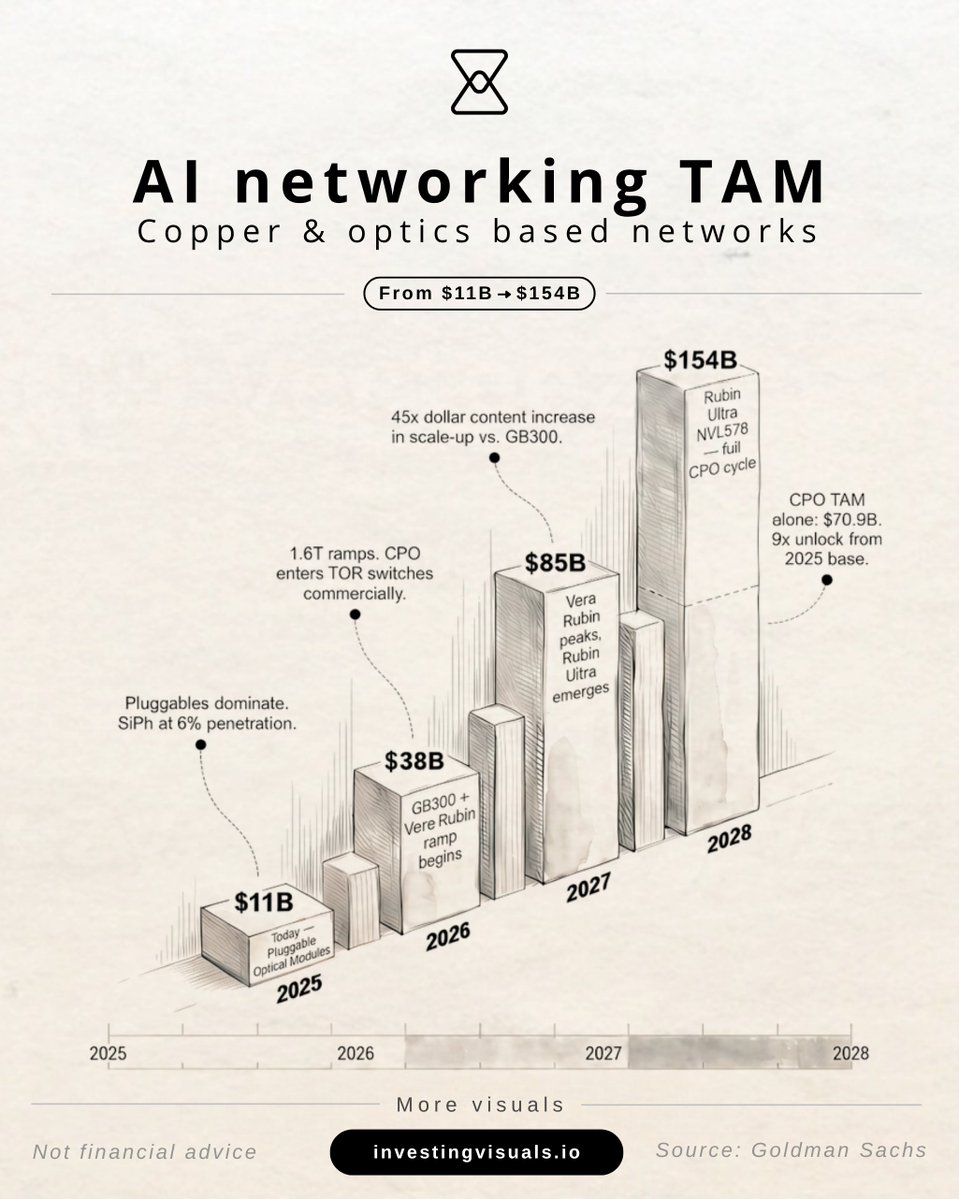
The AI connectivity TAM, explained.
AI connectivity is one of my favorite investing themes, with a market that's expected to grow to $154B by 2028.
There are, however, some misconceptions about the dynamics in this industry, particularly photonics vs. copper.
It's not an either/or situation.
There are plenty of use cases where copper is still useful and photonics would simply be too expensive to use.
Photonics becomes useful when you have to bridge certain distances, particularly as data centers scale in size. But not all data centers are campus-sized.
For smaller data centers, or in-rack connectivity, copper remains very useful.
Yes, we'll gradually shift toward photonics as exchanging data inside and outside the rack becomes more demanding, but it won't happen overnight.
My favorite connectivity businesses right now: $ALAB & $CRDO
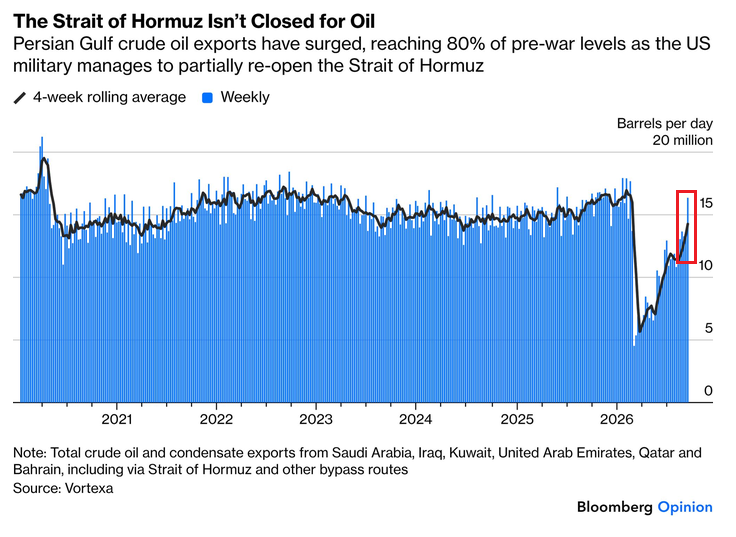
Oil flows in the Strait of Hormuz have sharply rebounded:
Persian Gulf crude oil exports surpassed 14 million barrels per day last week for the first time since the Iran War began on February 28th.
This marks an over +210% increase from the ~4.5 million barrels per day low seen in March.
As a result, the 4-week average is up to 14 million barrels per day, the highest level in 6 months.
Persian Gulf crude oil exports have now recovered to ~80% of their pre-war levels.
This comes as the US military has increasingly secured the Strait of Hormuz and established a two-way shipping corridor along the coast of Oman, allowing oil convoys to resume through the waterway.
Meanwhile, refined fuel shipments, including gasoline, diesel and jet fuel, remain at only around 50% of pre-war levels, as these products are more expensive to transport than crude oil and some refineries in the Persian Gulf that were damaged during the early stages of the war have also yet to fully resume operations.
Oil flows are coming back, but the fuel market is still under intense pressure.
American an European friends,
I’m so ashamed, but you need to see what France has become.
Don’t make the same mistakes we did.
The only peaceful solution is to send them back to their countries of origin they love so much.
We cannot coexist. It will be them, or us.
AI AGENTS COULD TAKE US COMMERCE FROM 21% ONLINE TO 30%+
- Agents pair expertise with purchases. Nick bought an expensive outdoor TV because Muse explained the risk first.
- $AMZN and $WMT win returns, fulfillment and inventory. The competition is already over on those vectors.
- This is just a new distribution layer on top of infrastructure they already built.
This is how much the new iPhone Duo will cost around the world
Türkiye 🇹🇷: $4,689 - +134.6% vs. US
Brazil 🇧🇷: $4,230 - +111.6%
India 🇮🇳: $3,124 - +56.3%
Sweden 🇸🇪: $2,698 - +35.0%
Italy 🇮🇹: $2,687 - +34.4%
Mexico 🇲🇽: $2,655 - +32.8%
Netherlands 🇳🇱: $2,652 - +32.7%
Spain 🇪🇸: $2,652 - +32.7%
France 🇫🇷: $2,652 - +32.7%
United Kingdom 🇬🇧: $2,652 - +32.7%
Germany 🇩🇪: $2,607 - +30.4%
Australia 🇦🇺: $2,433 - +21.7%
South Korea 🇰🇷: $2,427 - +21.4%
Singapore 🇸🇬: $2,426 - +21.4%
Switzerland 🇨🇭: $2,394 - +19.8%
China 🇨🇳: $2,382 - +19.2%
Thailand 🇹🇭: $2,379 - +19.0%
Malaysia 🇲🇾: $2,329 - +16.5%
Japan 🇯🇵: $2,319 - +16.0%
UAE 🇦🇪: $2,314 - +15.8%
Hong Kong 🇭🇰: $2,230 - +11.6%
Canada 🇨🇦: $2,216 - +10.9%
United States 🇺🇸: $1,999 - baseline
Steve Eisman says Michael Burry’s AI depreciation thesis “too academic” and says an OpenAI failure is the much larger risk
“I think, with all due respect to Michael, I think his argument is too academic."
"Put it this way: if AI succeeds because Anthropic and OpenAI grow like crazy and the hyperscalers do well, et cetera, et cetera, it’s not going to matter if the depreciation schedule changed from three to four years to five to six years."
"At the same time, if OpenAI fails and the whole chain goes in reverse, we’ll have a massive correction which has nothing to do with the depreciation schedule."
"I mean, I think what he’s deep down trying to point out is maybe there’s something wrong here, but I don’t think the thing that he’s pointing to as being wrong is important enough.”
AMAZON VS SHOPIFY. TWO VERY DIFFERENT BETS ON THE FUTURE OF AI SHOPPING.
- $AMZN blocked Muse from crawling its site. $SHOP opened up Shop Pay and built a catalog built specifically for agents.
- The abstraction layer is where Muse, Grokbot and ChatGPT will shop across every retailer at once.
- $AMZN wins on price, inventory and speed. The question is whether they let agents find that out.
🇺🇸 Key Events This Week:
1. Monday, ISM Services PMI:
Services make up 70% of the US economy, anything above 50 shows growth is holding up.
2. Tuesday, ADP Weekly Employment Change:
Private hiring beat expectations in the latest reading, so this will show whether hiring momentum is continuing.
3. Wednesday, Mortgage Rates:
Shows how expensive it is to borrow for a home, with higher rates adding pressure on housing demand.
4. Thursday, Initial Jobless Claims:
Tracks new unemployment claims, so a sharp rise would be an early sign that layoffs are increasing.
5. Friday, Michigan Consumer Sentiment:
Shows how confident Americans feel about the economy and their expectations on inflation.
Together, these reports will reflect the overall health of the US economy.
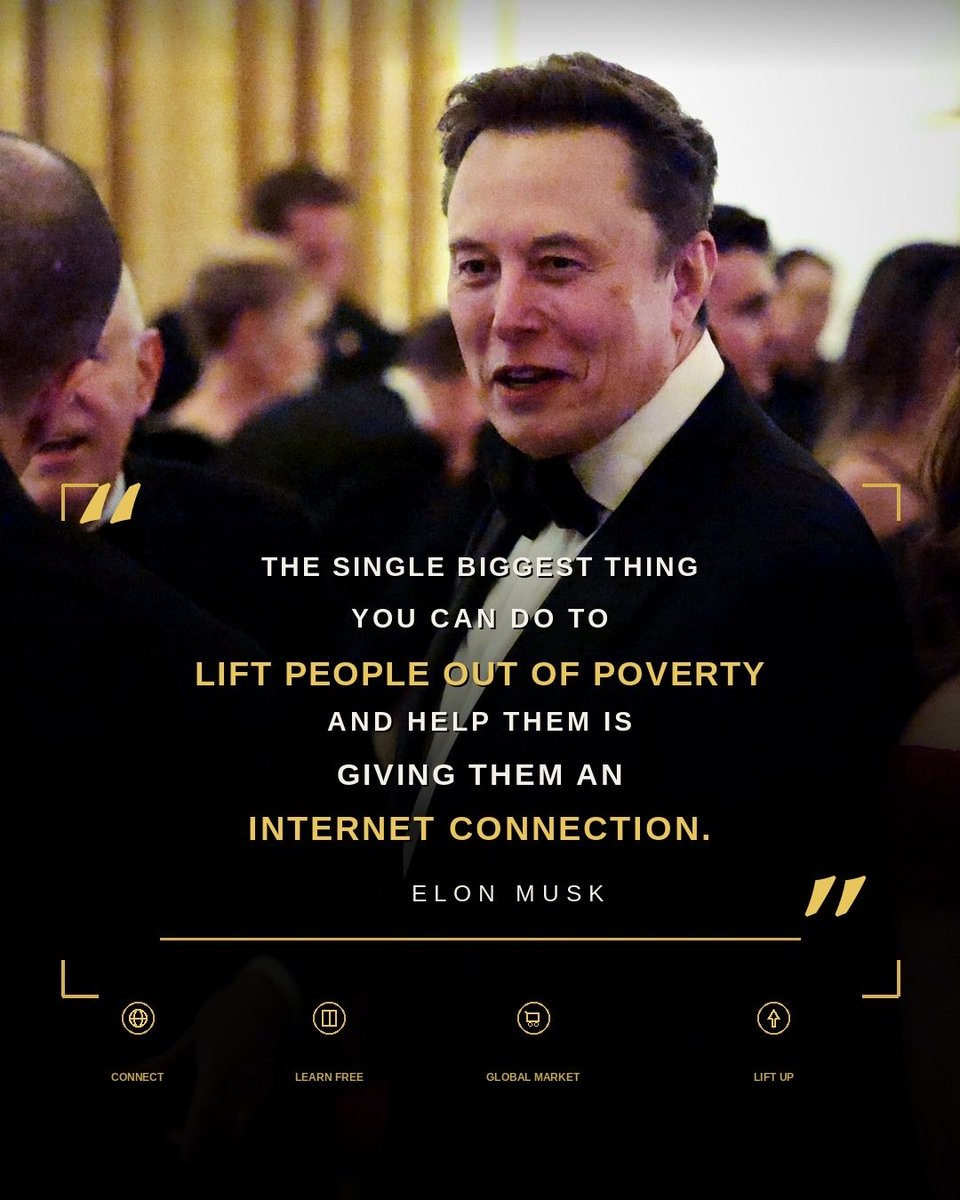
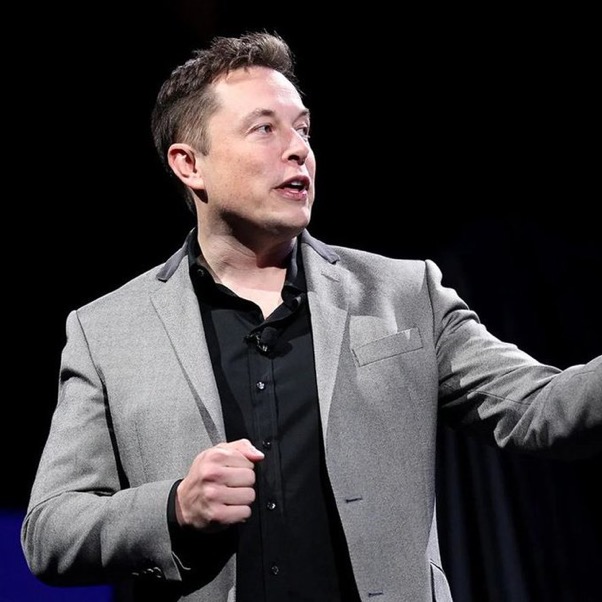
"The single biggest thing you can do to lift people out of poverty and help them is giving them an internet connection."
- @elonmusk
Starship is deploying Starlink V3.
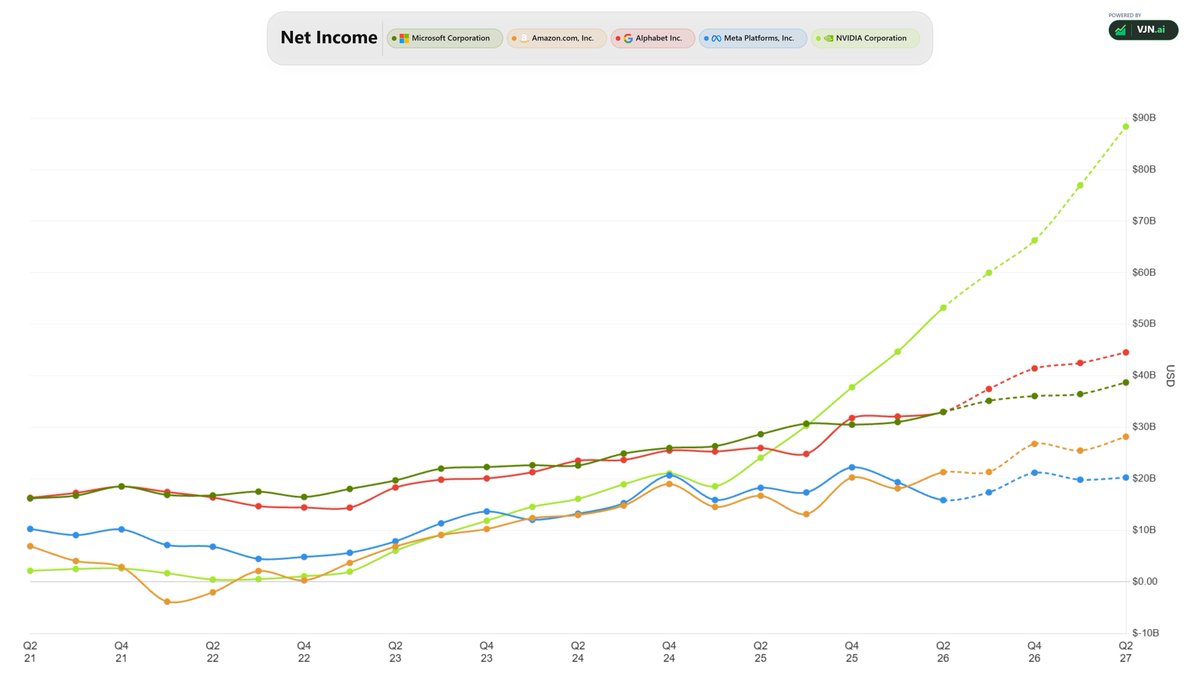
$NVDA is projected to earn as much as $META, $AMZN and $MSFT combined in a few quarters
That sounds good until you realize they are half of $NVDA revenue
Think about what that means...
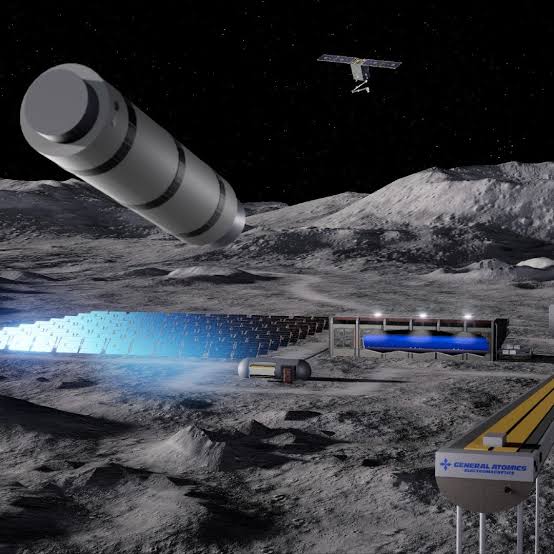
Elon Musk’s vision for humanity’s future:
“I really want to see the mass driver on the Moon, that is shooting AI satellites into deep space - whoosh… whoosh… whoosh....one after another"
A self-sustaining city glowing on the lunar surface
Then expanding to Mars, across the entire solar system, and eventually traveling among the stars
We might meet alien civilizations… or discover the ruins of ancient ones that lasted for millions of years
The only way we’ll ever find out is if we go out there and explore
This is how we become a spacefaring civilization
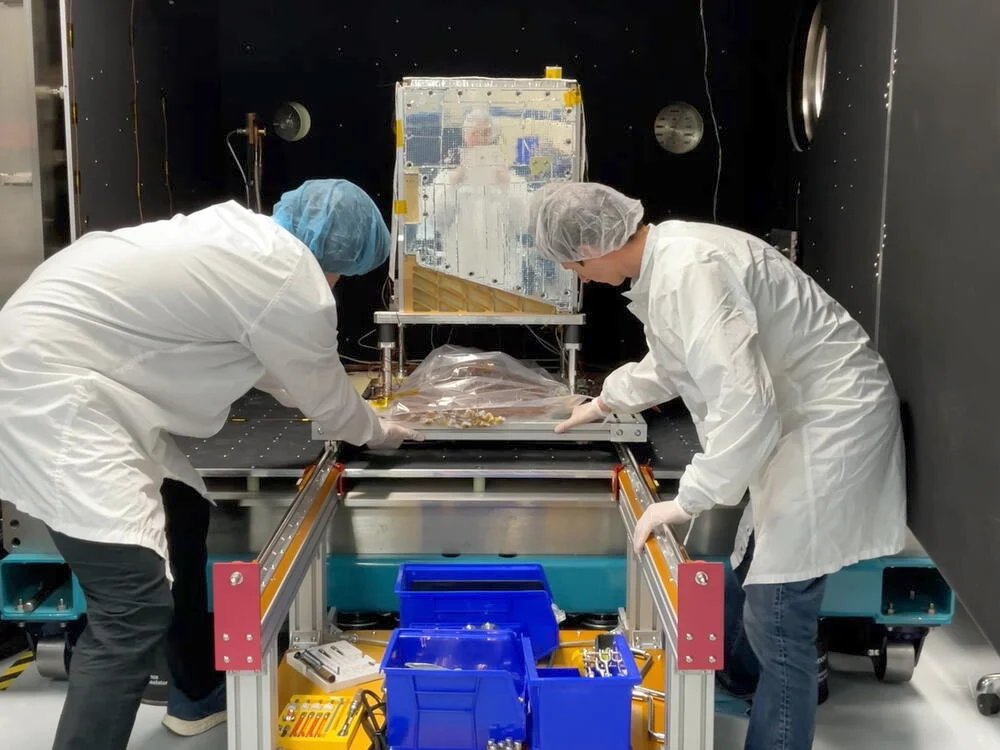
$GOOGL JUST PUT ITS AI CHIPS INTO ORBIT FOR THE FIRST TIME
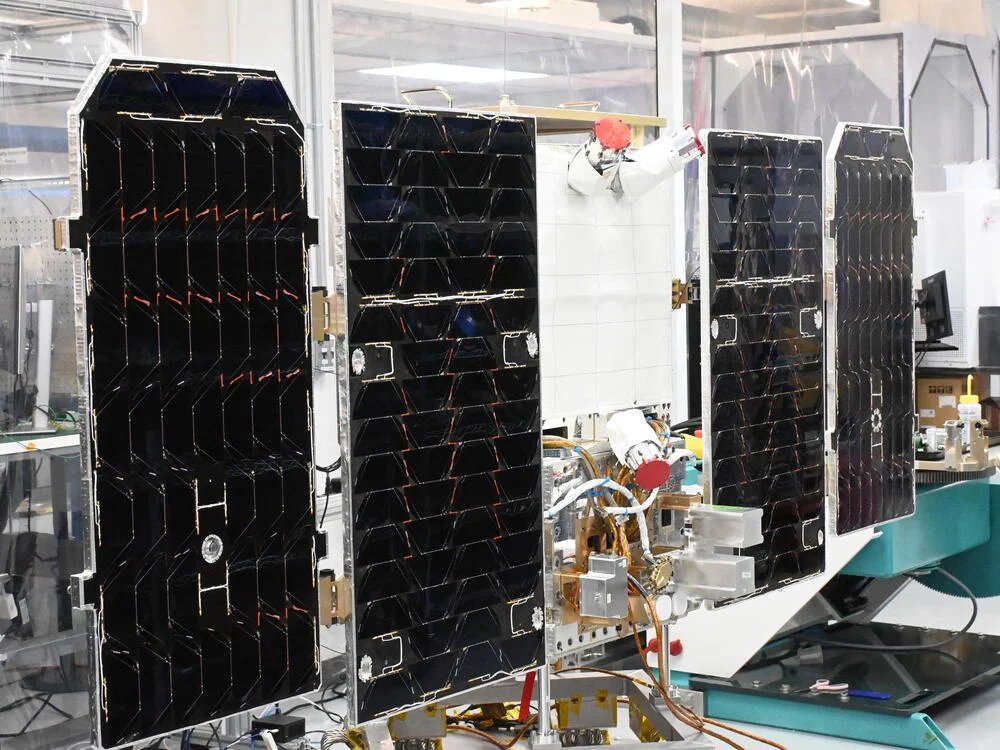
Google and Planet Labs $PL have successfully launched Project Suncatcher M1 aboard SpaceX’s Transporter-18 mission.
Planet says it has already made contact with the spacecraft and begun commissioning. This is the first-ever in-orbit test of Google’s Tensor Processing Units, or TPUs.
The refrigerator-sized prototype carries four Trillium TPUs, Google’s custom AI accelerators.
This is not yet an orbital data center. The goal is to see whether the same type of AI hardware Google uses on Earth can survive launch and reliably run machine-learning workloads in low Earth orbit.
There are three major engineering problems Google is testing:
RADIATION: cosmic radiation can corrupt calculations or damage electronics. Google previously tested Trillium TPUs with proton radiation and found they could withstand more total radiation than expected over a five-year mission.
COOLING: there is no air in space, so fans cannot cool the chips. Heat has to be moved through heat pipes into radiators and then emitted away from the spacecraft. The current prototype is expected to run AI workloads in roughly 15-minute bursts before allowing the system to cool.
NETWORKING: Google’s long-term plan is not one satellite, but clusters of satellites carrying dozens of TPUs each and connected through high-speed laser links.
Google estimates future AI workloads could require tens of terabits per second between satellites. Its ground prototype has already demonstrated 800 Gbps in each direction.
Why put AI compute in space at all?
In the right low-Earth orbit, solar panels can generate up to 8x more power than on Earth because satellites can receive near-continuous sunlight, reducing one of the biggest constraints facing AI data centers: electricity.
The economics:
Google estimates that if launch costs eventually fall below roughly $200 per kilogram by the mid-2030s, the cost of operating compute in space could begin approaching the energy cost of comparable terrestrial data centers.
David Tepper has allocated 70% of his portfolio to just seven stocks.
Here is the legendary investor's current portfolio breakdown:
1. Amazon ($AMZN) – 15.95% of the portfolio
Walter Isaacson on Elon Musk’s greatest strengths:
“One of the things that Elon is successful because of is his ability to iterate, to take risks, and to conduct experiments,
Starship, the biggest rocket ever made, has launched twice. Both times it exploded
The media called it failure, Elon called both launches a success
His(Elon’s) philosophy is simple “If you’re not failing 20% of the time, you’re not risking enough”
Every flight is a deliberate experiment: push the limits, see what breaks, learn fast, fix fast
Risk-averse cultures like NASA, Boeing, and Lockheed don’t experiment enough
Real innovation requires embracing the unknown and taking real risks
This is how he changes the world”
$OTIS
- Largest elevator company on the planet
- Maintains 2.5M units
- Shares down 30% over the last year
- Hugely profitable service/maintenance biz
- 68% ROIC
- Trades for 15x P/E, lowest valuation in years
- 2.7% dividend yield, 40% payout ratio









![gregoryblotnick's tweet photo. sizing...
Buffett: "Putting 75% of our net worth in a single position is not a problem...several times I've had 75% of my net worth in a situation."
Munger: "Sometimes, I have had more than 100% in an individual investment."
https://t.co/XC0kAOIji8
--
Q: American Express and Washington Post were big positions for you. How do you get confident enough with that [smaller] level of diversification?
Buffett: If we were running only our own money, putting 75% of our net worth in a single position is not a problem if it is something we really have high confidence in. Putting 500% or more of your net worth in a position is a problem. Several times I have had 75% of my non-Berkshire net worth in a situation. You will see things where it would be a mistake not to act. You won’t see them often, and the press and your friends won’t be talking about them. Wouldn’t you say, Charlie? 75% is not a real significant amount?
Munger: Sometimes, I have had more than 100% in an individual investment.](https://pbs.twimg.com/media/HTsrIwxXgAA-LdT.png)