China’s industrial overcapacity fuels both global competition and domestic strain. Our Executive Director Dr. Ann Tang @anntang2025, unpacks these dynamics in her new commentary with @IGCC_UCSD: 👉 https://t.co/4XWnO5G11p
#ChinaPolicy#GlobalEconomy#APEC#UCIrvine
📣 Next week at UC Irvine Long US-China Institute
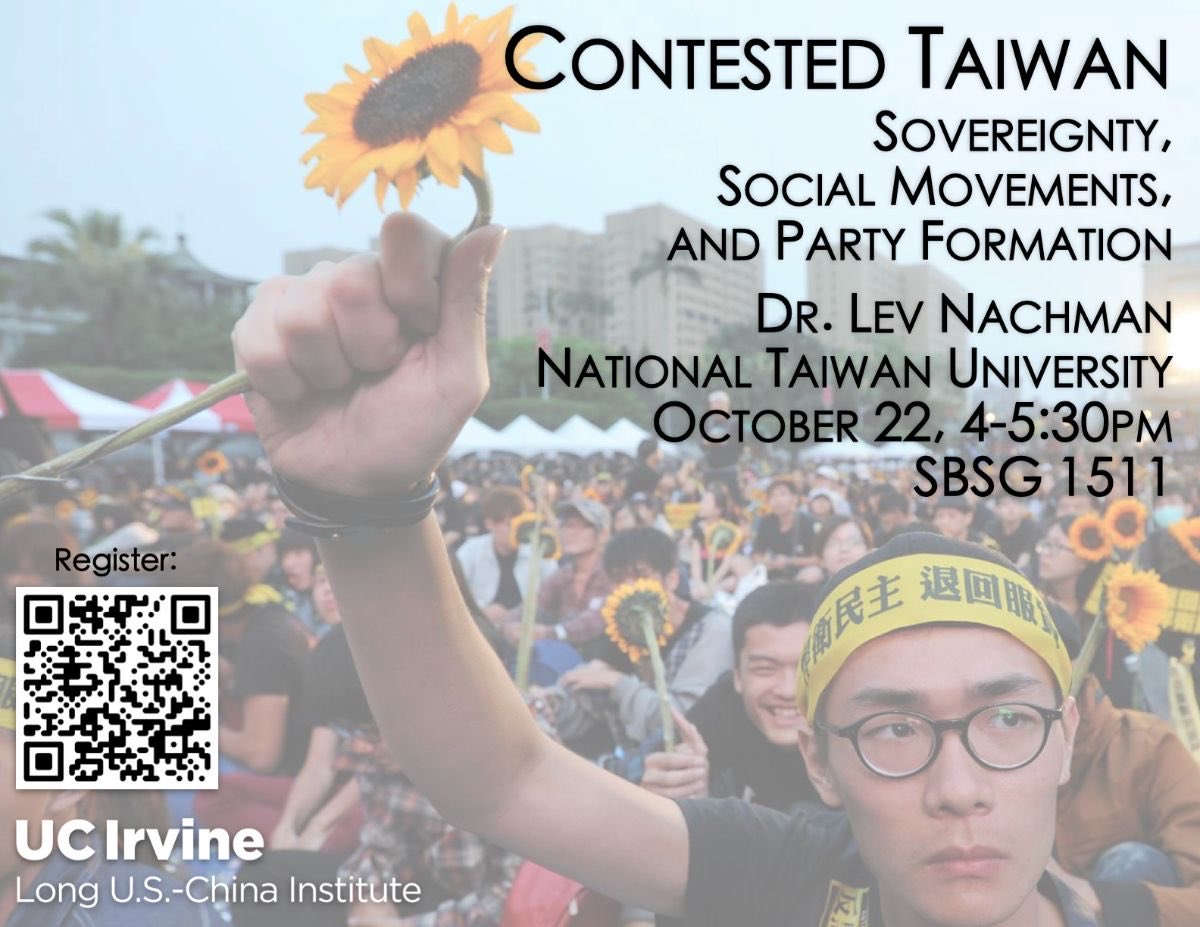
Join Dr. Lev Nachman @lnachman32 (NTU; UCI PoliSci PhD ’21) for:
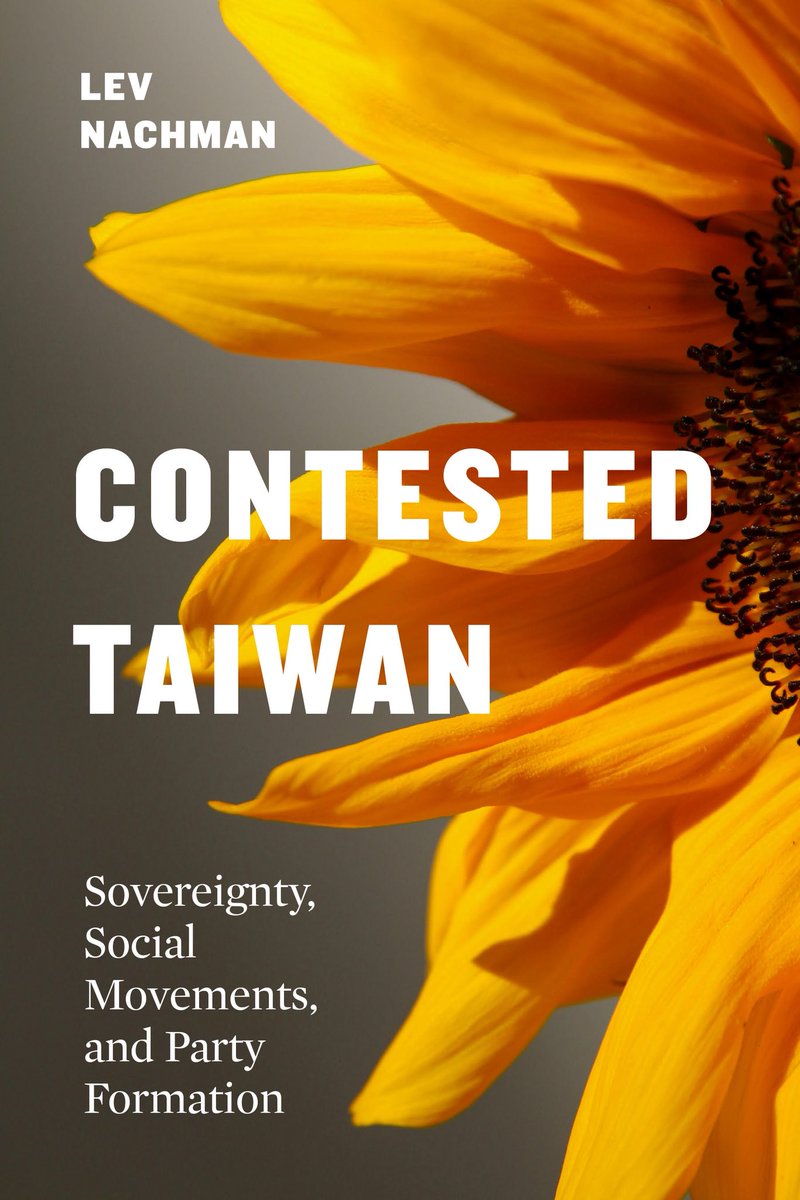
Contested Taiwan: Sovereignty, Social Movements & Party Formation
🗓️ Oct 22 | 4–5:30pm | SBSG 1511
👉 RSVP: https://t.co/mNpIVvr9cA
#Taiwan#USChina#UCI
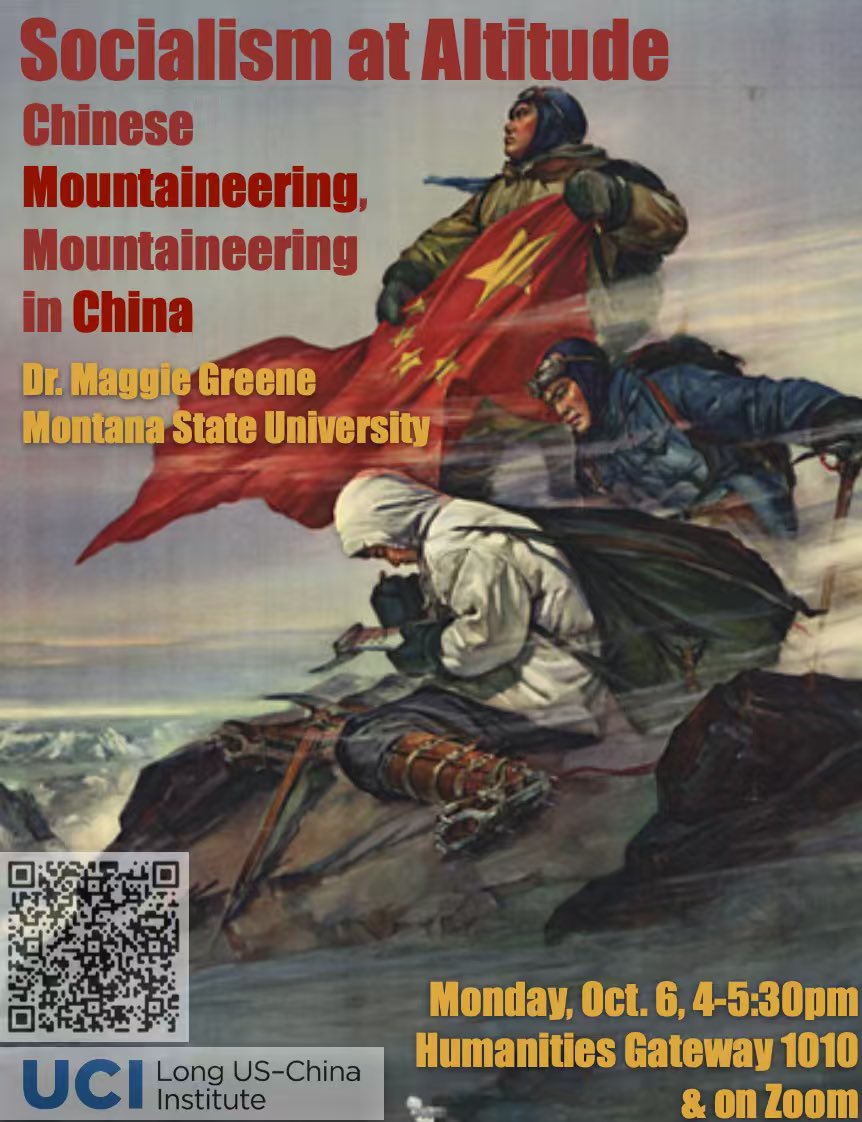
🏔️ What do China’s highest mountains reveal about politics, culture & identity?
Join us for Socialism at Altitude: Chinese Mountaineering & Mountaineering in China w/ Dr. Maggie Greene (Montana State).
📅 Mon, Oct 6 | 4–5:30pm PT 📍 UCI + Zoom
🔗 Scan the QR code to register
📢 Join us at UCI for: Contested Taiwan: Sovereignty, Social Movements, and Party Formation
🗓️ Wed, Oct 22 | 4–5:30pm 📍 SBSG 1511, UC Irvine
Speaker: Dr. Lev Nachman (NTU; UCI PoliSci PhD ’21) 👉 RSVP: https://t.co/mNpIVvrH28
@UCIrvine @UCIPoliSci #Taiwan#USChina
Join us at UC Irvine on Oct 9 for Tianlong Jiao: Exploring the Wonder of the Terracotta Warriors. Discover new insights from the @BowersMuseum VP & Chief Curator. Reception to follow.
🔗 Register: https://t.co/a0EMBiW27p
#LongUSChinaInstitute#UCIIlluminations
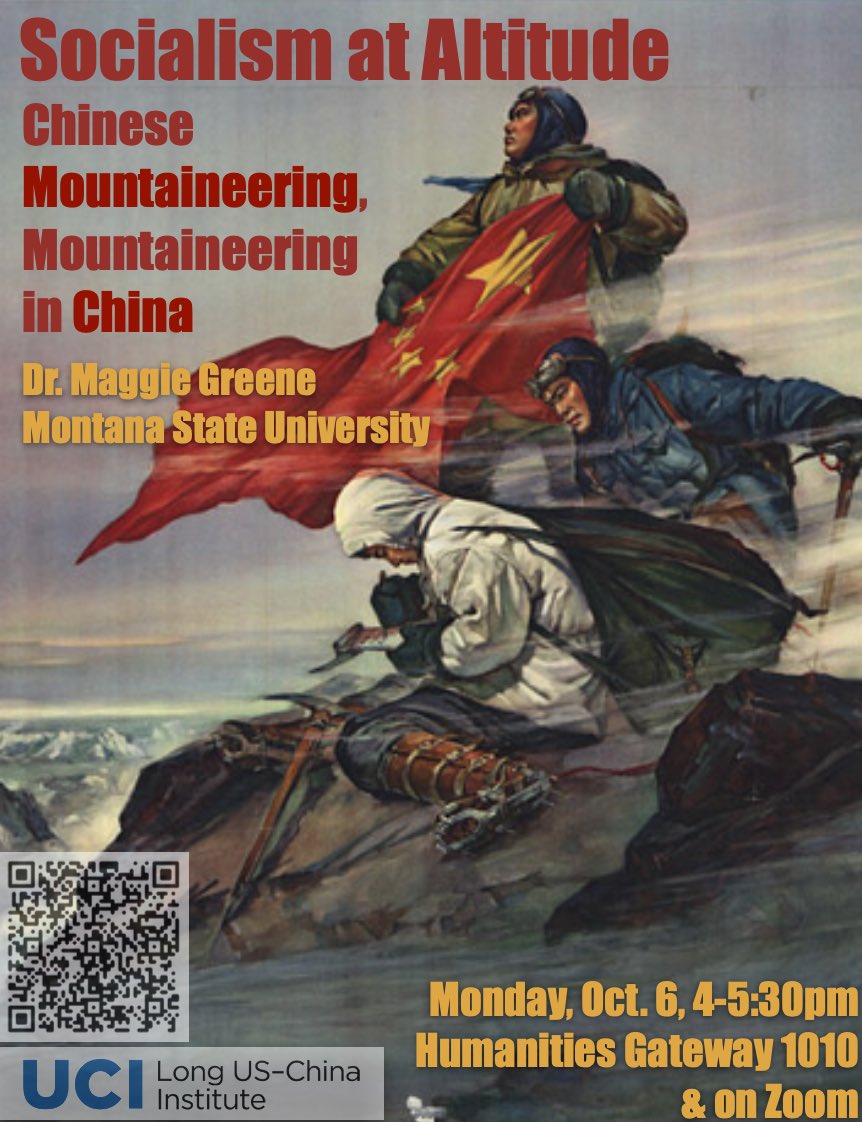
🌄 The Long U.S.–China Institute at @UCISocialSci welcomes @mcgreenesd Dr. Maggie Greene (Montana State University) for:
Socialism at Altitude: Chinese Mountaineering and Mountaineering in China
📅 Oct 6, 2025 | 4 PM PT
🔗 Register: https://t.co/i2QFCoSyzL
#USChina#History
China has made impressive advances in quantum technologies in recent years. Explore our feature to learn more about China’s ambitions and important milestones: https://t.co/NqliB3dk56
On Taiwan, China just has to win the psychological war. And for that, it needs no landing barges or hi-tech ballistics. It just needs the West to carry on ripping itself apart.' Article in Time Magazine.
https://t.co/GlxsQNgttd
Chinese AI startup StepFun recently announced a new Model-Chip Ecosystem Innovation Alliance (模芯生态创新联盟) with Huawei, Biren, Enflame, Moore Threads, etc. to help develop alternatives to Nvidia.
Here’s a great profile of StepFun by @economicsnoah https://t.co/W9HoDT9SNI
China will provide each newborn with an annual subsidy of $500 until the age of three (the typical age for public kindergarten enrollment) in an effort to address its declining birth rate. According to official statistics, China's annual number of births has dropped from 19 million in 2014 to 9.5 million in 2024.
During a State Council press conference held today, additional measures were announced to support childbirth, including extended maternity leave, tax incentives, and expanded childcare services.
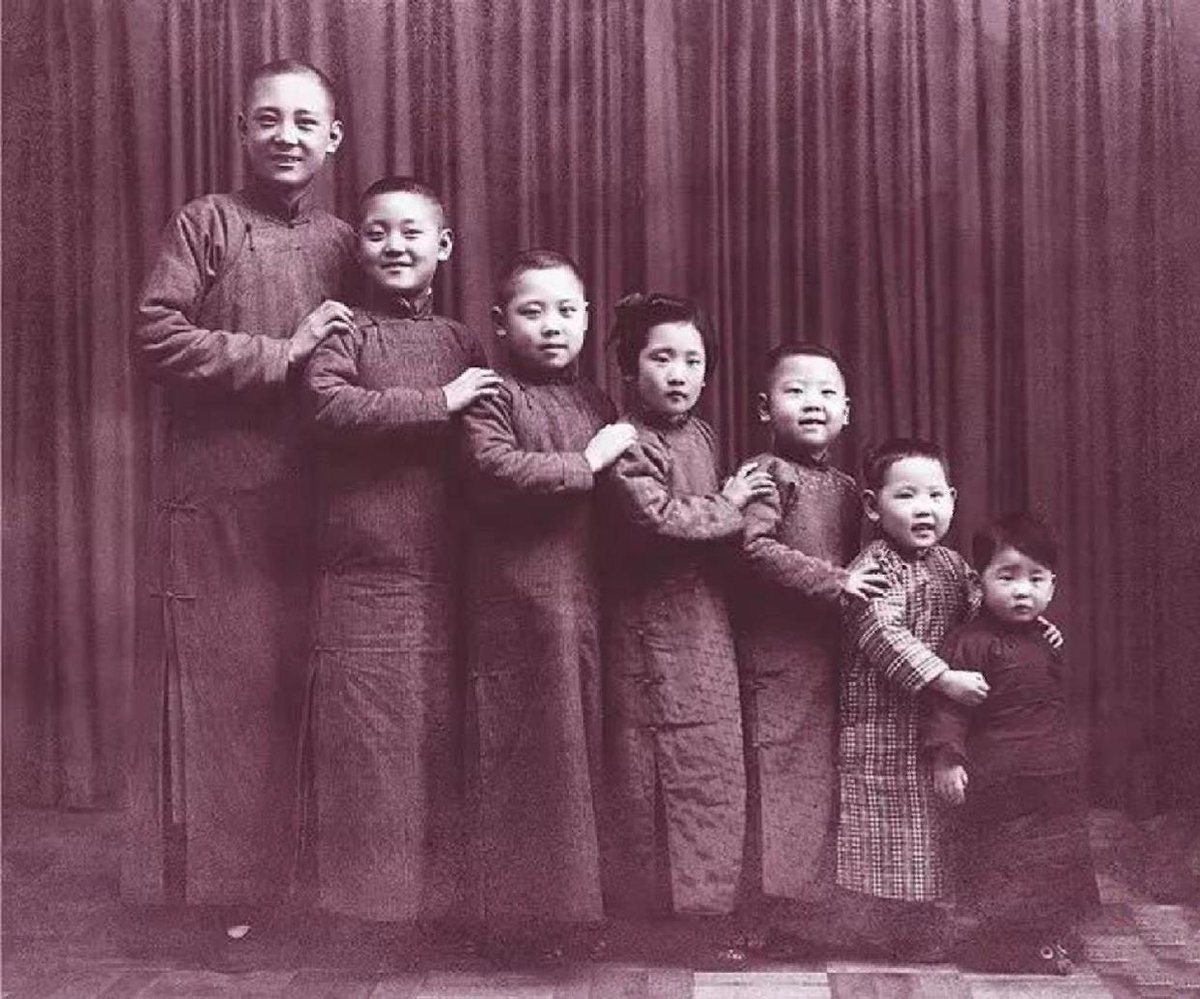
7 siblings from a big Chinese family, 1930s.
A move in the right direction for China's economic policy
"China’s government spending has pivoted toward social welfare to a degree unseen for at least a generation, as it runs a record budget deficit with a focus on boosting consumption to cushion the blow from Donald Trump’s tariffs."
Let's see if it is a temporary measure or a more permanent shift—next big watchpoint is the Five-Year Plan in March 2026, but Xi Jinping will give authoritative instructions at a CCP plenum later this year.
Via @business
https://t.co/wovvsY0Yvn
From Zhu to Xi: The Long March Toward Consumption That Never Arrived
Since 1998, Chinese leaders have regularly pledged to boost domestic demand, from Zhu Rongji’s stimulus to Xi’s “dual circulation” strategy. Yet consumption has never taken priority—thwarted not by intent, but by entrenched structural, political, and ideological barriers.
Evolution of China’s “Expanding Domestic Demand” Strategy
1. 1998 – Post-Asian Financial Crisis:
China first adopted “expanding domestic demand” as a macro policy under Premier Zhu Rongji, launching bond-funded infrastructure investment. Though the goal was internal stimulation, the approach was heavily skewed toward public investment, not household consumption.
2. 2008 – Global Financial Crisis:
The Hu-Wen administration rolled out a RMB 4 trillion stimulus, again with nearly half allocated to infrastructure. Despite rhetoric about boosting consumption, funds primarily flowed to local governments and SOEs, reinforcing China’s investment-driven growth model.
3. Post-2020 – Dual Circulation:
Faced with COVID and rising U.S.–China tensions, Beijing introduced the “dual circulation” strategy, prioritizing domestic demand. A 15-year roadmap followed in 2022, but structural reforms to lift consumption remained limited and largely aspirational.
Why Expansion of Domestic Demand Keeps Falling Short
1. Structural Income Reform Threatens the State-Corporate Model
Sustained consumption growth requires raising household incomes, reducing inequality, and expanding welfare. But doing so would shift power from the state and SOEs to households—undermining China’s political-economic foundation.
•The household share of GDP remains low (~40%) due to weak labor rights, hukou restrictions, and financial repression.
•Rebalancing toward households would shrink the state’s fiscal and capital share—higher wages cut into corporate profits, and more public services reduce local revenues. China’s strong-state, weak-household model is fundamentally at odds with consumption-led growth.
2. Short-Termism Trumps Long-Term Reform
Consumption-driven growth depends on:
•Building social welfare (e.g. pensions, healthcare, education) to reduce precautionary savings
•Urbanizing with equity, not just real estate investment
•Cultivating private-sector service jobs with upward mobility
All of these require long-term policy patience and institutional trust, neither of which align with the incentives of China’s bureaucratic-political system. Local officials are evaluated based on short-term GDP growth, infrastructure buildouts, and investment attraction—not consumer well-being.
3. Ideological Bias for Production Over Consumption
China’s Marxist legacy favors production and thrift over consumption.
•From Mao to Deng, growth was framed around output, not welfare.
•Even today, “common prosperity” emphasizes top-down redistribution, not empowering consumers.
•Consumption in China is tolerated but never idealized; imports, luxury goods, and rising household debt are viewed with suspicion, while “productive” investment is consistently celebrated. Consumer-driven growth is often seen as morally indulgent and strategically weak compared to state-led industrial expansion.
In China, expanding domestic demand has always been more slogan than strategy—an aspiration caught in the crossfire of political incentives, vested interests, and ideological habit. Until Beijing is willing to sacrifice control for consumption, talk of a demand-driven economy will remain just that: talk.
Several former Trump officials, current Trump allies, and Republican experts come out against the administration’s decision to provide China Nvidia’s H20:
Steve Bannon
Oren Cass
Matt Pottinger
Kyle Bass
David Feith
Liza Tobin
Michael Sobolik
Craig Singleton
Peter Mattis
The Center for East Asian Studies at the University of Kansas offers a travel grant to scholars from outside Lawrence, Kansas who wish to use the University's East Asian Studies and East Asian language collections held by KU Libraries. Apply by Sep. 19 https://t.co/HpBomP3UxS
Awesome new meta‑analysis of 67 studies on cadre promotion in China
-economic growth dominant driver of cadre promotion
-environment matters but weakly
-social stability & innovation null
-public service spending even hinders advancement