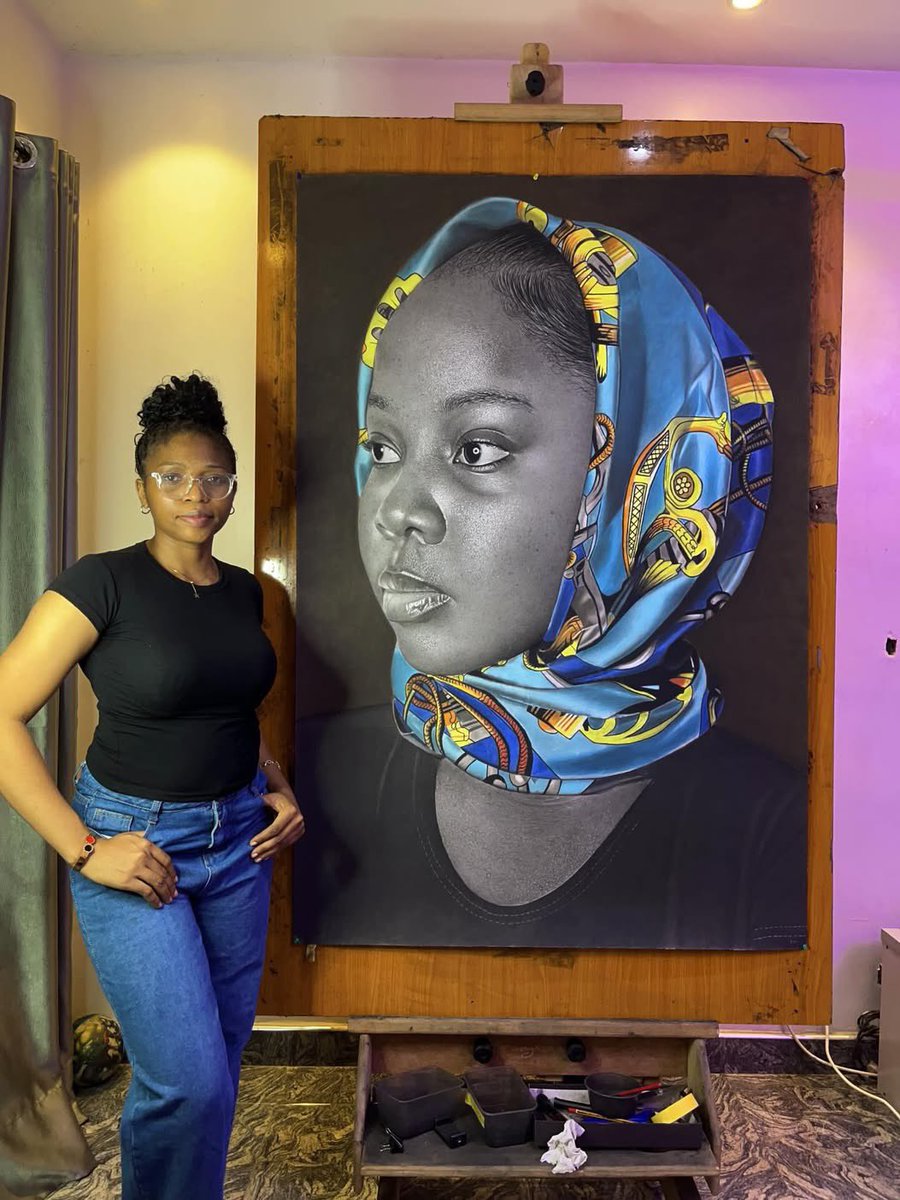
Barack and I were so honored to have @AkunyiliCrosby create our portrait for the Obama Presidential Center. Her artistic brilliance shines through — and the way she infused such life and joy into the piece is truly extraordinary. We love it, and we think everyone who visits the Center will too!
This is Grigori Perelman, the mathematician who declined both the Fields Medal and the $1,000,000 Clay Prize.
Perelman is a Russian mathematician who became internationally famous after proving the Poincare Conjecture, one of the Clay Mathematics Institutes seven Millennium Problems, and then astonishing the academic world by declining every major honor that followed.
In 2006 he refused the Fields Medal, explaining that he did not like the spectacle surrounding awards and believed that the mathematical community had behaved unfairly in handling credit for the proof. In 2010 he turned down the Clay Institutes prize of 1,000,000 dollars for the same achievement, stating that he felt no interest in money or fame and did not consider the recognition appropriately shared with other mathematicians who had contributed to the field.
He withdrew entirely from professional mathematics soon afterward, choosing a private life in Saint Petersburg while remaining an almost mythical figure known for unmatched brilliance and complete indifference to public acclaim.
#archaeohistories
James Baldwin with activist James Meredith, Jackson, Mississippi, in 1963, a year after Meredith became the first African American student admitted to the University of Mississippi. ❤️🖤💚
In Apocalypse Now (1979), Laurence Fishburne was only 14 years old when filming started in 1976. To secure the role, he reportedly misrepresented his age and claimed to be older than he actually was.
To land the role of Tyrone “Mr. Clean” Miller, Laurence Fishburne reportedly claimed he was 16, even though he was younger. In a fitting twist, his character was also underage and had lied about his age to enlist in the military.
The production of Apocalypse Now became notorious for its lengthy delays, which included typhoons, equipment failures, script rewrites, cast health problems, and extensive reshoots in the Philippines. By the time the film finally premiered in 1979, Fishburne was 18 years old. Ironically, while he had originally been considered too young for the role, the prolonged production brought him much closer to his character’s age by the time audiences saw the finished film.
Did you know a 12-year-old enslaved boy invented the method that made the global vanilla industry possible? He made it possible for us to enjoy treats like Vanilla Ice Cream!
In 1841, a 12-year-old boy named Edmond Albius made a discovery that changed agriculture worldwide.
At the time, vanilla orchids were grown in many places outside Mexico, but they rarely produced beans. Farmers knew the plant needed pollination, yet the natural pollinator found in Mexico did not exist in most other regions. For decades, growers tried and failed to solve the problem.
Edmond Albius, who was enslaved on the island of Réunion, discovered that the vanilla flower could be pollinated by hand. Using a small stick or thorn, he showed how to lift the membrane inside the flower and press the parts together, allowing fertilization to occur quickly and reliably.
His technique was simple, but it worked. It allowed vanilla to be cultivated on a large scale for the first time and helped establish major vanilla-producing regions such as Madagascar, which remains one of the world’s leading suppliers today.
The method Albius demonstrated is still used by farmers more than 180 years later.
Although he was later freed, Albius did not gain wealth or recognition from his discovery during his lifetime. He died in 1880 in modest circumstances. Today, however, historians and agricultural scholars recognize him as one of the key figures behind the global vanilla industry.
A practical idea from a teenager helped transform one of the world’s most valuable spices and made vanilla products widely available across the globe.
Nashville, Tennessee, 1930.
Vivien Thomas was born into the Jim Crow South. He was Black in a world that told him what he could and could not become.
He wanted to be a doctor.
He worked as a carpenter and saved every dollar to attend the Tennessee Agricultural and Industrial College. He planned to go to medical school.
Then the Great Depression hit.
The bank where he kept his savings collapsed. His money was gone. So were his plans.
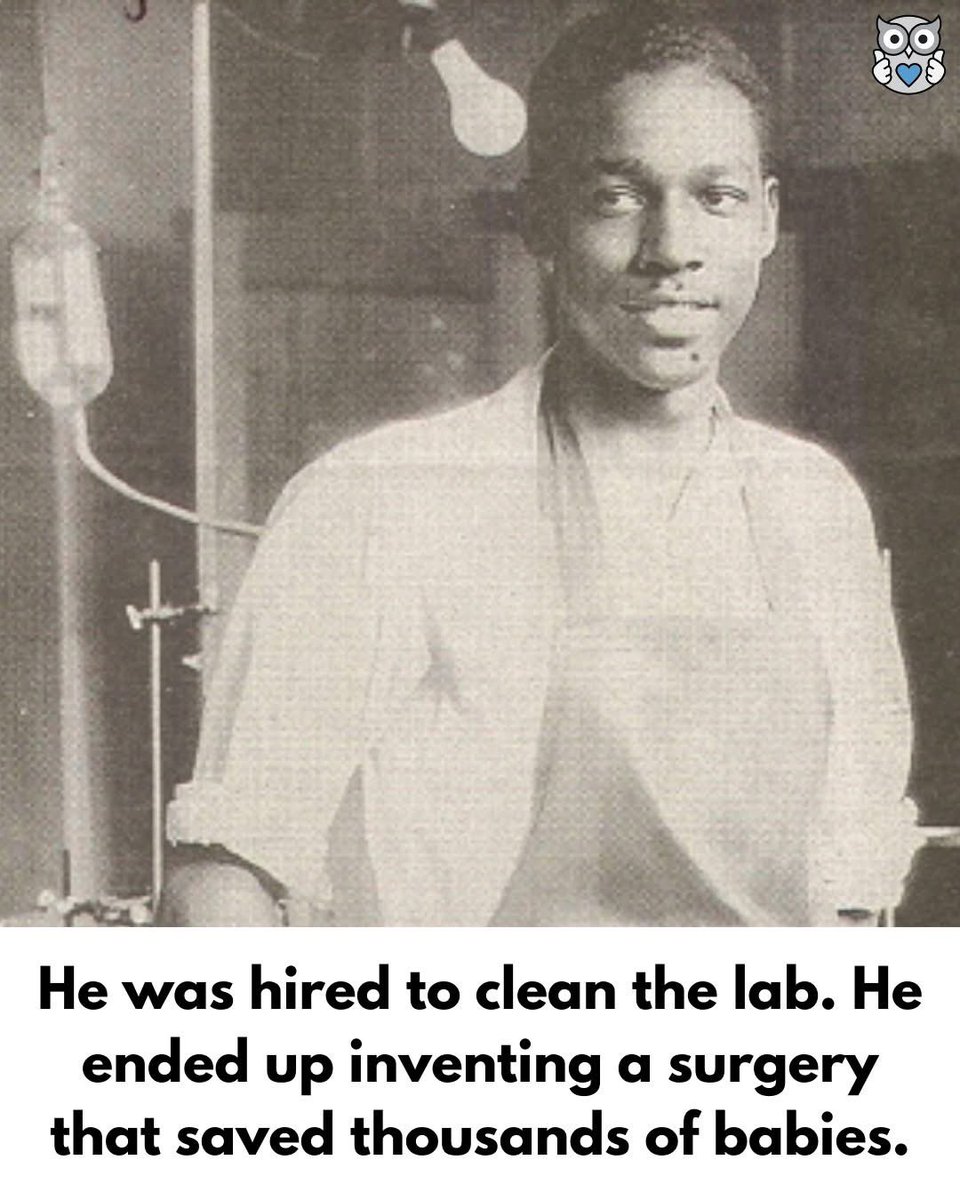
At 19, Vivien took a job at Vanderbilt University Hospital. He earned 12 dollars a week as a laboratory assistant. He worked in the lab of Dr. Alfred Blalock.
He was expected to clean, care for animals, and stay quiet.
Instead, he watched.
He listened.
He asked smart questions.
He understood what the experiments were trying to do.
Dr. Blalock noticed. He began teaching Vivien surgical skills.
Vivien had never been to medical school. He had no degree. But he had sharp eyes, a strong memory, and steady hands. Soon, he was performing complex surgeries on lab animals. His stitching was careful and exact. His knowledge of anatomy was deep.
By 1933, he was no longer just an assistant in practice. He was Blalock’s research partner. But officially, he was still paid and treated far below his real role.
In 1941, Dr. Blalock moved to Johns Hopkins Hospital to become Chief of Surgery. He agreed to go only if Vivien came with him. The hospital allowed it. But they gave Vivien a lower-status technical title.
Then came their biggest challenge.
Babies were dying from a heart defect called ‘tetralogy of Fallot’. People called it ‘Blue Baby Syndrome’. The babies’ skin turned blue because their bodies were not getting enough oxygen. Most did not live long.
Dr. Helen Taussig asked if a surgery could increase blood flow to the lungs.
Blalock turned to Vivien.
“Can you figure this out?”
Vivien went to work.
For months, he practiced on dogs. He tried again and again. He had to create new methods. He had to design tools. No one had ever done this before.
Finally, he developed a way to connect the subclavian artery to the pulmonary artery. The new path lets more blood reach the lungs.
It was bold.
It was risky.
It had never been tried on a human.
On November 29, 1944, they operated on a baby girl named Eileen Saxon. She was 15 months old and weighed only nine pounds. She was dying.
Dr. Blalock performed the surgery. Vivien stood behind him on a step stool. He quietly guided every move.
“Deeper.”
“A little to the left.”
“Use smaller sutures there.”
Blalock held the tools. Vivien directed the operation.
After four and a half hours, it was over. Eileen’s blue lips turned pink. Her fingers turned pink. Oxygen was finally reaching her body.
The surgery worked.
The procedure became known as the Blalock-Taussig Shunt. It changed medicine. It saved thousands of children. It helped create the field of pediatric heart surgery.
Dr. Blalock became famous.
Vivien did not.
For 22 years, Vivien trained surgical residents at Johns Hopkins. Many of them became leaders in heart surgery. They learned their skills from him.
But he was not called Doctor. He was not listed as faculty. He ate with the maintenance staff.
His name appeared on no papers.
In 1971, after four decades of work, Johns Hopkins promoted him to Instructor of Surgery. Not Professor. Instructor.
By then, the surgeons he had trained knew the truth.
In 1976, the hospital honored him with a portrait. It was placed beside Blalock’s. At the ceremony, former students stood and applauded. Some cried.
They knew who had taught them. They knew who had built the foundation.
That same year, Johns Hopkins awarded him an honorary doctorate. At last, he was officially Dr. Vivien Thomas.
He was 66 years old.
He had been doing the work of a surgeon for 46 years.
Dr. Vivien Thomas died in 1985 at age 75.
In 2004, HBO released a film about his life called Something the Lord Made.
January 30th is woven into my life in a profound way. It holds my brother, Dexter’s, birth (he would have been 65) and my mother, Coretta Scott King’s, passing 20 years ago.
Dexter’s keen mind, sharp insight, and gift for seeing several moves ahead enriched our family and the multifaceted legacy we inherited .
My mother’s strength, grace, and unwavering faith formed the example I seek to emulate. Each day, I strive in my own ways to both preserve and advance my father’s legacy of transformative Nonviolence, carrying them with me as a constant source of strength and guidance.
In doing so, I live in memory, in love, and in deep gratitude for the lives they lived and for the shared love, history, and togetherness of immediate family that once surrounded me and now lives in my heart.
#CorettaScottKing #DexterScottKing #MLK