1 historischer Tag für Ihr Portemonnaie
Trotz der Sorge vieler Bürger um Datenschutz und verstärkte staatliche Kontrolle, Bevormundung und Lenkung wird das Projekt des digitalen Euros (von unterschiedlichen Akteuren) innerhalb der EU-Strukturen beharrlich vorangetrieben.
Hier sehen Sie die französische Abgeordnete Aurore Lalucq, die einst - frz. Sozialisten meinen: irrtümlich! - Mitglied der frz. Sozialisten war, bevor sie rechtzeitig zu den Europawahlen 2019 zur „Place Publique“ des einst - irrtümlich!!!! - bei den frz. Sozialisten untergeschlüpften Raphael „CIA“ Glucksman wechselte, einem strammen Transatlantiker, Kriegstrommler & Mainstream-Ideologen, dem nicht wenige wegen seiner verkappten Versuche, Georgien (vor oder statt der Ukraine) zum schlagkräftigen Frontstaat gegen Russland aufzubauen, eine fast antieuropäische Nähe zu US-Neocons, US-Geheimdiensten und (gescheiterten) US-Regime Change-Operationen nachsagen.
Der lustigste Binnenwitz der EU-Demokratie ist es, dass Glucksmann sich im Europäischen Parlament zum Sprecher des dortigen „Kampfes gegen ausländische Einmischung“ gemacht hat, wobei er sich natürlich auf Russland & China beschränkt, während er doch selbst der lebende (und EU-Parlamentarier gewordene) Beweis für die erfolgreich vollzogene Einmischung dieses DRITTEN geopolitischen Spielers ist. Zwinkazwonka!
Lalucq jedenfalls ist in einem Bündnis namens „Lust auf ein ökologisches und soziales Europa“ („Envie d’Europe écologique et sociale“), was auf einer höheren Bewusstseinebene wohl irgendwie dazu passen muss, dass sie in der entsprechenden EU-Delegation ausgerechnet die Beziehungen zu den (ökosozial ja etwas rückständigen) USA und damit auch noch dem Staat „pflegt“, von dem sie sich mit dem digitalen Euro doch emanzipieren möchte.
Im ECON, dem Ausschuss des EU-Parlaments für Wirtschaft & Währung, wo sie die S&D-Fraktion vertritt, zeigt sie Ihnen hier gerade ihr gewinnendstes EU-Bürokratenstrahlen - und zwar darüber, dass der digitale Euro es nun „geschafft“ habe („adopted!“). Was, wenn man genauer hinsieht, eigentlich bedeutet, dass 43 der dort (als Abgeordnete) vertretenen Einzelpersonen, denen irrwitzerweise die erste Entscheidungsmacht über den zukünftigen Währungsrahmen der gesamten EU zufällt, ihre Stimmen abgegeben haben. Stimmen, von denen wiederum behauptet wird, sie würden über ein (so zauberlehrlingshaft wie abwegig verschlungenes) Demokratiekompetenzweiterleitungssystem 450 Mio. EU-Bürger und deren währungspolitische Souveränitätsinteressen repräsentieren. (Kurzversion: 43 Personen entscheiden über 450 Millionen, die niemand dazu je befragt hat.)
Seine Befürworter, auch Lalucq, beschreiben den digitalen Euro als Markstein europäischer Souveränität, mit dem unsere übermäßige und, wie wir hinzufügen müssen, durch und durch SELBSTVERSCHULDETE Abhängigkeit von US-amerikanischen Technologie- und Bankensystemen eingehegt werden und die EU sich gegen „illiberale Raubtiere“ & Tech-Giganten aus den USA zur Wehr setzen könne. Hinzu gesellt sich eine partielle Entmachtung von Geschäftsbanken & sogenannten Zahlungsdienstleistern, die uns zugegebenermaßen alles andere als unsympathisch ist.
Nur zementiert die digitale Infrastruktur aber eben auch die lückenlose Nachverfolgbarkeit aller Transaktionen und damit den Verlust der finanziellen Privatsphäre, sagen die Kritiker, die seine Einführung als entscheidenden Schritt in Richtung eines Überwachungsstaates interpretieren, in dem das Finanz-, Konsum- und sonstige Verhalten der Bürger zentral erfasst, gespeichert & analysiert wird.
Tatsächlich würde mit seiner Programmierbarkeit ein (für Zahlungsmittel) gänzlich neuer und wahrhaft auch dystopischer Möglichkeitsraum eröffnet werden, der das Instrumentarium staatlicher Überwachung, Kontrolle und Steuerung ins nahezu Unermessliche erweitert.
Denn der digitale Euro wird nicht nur zentralisiert und steuerbar, sondern (potentiell) programmierbar, konditionierbar und geolokalisierbar sein. Seine Verwendung wird (potentiell) an Bedingungen, Regulierungen, politische Ziele geknüpft werden können. Guthaben könnten mit Verfallsdaten & Obergrenzen versehen werden, während durch Zentralsteuerung einzelne Zugriffe aus der Ferne eingeschränkt oder durch Deaktivierung verunmöglicht werden können.
Trotz gegenteiliger Beteuerungen der EZB besteht die Sorge, ein digitaler Euro könne zweckgebunden - d.h. nur für bestimmte Güter nutzbar - werden, was es dem Staat erlauben würde, Konsumentscheidungen zu steuern oder zu blockieren. Damit wird nicht nur Einschränkungen der finanziellen Souveränität der Bürger der Weg geebnet, sondern schweren Eingriffen in die Eigentumsfreiheit bis hin zur stillen Enteignung durch die Möglichkeit, Negativzinsen im Bedarfsfall direkt auf digitale Bestände zu erheben.
Nach unserem Dafürhalten ist dies weit mehr als ein technisches Update oder jene überfällige „Modernisierung“, als die man das Projekt vermarktet, denn es birgt fraglos das Potential zur tiefgreifenden Veränderung nicht nur des Alltags, der Privatsphäre und der finanziellen Freiheit von hunderten Millionen Bürgern, sondern vor allem der Beziehung zwischen Individuum und Staat.
Ein solches „Geld“ verlöre unvermeidlich seine ihm primär zugedachte Funktion als frei verfügbares Tauschmittel & neutraler Wertspeicher - und zwar tatsächlich allein dadurch, dass sein funktionaler Wesensgehalt in den Verfügungsbereich staatlicher Autorität verschoben bzw. dem Zugriff institutioneller Akteure geöffnet wird. Einmal in den „falschen“ Händen, würde die „moderne“ Struktur, an der Lalucq, Lagarde und andere arbeiten, augenblicklich jenes durch den Bürger nicht mehr kontrollierbare Ermächtigungsinstrument zur totalitären Kontrolle & Herrschaft, das seine Kritiker in ihm sehen: eine programmierbare, konditionalisierbare, sozialkreditierbare Maßeinheit, die mühelos zur Verhaltenssteuerung & Unterdrückung gebraucht werden kann.
Wenn Sie uns fragen, dann halten wir das Risiko, dass diese Sache (mit dem digitalen Euro) genau so teuflisch ausgeht, wie seine Kritiker es befürchten, (aus Gründen) für zu groß, als dass wir ein in diesem Maße & derartiger Folgenschwere missbrauchsanfälliges Projekt für eine gute Idee halten könnten.
Letztlich ist die Frage nach dem digitalen Euro eine des Vertrauens in staatliche Autorität(en) und die Institutionen des Gemeinwesens - und natürlich eine des Unterscheidungsvermögens zwischen deren Gut- und Bösartigkeit. Denn glaubten die Bürger (noch) an die Existenz einer benignen (europäischen) Meta-Struktur und an die guten Absichten ihrer Architekten, dann wäre die Schaffung einer digitalen Währung sicher kein größeres Problem. Dass sie es heute aber ist, zeigt deutlicher als alles andere, in welchen Zustand die Demokratien Europas geraten sind.
Für Rousseau ist das Vertrauen der Bürger der gesellschaftsvertragliche Idealzustand, der einzig die legitime Autorität von Institutionen begründen kann. Dieses Vertrauen kann nicht gewaltsam herbeigeführt oder erzwungen werden; der Staat muss es sich durch Tugend & Transparenz verdienen. Das Ende des Vertrauens markiert bei Rousseau den sicheren Staatszerfall.
Oder in den Worten von Aurore Lalucq: „Ein historischer Tag für Europa“
P.S.: Anfang Juli wird über den digitalen Euro im Plenum abgestimmt. Ich werde nicht dafür stimmen. Schon weil ich in Zukunft nicht blank am Kaugummiautomaten stehen will… ZwinkerSmiley
Eure Homepage war 15 Jahre lang meine Startseite.
Heute lösche ich sie.
Nicht wegen X.
Wegen euch.
Ich war früher ein treuer Leser von euch. Eure digitalen Angebote waren früh maßgebend. Ich habe als Student eure Artikel verschlungen, die Feuilletons waren großartig, die Recherchen stark, die Aufmachung genial.
Eure Homepage ist bis heute meine Startseite im Browser. Ich weiß ehrlich gesagt gar nicht mehr warum.
Irgendwann hat sich etwas verändert.
Jede Schlagzeile, die ich lese, spiegelt das exakte Gegenteil der Realität wider. Egal ob Trump, AfD, Grüne, Letzte Generation, Migrationspolitik, Gendern, FDP, CDU oder SPD.
Es geht nicht darum, ob man links oder rechts steht. Es geht darum, dass ihr aufgehört habt, die Welt zu beschreiben, und angefangen habt, sie zu erziehen.
Fridays for Future war bei euch Heldenepos, Bauernproteste waren Demokratiegefährdung.
Habeck wurde porträtiert wie ein Philosoph auf der Regierungsbank, Lindner wie ein Saboteur. Jede Migrationsdebatte war automatisch rechts, jede Genderkritik automatisch rückständig.
Dazu diese Pseudo-Überheblichkeit in der Sprache. Als ob der Leser zu dumm wäre, sich eine eigene Meinung zu bilden.
Ihr geht nicht wegen der "Verrohung der Plattform." Ihr geht, weil ihr hier zum ersten Mal ungefilterte Antworten bekommt. Und das haltet ihr nicht aus.
Sprache soll verbinden. Journalismus soll einordnen. Nicht belehren. Eine Linksavantgarde kann genauso spalten wie alles andere.
Nur dass sie es mit dem Gefühl tut, auf der richtigen Seite zu stehen.
Ich lösche jetzt meine Startseite.
🇨🇳Beijing announces successful tests of 21st Century Thorium Reactor
In the Gobi Desert, China tested an experimental molten salt reactor with a capacity of 2 MW. The uniqueness is in the fuel: instead of uranium, thorium is used, which is three times more abundant in the earth's crust. The reactor went through a full cycle without stopping - the fuel was "updated" right in the process.
The Shanghai Institute of Applied Physics was involved in the development. The new technology operates on molten salts, which simultaneously serve as both fuel and coolant. Due to this, the radiation load is reduced, there is almost no waste, and safety is higher than that of traditional uranium reactors.
✔️More economical, cleaner, more reliable - this is how experts describe thorium reactors, already calling it the future energy revolution. Just one thorium-containing mine in Inner Mongolia is theoretically capable of supplying China with electricity for thousands of years.
➖Critics say While the West spends billions on wind turbines, Beijing is quietly advancing in the future.
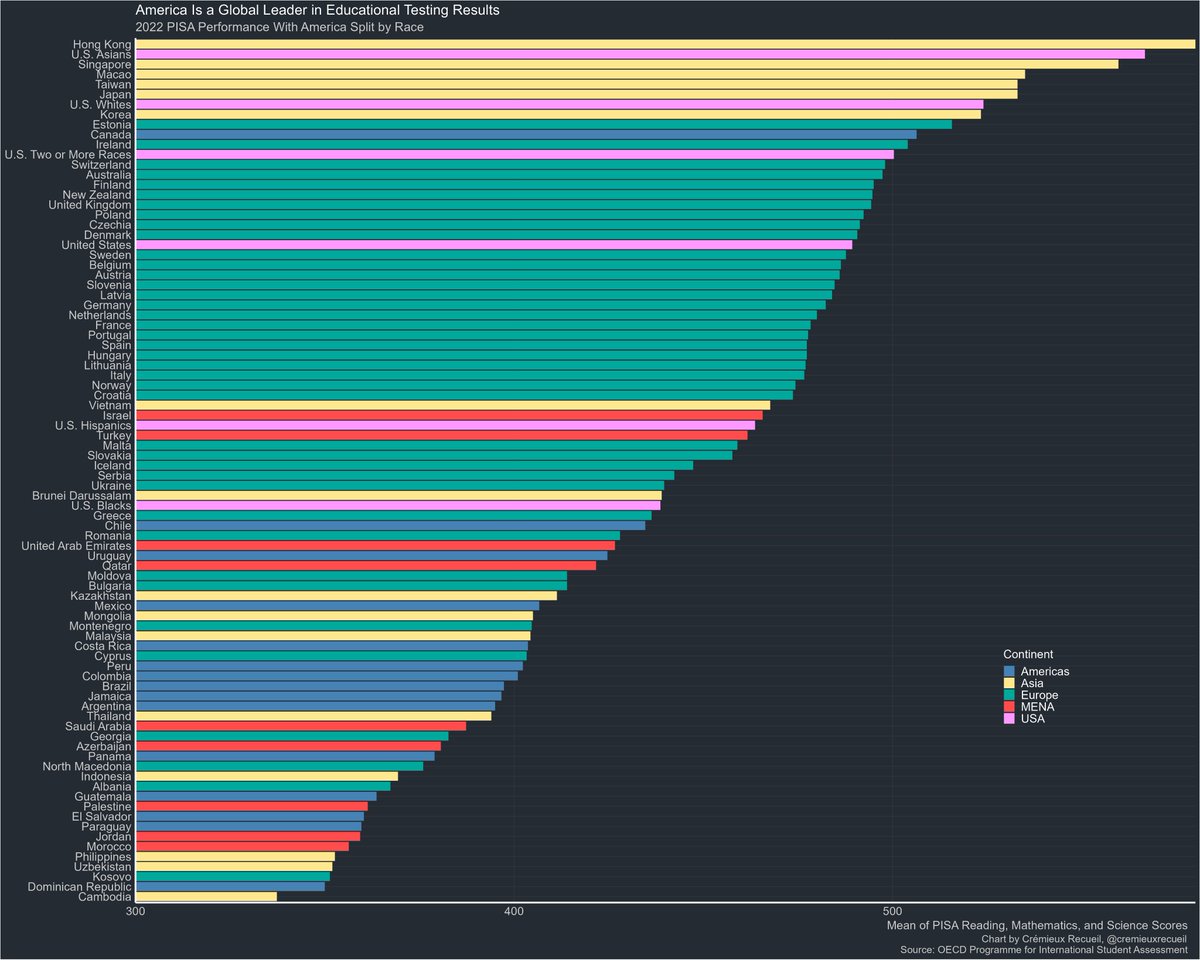
With the latest PISA results, America has proven once again that it has one of the smartest populations and, perhaps, the best education systems.
American Asians and Whites topped the charts; American Hispanics beat all other Hispanics; American Blacks did well.
🧵
Means first
@arctotherium42 Sure, but it's still important to note how demographically-consistent samples perform for several reasons, like that if we don't, people espouse unsupported theories like 'phones are making kids dumb.'
Germany is basically the engine of post-Cold War progressive leftism in the West. Not the UK, not Canada, it is Germany. Climate politics, racial guilt, mass migration: all this stuff is developed in the Western NGOsphere, implemented here and then spread to the rest of Europe and back to the United States.
Our unique historical position and deliberate cultural subordination to the US empire has created a political and cultural system that Trump or somebody should really figure out how to dismantle.
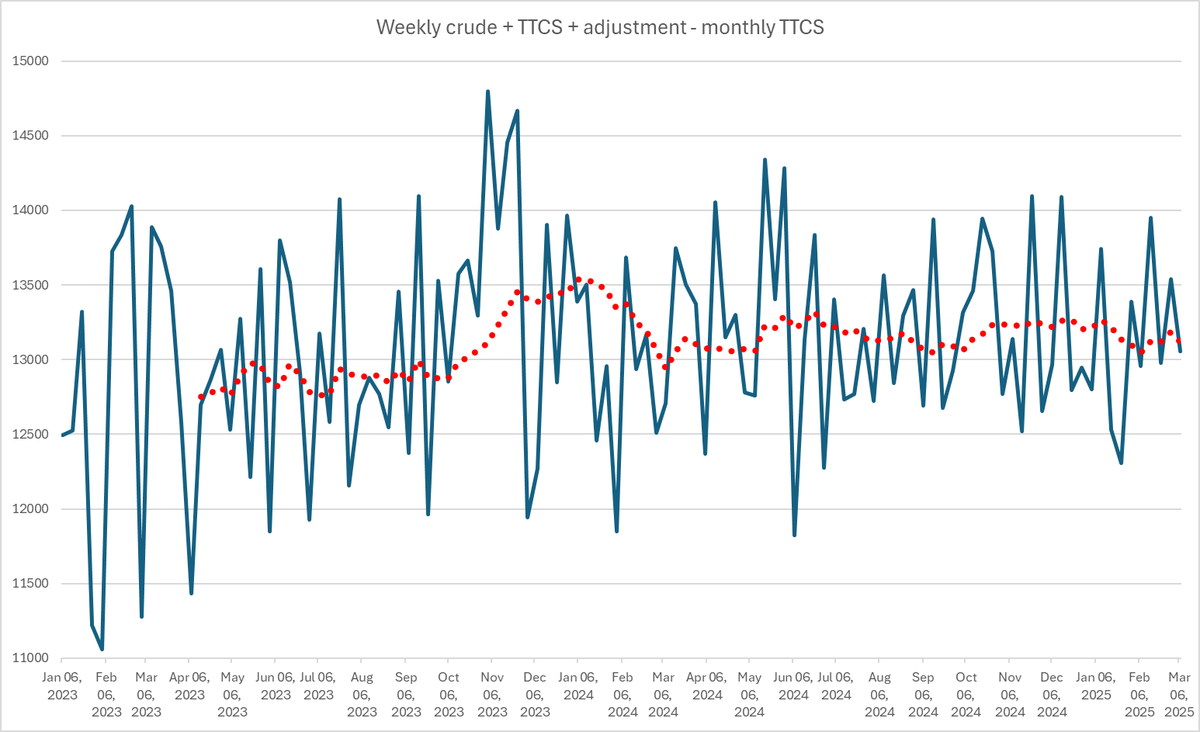
For anyone interested the graph below is a decent proxy for actual US crude production. The important piece is the red line which is a 20 week average.
US crude production flatlined a while back ~13.2mmbpd and will get worse not better.
@BokehResearch h/t for the chart idea
US economy in robust in expansion, but increasing headwinds for equities
Near-term data continues to paint the picture of a bullish US economy, with the very latest Friday's NFP report showing the unemployment rate down to a nine month low. However, several headwinds are gathering for US equities. In particular:
1- Earnings: 6 out of 7 megacap earnings guided below market for 1st quarter sales. Big Tech leads the market and for now seems to be struggling
2- DOGE: Significant progress appears to be made in budget cuts. NB: Every dollar of deficit spend is a dollar of corporate earnings - the reverse also applies
3- Tariffs: Contrary to consensus, this policy tool is likely not just for show, but a cornerstone of Trump 2.0
4- Immigration: The near-total halt of new immigration is likely to show up in higher labor cost in the coming quarters (all else being equal)
5- Positioning: Both retail and hedge funds bought equities at multi-period z-scores this past week, suggesting less demand from these two important groups from here on
6- Fed: Following the NFP report, more cuts likely to be priced out - it doesn't make sense to be dovish into low and declining unemployment
While nothing is ever certain, a price adjustment to these new market realities does not seem too unlikely
Big picture: The new administration - for now - continues to pursue a policy mix that is more favorable to labor and less favorable to capital, trying to strike the rebalancing act demanded by its electoral base. This is a regime change from the Biden era, which saw both asset and consumer price inflation massively benefitting a very narrow population segment at the expense of everyone else. It is an irony of history that a cabinet of billionaires is now driving change away from that, while the previous policy mix was driven by the historic working-class party
The Energy World is Flat 2.0
The re-globalisation of U.S. natural gas markets - If/when materialises - can have meaningful implications:ma cross energy and the global economy and markets
To start, it becomes a #flattener
- higher US Nat Gas prices (and volumes)
- lower Global Nat Gas prices
- lower Crude Oil and Products prices
Remembers crude oil and OPEC success is NOT about “oligopoly of supply”, but rather about “monopoly of demand”, more precisely, monopoly of TRANSPORTATION demand via gasoline, diesel, FO are all crude oil products, which now face competition from electric,LNG, CNG, etc…
The eventual Convergence of global Nat Gas prices (see comparison in barrel of oil equivalent, “apples with apples”) likely at lower end.
On the margin, lower global natural gas prices will also flatten electricity prices (although these will always remain more regional) and on the margin inflationary for USA and deflationary for the rest of the world
Overall, all these forces will reduces the competitive advantage of the USA via energy channel that has been major driver of economic divergence across global economies and USA exceptionalism since Fukushima in 2011.
The Russia/Ukraine war resulted in a re-regionalisation of natural gas prices with a resulting divergence and surge in global natural gas prices
But the flattening forces are simply too powerful and will, eventually, prevail.
@dlacalle@RaoulGMI@KeithMcCullough@jessefelder@ErikSTownsend@johnauthers@ttmygh@EdConwaySky
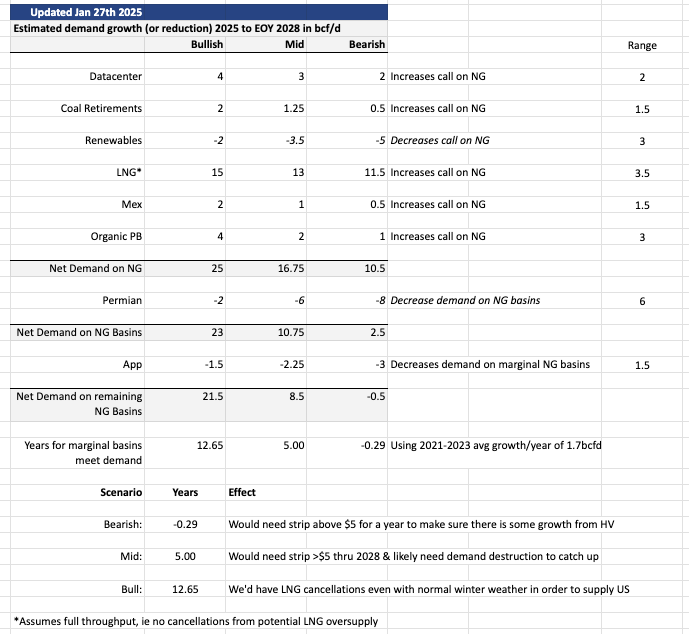
How negative is Deepseek news for $NG Natural Gas? I think it's helpful to take a holistic look at supply and demand for NG before answering that question. Below I rolled up some estimates through EOY 2028.
Here's some commentary on each line item with a snapshot below.
Data center - I had kept this number low since I was never sure of the impact of new Datacenter demand on NG in the first place. After yesterday I cut it another 33%. It's definitely greater than zero, but I'd feel safer with the bearish number here (2bcf/d).
Coal retirements - also a wild card given the administration's friendliness to coal. There will still be retirements and some conversions to $NG. The retired plants will likely have low utilization (30%?). This will be greater than zero, but I think I would steer clear of the Bullish estimate here.
Renewables - I think the mid estimate (3.5bcf/d) might be on the high side. 2024 renewable growth might have been peak growth for a while. Just under 1bcf/d growth per year is a safe estimate and I think errs closer to the bullish case (in this case, lower is more bullish for NG).
LNG - In some respects this is more straightforward than the rest since we have line of sight on all the projects that would come on before 2028, but there's a risk of an "LNG glut" that could lead to cancellations and/or downward price pressure on NG. I'll add a separate post where I roll this up with some notes.
Mexico - this is for organic Mexican demand. I include Mexican LNG projects in the LNG number. I think 1bcf/d in 4 years is quite safe. Could be higher.
Canada - I didn't include Canada. I do think CA>US imports take a hit as LNG Canada ramps but they may be able to catch up over time. Flat works for me here.
Organic PB - This is organic growth from population growth, migration to the AC-heavy south, electric vehicles, etc. It's tough to guess at this number since price and weather swings the last couple years obscure the real numbers, so I feel safe with 2bcf/d and this leans bullish.
Permian - This is line item with the biggest variance. Permian has grown around 2bcf/d for a few years. Activity has dropped big time since 2023 and oil prod has been flat. I don't know if it's realistic to keep this growth up since gas declines too, just more slowly than oil. However it's possible more gathering and takeaway can get close to the trend. Personally I think 1.5bcf/d/year growth is a safe estimate. I don't see 2bcf/d with the activity drop.
App - this is for the Appalachian Marcellus. It is takeaway constrained except for in-basin demand, which has helped it go above that constraint during winter. There will be de-bottlenecking on MVP that will increase the takeaway by about 2bcf/d starting in late 2026 through the end of the decade. Right now App is about 1bcf/d below it's constraint, so I take that 1bcf/d, throw-in winter bump, and some de-bottlenecking.
Net Demand on remaining NG Basins - What's left is the call on the remaining basins. Average growth in years 2021 through 2023 was 3.75/bcf/d including App and Permian. Outside of the big two, other basins did not grow that much.
So I look at how many years of growth we need from these basins to meet the call on them and what that means for pricing. Maybe an imperfect approach but there's so many variables I try to keep it simple.
*IF* we get that "Mid" number we need 8.5bcf/d out of the remaining basins by the end of 2028. That's over 4 years from a standing start. That's MORE than they grew from 2021-2023 when there was a big price spike.
There's some DTILs available, but DUCs are low and activity has been winding down a lot (we'll learn a lot more during Feb earnings calls.)
What kind of pricing do we need to incent that growth? The biggest swing basin will be Haynesville and the biggest private there (Aethon) says they need $5 strip to grow.
Maybe the mid number is wrong and maybe we are already loose so you should take a couple off. Plug in your own numbers and see where you end up. Put in 2 or even zero for Data Centers if you want.
$EQT $AR $EXE $RRC $CRK $VG $LNG
$BTU Acquisition of Anglo American coal mines...
The good is that this adds ~$750m of unlevered FCF, about double what I expected post-centurion so FCF/MCAP 2026+ should be double. FCF/EV probably about the same until they pay down debt.
The meh (to me at least) is that the new FCF is from met-coal. I know all the coal bois love met but I'd prefer thermal as it's more out of favor and more clearly coming out of a trough (definitely a minority opinion);
The bad is that this takes a straightforward thesis (FCF doubles in 6 quarters when centurion comes on) and complicates it a bit though you are compensated for it.
All in all, whether this was a good move depends on where we are in the cycle. If we are early/mid, then this will improve returns otherwise, otherwise...
Quick take on today's CPI
1 - core CPI is still at 3.3%, supercore (services ex. housing) at 4.1%, and the market sees it as a WIN 🤡
2 - Haircut inflation still at 4.6%, inflation in labor-intensive serviced stuck at 4-5%
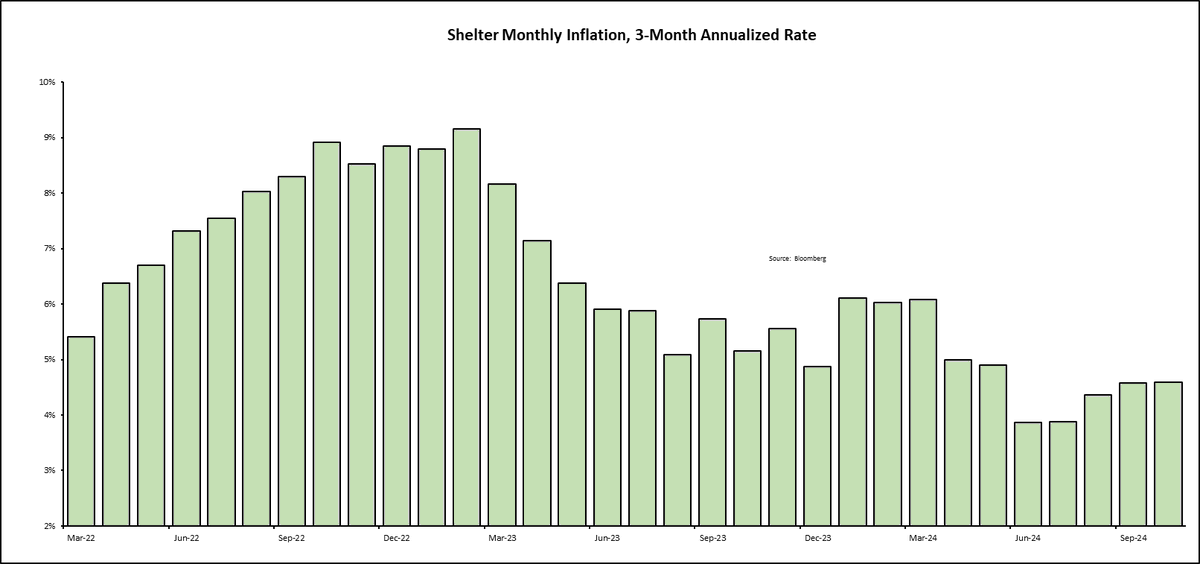
3 - Shelter inflation at 4.6% on 1-month, 3-month, and 1-year basis.
Powell suggested that rent costs are normalizing last week 🤡
➡️ We are no longer in a 2% world.
BTW, the last sub 2% CPI reading was 57 months ago!!😱
☠️☠️☠️CHART REVIEW ☠️☠️☠️
Did another chart review.
It's still a bit long since I'm reviewing everything at once so I'll try to follow up with some shorter videos targeting specific segments.
Here I cover $SPY $BTC $TLT $CL $OXY $NG $CRK $EQT $AR $RRC $BTU $WHC.AX