The Light in the Darkness: Director's Cut just launched on @PlayStation for free.
https://t.co/hqzK5To8Jz
3 years after the original release, I was able to bring to life the original vision thanks to @ClaimsCon and @Meta
@snarky_fella It is majority Muslim, and if people are bringing up the Middle East and Muslims countries should be accurate.
I mean Azerbaijan which is Muslim banned the Hijab in schools etc...
How can you be so ignorant of basic facts, @billmaher ?
"Your wife would have to wear a head-to-toe burqa every time"
The only Muslim countries that impose any form of Hijab on women are Iran and Afghanistan. Not a single other Muslim country does that.
@AndreSegers its kinda what that studio does at activision, does remakes before full sequels.
But also incredibly important the writers are British because the british humour is a huge part of it
Wait until he learns that the Taliban only allow ethnic-Pushtans to be in roles of power, as it’s an ethnic movement primarily, & religiously afterwards.
A call to the Jews of the world “not to rest until the civilised world understands that the German nation must pay for the Jewish and Polish victims of Hitler’s atrocities,” was cabled by Prof. Stanislaw Kot. prominent member of the Polish Cabinet, to the World Orthodox Agudas Israel Organization in 1942.
The cable was road last night at a mass-meeting called by the Agudah in Tel Aviv to protest against the Nazi cold-blooded mass-extermination of Jews.
@LucBernard@TimaSa713@MelSRobbins Thank you 🙏🙏🙏🙏
I remember playing Rayman Legends during the war of 2014.
Ever since, I love video games and hate wars.
This is remarkable and it deserves our support. The youth of Gaza need every opportunity to expand their knowledge, find enjoyment and discover new experiences.
It's why there is pictures of Bedouins who fought on the Israeli side in 1948 wearing the Keffiyeh.
History is just fascinating how items of clothing get politicized for various reasons.
The keffiyeh used to be what bedouins, villagers and farmers would wear to protect against the sun, before it became popularized.
While upper and middle class Arabs would wear the fez.
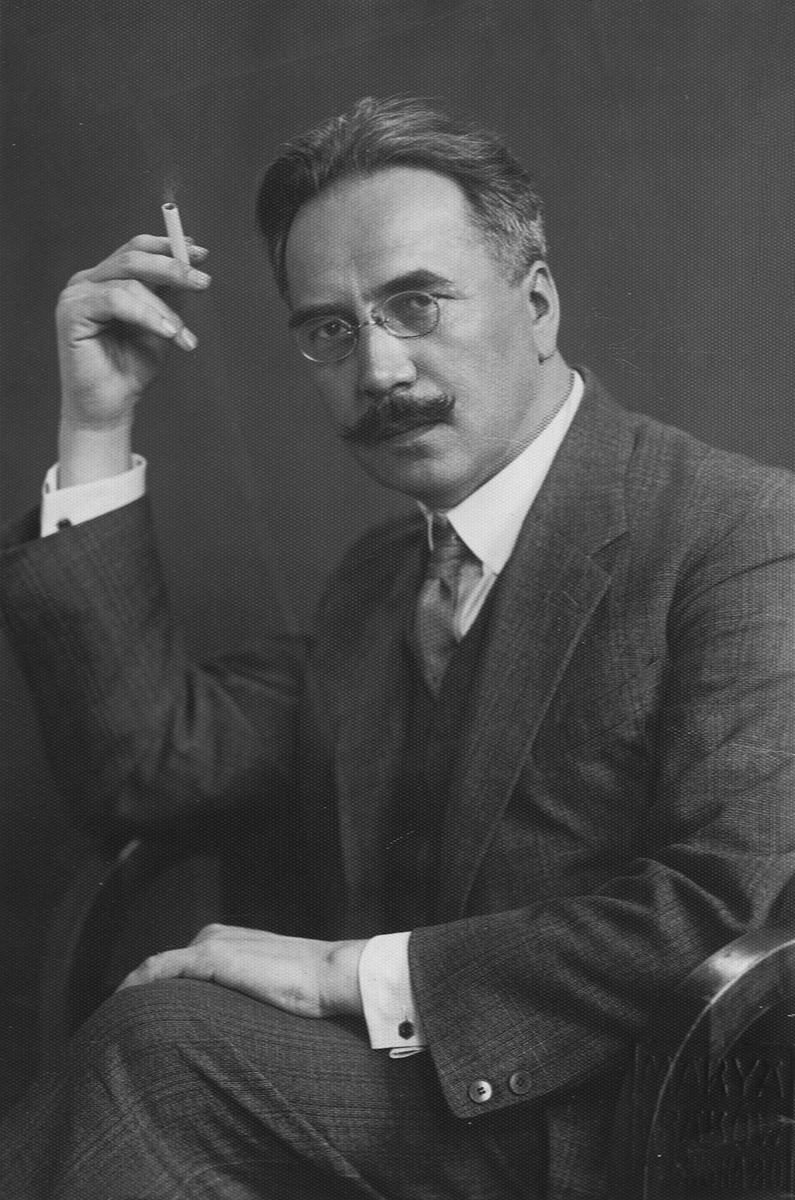
(picture of Tommy Cooper unrelated).
Naturally when the cult sees this, they'll call me a Zio and accuse me of hating Palestinians, so let me make it clear- I am for Palestine; I hate YOU, the narcissistic, antisemitic losers who adopt them like a prop just like that keffiyeh you bought off Amazon.
Fun fact: lot of pizza places in Israel are Muslim owned because cheese+meat pizza is forbidden by Jewish kosher rules, so there's a niche for non-kosher pizza.
**A new chapter — and new things to build.**
Over two years ago, I met @afalkhatib, and what began as a moment of allyship grew into a shared commitment to pragmatic solutions for Israel and Palestine. As our collaboration deepened, we brought the concept to the @AtlanticCouncil to build something from the ground up.
I have now concluded my role as Deputy Director of Realign for Palestine. I'm proud of what we accomplished, deeply grateful for the people who made it possible, and excited about what comes next.
Realign For Palestine has been among the most meaningful experiences of my career.
Along the way, I learned something important about myself: Some of my best work is taking ambitious ideas, bringing the right people together, and building something that didn't exist before.
*Building on pragmatism*
Together with Ahmed, I helped develop and advance a distinctly Palestinian-led public narrative, grounded in Gazan perspectives and a pragmatic vision, establishing principles for more constructive discourse on Palestine while building an ambitious policy agenda in Washington and global capitals for Palestinian freedom and prosperity.
For more than two years, that mission has meant commuting back and forth to Washington, DC, while traveling to meetings, convenings, and engagements wherever the work took us. Over the hundreds of meetings, media appearances, and events, we reached thousands of people directly and millions more online, advancing conversations with policymakers, diplomats, and institutional leaders at the highest levels.
At its heart, radical pragmatism was a challenge to the field: to focus not only on what isn't possible today, but on what we can make possible tomorrow.
My approach to that pragmatism focused on pioneering work to advance Palestinian financial autonomy and economic resilience. This summer, I co-published the Atlantic Council mini-series: The future of Money in Palestine and convened a high-level working group of financial executives, policymakers, and technologists to discuss Gaza's financial future.
Together with stakeholders, partners, and coauthors, we moved conversations about digital sovereignty, privacy, and financial inclusion beyond abstract policy debates and toward practical questions of implementation, institutional cooperation, and the financial infrastructure Palestinians need to exercise greater control over their economic futures.
Before October 7, 2023, I had begun preparing for a career beyond Israel and Palestine, and had even started exploring real estate law. But the events of that day, and everything that followed, drew me back to work I felt I could not walk away from. I went all-in during an extraordinarily difficult time, and I'm grateful for the opportunity to have contributed during such a painful period for so many.
The photos I've included here capture just some of the journeys, people, places, and moments that have defined these past two years. From DC to the conversations and experiences along the way, they remind me that so much of this work was built through relationships, shared purpose, and simply showing up, again and again.
Realign For Palestine continues at the Atlantic Council under Ahmed's leadership, and I look forward to supporting its mission of radical pragmatism as a strategic advisor. This marks the conclusion of my role as Deputy Director, not the end of my commitment to the work.
*A new approach: Humanitarian delivery, FinTech, and innovation*
Perhaps the biggest lesson I've taken from this experience is that meaningful change requires more than developing good ideas or influencing the conversation. It requires building the institutions, technologies, and systems that can translate those ideas into measurable improvements in people's lives.
I've come to believe that some of the most important innovations in conflict and recovery are beyond diplomacy or traditional aid, but in the financial, technological, and institutional systems that give people greater autonomy, opportunity, and resilience.
That conviction is guiding my next chapter, as I move toward turning policy ideas into practical solutions that deliver care, dignity, and greater independence to people living through war and conflict.
I'm thrilled to announce that I'm joining @GazaChildrenVillage (GCV) as Chief Strategy Officer, leading strategy across external affairs, media, and communications for an organization delivering care directly to children who need it most. GCV operates a network of 21 Academies of Hope, providing holistic, trauma-informed care, education, nourishment, and hope to Gaza's most vulnerable children, including orphans and those whose lives continue to be shaped by conflict and displacement. This is how we turn dignity into daily practice.
Within GCV, I'm especially excited to lead Gaming for Joy https://t.co/DJ8eXnAdgD, a new initiative I co-conceived it with gaming visionary @LucBernard and have received support from the U.S. Embassy in Jerusalem to bring together gaming, play, and educational technologies for children to learn, explore, imagine, and engage with the values of global citizenship.
Because children living through war deserve more than survival. They deserve the chance to learn, imagine, play, and simply be children.
I will soon announce more about some work I will be doing to support the development of technologies that improve humanitarian response and recovery. Complementing my role at GCV, advancing research, writing, and building technology incubation around digital currencies, financial architecture, humanitarian financing, economic development, and more.
*Let's keep building*
Whether you're building, investing, researching, funding, or developing policy in these spaces, I'd welcome the opportunity to connect. I'm particularly interested in collaborating with people and organizations working at the intersection of:
• Humanitarian technology — developing tools and infrastructure that work in crisis and conflict environments.
• Digital assets and financial autonomy — designing and deploying financial systems that promote resilience, transparency, and opportunity.
• Humanitarian financing and development — rethinking how aid is financed, delivered, and translated into sustainable economic growth.
Book time with me here: https://t.co/mXEa3fctdX...
or send me a message directly.
I'm deeply grateful to Ahmed, the Atlantic Council, and to the colleagues, friends, and partners who have trusted me, challenged my thinking, and helped turn ideas into meaningful work.
For over fifteen years, my professional life has been rooted in Israel and Palestine, shaping how I understand conflict, economic resilience, institutional development, and the possibilities for innovation, even in the most difficult circumstances.
Now, I'm taking those lessons into a broader arena, guided by the same conviction that brought me to this work in the first place:
Pragmatism isn't about accepting the limits of what exists, but about building what could be.
*Here's to what comes next.* Let's go!
Melanie @MelSRobbins and I started a new initiative with The Gaza Children Village to bring videogames to the children of Gaza with support from the U.S. Embassy in Jerusalem.
"Because children living through war deserve more than survival. They deserve the chance to learn, imagine, play, and simply be children."
https://t.co/gTywRYvdep