Doctor en Fisiología, Director Instituto de Investigación interdisciplinar en Ciencias Biomédicas, Universidad SEK @I3CBSEK #ciencia#innovación @Nanofutures
“If we can predict the [protein's] shape, we can design a drug that recognizes the harmful form and leaves the healthy one alone.”
A Hopkins-led team backed by up to $52M from @ARPA_H will build an AI model to decode how proteins misfold in Parkinson’s, cancer, and other diseases. https://t.co/8DIhsDzYX9
Breakthrough in dodo de-extinction. Bringing back the dodo is like rebuilding a lost hit from a few scratchy records. The tricky part? The arrangement, aka regulatory DNA. GenoMorph studies living birds to learn how it works. Swipe to learn more.
(1/10)
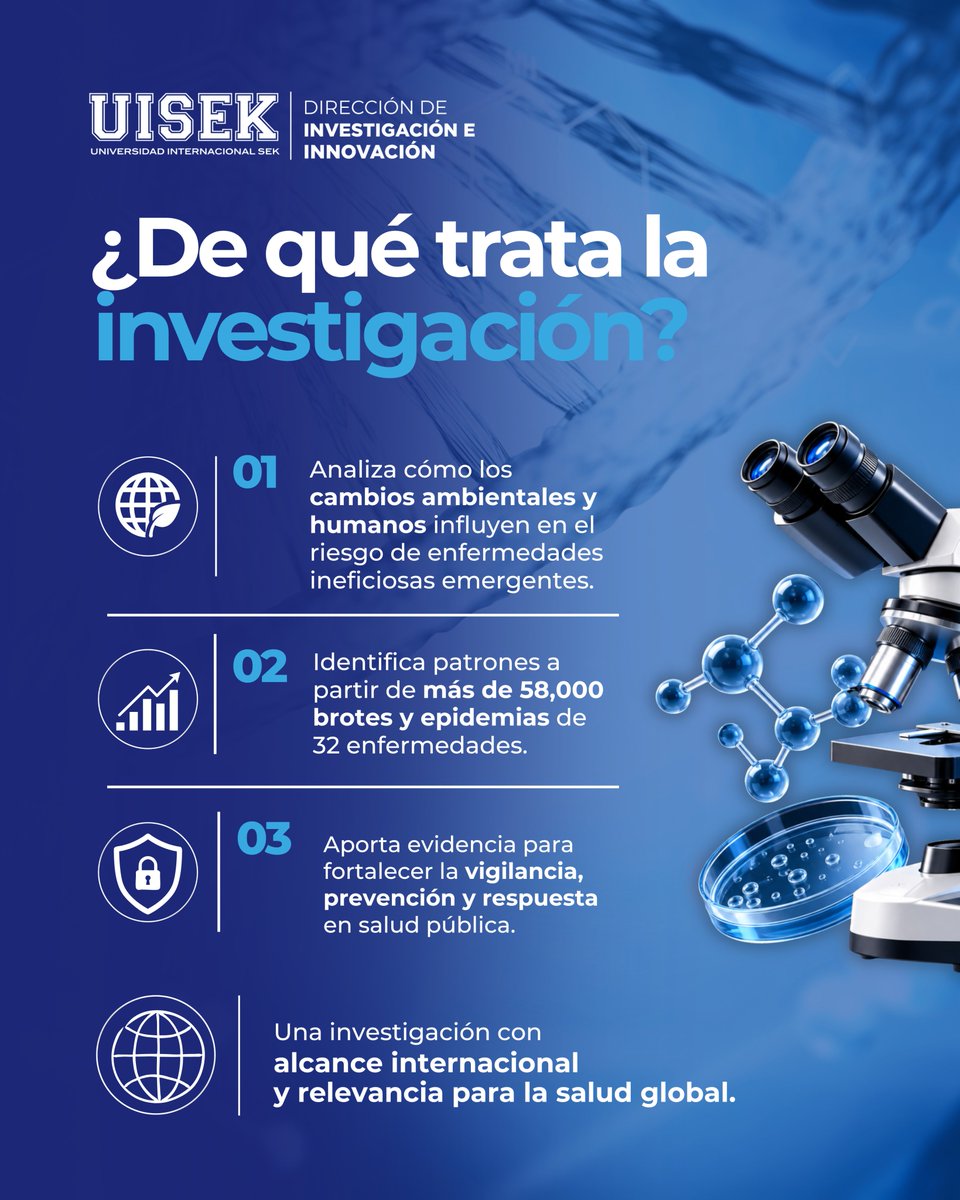
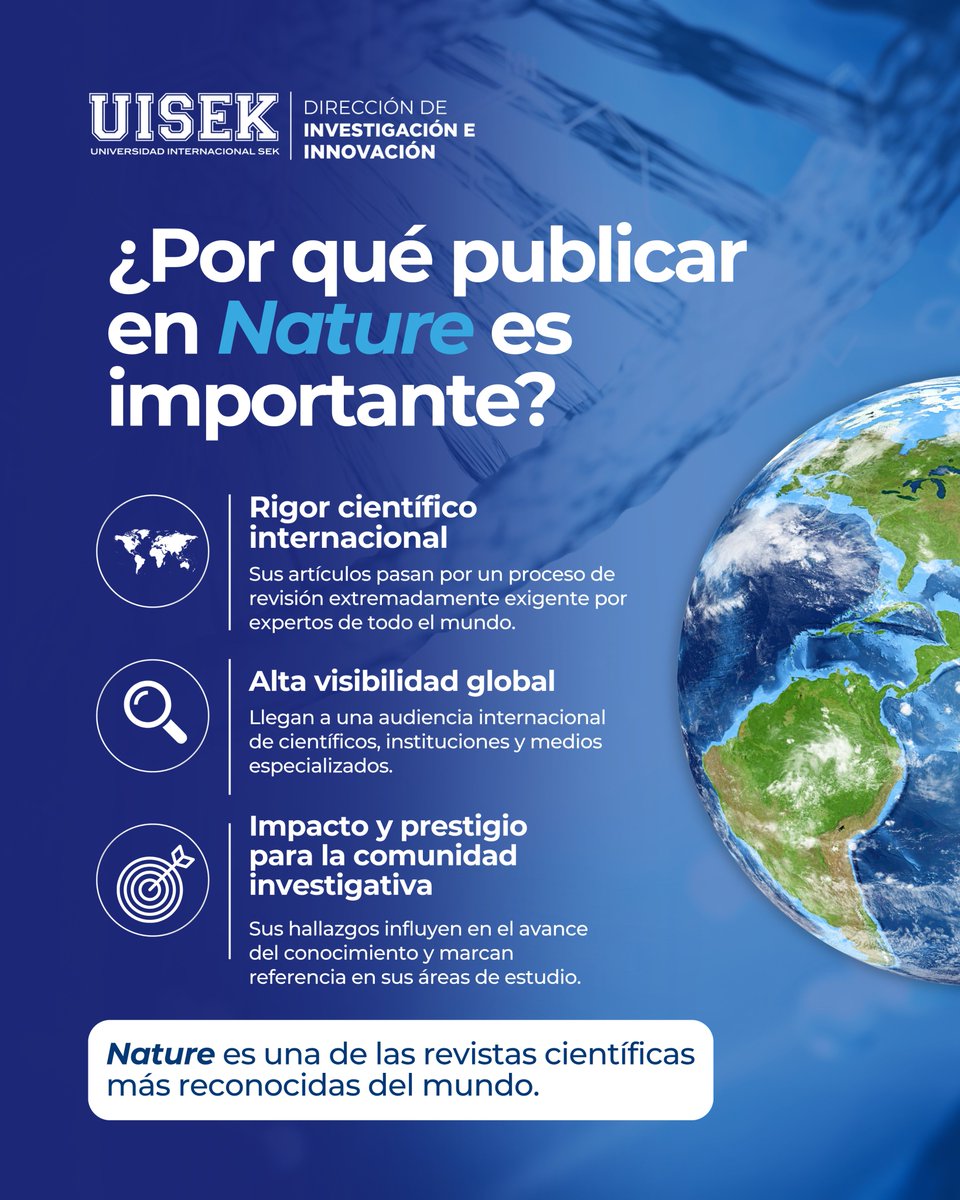
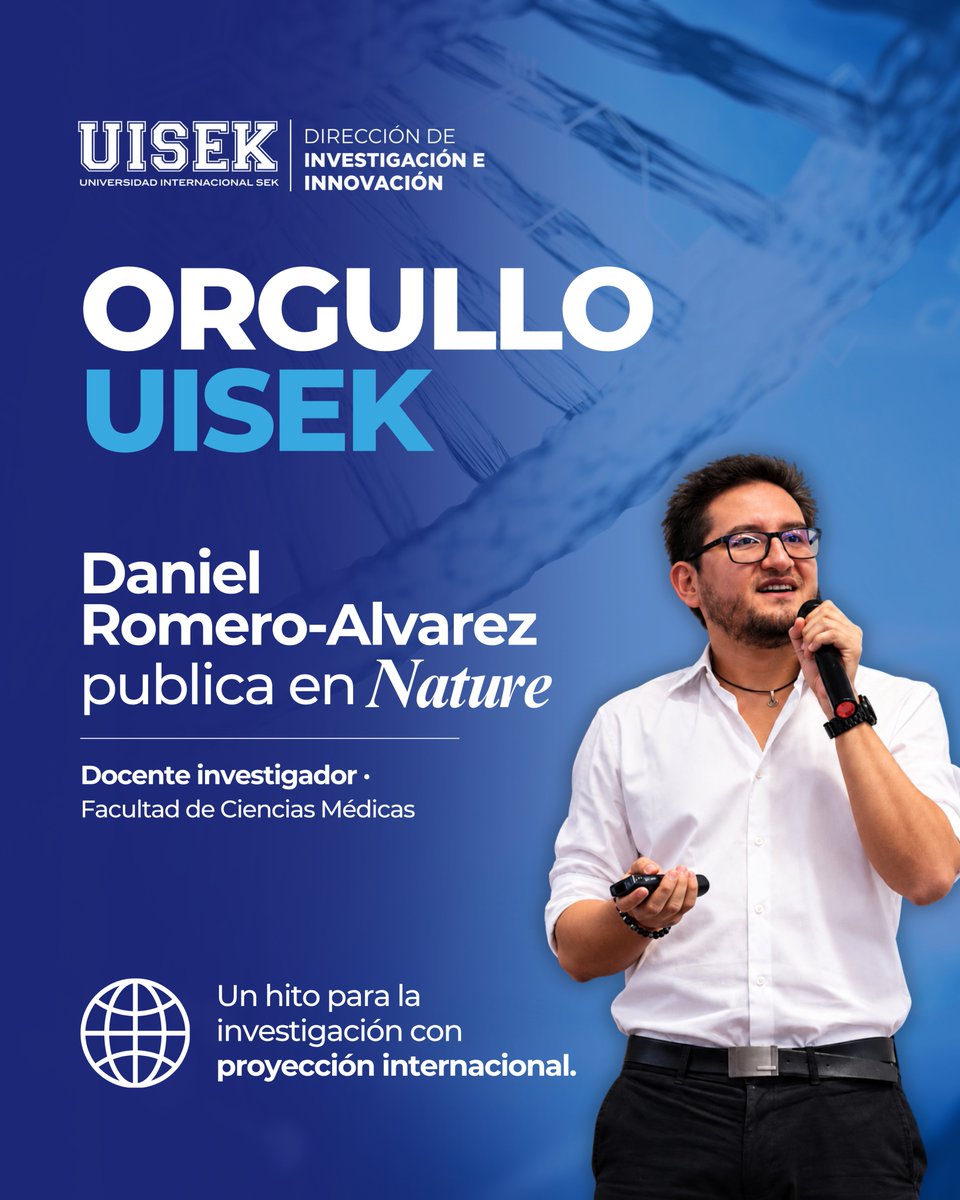
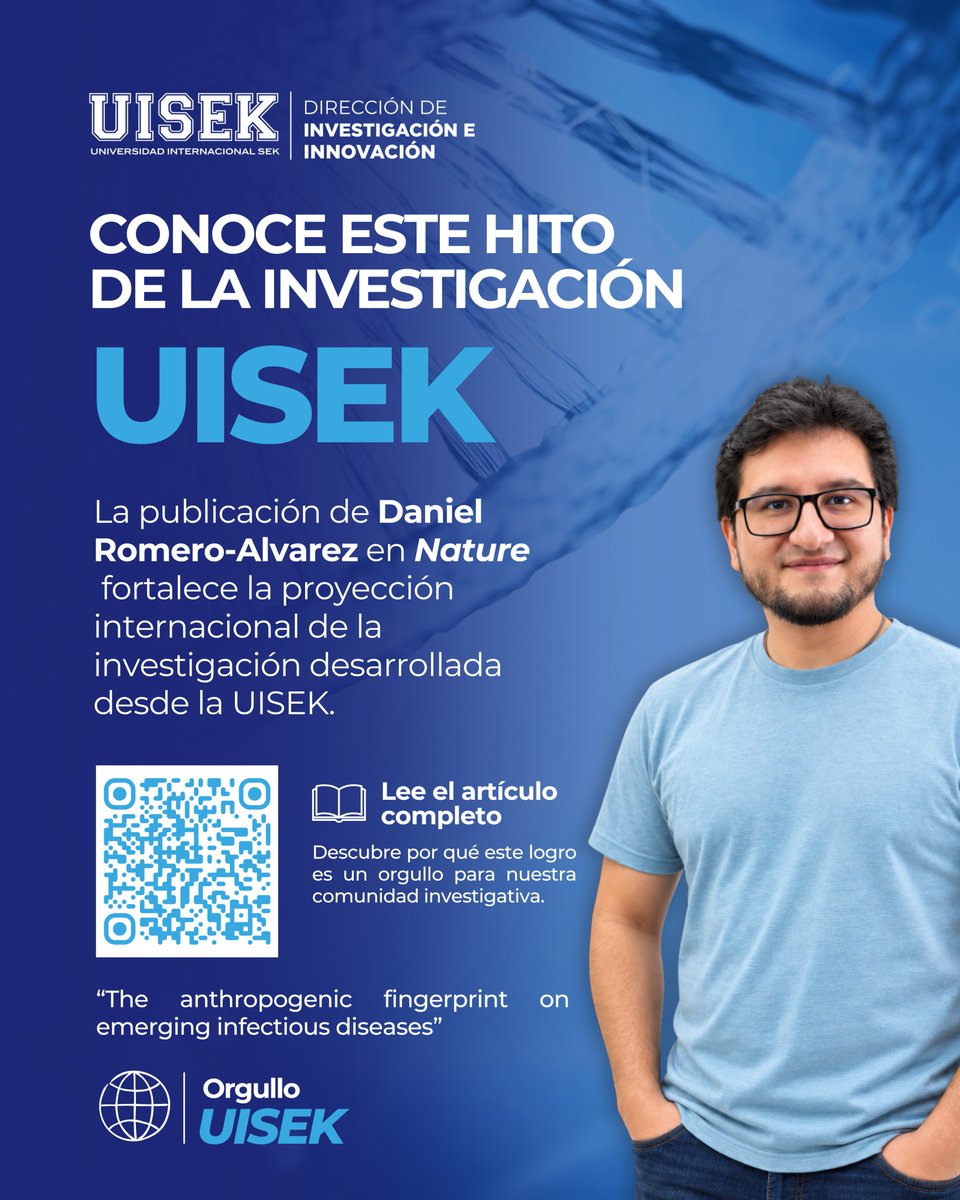
#OrgulloUISEK | Nuestro docente investigador Daniel Romero Alvarez (@Vakdaro) participó en un estudio que analiza cómo los cambios ambientales influyen en el surgimiento de enfermedades infecciosas, con el objetivo de fortalecer la #prevención en salud pública.
Claude has discovered a previously unknown enzyme system hidden in the DNA of bacteriophages. Beside the enzyme’s gene sits a long array of repeating DNA—a structure that looks somewhat similar to CRISPR.
We don’t yet understand what this system does, but only a handful of known systems share its features, and all of them are able to cut, copy, and paste DNA. Historically, the discovery of such programmable systems has helped revolutionize medicine. CRISPR, for instance, is now the foundation of genetic medicines. But it will take much more work to learn what this system does, and whether it can be put to similar use.
Read more: https://t.co/RuEosScSMb
A lot happened in AI x bio over the past week. Here’s what you might’ve missed.
☑️ Yes, it's happening: Anthropic has built its own biology lab.
☑️ AI helps mRNA vaccines survive two months at 37°C.
☑️ China goes all in on AI with its new pharma plan.
☑️ Tired: LLM. Wired: LLLM.
☑️ Navier-Stokes was child's play. Now biology gets its own “Millennium Problems.”
Let's take a closer look. 🧵 (1/7)
AI is rapidly getting smarter.
Now, humanity can too.
Today, @nucleusgenomics is announcing Vitruvian, our newest set of genetic optimization models.
Vitruvian’s intelligence model can optimize embryo DNA for 14 IQ points — nearly a standard deviation.
The models were trained on 1,000,000+ people, validated across 40,000+ siblings, and used more than 7 million genetic markers.
In Superintelligence, Nick Bostrom proposed genetic optimization as a key way for humanity to keep pace with rapidly advancing AI.
Bostrom’s vision is no longer theoretical.
Genetic optimization, like AI, has followed a scaling law: as datasets have grown, so have model capabilities. This trend will continue.
Parents across the world now have the choice to substantially increase their child’s intelligence.
And the next generation can choose to do the same.
AI is no longer the only intelligence that will compound.
Humanity can now direct its own evolution.
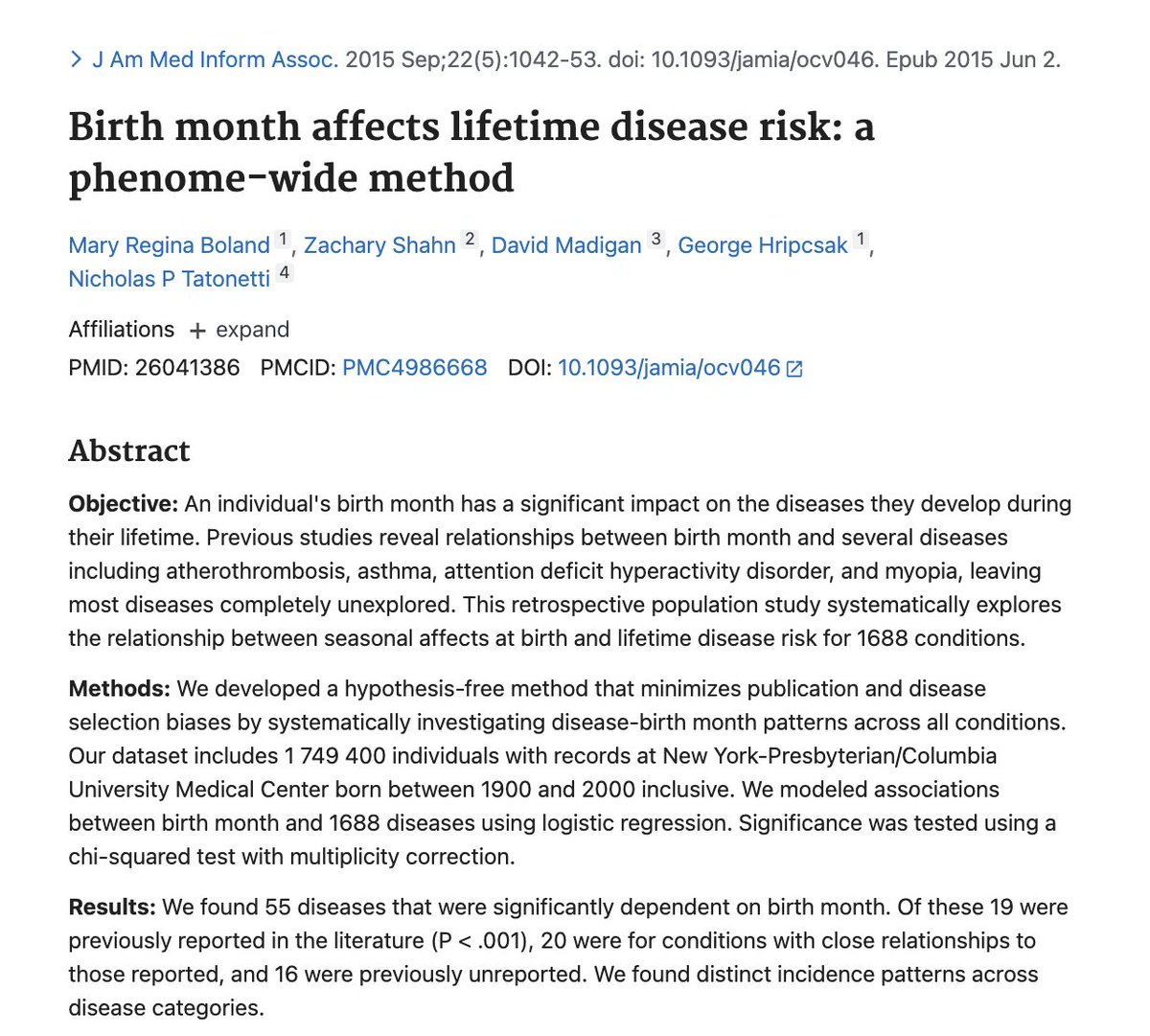
The month you were born predicts which diseases you are most likely to get. A 2015 study at Columbia University scanned the medical records of 1.7 million patients and found 55 diseases with a statistically significant link to birth month.
The study was published in the Journal of the American Medical Informatics Association by Mary Regina Boland. She used data from New York Presbyterian Hospital covering patients born between 1900 and 2000 and checked every diagnosis against birth month while controlling for age, sex, and other factors.
October babies had the highest risk of respiratory infections. March babies had the highest risk of heart disease. January babies had higher rates of hypertension. Summer babies had lower rates of most respiratory conditions. The relationships were not small, and many of them lined up with findings from earlier studies in different countries.
The mechanism is seasonal exposure during pregnancy and early life. A baby born in October was in the womb during the summer, when air quality is different, sunlight exposure is higher, and the mother's diet shifts with the season. A baby born in March spent its third trimester in winter, when vitamin D levels drop and respiratory viruses circulate. The immune system and the cardiovascular system are being built during those months, and what the environment provides at that stage leaves a mark that lasts.
You cannot change when you were born. The study is not a prediction of your future. It is a reminder that the body carries the weather of its first year for the rest of its life, and the data comes from 1.7 million people. https://t.co/x3EVRqpTzV
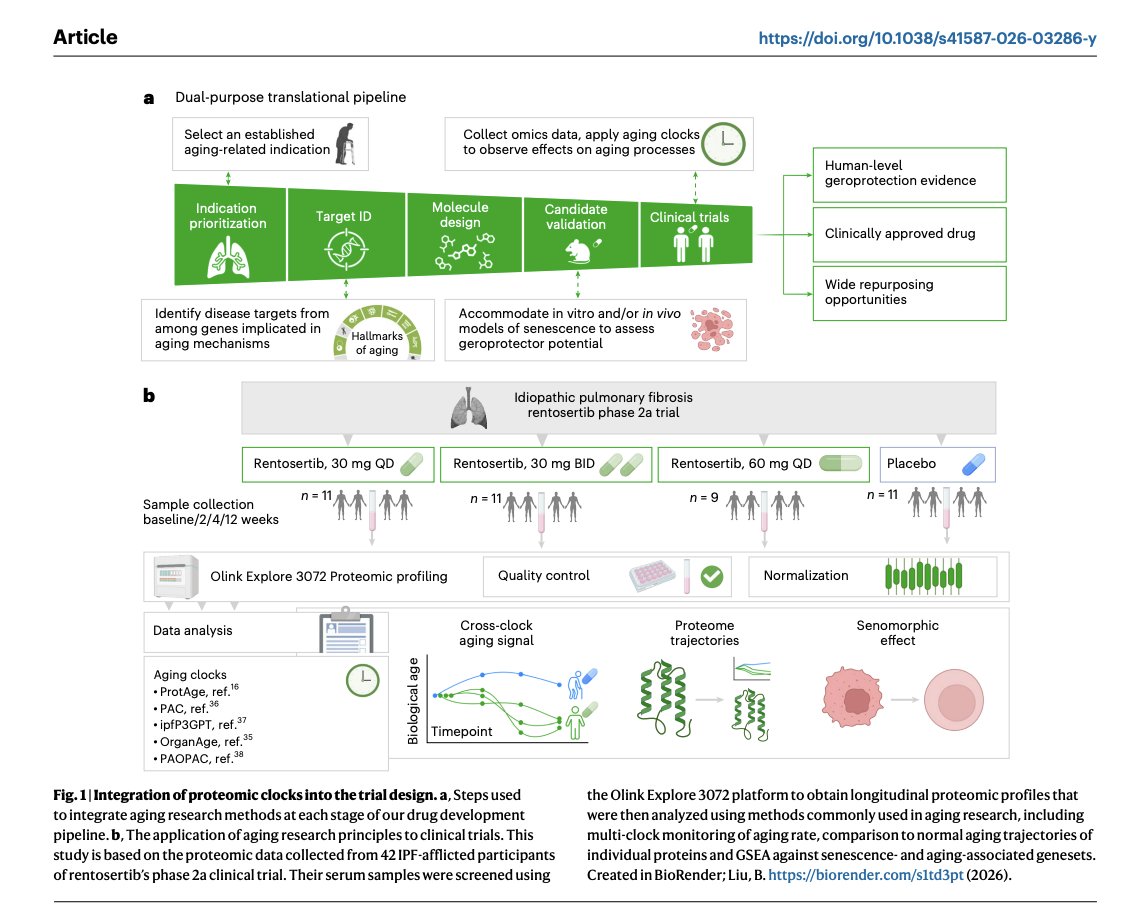
My dear friends, I am happy to report the publication of the most important paper in my life to date (we have several great papers coming out but this is very special). Tomorrow, I will present this paper for the first time at the Nature AI Healthcare in Paris and will post a longer post on this story and its broader implications for how to conduct clinical trials. Please read it and comment on it.
Many thanks to the great co-authors of the study and everyone who contributed. Many thanks to the many reviewers (friendly and unfriendly) for spending so much time and helping make it better.
Link in the comments.
Lessons from one of the first [and the largest] randomized trials of AI in medicine @NatureMedicine
A trial of >100,000 women undergoing mammography with or without AI support for interpretation, by Kristina Lång @lunduniversity
Most importantly, can it [AI] improve patient outcomes?
https://t.co/B1j8bvphcB
“In broad strokes, it appears that the modern human population evolved from a merger of two ancient groups around 300,000 years ago, roughly 80% from one, and 20% from the other.” Who were these stem populations? Here is some informed speculation.
https://t.co/8LjHgCmofQ
🚨 ULTIMA HORA : Un chico de 25 años acaba de recibir una oferta de 60.000 millones de dólares de SpaceX. Y lo más loco es que no gastó ni un dólar en marketing.
Michael Truell empezó a programar a los 11 años, hizo prácticas en Google a los 18, abandonó el MIT y fundó una empresa que fracasó.
Luego pivotó y construyó Cursor, un editor de código con IA que escribe software por ti.
Lo que pasó después rompió todos los récords de la historia del SaaS. 100 millones de dólares en ingresos anuales en 12 meses.
500 millones al mes 21. 1.000 millones en noviembre de 2025. 2.000 millones en febrero de 2026. Proyección de 6.000 millones antes de que acabe el año.
Sin un solo comercial. Sin anuncios. Sin growth hacking. Solo desarrolladores que no podían dejar de hablar de él.
El 70% de las empresas del Fortune 1000 lo usan. Los 40.000 ingenieros de Nvidia lo usan. Coinbase tiene el 100% de adopción entre sus devs. Se aceptan mil millones de líneas de código al día.
Pero el problema no era el mercado. Era físico. No había suficientes GPUs en el mundo para entrenar su próximo modelo. El dinero no podía solucionar eso.
Ahí entró Elon Musk. SpaceX ofrece 60.000 millones por Cursor y acceso inmediato a Colossus, el superordenador equivalente a un millón de H100 de Nvidia, durante nueve meses. Si al final no compran, pagan 10.000 millones como penalización. La mayor cláusula de ruptura en la historia corporativa.
No hay escenario en el que Truell pierda.
Y para cerrar el círculo: Alameda Research, el brazo inversor de FTX, entró en el capital de Cursor en 2022. Cuando FTX quebró, los liquidadores vendieron esa participación por 200.000 dólares.
Hoy vale aproximadamente 3.000 millones. Sam Bankman-Fried lo llamó la peor decisión de liquidación en la historia del venture capital. Desde la cárcel.
Quieren saber cómo utilizamos la prospectiva tecnológica en encontrar nichos de colaboración para poner en marcha iniciativas de diplomacia científica?
Aquí encontrarán ese ejercicio para la relación binacional entre Chile y Marruecos.
No se lo pierdan!
👇
The Moore's Law Update
NOTE: this is a semi-log graph, so a straight line is an exponential; each y-axis tick is 100x. This graph covers a 1,000,000,000,000,000,000,000x improvement in computation/$. Pause to let that sink in.
Humanity’s capacity to compute has compounded for as long as we can measure it, exogenous to the economy, and starting long before Intel co-founder Gordon Moore noticed a refraction of the longer-term trend in the belly of the fledgling semiconductor industry in 1965.
I have color coded it to show the transition among the integrated circuit architectures. You can see how the mantle of Moore's Law has transitioned most recently from the GPU (green dots) to the ASIC (yellow and orange dots), and the NVIDIA Hopper architecture itself is a transitionary species — from GPU to ASIC, with 8-bit performance optimized for AI models, the majority of new compute cycles.
There are thousands of invisible dots below the line, the frontier of humanity's capacity to compute (e.g., everything from Intel in the past 15 years). The computational frontier has shifted across many technology substrates over the past 128 years. Intel ceded leadership to NVIDIA 15 years ago, and further handoffs are inevitable.
Why the transition within the integrated circuit era? Intel lost to NVIDIA for neural networks because the fine-grained parallel compute architecture of a GPU maps better to the needs of deep learning. There is a poetic beauty to the computational similarity of a processor optimized for graphics processing and the computational needs of a sensory cortex, as commonly seen in the neural networks of 2014. A custom ASIC chip optimized for neural networks extends that trend to its inevitable future in the digital domain. Further advances are possible with analog in-memory compute, an even closer biomimicry of the human cortex. The best business planning assumption is that Moore’s Law, as depicted here, will continue for the next 20 years as it has for the past 128. (Note: the top right dot for Mythic is a prediction for 2026 showing the effect of a simple process shrink from an ancient 40nm process node)
----
For those unfamiliar with this chart, here is a more detailed description:
Moore's Law is both a prediction and an abstraction. It is commonly reported as a doubling of transistor density every 18 months. But this is not something the co-founder of Intel, Gordon Moore, has ever said. It is a nice blending of his two predictions; in 1965, he predicted an annual doubling of transistor counts in the most cost effective chip and revised it in 1975 to every 24 months. With a little hand waving, most reports attribute 18 months to Moore’s Law, but there is quite a bit of variability. The popular perception of Moore’s Law is that computer chips are compounding in their complexity at near constant per unit cost. This is one of the many abstractions of Moore’s Law, and it relates to the compounding of transistor density in two dimensions. Others relate to speed (the signals have less distance to travel) and computational power (speed x density).
Unless you work for a chip company and focus on fab-yield optimization, you do not care about transistor counts. Integrated circuit customers do not buy transistors. Consumers of technology purchase computational speed and data storage density. When recast in these terms, Moore’s Law is no longer a transistor-centric metric, and this abstraction allows for longer-term analysis.
What Moore observed in the belly of the early IC industry was a derivative metric, a refracted signal, from a longer-term trend, a trend that begs various philosophical questions and predicts mind-bending AI futures.
In the modern era of accelerating change in the tech industry, it is hard to find even five-year trends with any predictive value, let alone trends that span the centuries.
I would go further and assert that this is the most important graph ever conceived. A large and growing set of industries depends on continued exponential cost declines in computational power and storage density. Moore’s Law drives electronics, communications and computers and has become a primary driver in drug discovery, biotech and bioinformatics, medical imaging and diagnostics. As Moore’s Law crosses critical thresholds, a formerly lab science of trial and error experimentation becomes a simulation science, and the pace of progress accelerates dramatically, creating opportunities for new entrants in new industries. Consider the autonomous software stack for Tesla and SpaceX and the impact that is having on the automotive and aerospace sectors.
Every industry on our planet is going to become an information business. Consider agriculture. If you ask a farmer in 20 years’ time about how they compete, it will depend on how they use information — from satellite imagery driving robotic field optimization to the code in their seeds. It will have nothing to do with workmanship or labor. That will eventually percolate through every industry as IT innervates the economy.
Non-linear shifts in the marketplace are also essential for entrepreneurship and meaningful change. Technology’s exponential pace of progress has been the primary juggernaut of perpetual market disruption, spawning wave after wave of opportunities for new companies. Without disruption, entrepreneurs would not exist.
Moore’s Law is not just exogenous to the economy; it is why we have economic growth and an accelerating pace of progress. At Future Ventures, we see that in the growing diversity and global impact of the entrepreneurial ideas that we see each year — from automobiles and aerospace to energy and chemicals.
We live in interesting times, at the cusp of the frontiers of the unknown and breathtaking advances. But, it should always feel that way, engendering a perpetual sense of future shock.
Les comparto el N96 de la Revista Prospectiva y Estrategia con un especial sobre lo que fue la Cumbre del Futuro y publicaciones relevantes sobre el futuro de la salud, educación, energía, etc
Lea y comparta!
👇
https://t.co/zF7qrEskYe
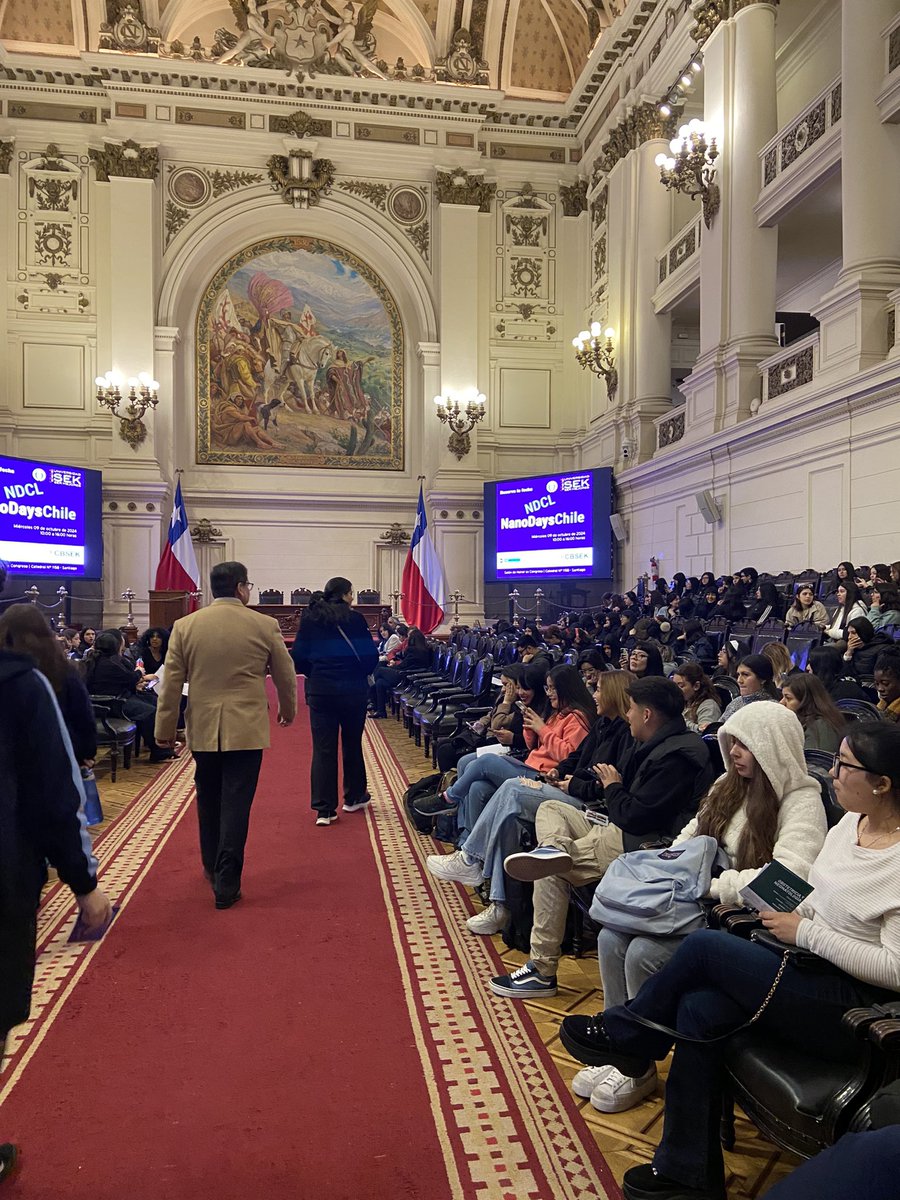
Hoy tuvimos el #NanoDAY2024 en dependencias del ex congreso, organizado por Universidad SEK Chile y con invitados de diversas universidades y colegios. 6ta versión de este evento en nuestro país 👌