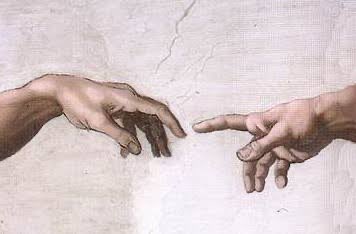
There’s an age old joke us Lutherans love to recite often and for good reason. An old man and his wife are sitting on their porch and the old woman is in a huff. Her husband asks her what’s wrong and she replies “it’s just that… you never tell me you love me anymore.” 🧵
What’s an opinion on the liturgy that’s genuinely got you like this?
I’ll go first.
Of the DS 1, 3, and 4 Glorias, DS 3 is the worst! (And I love chanting btw!)
@Degenwillape@Ray437677951852 The small altar to the left of the main altar area is the even better option. Especially when it has a book in the wall for the pastor to sit and allows you to speak without looking directly at him, only for him to get up, place his hands on your head, absolve and commune you
@StNickRespecter@mattjhedges11 A case can be made that Luther knew the place of Aristotle in the faith better than Aquinas, and in context it’s compelling. The laity of the Middle Ages en masse did not know the creed, the Ten Commandments, or the words of institution, but Aristotle was taught in sermons 🤷♂️
@StNickRespecter@mattjhedges11 Aye, he did say that and also called him a devil among men and many other things. But at other times he speaks of the ethics as being the most gloriously written and references Aristotles metaphysics often in the Genesis commentaries.
@CleaveToChrist@farmingandJesus@Canonandcreed I think they’re the sole case of a cult becoming Christian iirc. Still very weird, still a lot of issues to work through, but I thought they at one point weren’t Trinitarian and now are, so progress has been made
@Dogmaticist One of my biggest critiques of the infallible statement claims are these fact that the reasons aren’t defined and are prone to being debunked 😭
@CossmanTodd@ScholasticsFan@mattjhedges11 Right, but like, what is getting chewed, swallowed, digested and eventually excreted? My understanding of the Roman position is these are accidents of bread without substance, not Jesus’ body. Pierre d’Ailly and SCOTUS both speak on this iirc
@CossmanTodd@ScholasticsFan@mattjhedges11 Think about this though to help. When you bite the host, are you capernaitically crushing Jesus between your teeth, or sacramentally receiving His body? The latter is obviously true and the former barbaric, so what is it that you tear, digest, and eventually excrete?
@logos_asarkos Related question I have actually heard asked: Is it semi-pelagian to believe that God persuades the will to desire something contrary to it, to make an enemy to Himself, through persuasion of the Spirit, desire Him?
"There are no contradictions"
Meanwhile there are official Martin V decrees calling for the extermination of "heretical" communities and influencing the state towards these tasks:
Credit to @AngAesthetics: https://t.co/P1l6NKYzfC
"Recognizing that God upholds the freedom of men and women in the unfolding of history, the Second Vatican Council affirmed the distinction between the ecclesial community and the political community, emphasizing that each must operate with full autonomy. The Church’s presence in the world is also expressed through her relationship with civil society and public institutions. By engaging with these entities, the Church acknowledges the value of social and political realities and honors their specific responsibilities, supporting everything that fosters the wellbeing of individuals and strengthens the fabric of society. The Church does not claim to assume the functions belonging to the State. On the contrary, she esteems those who serve the common good, and she firmly acknowledges the responsibility that civil institutions hold within society.
At the same time, the mission entrusted to the Church prompts her to address the real suffering of the men and women of our time. This closeness does not stem from an intent to supplant civil institutions, much less from an implicit criticism of their work. Rather, it stems from evangelical charity, which impels the Church to draw near to the wounds of humanity whenever they surface with greater severity. When the Church intervenes, she does so following the example of the Good Samaritan, with discretion and closeness, aware that what arises from urgent necessity cannot become the norm, nor replace the institutional responsibilities proper to the civil community."
(Magnifica Humanitas, Ch. 1, n. 21)
@CleaveToChrist I dont believe the blood is sacramentally given with the body. Sure, the blood is omnipresent as wherever Christ dwells there His human nature does as well, but in the host I thought it was the Lutheran position that the body is given, and in the cup the blood given.
@CleaveToChrist Can you explain this to me please? I agree that in receiving one, you receive some benefit. But I was not under the impression that when part of the sacrament is given, the whole Christ is given. I would agree His flesh and blood cannot be separated, but (cont)
@DrJordanBCooper His take in the Genesis commentaries regarding how highly he viewed Aristotle's ethics is well known, but in them also he speaks positively of the contributions Aristotle made to science and physics and understandings of nature and its relations. He was pretty nuanced with him