This project has been such a blessing to work on, and I'm hopeful that we can continue to build momentum towards a unifying and edifying DFW. Check out this update from our committee's chairman, @nateshurden.
For instance, every time I compared the modern translation of Ames with the 17th century one the 17th century one was better, especially when some technical theological issue was being discussed. But the 17th century one is extremely archaic in spots so there's a big barrier.
Early modern translations are often great because they usually were fluent in Latin and educated in the tradition and categories being written about. The downside is that these works are barely in English.
@Adedamola_Ogun@Mohsule_ Turretin also indicates his approval of the psychological analogy, he just says we need to observe in what ways they're not applicable. There doesn't seem to be any real departure here across the board
If you think about it carefully you will see that when the will does not have the rectitude of which we speak, it is without contradiction both slave and free. For it is never within its power to acquire the rectitude it does not have, although it is always within its power to preserve what it once had. Because it cannot return from sin, it is a slave; because it cannot be robbed of rectitude, it is free. But from its sin and slavery it can return only by itself. But neither by another or by itself can it be deprived of its freedom. For it is always naturally free to preserve rectitude if it has it, even when it does not have what it might preserve.
- Anselm of Canterbury, On Free Will
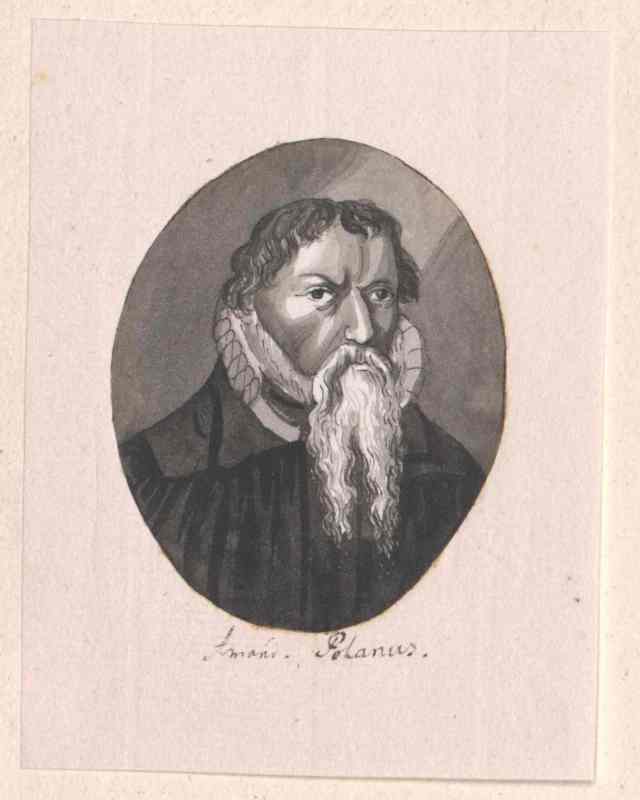
For will any man suffer himself to be taught, that thinks himself to be learned? Many might come to the highest degree of learning, but they do falsely persuade themselves that they have already attained to it.
Amandus Polanus, Substance, 236.
Concerning which, there are many notable sentences, such as: glory offers violence to the truth. And again, glory is the hindrance of promotion. The rash presumption of knowing forestalls the way of learning.
Contrary to this is stubbornness in errors, and the abounding in one's own opinion and rash presumption of knowledge, when anyone thinks that he knows that which he is yet ignorant of. It may also be called the opinion of knowledge.
Docility is a bridling of pride, by which we govern our mind so that we do not show contempt for the judgment of others through the admiration of our own wisdom, but instead hear others quietly and yield to being convicted with true arguments.
"Outside of the catholic church, there is no salvation.
Hence, we also think and believe that this catholic church alone is holy and preserved in such a way that, outside of her, there is no holiness or salvation. This is the case since the truth (without which none receives salvation) shines forth in her alone in such a way that there is no truth outside of her and, indeed, since none but Christ’s body can be saved. For no one has ascended into heaven except He who descended from heaven, the Son of Man who is in heaven (John 3:13), that is, the whole Son of Man with His whole body, which is the church. Thus, Peter was not wrong to compare the church with Noah’s ark, in which alone humankind was saved, and we read that everything found outside of it perished in the flood waters (2 Peter 2:5; Gen. 7:23)." — Girolamo Zanchi, Confession of the Christian Religion, Ch. 24, The Church Militant
No Lutheran will admit this to you but St. Augustine would call them heretics and they themselves could not allow St. Augustine in their church.
Such is not the case with the Catholic Church.