El mercado negro de chips no es una anécdota tecnológica: es el síntoma de un problema mucho más profundo. Cuando el Estado obliga a registrar celulares sin construir confianza, sin explicar bien la medida y sin garantizar de verdad la protección de datos, la gente busca salidas. Y esas salidas terminan alimentando exactamente lo que se quería combatir: anonimato, fraude, extorsión y robo de identidad.
El registro de celulares puede tener una finalidad legítima: perseguir delitos. Pero en una democracia la seguridad no puede construirse sacrificando privacidad, libertad de comunicación y derechos humanos. Un número telefónico hoy no es sólo una línea: es banca, redes sociales, trabajo, familia, ubicación, identidad digital. Por eso cualquier registro masivo exige controles estrictos, transparencia, supervisión independiente y mecanismos reales para corregir abusos.
Lo más grave es que una SIM vendida ilegalmente puede terminar vinculando a una persona inocente con un delito que no cometió. Ahí está el riesgo: que una política pensada para dar seguridad termine fabricando sospechosos, fortaleciendo mercados clandestinos y debilitando derechos. El debate no es si queremos combatir la extorsión. Claro que sí. La pregunta es si vamos a hacerlo con inteligencia institucional o con ocurrencias que pueden salir carísimas.
With less than 2️⃣ weeks left until #AISE26, take a look back at UNIDIR’s report on the five regional consultations held ahead of #REAIM2024.
Discover key insights on military AI governance, its unique features and the opportunities it presents.
🔗 https://t.co/wCNF2T3smf
🌎 En Jornadas #STICDOMINICANA 2026, la conversación también se juega en el terreno digital. Este 28 de mayo, acompáñanos en una sesión especial de @OEA_Cyber sobre cómo la región se coordina para enfrentar amenazas cibernéticas durante la Copa Mundial���
🤝 A través de #CSIRTAmericas, más de 50 equipos en 22 países comparten alertas y fortalecen su capacidad de respuesta ante incidentes.
📅 Día CSIRTAmericas
📍 Sala STIC | Virtual
🕘 09:00 – 11:10 (GMT-5)
Inscríbete aquí 👉 https://t.co/Tox9kEyZ7p
Porque en eventos globales, la seguridad digital también es parte del juego. 🔐
Un profesor se volvió viral después de perder la paciencia en clase mientras explicaba la importancia de hacer cálculos precisos en construcción.
Visiblemente frustrado, recordó a sus alumnos que un error en ingeniería no es solo “suspender un ejercicio”, sino algo que puede terminar afectando la seguridad y la vida de otras personas.
Y probablemente por eso hablaba con tanta intensidad: hay profesiones donde un pequeño fallo en papel puede convertirse en un desastre real fuera del aula.
📌Comenzó el Programa Regional de IA y Sistemas de Justicia 2026 del CEJA
Una iniciativa clave para fortalecer capacidades y enfrentar el impacto de la inteligencia artificial en la justicia.
👉 Una prioridad institucional para la región https://t.co/nUfBbEkHOA
Today I started something I'm really excited about.
I'm publishing a complete #SSH course on Pro TecMint that covers 54 chapters across 16 modules, from absolute beginner to enterprise.
Chapter 1 is live now for Pro TecMint members. I'll be dropping new chapters regularly.
Join here to follow along
https://t.co/M6zgrQxiBf
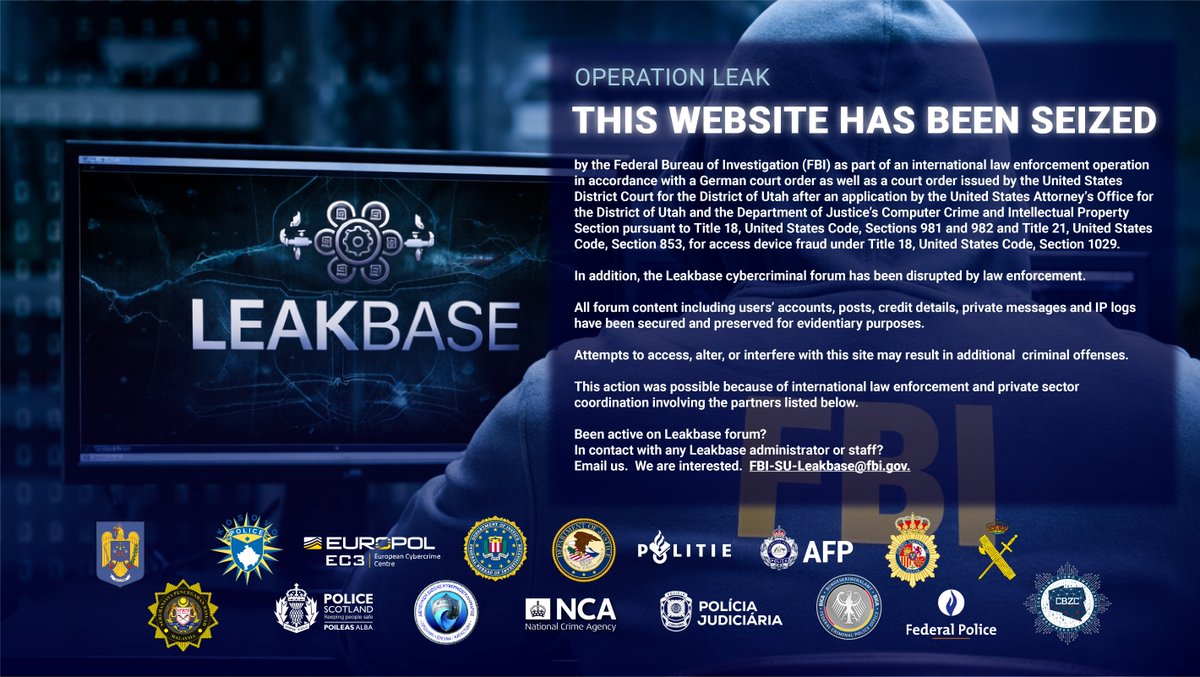
Today, the #FBI, Europol and law enforcement agencies around the world executed a takedown of LeakBase, one of the largest cybercriminal platforms, seizing users’ accounts, posts, credit details, private messages and IP logs for evidentiary purposes. Together with our partners, we are sending a message that no criminal is truly anonymous online and removing an easy point of access to stolen information on American businesses and citizens.
The FBI will continue to defend the homeland by dismantling the key services that #cybercriminals use to facilitate their attacks. https://t.co/sAlBTORRG0
Descubre RAPTOR, el framework de IA que convierte a Claude en un agente de ciberseguridad ofensiva/defensiva para automatizar análisis, fuzzing y exploits. Una mirada al futuro de SecOps.
🕵️♂️🤖🛡️⚠️ #HackingEtico#Ciberseguridad#AI#SecOps#AI#RedTeam#Claude
2025 was a memorable year for #FBI Cyber, which advanced its mission to impose costs on global adversaries. Key facts behind the numbers:
✔️ In May, the FBI and our partners disrupted LummaC2, the most popular infostealer service available in online criminal markets, responsible for millions of attacks against victims and millions of dollars in losses.
✔️ That same month, we dismantled the long-running criminal proxy service 5Socks/AnyProxy—indicting administrators, seizing domains, and disabling a botnet with our foreign law enforcement partners.
✔️ In July, we announced the arrest of Xu Zewei, a prolific contract hacker working on behalf of the Chinese Communist Party. He and his co-conspirators stole COVID-19 research from US universities and compromised thousands of computers worldwide.
✔️ In August, we co-authored a critical advisory for defending against Salt Typhoon, a CCP-sponsored group that attacked the telecom sector. Through our investigation, we notified hundreds of US victims and at least 80 victim countries.
✔️ In September, the FBI and UK partners secured the arrest of a key member of Scattered Spider, a cybercriminal group linked to 120 network intrusions and more than $115 million in ransom payments.
✔️ In December, we announced the extradition of Victoria Dubranova, who is charged with participating in two Russia-backed criminal groups that conducted cyberattacks against US critical infrastructure.
This year, FBI Cyber will continue to engage with victims and combat the entire spectrum of #cyber threats, from cyber criminals seeking financial gain to nation-state actors looking to undermine our national security.