35 years ago today, ‘Doug,’ ‘Rugrats’ and ‘The Ren & Stimpy Show’ premiered on Nickelodeon.
The three series were the first Nicktoons, launching a new era of original animation for the network.
Usher recently brought out Ashanti, Mary J. Blige, and Method Man during the second of his and Chris Brown’s two shows at MetLife Stadium in New Jersey for The R&B Tour.
(🎥Power1051/IG)
#SayHerName grew from the need to make sure Black women were not left out of conversations about police violence in America. Women such as Rekia Boyd, Atatiana Jefferson and Sandra Bland became some of the best-known names associated with the movement, but there are many others whose stories never received the same national attention.
The women remembered through #SayHerName did not all die under the same circumstances. Some were killed during encounters with police, while others died in custody. What connects their stories is the effort to make sure Black women are remembered as individuals, not forgotten names or statistics. Learning what happened to them is part of understanding the wider history of race, policing and justice in America. #BlackHistory #SayHerName #BlackWomen
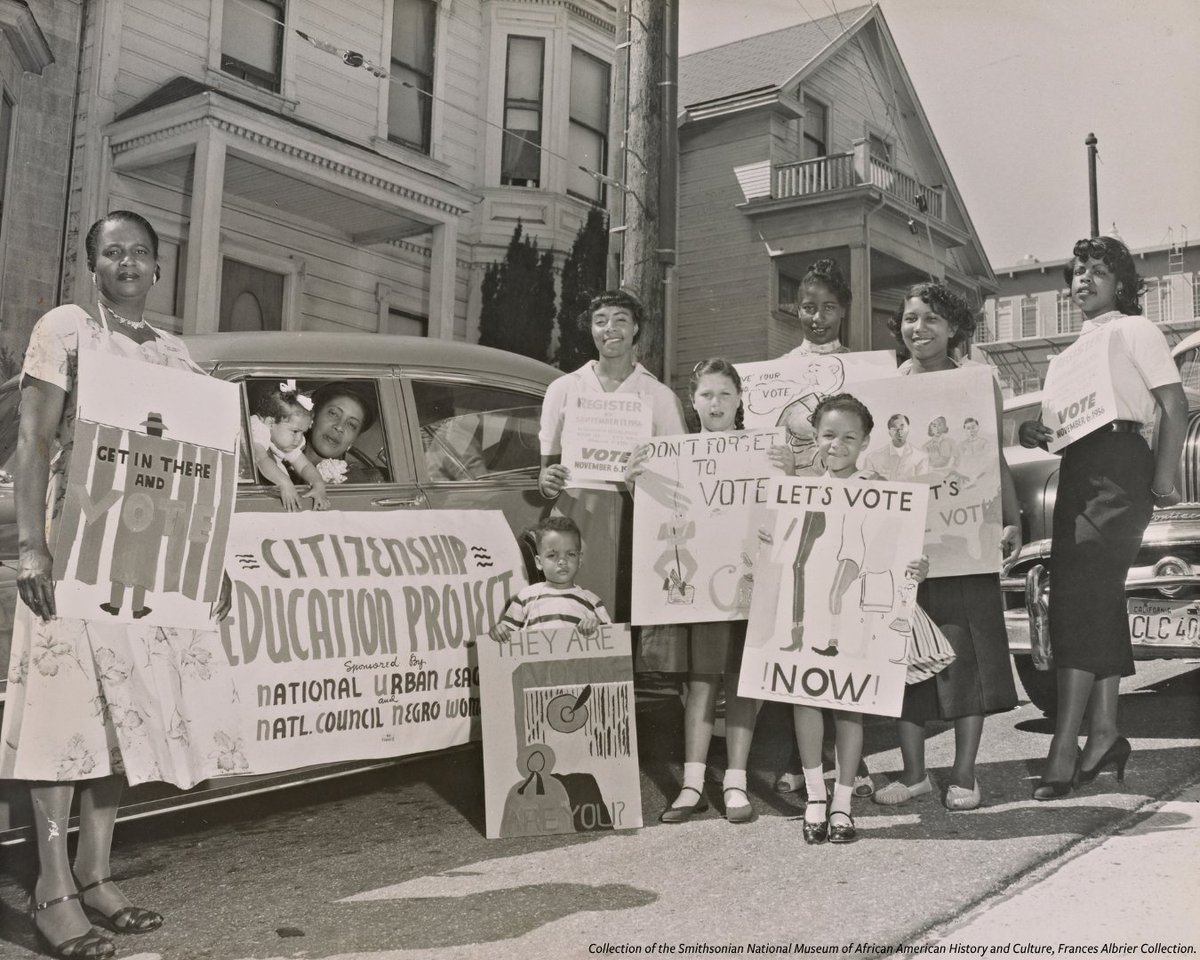
Today marks the 61st anniversary of the Voting Rights Act. Signed into law on August 6, 1965, it outlawed literacy tests, poll taxes in federal elections, and other obstacles to voting. The Act led to dramatic increases in Black voter registration.
Long before Haiti became the first independent Black republic, Toussaint L’Ouverture emerged from slavery to become one of the most important leaders of the Haitian Revolution. His rise happened during a period when Saint-Domingue, as Haiti was then known, was one of France’s richest colonies. That wealth came largely from sugar and coffee plantations worked by hundreds of thousands of enslaved Africans under an extraordinarily violent system.
Toussaint was born enslaved around 1743 on the Bréda plantation near Cap-Français. He eventually gained his freedom years before the great uprising of 1791. By then he was already in his forties, yet within a few years he would become a military commander whose decisions were being watched not only in the Caribbean, but in Paris, London, Madrid and Washington.
The Haitian Revolution began in 1791 when enslaved people in northern Saint-Domingue launched a massive rebellion. Toussaint did not immediately become its leader. His importance grew gradually as the conflict expanded and European powers became involved. France, Spain and Britain all had interests in the region, and Toussaint proved unusually skilled at navigating both warfare and politics. He initially fought alongside Spanish forces against France, but after revolutionary France abolished slavery throughout its colonies in 1794, he changed allegiance and supported the French Republic.
Over the following years, Toussaint developed into one of the most powerful figures in Saint-Domingue. His forces fought rival armies, helped defeat British attempts to seize the colony and eventually brought much of the territory under his authority. What makes his career especially striking is that he had not followed the traditional path of the European officers he faced. He had not spent his youth in a military academy preparing to command armies. His experience and leadership developed in the extraordinary circumstances of revolution.
By 1801, Toussaint had become the dominant political figure in Saint-Domingue. That year he introduced a constitution that abolished slavery permanently and gave the colony considerable autonomy, while still formally recognizing French sovereignty. Toussaint was named governor for life. For Napoleon Bonaparte, who had risen to power in France, this degree of independence was difficult to accept.
Napoleon sent a major expedition to Saint-Domingue in 1802 under the command of his brother-in-law, General Charles Leclerc. France intended to reassert control over the colony. The expedition initially succeeded in forcing several Haitian commanders to make agreements with the French, including Toussaint himself. But the peace did not last.
Toussaint was arrested in June 1802 despite assurances of his safety. He was placed aboard a ship and transported across the Atlantic to France, where he was imprisoned at Fort de Joux in the Jura Mountains. Far from the Caribbean revolution he had helped shape, Toussaint died in his cell on April 7, 1803. His capture did not end the revolution.
When it became increasingly clear that France intended to restore slavery, resistance intensified under leaders including Jean-Jacques Dessalines and Henry Christophe. French forces were devastated by fierce fighting and yellow fever, and Napoleon’s attempt to regain control of Saint-Domingue ultimately collapsed. The decisive French defeat came at the Battle of Vertières in November 1803.
On January 1, 1804, Dessalines declared the independence of Haiti.
Toussaint never lived to see that day, which is an important part of telling his story accurately. He did not personally declare Haitian independence, nor was Napoleon himself physically driven from Haiti by Toussaint. The final struggle was completed by other Haitian leaders after Toussaint had been imprisoned in France.
But his contribution to what followed was enormous. Toussaint helped turn a revolution born among enslaved people into an organized political and military movement capable of confronting European empires. He commanded armies, negotiated with foreign powers and helped establish the principle that emancipation in Saint-Domingue would not simply be reversed whenever European governments changed their minds.
If you love our content and would like to support the page, you can buy us a coffee here: https://t.co/K1AhtZuOFs or tap Link in Bio
Paul Cuffee is one of the most remarkable figures in early American history, yet his story is rarely taught. Born on January 17, 1759, on Cuttyhunk Island, Massachusetts, Cuffee's life challenged the limitations that society tried to place on Black people during the eighteenth century. He became a successful businessman, shipowner, abolitionist, and advocate for Black self-determination long before the Civil War.
Cuffee was born Paul Slocum to Kofi Slocum, a formerly enslaved African farmer, and Ruth Moses, a member of the Wampanoag Nation. His heritage reflected two communities that had both endured colonization and oppression. After his father's death, Paul and his brother inherited the family farm in Massachusetts. As he grew older, he chose to honor his African roots by changing his surname from Slocum to Cuffe, later commonly spelled Cuffee, a name derived from his father's Akan heritage.
Despite receiving little formal education, Cuffee possessed remarkable intelligence and determination. He began his career in the whaling industry before expanding into international maritime trade. Over time, he built and purchased several ships, establishing trading routes along the American Atlantic coast, throughout the Caribbean, across Europe, and to Sierra Leone in West Africa. Through hard work and careful business decisions, he became one of the wealthiest Black entrepreneurs in the United States during his lifetime.
Cuffee also believed that economic success meant little without justice. In 1780, he joined his brother and several other men in protesting taxation without representation after they were required to pay taxes despite being denied the right to vote. Their petition reflected the same principle that had fueled the American Revolution, yet Black citizens were still excluded from many of the freedoms the new nation claimed to defend.
As an abolitionist, Cuffee dedicated much of his later life to improving opportunities for free Black Americans. He developed relationships with leaders in Sierra Leone, a British colony established for formerly enslaved and free Black settlers. Believing that some free Black Americans might wish to build lives free from racial discrimination, he founded organizations that promoted education, commerce, and voluntary emigration. In 1815, he personally financed a voyage that transported 38 free Black Americans to Sierra Leone aboard his ship Traveler.
Not everyone agreed with Cuffee's vision. Many Black leaders, including Bishop Richard Allen, opposed colonization efforts because they believed Black Americans deserved equal rights in the country where they had been born and feared that colonization could be used to strengthen slavery by removing free Black communities. Their concerns would later influence widespread opposition to similar efforts promoted by the American Colonization Society. Cuffee respected these debates and believed that any decision to emigrate should always be voluntary.
His influence reached the highest levels of government. In 1812, Cuffee met with President James Madison and Treasury Secretary Albert Gallatin at the White House after one of his trading vessels was seized during an embargo. The meeting demonstrated the respect he had earned as both a businessman and an advocate for Black advancement.
Paul Cuffee passed away on September 7, 1817, but his legacy lives on. He proved that Black excellence existed in every field, from agriculture and commerce to politics and philanthropy, even during an era when opportunities were intentionally restricted. His life reminds us that the history of Black achievement did not begin after emancipation. It stretches back through generations of innovators, entrepreneurs, and visionaries who helped shape the United States while fighting for justice and equality.
If you love our content and would like to support the page, you can buy us a coffee here: https://t.co/K1AhtZuOFs or tap Link in Bio
ESPN sources: Two-time Pro-Bowl selection Bijan Robinson and the Falcons reached agreement on a three-year extension worth up to $75 million that now will make him the highest-paid running back in NFL history. Robinson will receive a record $51 million guaranteed, including $37 million at signing, in a deal that agent Nicole Lynn and the Falcons have been working hard on to finish up in recent days.