Isaias Afwerki, who has long relied on state-controlled media—including satellite broadcasts—to communicate with the Eritrean public, now faces growing unease as independent television channels based abroad begin reaching audiences inside the country via satellite. (1/4)
#Eritrea
The “Greater Israel” narrative is spreading fast across media —simple, emotional, and dangerously misleading. My latest op-ed exposes it for what it is: a hoax—one of the most dangerous lies shaping today’s discourse: https://t.co/TLnulim2up
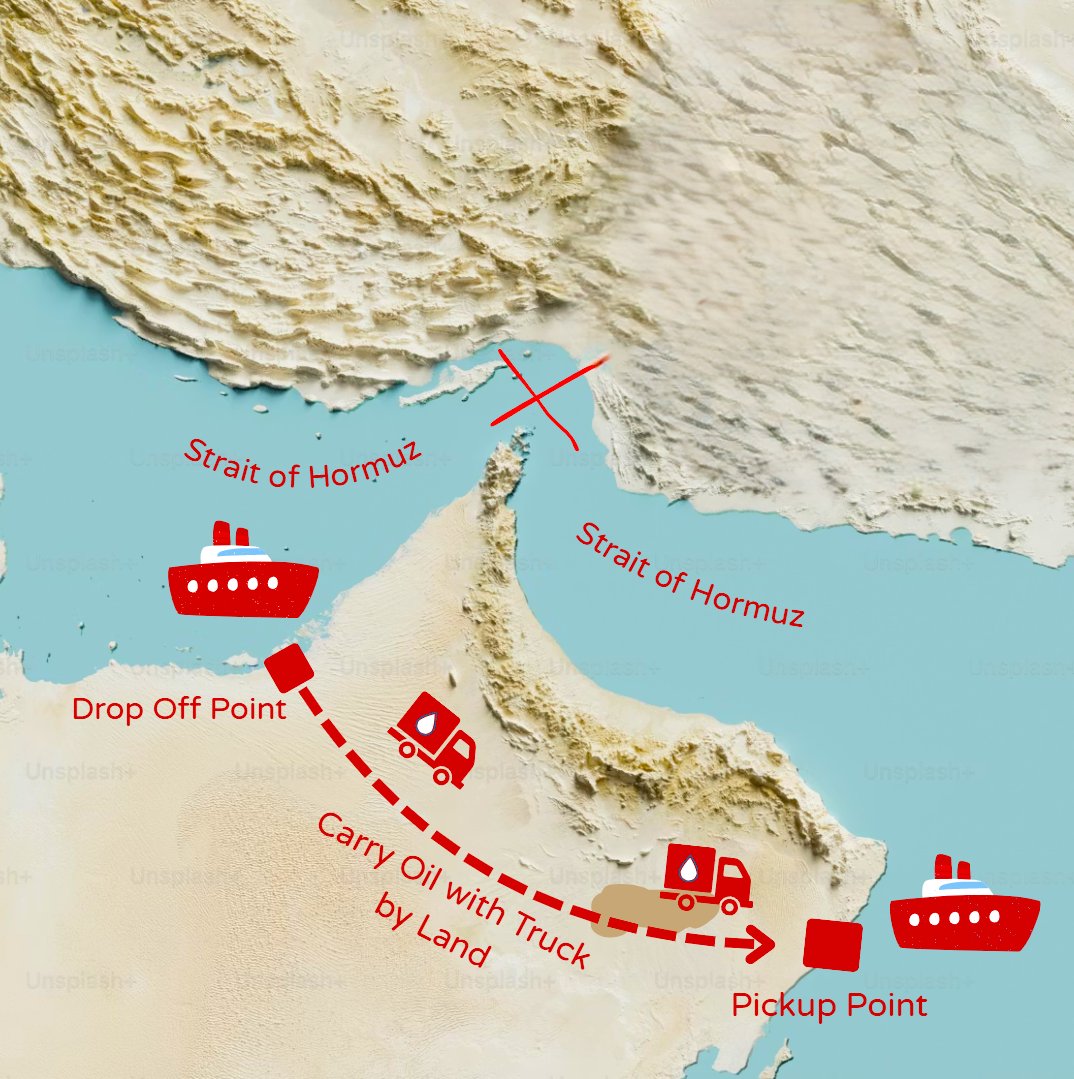
Houthis launch a missile at Israel—signaling they will join if the war escalates. With Hormuz already closed, Tehran now holds another choke point: Bab el-Mandab. https://t.co/OJzz5VpZyX
How the Iran war exposed that Africa’s stance on Israel isn’t driven by strategic interest but by entrenched narratives and long‑standing perceptions. The full op‑ed: https://t.co/P5tbpaIvM2
The Israeli ambassador got three things wrong: who the real power in the Horn of Africa is, the nature of the Ethiopia–Israel relationship, and how Israel’s best strategic interests are actually served. Read my take on the Ambassador @AmbAvrahamN interview on @andafta:
https://t.co/bL0tsYcV0H
https://t.co/bGYFbYvn44
@mamamesay@Jawar_Mohammed@NeaminZeleke@Eritrea_UN
If the U.S. Strikes Power Plants, Will Iran Shut Bab el‑Mandeb? It is possible, and even likely.
Read the full op‑ed on Substack: https://t.co/PoCxPOh6ce
My latest analysis explains what the U.S. designation of Sudan’s Muslim Brotherhood as an FTO means for Sudan and regional security — overlooked amid the Iran war. https://t.co/3tkNNwaCpS
@amjadt25@FormulaRauda
The Eritrean Dictator Is Central to Iran’s Regional Axis — Yet Untargeted!
The potential closure of the Strait of Hormuz demonstrates the extent of Iran’s ability to disrupt the global economy. Iran, through its proxy the Houthis, with its close ally, the Eritrean dictator, has been attempting to control the Bab el-Mandeb. This strategy also includes backing the U.S.-designated terrorist organization, the Muslim Brotherhood, in Sudan.
It is likely that, just as Iran & the Eritrean dictator successfully helped the Houthis to power in Yemen, they could attempt to repeat the same strategy with the Muslim Brotherhood to reassume power in Sudan—and with Al-Shabaab in Somalia.
Now, following Israeli & U.S. strikes, if the Iranian regime survives—as expected—it will likely intensify its proxy strategy, coordinating closely with the Eritrean dictator.
Israel & the United States must therefore target the single most dangerous enabler of the Iranian Islamist regime in the Red Sea region: the Eritrean dictator.
https://t.co/cfYso0Z5z7
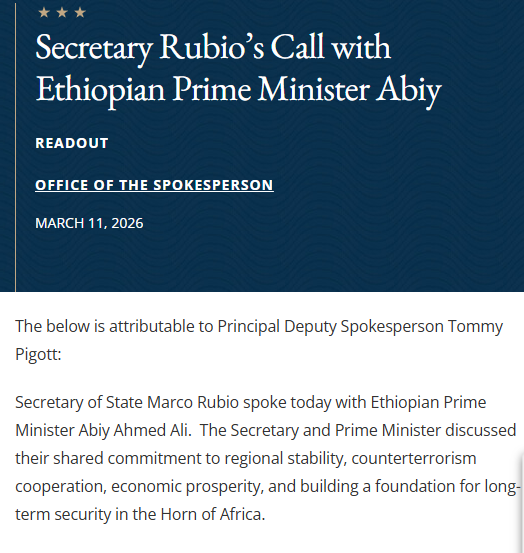
@SecRubio@POTUS@netanyahu@FDD@PMEthiopia@eritrean_post
Iran is keeping the Houthis in reserve as a key lever for its next level of regional escalation, with senior official Mohammed al-Bukhaiti confirming the group stands ready to strike in alignment with Tehran’s ‘Axis of Resistance.’ https://t.co/ObPtY2Uy9V
For anyone trying to understand why the Houthis have stayed out of the conflict despite major U.S. and Israeli strikes on Iran, read this analysis by leading Yemen and Red Sea expert @Ndawsari. It clearly explains the strategic logic behind Houthi restraint.
The UAE has zero tolerance for the Muslim Brotherhood, a U.S.-designated terrorist group that turned Sudan into a hub for global terrorism & committing genocide, and has partnered with Ethiopia to block its return to power under Abdel Fattah al-Burhan.
With Iran weakened, only the Eritrean dictator is backing the Muslim Brotherhood. This follows a clear pattern: the dictator's solidarity with the Houthis is evident in his silence as a third of the ships related to israel attacked in the Red Sea were in Eritrean territorial waters.
In 2006, he backed Al-Shabaab against the U.S.-backed Somali government, prompting U.N. sanctions. In 2022, thousands of Somali soldiers trained in Eritrea later joined Al-Shabaab.
The alignment is unmistakable: the Eritrean dictator stands against Israel, UAE, & U.S., & stands with Iran, Houthis, Al-Shabab & the Muslim Brotherhood in Sudan; the axis of terrior.
@FormulaRauda as the U.S. in 2006 worked with Meles Zenawi against Al-Shabab terriorist in Somalia, now the UAE has no alternative but to work with @AbiyAhmedAli against the MB terriorist in Sudan.
@amjadt25@ifa_ethiopia@UAEinNYC@eritrean_post
Isaias Afwerki, the Eritrean dictator, Iran's close ally, has completely isolated the stable and peaceful Eritrea, while meddling in Ethiopia to dismantle its popular federal arrangement against the will of its people and backing the U.S.-designated terrorist Muslim Brotherhood in Sudan, which is committing genocide against non-Arab Sudanese. Washington once engaged the late Meles Zenawi for lack of a partner in Eritrea; today it works with Abiy Ahmed for the very same reason. @SecRubio@StateDeputySpox
Despite launching 899 aerial attacks against Israel in solidarity with Hamas, the Houthis are now holding back from escalation. Why? In my latest op-ed, I examine the strategic dilemma facing the Houthis: balancing loyalty to Iran with their growing ambition to consolidate power inside Yemen. https://t.co/PBO3yAFAR2 via @JNS_org
Thank you, @SecRubio, it is important step to end the Muslim brotherhood led genocide in Sudan, the center of global terrorist networks . It is not only the IRGC; the Eritrean dictator, Isaias Afwerki, is also one of the most important backers of the Muslim Brotherhood in Sudan, helping destabilize the country. The Eritrean dictator has supported Al-Shabaab in Somalia and the Houthi movement in Yemen alongside Iran, acting against the Tigrigna nation—the overwhelming majority and an ancient outpost of the Judeo-Christian West in the Red Sea—and against the interests of Israel and the United States. The Eritrean dictator and the Chinese mining companies in Eritrea that sustain his power should also face secondary for the sake of regional peace and stability.
The State Department’s announcement that the United States will designate the Sudanese Muslim Brotherhood as a Foreign Terrorist Organization is long overdue and welcome news. Under the Muslim Brotherhood, Sudan became a dangerous hub of Islamist extremism and transnational terrorist networks. In the 1980s and 1990s, Khartoum openly hosted Hamas, Palestinian Islamic Jihad, Abu Nidal, and Al-Qaeda.
From 1991 to 1996, Osama bin Laden operated a major and well-protected terrorist base in Sudan under the Islamist regime, building businesses, training camps, and militant networks that later spread across the region. In 1997, Hamas founder Ahmed Yassin was welcomed to Sudan, granted land and offices, and celebrated as a hero of the violent anti-Israel struggle. Sudan facilitated militant training, financing, and operations, including Abu Nidal’s deadly attacks and the networks behind the devastating 1998 U.S. embassy bombings in Nairobi and Dar es Salaam.
Iran’s ties to Sudanese Islamists go back decades. Tehran supplied advanced weapons, military training, intelligence support, and helped build Sudan’s strategic military-industrial base. Khartoum became a critical bridge between Sunni and Shi’a Islamist movements, enabling dangerous coordination and joint operations. Today, Tehran is exploiting Sudan’s brutal civil warand the vulnerabilities of Gen. Abdel Fattah al-Burhan’s Sudanese Armed Forces (SAF)—heavily influenced by the Muslim Brotherhood—to build a strategic proxy presence on the Red Sea, mirroring its success with the Houthis in Yemen.
Al-Burhan has tried to distance himself from the Muslim Brotherhood and Iran, seeking desperately needed support from the United States and Europe. Yet his career was built within the Brotherhood-aligned National Islamic Front/National Congress Party, and the SAF’s senior ranks remain deeply entrenched within the Islamist elite. He has rehabilitated hardline Islamist figures while sidelining secular rivals.
The Eritrean dictator, Isaias Afwerki—one of Tehran’s closest and most loyal non-Arab partners—has also backed the Muslim Brotherhood in Sudan. Today, Ali Karti, secretary-general of the Sudanese Islamic Movement (SIM), the powerful local branch of the transnational Muslim Brotherhood, is in Eritrea. despite the Brotherhood having carried out numerous terrorist attacks in Eritrea in the mid-1990s, killing many civilians and soldiers.
Designating the Sudanese Muslim Brotherhood as a Foreign Terrorist Organization will seriously weaken this dangerous network, curb violent radicalization, and help end the ongoing genocide and catastrophic violence in Sudan, as well as the export of terrorism across the region. It will strengthen long-term peace and stability in the Red Sea region—and it will be very bad news for the Eritrean dictator and his ally, Iran.
https://t.co/duH1FGYudP
@amjadt25@eritrean_post