𝐊𝐚𝐭𝐞 𝐃𝐮𝐠𝐠𝐚𝐧 𝐓𝐞𝐥𝐥𝐬 𝐂𝐡𝐢𝐥𝐝𝐫𝐞𝐧’𝐬 𝐂𝐨𝐦𝐦𝐢𝐭𝐭𝐞𝐞 𝐌𝐨𝐫𝐞 𝐓𝐡𝐚𝐧 𝐚 𝐐𝐮𝐚𝐫𝐭𝐞𝐫 𝐨𝐟 𝐓𝐮𝐬𝐥𝐚 𝐂𝐚𝐬𝐞𝐬 𝐇𝐚𝐯𝐞 𝐍𝐨 𝐀𝐬𝐬𝐢𝐠𝐧𝐞𝐝 𝐒𝐨𝐜𝐢𝐚𝐥 𝐖𝐨𝐫𝐤𝐞𝐫
At a recent meeting of the Oireachtas Children’s Committee, Deputy John Connolly questioned Tusla Chair Madeleine Clarke and CEO Kate Duggan on therapeutic services, staffing shortages and the allocation of social workers.
The most significant revelation came when Kate Duggan confirmed that only 72 per cent of Tusla cases are currently allocated to a social worker, meaning that more than one in four cases do not have an assigned social worker.
Duggan said Tusla received more than 106,000 referrals in 2025, representing a 10 per cent increase on the previous year. She also revealed that referrals increased by a further 10 per cent during the first quarter of 2026.
Responding to questions about staffing pressures, Madeleine Clarke acknowledged that resources remain scarce and that demand continues to exceed capacity. She pointed to ongoing recruitment difficulties across a range of professions, including social work, social care and psychology, with many qualified staff opting for private sector employment.
Clarke said Tusla has introduced apprenticeship programmes in social work and social care through University College Cork in an effort to increase the number of professionals entering the sector. She also suggested that the agency’s public image may be affecting recruitment, arguing that public discussion often focuses on Tusla’s challenges without reflecting the positive work carried out by staff.
The committee also discussed family reunification. Clarke stressed that reunification requires practical support for families and described how social care and family support workers often provide intensive assistance to prevent placement breakdowns and help children return home safely.
Duggan outlined a major reform programme aimed at reducing pressure on social workers. Under a new referral system, families seeking support can be directed to family support and early intervention services without automatically entering the child protection pathway. Tusla believes this will allow social workers to focus on children requiring statutory child protection intervention.
Asked directly about social worker allocation, Duggan said Tusla’s goal is to increase allocation rates from the current 72 per cent to 100 per cent through these reforms.
The exchange concluded with a brief discussion on education provision in care settings. Clarke said she was not yet in a position to comment on educational supports in general residential care, but praised the educational provision she had observed during visits to Tusla’s three special care units.
The key takeaway from the exchange was the confirmation that more than a quarter of Tusla cases currently have no assigned social worker, despite continuing increases in referrals to the agency.
𝐊𝐚𝐭𝐞 𝐃𝐮𝐠𝐠𝐚𝐧 𝐓𝐞𝐥𝐥𝐬 𝐂𝐡𝐢𝐥𝐝𝐫𝐞𝐧’𝐬 𝐂𝐨𝐦𝐦𝐢𝐭𝐭𝐞𝐞 𝐌𝐨𝐫𝐞 𝐓𝐡𝐚𝐧 𝐚 𝐐𝐮𝐚𝐫𝐭𝐞𝐫 𝐨𝐟 𝐓𝐮𝐬𝐥𝐚 𝐂𝐚𝐬𝐞𝐬 𝐇𝐚𝐯𝐞 𝐍𝐨 𝐀𝐬𝐬𝐢𝐠𝐧𝐞𝐝 𝐒𝐨𝐜𝐢𝐚𝐥 𝐖𝐨𝐫𝐤𝐞𝐫
At a recent meeting of the Oireachtas Children’s Committee, Deputy John Connolly questioned Tusla Chair Madeleine Clarke and CEO Kate Duggan on therapeutic services, staffing shortages and the allocation of social workers.
The most significant revelation came when Kate Duggan confirmed that only 72 per cent of Tusla cases are currently allocated to a social worker, meaning that more than one in four cases do not have an assigned social worker.
Duggan said Tusla received more than 106,000 referrals in 2025, representing a 10 per cent increase on the previous year. She also revealed that referrals increased by a further 10 per cent during the first quarter of 2026.
Responding to questions about staffing pressures, Madeleine Clarke acknowledged that resources remain scarce and that demand continues to exceed capacity. She pointed to ongoing recruitment difficulties across a range of professions, including social work, social care and psychology, with many qualified staff opting for private sector employment.
Clarke said Tusla has introduced apprenticeship programmes in social work and social care through University College Cork in an effort to increase the number of professionals entering the sector. She also suggested that the agency’s public image may be affecting recruitment, arguing that public discussion often focuses on Tusla’s challenges without reflecting the positive work carried out by staff.
The committee also discussed family reunification. Clarke stressed that reunification requires practical support for families and described how social care and family support workers often provide intensive assistance to prevent placement breakdowns and help children return home safely.
Duggan outlined a major reform programme aimed at reducing pressure on social workers. Under a new referral system, families seeking support can be directed to family support and early intervention services without automatically entering the child protection pathway. Tusla believes this will allow social workers to focus on children requiring statutory child protection intervention.
Asked directly about social worker allocation, Duggan said Tusla’s goal is to increase allocation rates from the current 72 per cent to 100 per cent through these reforms.
The exchange concluded with a brief discussion on education provision in care settings. Clarke said she was not yet in a position to comment on educational supports in general residential care, but praised the educational provision she had observed during visits to Tusla’s three special care units.
The key takeaway from the exchange was the confirmation that more than a quarter of Tusla cases currently have no assigned social worker, despite continuing increases in referrals to the agency.
𝐎𝐧𝐞 𝐖𝐞𝐞𝐤 𝐈𝐧
✅ 26 counties organised
✅ Volunteers joining daily
✅ Over 25,000 social media views
This is only the beginning.
💜 26 Counties. One Mile. One Message.
Volunteer
📧 [email protected]#WalkInOurShoes
𝐎𝐧𝐞 𝐖𝐞𝐞𝐤 𝐈𝐧
✅ 26 counties organised
✅ Volunteers joining daily
✅ Over 25,000 social media views
This is only the beginning.
💜 26 Counties. One Mile. One Message.
Volunteer
📧 [email protected]#WalkInOurShoes
💯 must read by @blueskylou Ireland’s only journalist to report comprehensively since 2020. Give her a follow to get the most up-to-date, authentic account of the Irish state’s cover-up of its response to Covid. This is the true account of what the state has done to @indepdubnrth
EXCLUSIVE: "I told her personally" - An ex-Fine Gael Justice Minister said that in 2023 he privately raised a number of controversial books with then-Education Minister Norma Foley, including "What's the T?", telling Gript "I even named the books for her":https://t.co/5MldGKgw6R
Committee made 'no finding' in relation to tweets that linked covid jabs to cancer and... covid treatments such as ivermectin.
Wonder why?
Full page in today's Daily Mail from reporter Sean MacCarthaigh
Pic by Colin Keegan/ Collins 🙄
Last night, Deputy Michael Fitzmaurice told the Irish Daily Mail that the ‘bullies in Europe' do not think about the 'knock-on consequences' their decisions have on rural Ireland
𝐀𝐰𝐚𝐫𝐝 𝐖𝐢𝐧𝐧𝐢𝐧𝐠 𝐉𝐨𝐮𝐫𝐧𝐚𝐥𝐢𝐬𝐭 𝐌𝐢𝐜𝐡𝐚𝐞𝐥 𝐎’𝐅𝐚𝐫𝐫𝐞𝐥𝐥 𝐁𝐞𝐡𝐢𝐧𝐝 𝐌𝐚𝐥𝐚𝐰𝐢 𝐂𝐡𝐢𝐥𝐝 𝐒𝐞𝐱 𝐀𝐛𝐮𝐬𝐞 𝐄𝐱𝐩𝐨𝐬𝐞́ 𝐏𝐫𝐞𝐯𝐢𝐨𝐮𝐬𝐥𝐲 𝐔𝐧𝐜𝐨𝐯𝐞𝐫𝐞𝐝 𝐅𝐚𝐢𝐥𝐮𝐫𝐞𝐬 𝐢𝐧 𝐓𝐮𝐬𝐥𝐚’𝐬 𝐇𝐚𝐧𝐝𝐥𝐢𝐧𝐠 𝐨𝐟 𝐀𝐛𝐮𝐬𝐞 𝐀𝐥𝐥𝐞𝐠𝐚𝐭𝐢𝐨𝐧𝐬
The awarding of the 2026 European Press Prize for Investigative Reporting to Irish Mail on Sunday journalist Michael O’Farrell has highlighted the vital role investigative journalism plays in exposing child abuse and holding powerful institutions to account.
O’Farrell received the award in Lisbon for his investigation into allegations against Brother Aidan Clohessy of the St John of God Order. His reporting uncovered evidence that vulnerable children in Malawi were allegedly left exposed to abuse for decades while church authorities concealed allegations and allowed continued access to children. The investigation contributed to Clohessy’s eventual prosecution and imprisonment for offences dating back 57 years.
The award winning investigation follows a long record of public interest journalism by O’Farrell. In June 2020, he published a major investigation into the handling of child sexual abuse allegations within Midlands foster care services.
That investigation centred on a former foster child known as Saoirse and revealed what a confidential Tusla review described as serious failures by child protection authorities and An Garda Síochána. The review found no evidence that authorities adequately followed up allegations of abuse, assessed risks to other children, or reviewed the cases of 16 foster children placed in a home where abuse had been admitted by a foster parent’s son.
The review was also unable to establish whether allegations involving 37 children across five additional foster homes were ever properly investigated. Missing files, poor record keeping and unexplained gaps in documentation hampered efforts to determine what actions had been taken by the Midland Health Board, the HSE and later Tusla.
The investigation further revealed that Gardaí had lost Saoirse’s original abuse complaint in 2009 and that it was never investigated. An Garda Síochána later apologised, while Tusla chief executive Bernard Gloster issued an unreserved apology to Saoirse.
Taken together, the two investigations highlight a recurring theme. In both cases, allegations of abuse were raised, institutions failed to respond adequately, and accountability only emerged after determined investigative journalism brought the issues into the public domain.
O’Farrell’s European Press Prize recognises not only a single investigation but the wider importance of independent journalism in uncovering hidden wrongdoing, challenging institutional failures and ensuring that victims’ voices are finally heard.
𝐀𝐰𝐚𝐫𝐝 𝐖𝐢𝐧𝐧𝐢𝐧𝐠 𝐉𝐨𝐮𝐫𝐧𝐚𝐥𝐢𝐬𝐭 𝐌𝐢𝐜𝐡𝐚𝐞𝐥 𝐎’𝐅𝐚𝐫𝐫𝐞𝐥𝐥 𝐁𝐞𝐡𝐢𝐧𝐝 𝐌𝐚𝐥𝐚𝐰𝐢 𝐂𝐡𝐢𝐥𝐝 𝐒𝐞𝐱 𝐀𝐛𝐮𝐬𝐞 𝐄𝐱𝐩𝐨𝐬𝐞́ 𝐏𝐫𝐞𝐯𝐢𝐨𝐮𝐬𝐥𝐲 𝐔𝐧𝐜𝐨𝐯𝐞𝐫𝐞𝐝 𝐅𝐚𝐢𝐥𝐮𝐫𝐞𝐬 𝐢𝐧 𝐓𝐮𝐬𝐥𝐚’𝐬 𝐇𝐚𝐧𝐝𝐥𝐢𝐧𝐠 𝐨𝐟 𝐀𝐛𝐮𝐬𝐞 𝐀𝐥𝐥𝐞𝐠𝐚𝐭𝐢𝐨𝐧𝐬
The awarding of the 2026 European Press Prize for Investigative Reporting to Irish Mail on Sunday journalist Michael O’Farrell has highlighted the vital role investigative journalism plays in exposing child abuse and holding powerful institutions to account.
O’Farrell received the award in Lisbon for his investigation into allegations against Brother Aidan Clohessy of the St John of God Order. His reporting uncovered evidence that vulnerable children in Malawi were allegedly left exposed to abuse for decades while church authorities concealed allegations and allowed continued access to children. The investigation contributed to Clohessy’s eventual prosecution and imprisonment for offences dating back 57 years.
The award winning investigation follows a long record of public interest journalism by O’Farrell. In June 2020, he published a major investigation into the handling of child sexual abuse allegations within Midlands foster care services.
That investigation centred on a former foster child known as Saoirse and revealed what a confidential Tusla review described as serious failures by child protection authorities and An Garda Síochána. The review found no evidence that authorities adequately followed up allegations of abuse, assessed risks to other children, or reviewed the cases of 16 foster children placed in a home where abuse had been admitted by a foster parent’s son.
The review was also unable to establish whether allegations involving 37 children across five additional foster homes were ever properly investigated. Missing files, poor record keeping and unexplained gaps in documentation hampered efforts to determine what actions had been taken by the Midland Health Board, the HSE and later Tusla.
The investigation further revealed that Gardaí had lost Saoirse’s original abuse complaint in 2009 and that it was never investigated. An Garda Síochána later apologised, while Tusla chief executive Bernard Gloster issued an unreserved apology to Saoirse.
Taken together, the two investigations highlight a recurring theme. In both cases, allegations of abuse were raised, institutions failed to respond adequately, and accountability only emerged after determined investigative journalism brought the issues into the public domain.
O’Farrell’s European Press Prize recognises not only a single investigation but the wider importance of independent journalism in uncovering hidden wrongdoing, challenging institutional failures and ensuring that victims’ voices are finally heard.
𝐖𝐡𝐚𝐭 𝐝𝐨𝐞𝐬 𝐭𝐡𝐞 𝑊𝑎𝑙𝑘 𝑖𝑛 𝑂𝑢𝑟 𝑆ℎ𝑜𝑒𝑠 𝐄𝐯𝐞𝐧𝐭 𝐈𝐧𝐯𝐨𝐥𝐯𝐞?
This September, people across Ireland will walk one mile in solidarity with children and families affected by the family court system. No speeches. No fundraising. Just a peaceful walk 💜
𝐖𝐡𝐚𝐭 𝐝𝐨𝐞𝐬 𝐭𝐡𝐞 𝑊𝑎𝑙𝑘 𝑖𝑛 𝑂𝑢𝑟 𝑆ℎ𝑜𝑒𝑠 𝐄𝐯𝐞𝐧𝐭 𝐈𝐧𝐯𝐨𝐥𝐯𝐞?
This September, people across Ireland will walk one mile in solidarity with children and families affected by the family court system. No speeches. No fundraising. Just a peaceful walk 💜
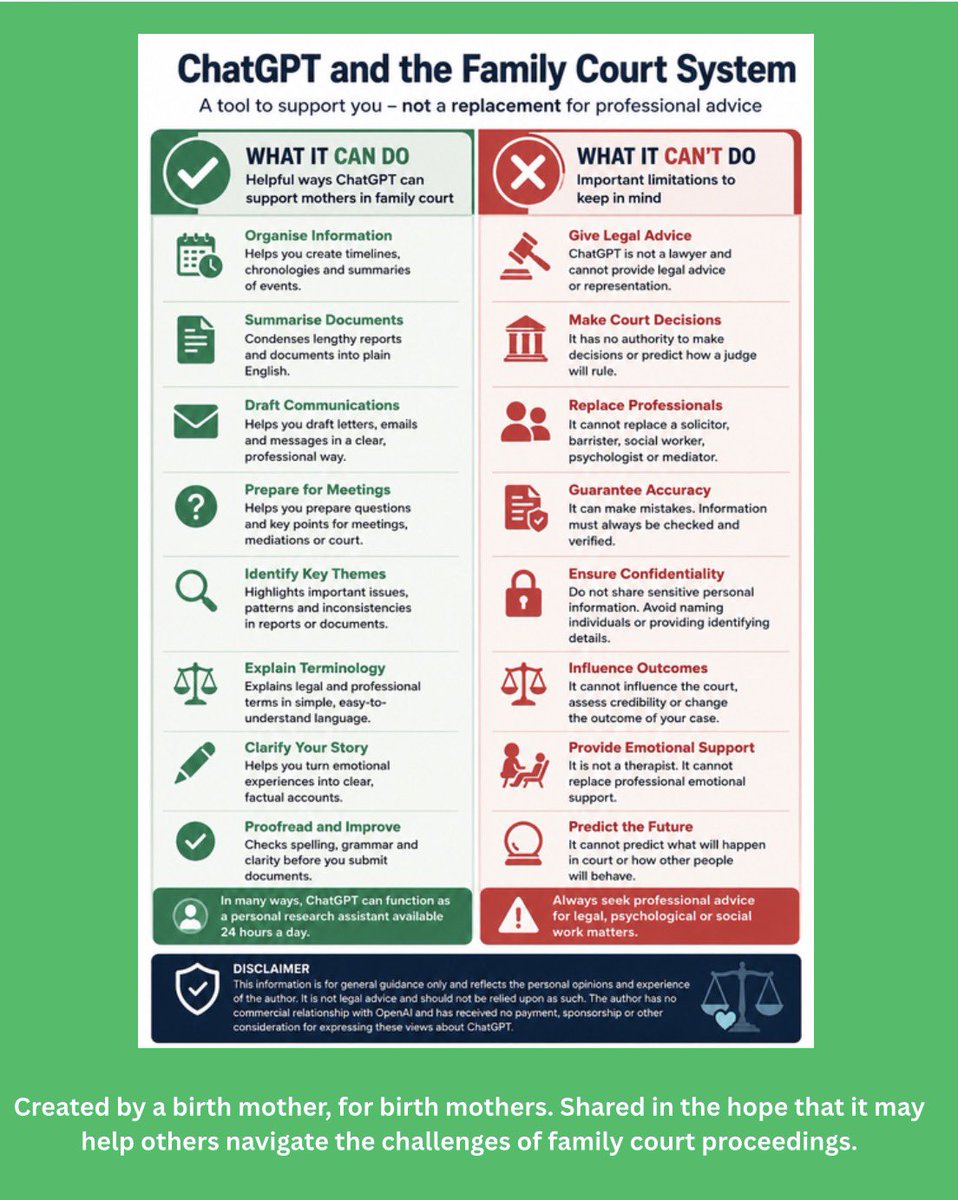
𝐂𝐚𝐧 𝐂𝐡𝐚𝐭𝐆𝐏𝐓 𝐇𝐞𝐥𝐩 𝐌𝐨𝐭𝐡𝐞𝐫𝐬 𝐢𝐧 𝐭𝐡𝐞 𝐅𝐚𝐦𝐢𝐥𝐲 𝐂𝐨𝐮𝐫𝐭 𝐒𝐲𝐬𝐭𝐞𝐦?
𝑇ℎ𝑒 𝑎𝑛𝑠𝑤𝑒𝑟 𝑖𝑠 𝑦𝑒𝑠, 𝑏𝑢𝑡 𝑝𝑒𝑟ℎ𝑎𝑝𝑠 𝑛𝑜𝑡 𝑖𝑛 𝑡ℎ𝑒 𝑤𝑎𝑦 𝑚𝑎𝑛𝑦 𝑝𝑒𝑜𝑝𝑙𝑒 𝑖𝑚𝑎𝑔𝑖𝑛𝑒.
As a birth mother, I have found ChatGPT particularly useful when analysing lengthy reports, preparing submissions, researching public policy and converting complex information into plain English.
ChatGPT cannot give legal advice, make decisions for judges or replace a solicitor or barrister. What it can do is help parents organise information, communicate more clearly and better understand complex documents.
Many mothers involved in family court proceedings find themselves overwhelmed by reports, court documents, emails, meetings and deadlines. Trying to make sense of hundreds of pages of paperwork while coping with the emotional impact of proceedings can be exhausting.
Used properly, ChatGPT can help by:
• Organising timelines and chronologies of events.
• Summarising lengthy reports into plain English.
• Drafting letters and emails.
• Preparing questions for meetings.
• Identifying key themes in documents.
• Explaining legal and professional terminology.
• Converting emotional accounts into clear factual narratives.
• Proofreading documents before they are submitted.
In many ways, ChatGPT can function as a personal research assistant available 24 hours a day.
Of course, ChatGPT is not infallible. Information should always be checked and verified, particularly where legal matters are concerned. It should never be treated as a substitute for professional advice.
However, in a system where many parents feel intimidated by process, paperwork and professional language, AI has the potential to make information more accessible and to help people communicate more effectively.
Technology will never replace human judgement, compassion or legal expertise. But it can help ensure that parents are better informed, better organised and better prepared to participate in decisions that affect their children.
👇 What has your experience been? Have you used ChatGPT or other AI tools to help you navigate family court proceedings?
✅ Please help more mothers by sharing this post.
Disclaimer: This article reflects the personal views and experiences of a birth mother. It is not legal advice and should not be relied upon as such. The Alliance of Birth Mothers Campaigning for Justice and the birth mother has no commercial relationship with OpenAI and have received no payment, sponsorship or other consideration in connection with this article.
𝐂𝐚𝐧 𝐂𝐡𝐚𝐭𝐆𝐏𝐓 𝐇𝐞𝐥𝐩 𝐌𝐨𝐭𝐡𝐞𝐫𝐬 𝐢𝐧 𝐭𝐡𝐞 𝐅𝐚𝐦𝐢𝐥𝐲 𝐂𝐨𝐮𝐫𝐭 𝐒𝐲𝐬𝐭𝐞𝐦?
𝑇ℎ𝑒 𝑎𝑛𝑠𝑤𝑒𝑟 𝑖𝑠 𝑦𝑒𝑠, 𝑏𝑢𝑡 𝑝𝑒𝑟ℎ𝑎𝑝𝑠 𝑛𝑜𝑡 𝑖𝑛 𝑡ℎ𝑒 𝑤𝑎𝑦 𝑚𝑎𝑛𝑦 𝑝𝑒𝑜𝑝𝑙𝑒 𝑖𝑚𝑎𝑔𝑖𝑛𝑒.
As a birth mother, I have found ChatGPT particularly useful when analysing lengthy reports, preparing submissions, researching public policy and converting complex information into plain English.
ChatGPT cannot give legal advice, make decisions for judges or replace a solicitor or barrister. What it can do is help parents organise information, communicate more clearly and better understand complex documents.
Many mothers involved in family court proceedings find themselves overwhelmed by reports, court documents, emails, meetings and deadlines. Trying to make sense of hundreds of pages of paperwork while coping with the emotional impact of proceedings can be exhausting.
Used properly, ChatGPT can help by:
• Organising timelines and chronologies of events.
• Summarising lengthy reports into plain English.
• Drafting letters and emails.
• Preparing questions for meetings.
• Identifying key themes in documents.
• Explaining legal and professional terminology.
• Converting emotional accounts into clear factual narratives.
• Proofreading documents before they are submitted.
In many ways, ChatGPT can function as a personal research assistant available 24 hours a day.
Of course, ChatGPT is not infallible. Information should always be checked and verified, particularly where legal matters are concerned. It should never be treated as a substitute for professional advice.
However, in a system where many parents feel intimidated by process, paperwork and professional language, AI has the potential to make information more accessible and to help people communicate more effectively.
Technology will never replace human judgement, compassion or legal expertise. But it can help ensure that parents are better informed, better organised and better prepared to participate in decisions that affect their children.
👇 What has your experience been? Have you used ChatGPT or other AI tools to help you navigate family court proceedings?
✅ Please help more mothers by sharing this post.
Disclaimer: This article reflects the personal views and experiences of a birth mother. It is not legal advice and should not be relied upon as such. The Alliance of Birth Mothers Campaigning for Justice and the birth mother has no commercial relationship with OpenAI and have received no payment, sponsorship or other consideration in connection with this article.
“Of all the articles I have written in recent years, this is one of the most important.
Jamie Canavan’s new book is not simply a history of foster care. It is a history of how Ireland has understood childhood, motherhood, poverty, family life and State intervention.
If we are to understand the debates surrounding Tusla today, we must first understand the history from which modern child welfare emerged,” says Anna Kavanagh, Cofounder, @AllianceBirth
Thread 🧵👇
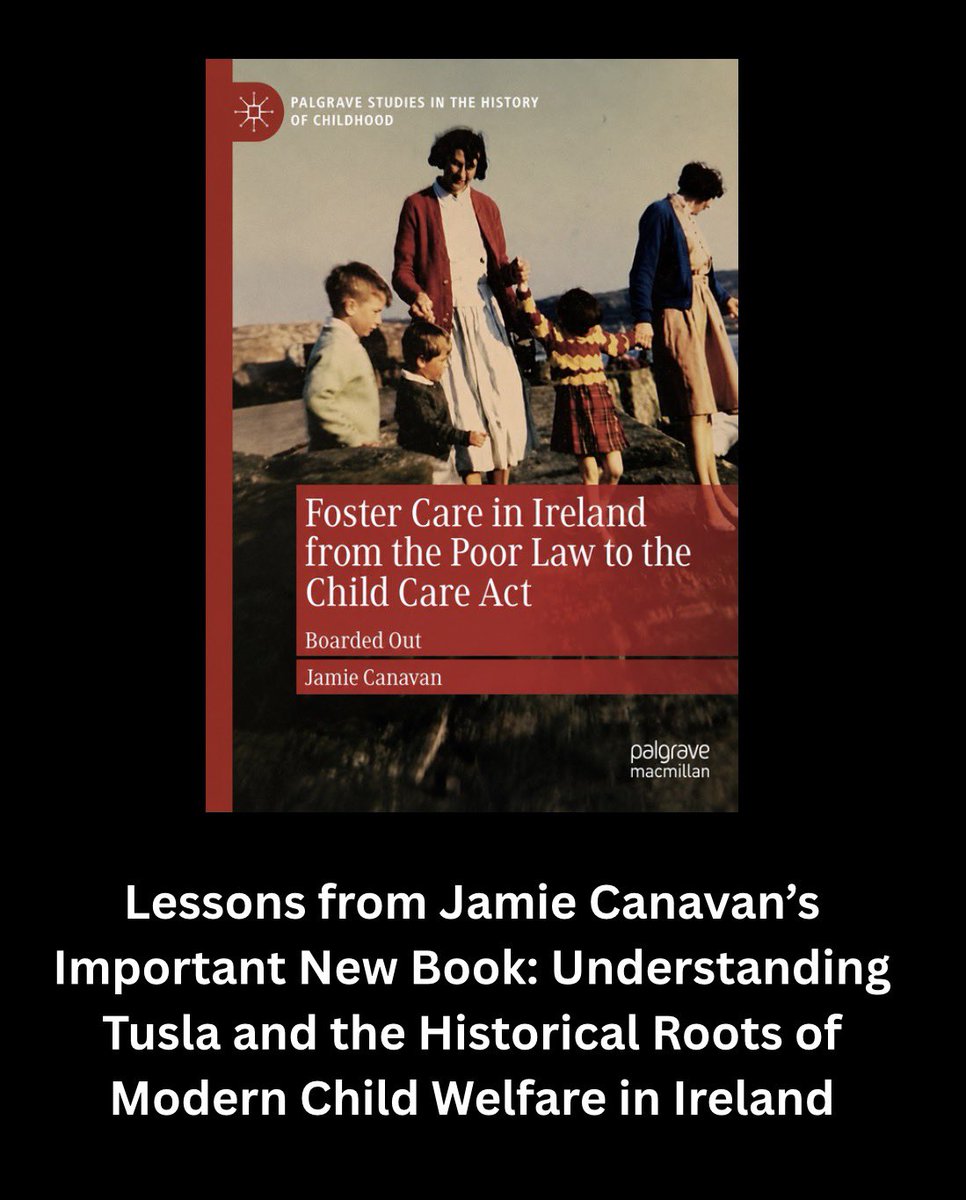
To Understand Tusla Today, We Must First Understand the History of Child Welfare in Ireland
🧵 1/3
Review of 𝘍𝘰𝘴𝘵𝘦𝘳 𝘊𝘢𝘳𝘦 𝘪𝘯 𝘐𝘳𝘦𝘭𝘢𝘯𝘥 𝘧𝘳𝘰𝘮 𝘵𝘩𝘦 𝘗𝘰𝘰𝘳 𝘓𝘢𝘸 𝘵𝘰 𝘵𝘩𝘦 𝘊𝘩𝘪𝘭𝘥 𝘊𝘢𝘳𝘦 𝘈𝘤𝘵 𝘣𝘺 𝘑𝘢𝘮𝘪𝘦 𝘊𝘢𝘯𝘢𝘷𝘢𝘯
Anna Kavanagh
For decades, Ireland has comforted itself with the belief that the abuses associated with Mother and Baby Homes, Industrial Schools and other institutions belonged to a darker chapter of the nation’s past. The prevailing narrative has been one of progress: institutions closed, social work professionalised, foster care expanded and child welfare modernised.
Jamie Canavan’s important new book, Foster Care in Ireland from the Poor Law to the Child Care Act, challenges that reassuring story.
Based on her doctoral research at the University of Galway, Canavan traces the history of foster care and “boarding out” from the nineteenth century through to the enactment of the Child Care Act 1991. In doing so, she offers far more than a history of foster care. The book is ultimately a history of how the Irish State has understood childhood, motherhood, poverty, family life and social control.
The book opens with a contemporary controversy. In 2022, Deputy Catherine Connolly criticised the Government’s Mother and Baby Institutions Redress Scheme for excluding many people who had been removed from institutions and placed in foster homes or boarding out arrangements. Among them was Kevin, whose story becomes a recurring thread throughout the work.
Born in a mother and baby institution, Kevin was transferred to an orphanage and later boarded out without his mother’s knowledge or consent. He subsequently experienced severe abuse. Despite spending his entire childhood under the authority of the State’s welfare system, he was excluded from redress because he had not spent the required six months inside one of the institutions covered by the scheme.
For Canavan, Kevin’s experience illustrates a wider historical problem. Boarded out children often disappeared from public view. Removed from institutions, they nevertheless remained under State authority. Their experiences frequently went unrecorded, unexamined and, in many cases, unacknowledged.
The book argues that foster care cannot be understood in isolation. It emerged from a wider system shaped by poverty, religious authority, social stigma and the treatment of unmarried mothers. Throughout much of the twentieth century, the State relied heavily on religious organisations to manage child welfare. Children were often separated from their mothers not simply because of concerns about safety, but because of prevailing moral attitudes towards poverty, illegitimacy and female sexuality.
One of Canavan’s most striking observations is the speed with which Ireland embraced foster care during the 1970s and 1980s. Foster care came to be presented as a humane and progressive alternative to institutionalisation. Recruitment campaigns intensified. Foster parents were publicly praised. Social work became increasingly professionalised.
Yet the author argues that this shift occurred without adequately addressing the deeper social problems that had brought families into contact with welfare services in the first place. Poverty, inadequate housing, social exclusion and lack of practical family supports remained stubbornly present.
That theme becomes even more relevant in the later chapters dealing with the development of modern child welfare policy.
"You have issued your findings and your verdict, and whilst I must respectfully accept those findings, I say to you again, I make no apologies for being guided by my conscience" - Marcus de Brun
@indepdubnrth
https://t.co/UAVgJSUnwJ
𝐓𝐮𝐬𝐥𝐚’𝐬 “𝐅𝐚𝐫𝐜𝐢𝐜𝐚𝐥” 𝐂𝐨𝐮𝐫𝐭 𝐁𝐚𝐭𝐭𝐥𝐞 𝐄𝐧𝐝𝐞𝐝 𝐖𝐡𝐞𝐫𝐞 𝐈𝐭 𝐁𝐞𝐠𝐚𝐧. 𝐇𝐨𝐰 𝐌𝐮𝐜𝐡 𝐃𝐢𝐝 𝐈𝐭 𝐂𝐨𝐬𝐭 𝐓𝐡𝐞 𝐓𝐚𝐱𝐩𝐚𝐲𝐞𝐫?
According to a report in today’s Irish Times, a Dublin District Court judge has delivered a sharp rebuke of Tusla’s handling of an age assessment case involving a young Somali national charged with the murder of Ukrainian teenager Vadym Davydenko, describing the agency’s position as “absolutely farcical”.
The criticism was directed not at the criminal proceedings themselves, but at what appears to be a lengthy and costly legal process that has brought the child protection system full circle.
The young man entered Tusla’s care last year after the agency assessed him as a child and successfully sought an interim care order. However, concerns later emerged regarding his age.
In January, District Court Judge John Campbell refused to extend the care order, stating that he did not believe the young man was a child. Tusla challenged that decision in the High Court and succeeded in having it overturned. 
The agency then conducted a second assessment of its own, only to conclude that the young man was in fact over 18, effectively arriving at the same position previously reached by the District Court judge.
Despite this reversal, Tusla has continued to pursue a formal age inquiry under the Child Care Act.
Judge Conor Fottrell questioned the purpose of continuing the proceedings when the inquiry is not expected to conclude until June 18th and the young man, according to the dates he provided when seeking asylum, will turn 18 on June 20th.
The judge described the situation as “highly unusual”, “unrealistic” and “unfair”, observing that the court was being asked to determine whether a person was entitled to child protection services only days before he would age out of the care system.
Counsel for the young man argued that the proceedings were approaching the point of futility. She questioned whether the court was effectively being asked to decide whether he was entitled to Tusla services for just two final days before reaching adulthood.
The case illustrates a broader concern that has surfaced in a number of child protection proceedings in recent years. Delays in assessments, reviews, legal challenges and court hearings can result in significant amounts of time, money and professional resources being devoted to disputes whose practical consequences have largely disappeared by the time a decision is finally reached.
Throughout the process, Tusla has maintained that it is legally obliged to follow the statutory procedures and ensure fair process for the young person. However, Judge Fottrell’s remarks suggest frustration with a system that spent months contesting a judicial finding, only to ultimately arrive at the same conclusion itself.
The financial dimension is also difficult to ignore. While no figure was given in court, the costs associated with multiple hearings in the District Court, a High Court judicial review, legal representation for all parties, expert assessments and ongoing care arrangements are likely to be substantial.
Those costs are ultimately borne by the taxpayer. Against that backdrop, the judge’s description of the process as “farcical” reflects a wider concern about whether public resources are being used effectively when lengthy legal proceedings end up resolving a question that has little practical significance by the time the answer arrives.
𝐓𝐮𝐬𝐥𝐚’𝐬 “𝐅𝐚𝐫𝐜𝐢𝐜𝐚𝐥” 𝐂𝐨𝐮𝐫𝐭 𝐁𝐚𝐭𝐭𝐥𝐞 𝐄𝐧𝐝𝐞𝐝 𝐖𝐡𝐞𝐫𝐞 𝐈𝐭 𝐁𝐞𝐠𝐚𝐧. 𝐇𝐨𝐰 𝐌𝐮𝐜𝐡 𝐃𝐢𝐝 𝐈𝐭 𝐂𝐨𝐬𝐭 𝐓𝐡𝐞 𝐓𝐚𝐱𝐩𝐚𝐲𝐞𝐫?
According to a report in today’s Irish Times, a Dublin District Court judge has delivered a sharp rebuke of Tusla’s handling of an age assessment case involving a young Somali national charged with the murder of Ukrainian teenager Vadym Davydenko, describing the agency’s position as “absolutely farcical”.
The criticism was directed not at the criminal proceedings themselves, but at what appears to be a lengthy and costly legal process that has brought the child protection system full circle.
The young man entered Tusla’s care last year after the agency assessed him as a child and successfully sought an interim care order. However, concerns later emerged regarding his age.
In January, District Court Judge John Campbell refused to extend the care order, stating that he did not believe the young man was a child. Tusla challenged that decision in the High Court and succeeded in having it overturned. 
The agency then conducted a second assessment of its own, only to conclude that the young man was in fact over 18, effectively arriving at the same position previously reached by the District Court judge.
Despite this reversal, Tusla has continued to pursue a formal age inquiry under the Child Care Act.
Judge Conor Fottrell questioned the purpose of continuing the proceedings when the inquiry is not expected to conclude until June 18th and the young man, according to the dates he provided when seeking asylum, will turn 18 on June 20th.
The judge described the situation as “highly unusual”, “unrealistic” and “unfair”, observing that the court was being asked to determine whether a person was entitled to child protection services only days before he would age out of the care system.
Counsel for the young man argued that the proceedings were approaching the point of futility. She questioned whether the court was effectively being asked to decide whether he was entitled to Tusla services for just two final days before reaching adulthood.
The case illustrates a broader concern that has surfaced in a number of child protection proceedings in recent years. Delays in assessments, reviews, legal challenges and court hearings can result in significant amounts of time, money and professional resources being devoted to disputes whose practical consequences have largely disappeared by the time a decision is finally reached.
Throughout the process, Tusla has maintained that it is legally obliged to follow the statutory procedures and ensure fair process for the young person. However, Judge Fottrell’s remarks suggest frustration with a system that spent months contesting a judicial finding, only to ultimately arrive at the same conclusion itself.
The financial dimension is also difficult to ignore. While no figure was given in court, the costs associated with multiple hearings in the District Court, a High Court judicial review, legal representation for all parties, expert assessments and ongoing care arrangements are likely to be substantial.
Those costs are ultimately borne by the taxpayer. Against that backdrop, the judge’s description of the process as “farcical” reflects a wider concern about whether public resources are being used effectively when lengthy legal proceedings end up resolving a question that has little practical significance by the time the answer arrives.
𝑺𝙤𝒎𝙚 𝙨𝒕𝙤𝒓𝙞𝒆𝙨 𝙖𝒓𝙚 𝙣𝒆𝙫𝒆𝙧 𝙩𝒐𝙡𝒅 𝒑𝙪𝒃𝙡𝒊𝙘𝒍𝙮.
In September people across Ireland walking one mile in solidarity with children and families affected by the family court system.
Follow. Share. 💜
Volunteer: [email protected]#WalkInOurShoes
𝑺𝙤𝒎𝙚 𝙨𝒕𝙤𝒓𝙞𝒆𝙨 𝙖𝒓𝙚 𝙣𝒆𝙫𝒆𝙧 𝙩𝒐𝙡𝒅 𝒑𝙪𝒃𝙡𝒊𝙘𝒍𝙮.
In September people across Ireland walking one mile in solidarity with children and families affected by the family court system.
Follow. Share. 💜
Volunteer: [email protected]#WalkInOurShoes
This is a 💯 must read by @blueskylou for anyone concerned about the cover-up of vaccine related deaths ahead of imminent publication of @reasonoverfear Dr Michael McConville’s book and the Medical Council’s verdict on @indepdubnrth tomorrow morning. Louise Roseingrave is Ireland’s most reputable journalist reporting on all things Covid, that cost her the loss of a longstanding career reporting for the major mainstream newspapers. She know writes on substack.
Revisiting Roy Butler's inquest - as the IMC issues its decision on Marcus de Brun inquiry tomorrow
Dr Mick McConville @reasonoverfear issues a stark analysis of autopsy evidence at the coronial inquiry into Roy's death in his new book
link below:
𝐓𝐮𝐬𝐥𝐚 𝐀𝐜𝐤𝐧𝐨𝐰𝐥𝐞𝐝𝐠𝐞𝐬 𝐆𝐚𝐩 𝐁𝐞𝐭𝐰𝐞𝐞𝐧 𝐑𝐞𝐬𝐢𝐝𝐞𝐧𝐭𝐢𝐚𝐥 𝐚𝐧𝐝 𝐒𝐩𝐞𝐜𝐢𝐚𝐥 𝐂𝐚𝐫𝐞, 𝐛𝐮𝐭 𝐆𝐨𝐯𝐞𝐫𝐧𝐦𝐞𝐧𝐭 𝐒𝐭𝐨𝐩𝐬 𝐒𝐡𝐨𝐫𝐭 𝐨𝐟 𝐁𝐚𝐜𝐤𝐢𝐧𝐠 𝐍𝐞𝐰 𝐓𝐡𝐞𝐫𝐚𝐩𝐞𝐮𝐭𝐢𝐜 𝐔𝐧𝐢𝐭𝐬 𝐭𝐨 𝐀𝐝𝐝𝐫𝐞𝐬𝐬 𝐈𝐭
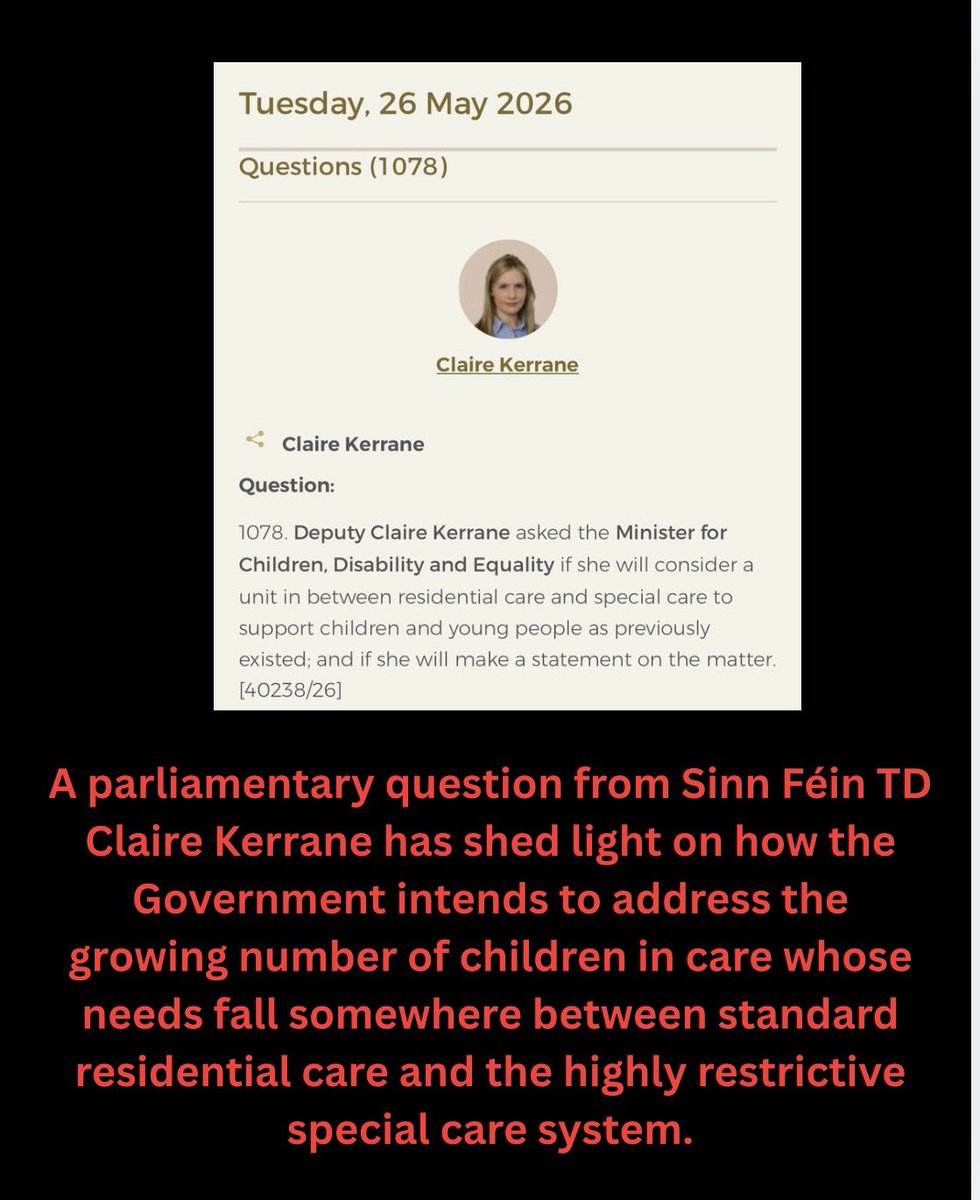
A parliamentary question from Sinn Féin TD Claire Kerrane has shed light on how the Government intends to address the growing number of children in care whose needs fall somewhere between standard residential care and the highly restrictive special care system.
Deputy Kerrane asked Minister for Children, Disability and Equality Norma Foley whether she would consider establishing a form of care that sits between residential care and special care, similar to services that previously existed. Such units were designed to provide intensive therapeutic support to vulnerable children whose needs exceeded what could be provided in mainstream residential settings but who did not necessarily require detention in special care.
In her written reply, the Minister did not directly answer whether such a model would be reintroduced. Instead, she outlined a series of measures focused on expanding special care capacity, increasing therapeutic supports and developing additional step down placements for young people leaving special care.
The response confirms that foster care remains the State’s preferred placement option. However, the Minister acknowledged that some children present with more complex needs and require additional therapeutic interventions.
That acknowledgement may be one of the most significant aspects of the exchange.
Tusla advised the Minister that some children “require additional levels of therapeutic support outside of the special care setting”, effectively recognising that there is a cohort of young people whose needs are not adequately met by either ordinary residential care or special care. Yet despite acknowledging the existence of that gap, the Government’s proposed response is not the creation of a new tier of therapeutic residential care.
Instead, Budget 2026 includes €26 million for special care, an increase of more than €6 million on the previous year, with €1.3 million specifically allocated to enhanced multidisciplinary therapeutic services for children on the edge of special care, in special care, and transitioning from special care placements.
The Minister also highlighted the establishment of a multi agency special care committee in May 2025, involving Tusla, the HSE, An Garda Síochána and EPIC. The committee reviews admissions to and discharges from special care and is intended to ensure that all alternatives are explored before a young person is deprived of their liberty under a High Court order.
Additional investment is planned in the physical infrastructure of special care. Tusla has been allocated €188 million in capital funding between 2026 and 2030, with €17 million earmarked for special care developments. Four additional special care step down beds are expected to open during 2026, while a further step down service is planned for 2027.
These developments suggest that policy makers are increasingly focused on improving transitions into and out of special care. What is less evident is any intention to develop a distinct therapeutic alternative that could intervene earlier and potentially prevent some children from reaching special care in the first place.
The exchange therefore reveals a subtle but important distinction in Government policy. The Minister’s reply suggests that officials accept there is a group of children whose needs fall between conventional residential care and special care. However, rather than creating a separate category of therapeutic placement, the State’s strategy appears to be centred on strengthening the existing special care pathway through enhanced therapeutic supports, improved interagency planning and expanded step down services.
𝐓𝐮𝐬𝐥𝐚 𝐀𝐜𝐤𝐧𝐨𝐰𝐥𝐞𝐝𝐠𝐞𝐬 𝐆𝐚𝐩 𝐁𝐞𝐭𝐰𝐞𝐞𝐧 𝐑𝐞𝐬𝐢𝐝𝐞𝐧𝐭𝐢𝐚𝐥 𝐚𝐧𝐝 𝐒𝐩𝐞𝐜𝐢𝐚𝐥 𝐂𝐚𝐫𝐞, 𝐛𝐮𝐭 𝐆𝐨𝐯𝐞𝐫𝐧𝐦𝐞𝐧𝐭 𝐒𝐭𝐨𝐩𝐬 𝐒𝐡𝐨𝐫𝐭 𝐨𝐟 𝐁𝐚𝐜𝐤𝐢𝐧𝐠 𝐍𝐞𝐰 𝐓𝐡𝐞𝐫𝐚𝐩𝐞𝐮𝐭𝐢𝐜 𝐔𝐧𝐢𝐭𝐬 𝐭𝐨 𝐀𝐝𝐝𝐫𝐞𝐬𝐬 𝐈𝐭
A parliamentary question from Sinn Féin TD Claire Kerrane has shed light on how the Government intends to address the growing number of children in care whose needs fall somewhere between standard residential care and the highly restrictive special care system.
Deputy Kerrane asked Minister for Children, Disability and Equality Norma Foley whether she would consider establishing a form of care that sits between residential care and special care, similar to services that previously existed. Such units were designed to provide intensive therapeutic support to vulnerable children whose needs exceeded what could be provided in mainstream residential settings but who did not necessarily require detention in special care.
In her written reply, the Minister did not directly answer whether such a model would be reintroduced. Instead, she outlined a series of measures focused on expanding special care capacity, increasing therapeutic supports and developing additional step down placements for young people leaving special care.
The response confirms that foster care remains the State’s preferred placement option. However, the Minister acknowledged that some children present with more complex needs and require additional therapeutic interventions.
That acknowledgement may be one of the most significant aspects of the exchange.
Tusla advised the Minister that some children “require additional levels of therapeutic support outside of the special care setting”, effectively recognising that there is a cohort of young people whose needs are not adequately met by either ordinary residential care or special care. Yet despite acknowledging the existence of that gap, the Government’s proposed response is not the creation of a new tier of therapeutic residential care.
Instead, Budget 2026 includes €26 million for special care, an increase of more than €6 million on the previous year, with €1.3 million specifically allocated to enhanced multidisciplinary therapeutic services for children on the edge of special care, in special care, and transitioning from special care placements.
The Minister also highlighted the establishment of a multi agency special care committee in May 2025, involving Tusla, the HSE, An Garda Síochána and EPIC. The committee reviews admissions to and discharges from special care and is intended to ensure that all alternatives are explored before a young person is deprived of their liberty under a High Court order.
Additional investment is planned in the physical infrastructure of special care. Tusla has been allocated €188 million in capital funding between 2026 and 2030, with €17 million earmarked for special care developments. Four additional special care step down beds are expected to open during 2026, while a further step down service is planned for 2027.
These developments suggest that policy makers are increasingly focused on improving transitions into and out of special care. What is less evident is any intention to develop a distinct therapeutic alternative that could intervene earlier and potentially prevent some children from reaching special care in the first place.
The exchange therefore reveals a subtle but important distinction in Government policy. The Minister’s reply suggests that officials accept there is a group of children whose needs fall between conventional residential care and special care. However, rather than creating a separate category of therapeutic placement, the State’s strategy appears to be centred on strengthening the existing special care pathway through enhanced therapeutic supports, improved interagency planning and expanded step down services.
𝟏𝟒 𝐘𝐞𝐚𝐫 𝐎𝐥𝐝 𝐢𝐧 𝐓𝐮𝐬𝐥𝐚 𝐂𝐚𝐫𝐞 𝐑𝐞𝐦𝐚𝐧𝐝𝐞𝐝 𝐢𝐧 𝐂𝐮𝐬𝐭𝐨𝐝𝐲 𝐀𝐟𝐭𝐞𝐫 𝐁𝐫𝐞𝐚𝐜𝐡𝐢𝐧𝐠 𝐂𝐮𝐫𝐟𝐞𝐰 𝐚𝐭 𝐏𝐫𝐢𝐯𝐚𝐭𝐞 𝐅𝐨𝐫 𝐏𝐫𝐨𝐟𝐢𝐭 𝐂𝐚𝐫𝐞 𝐇𝐨𝐦𝐞 𝐖𝐡𝐞𝐫𝐞 𝐒𝐡𝐞 𝐒𝐥𝐞𝐩𝐭 𝐨𝐧 𝐭𝐡𝐞 𝐅𝐥𝐨𝐨𝐫 𝐁𝐞𝐜𝐚𝐮𝐬𝐞 𝐓𝐡𝐞𝐫𝐞 𝐖𝐚𝐬 𝐍𝐨 𝐁𝐞𝐝
A report in the Laois Nationalist describes how a 14 year old girl was led sobbing from Portlaoise Children’s Court after Judge Andrew Cody revoked her bail and remanded her to Oberstown following 15 alleged breaches of her curfew conditions.
While the court heard evidence that the girl had repeatedly failed to return to her placement by the required time, the case also shone a light on troubling conditions within the private care home where she had been placed.
Her solicitor, Josephine Fitzpatrick, told the court that the home is operated by a private for profit agency which “simply supplies accommodation” and acknowledged that it was not an appropriate placement for the child. The court heard that the girl was sleeping on a mattress because she did not have a bed of her own. It was also stated that another young person in the house screamed throughout the night, creating a distressing living environment.
According to the defence, the home had very little supervision or facilities for young people. The girl had asked for basic things such as a bed and a television to help keep her occupied, while her solicitor argued that staff often failed to collect her when requested and that there were occasions when she could not gain access to the house.
The court also heard that Tusla was seeking alternative accommodation for the girl, suggesting that concerns about the suitability of the placement were already recognised.
In an emotional moment, the young girl told the judge: “The staff don’t care about me.” However, Judge Cody concluded that her repeated breaches of curfew, including being out until 2am and 3am, meant she posed a danger to herself and had “run out of road”. He revoked her bail and remanded her to Oberstown.
The report raises broader questions about the quality and suitability of some privately operated for profit residential homes where Tusla houses vulnerable children they have taken into state Care. While the court’s focus was on repeated bail breaches, evidence emerged of a placement where a child was sleeping on a mattress, living alongside another young person who screamed through the night, and residing in what her solicitor described as an unhappy house with very little supervision or support. These conditions formed an important backdrop to the events that ultimately led to the girl being taken into custody. These private companies typically cost several thousand euro per week. Could this money not have been spent supporting the child to stay with her mother? 
𝟏𝟒 𝐘𝐞𝐚𝐫 𝐎𝐥𝐝 𝐢𝐧 𝐓𝐮𝐬𝐥𝐚 𝐂𝐚𝐫𝐞 𝐑𝐞𝐦𝐚𝐧𝐝𝐞𝐝 𝐢𝐧 𝐂𝐮𝐬𝐭𝐨𝐝𝐲 𝐀𝐟𝐭𝐞𝐫 𝐁𝐫𝐞𝐚𝐜𝐡𝐢𝐧𝐠 𝐂𝐮𝐫𝐟𝐞𝐰 𝐚𝐭 𝐏𝐫𝐢𝐯𝐚𝐭𝐞 𝐅𝐨𝐫 𝐏𝐫𝐨𝐟𝐢𝐭 𝐂𝐚𝐫𝐞 𝐇𝐨𝐦𝐞 𝐖𝐡𝐞𝐫𝐞 𝐒𝐡𝐞 𝐒𝐥𝐞𝐩𝐭 𝐨𝐧 𝐭𝐡𝐞 𝐅𝐥𝐨𝐨𝐫 𝐁𝐞𝐜𝐚𝐮𝐬𝐞 𝐓𝐡𝐞𝐫𝐞 𝐖𝐚𝐬 𝐍𝐨 𝐁𝐞𝐝
A report in the Laois Nationalist describes how a 14 year old girl was led sobbing from Portlaoise Children’s Court after Judge Andrew Cody revoked her bail and remanded her to Oberstown following 15 alleged breaches of her curfew conditions.
While the court heard evidence that the girl had repeatedly failed to return to her placement by the required time, the case also shone a light on troubling conditions within the private care home where she had been placed.
Her solicitor, Josephine Fitzpatrick, told the court that the home is operated by a private for profit agency which “simply supplies accommodation” and acknowledged that it was not an appropriate placement for the child. The court heard that the girl was sleeping on a mattress because she did not have a bed of her own. It was also stated that another young person in the house screamed throughout the night, creating a distressing living environment.
According to the defence, the home had very little supervision or facilities for young people. The girl had asked for basic things such as a bed and a television to help keep her occupied, while her solicitor argued that staff often failed to collect her when requested and that there were occasions when she could not gain access to the house.
The court also heard that Tusla was seeking alternative accommodation for the girl, suggesting that concerns about the suitability of the placement were already recognised.
In an emotional moment, the young girl told the judge: “The staff don’t care about me.” However, Judge Cody concluded that her repeated breaches of curfew, including being out until 2am and 3am, meant she posed a danger to herself and had “run out of road”. He revoked her bail and remanded her to Oberstown.
The report raises broader questions about the quality and suitability of some privately operated for profit residential homes where Tusla houses vulnerable children they have taken into state Care. While the court’s focus was on repeated bail breaches, evidence emerged of a placement where a child was sleeping on a mattress, living alongside another young person who screamed through the night, and residing in what her solicitor described as an unhappy house with very little supervision or support. These conditions formed an important backdrop to the events that ultimately led to the girl being taken into custody. These private companies typically cost several thousand euro per week. Could this money not have been spent supporting the child to stay with her mother?