Exclusive: The Trump administration is exploring ways to reset ties with a reclusive and autocratic state controlling prime geopolitical real estate along the Red Sea as Iran threatens to choke off a second vital maritime corridor. https://t.co/VUZfisWwSy
A mummified baboon in Egypt just helped solve a 4,500-year-old mystery.
In 2023, DNA testing traced it directly to Eritrea 🇪🇷. For the first time, modern science ties the ancient Land of Punt (2500 to 600 BC) kingdom to a real location: Eritrea.
#Eritrea’s Pres. #Afwerki said 26 will be a year of improving US–Eritrea ties. After the EU & Canada moved to re-engage, the US is now weighing lifting sanctions.
If this materializes, it could be transformative for #Asmara and unlock major economic & geopolitical opportunities.
🚨 US EYES ERITREA RESET TO COUNTER IRAN
The Trump administration is reportedly exploring a shift in policy toward Eritrea — including lifting some sanctions — as part of a strategy to push back against Iranian influence in the Red Sea.
Eritrea controls more than 700 miles of coastline along a critical maritime chokepoint now threatened by Iran-backed Houthis. US envoy Massad Boulos has already met with Eritrea’s president and Egypt’s Sisi to move talks forward.
Eritrea has long been labeled “Africa’s North Korea” due to its repression. But officials are now arguing that sanctions alone haven’t worked — and the strategic stakes are too high.
The question:
Do you engage a regime like this to counter a bigger threat?
Or does that come at too high a cost?
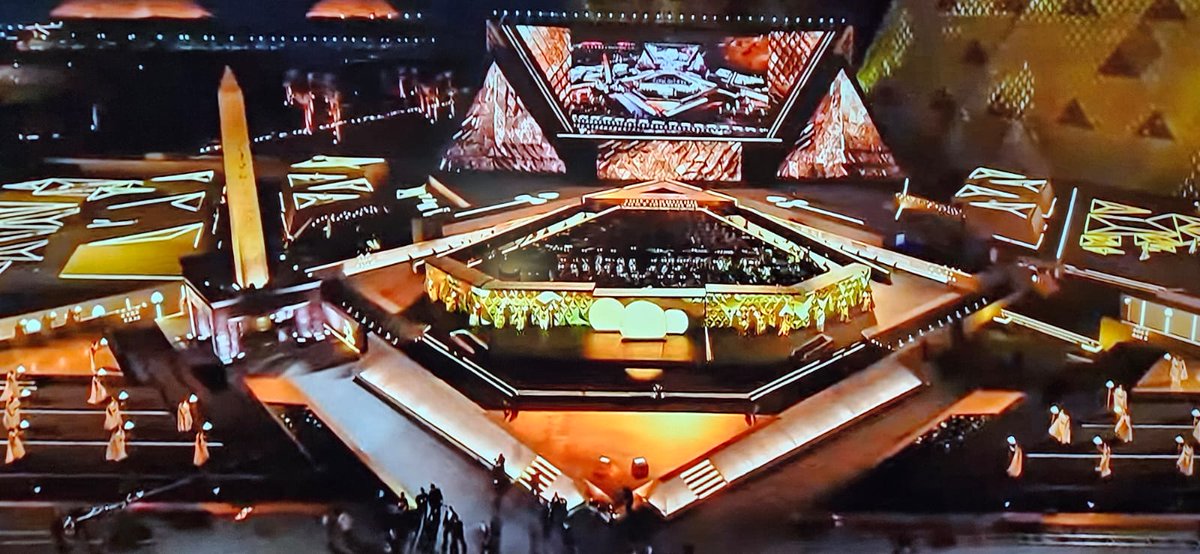
President Isaias Afwerki is attending the inauguration of the Grand Egyptian Museum in Cairo this evening—a landmark event in the history of culture and human civilization. #Eritrea#Egypt
From the rugged heights of the Sahel Mountains to Barka Winds:
The Roots Beneath the Soil
A Continuation of the Eritrean Journey
By Abraham Gebremichael
Eritrea’s story is not a straight line; it is a circle of struggle, return, and regeneration. To understand its present and future, we must listen to the places that carried its past. From the rugged heights of the Sahel Mountains to the open plains of Barka, every stone and grain carries memory. This journey is not only geographic, it is spiritual, generational, and symbolic. Along the way, we find not just history, but continuity. We find hands that once held rifles now planting seeds. We find symbols, the camel, the flag, and the martyr living not just in monuments, but in the work of everyday life.
In the Sahel, the mountains echo with names never forgotten. They witnessed the rise of a people who chose silence over surrender, education over despair, and dignity over defeat. Here, in makeshift schools carved into stone and beneath open skies, freedom learned to speak not in speeches, but in action. Fighters walked barefoot, yet carried the burden of a nation. And by their side was the camel steady, unshaken. It hauled more than supplies. It carried the wounded, the hungry, the hope. Quietly, it became a symbol of unbreakable endurance. Like Eritrea itself, it persisted.
From this bedrock of sacrifice, the journey turns toward Barka, a land once ravaged, now renewed. In these fertile plains, memory becomes motion. Farmers rise before the sun, and children study by lanterns powered by their parents’ resolve. Here, ants march again, no longer burdened by war, but tasked with building the future: carrying seeds, books, and solar light. The same hands that once dug trenches now till the soil. The same villages that once mourned now sing.
And above it all, the flag of Eritrea flies not as a symbol of conquest, but of covenant:
🔴 Red stands for the blood shed in the fight for freedom and independence. Its narrowing triangle symbolizes the end of bloodshed.
🟢 Green symbolizes sustainable agricultural growth and food security. Its widening shape represents Eritrea’s fertile future.
🔵 Blue represents marine development and the preservation of the Red Sea’s wealth.
🟡 The Yellow Laurel Wreath bears 30 leaves, 15 on each, symbolizing peace, unity, and the 30-year struggle for independence.
At the center, 6 leaves are split evenly: 3 for Eritrea’s 9 ethnic groups, and 3 for their respective languages.
This flag does not just wave from poles; it waves from hearts. It rises in every planted field, every reopened school, every child who returns from the diaspora not as a stranger but as a builder.
The martyrs, too, remain. Not only on stone walls or under commemorative dates but in the very grain that grows. They bloom in the mango tree. They echo in the classroom. They live at work.
Eritrea does not honor its past by standing still. It honors it by becoming. The Sahel gives us memory. Barka gives us life. The camel walks still, in quiet strength. The ants labor still, in quiet unity. The flag still rises, with sacred meaning. And from beneath the soil where roots entwine with memory grows a new Eritrea. One that does not forget. One that does not retreat. One that continues by its own hands, its rhythm, and its truth.
🕯️Zikri N’Suwuatna
Eternal Glory to Our Martyrs.
Strength to our people.
They Marched Not in Formation, but in Celebration
A Continuation of the Eritrean Journey
By Abraham Gebremichael
They marched not in formation, but in celebration.
Tiny feet, vast echoes.
Thirty years in the dust, and now the hill sings with flag and flame.
On May 24, they rose
And Eritrea was born in joy.
Along the rugged shores of the Eritrean Red Sea, where waves whisper stories of survival and winds carry echoes of resistance, a silent monument rises, one not built by machines or men, but by ants.
In this imaginative tableau, ants, those tireless symbols of unity, purpose, and resilience, undertake a sacred task. With unyielding strength and quiet devotion, they construct a towering monument of stone and metal, etched not with names, but with meaning. The Eritrean flag flutters above their work, a testament to the legacy they defend and the future they build.
Each ant plays a role: one carries a book, another a flower, another a glowing orb. These are not just items; they are metaphors. The book represents knowledge and remembrance, the flower symbolizes renewal and hope, and the glowing orb reflects the inner light of the Eritrean people, especially the fallen, whose memory guides the living.
The coastline becomes more than geography. It becomes a threshold between past and future, between grief and rebirth. Storm clouds gather in some scenes, reminding us of war, sacrifice, and diaspora. But even in the darkest hour, divine rays break through. Candles flicker beside the stones. They are not just flames; they are prayers. Eternal vigils held by a people who do not forget.
In this vision, the ants become Eritrea itself: small but mighty, overlooked but indispensable. Their cooperation and perseverance mirror the spirit that won independence and the spirit that continues to build a nation grounded in dignity, memory, and hope.
The monuments they build are more than stone. They are forged in labor, memory, and will. As the Red Sea of Eritrea laps gently at the shore, the message is clear:
Eritrea is for Eritreans. Assab is not a question. It is our origin. Our coast. Our covenant.
Let the waves speak it.
Let the mountains carry it.
Let the winds whisper it from Massawa to Barka:
We build with many hands. We remember with one heart. We rise together.
And to those who doubt, to those who distort or deny:
“The camel keeps on marching while the dog keeps on barking.”
We are the camel. We carry our history and our vision forward steadily, silently, and without pause.
Victory always for those who never stopped walking toward the light.
Glory to our martyrs. Strength to our people
The Light That Refused to Die
By Abraham Gebremichael
When the world rehearsed its darkness, Eritrea answered with endurance.
Amid storms and silence, when drums of falsehood echoed through the Horn, a single ember, small, defiant, and knowing refused to die.
It was not a fire of rage, but of memory.
They tried to drown it, and the sea turned witness.
They tried to bury it, and the soil began to glow.
They tried to silence it, and even the mountains began to speak.
Nakfa, Massawa, and the Red Sea became keepers of that quiet fire
each tide, each trench, each reef, remembering the names that history tried to wash away.
The ember became a teacher:
it taught the wind humility,
taught the soil patience,
taught the people how to turn endurance into art.
From the coral depths to the farmer’s hand,
from the mason’s stone to the child’s lamp,
the flame spread not through spectacle, but through steadfastness.
Because Eritreans are not performers of fire, they are keepers of it.
They light torches not to boast, but to see clearly.
They mend nets instead of shouting slogans,
they raise schools instead of borders,
they guard reefs as if guarding archives of truth.
Their sovereignty is not a stage costume, it’s a discipline, a dawn ritual, a vow renewed with every sunrise.
The world demands fireworks. Eritrea offers furnaces.
While others debate geography, Eritrea tends the geography of conscience.
Its silence is not absence; it is composure.
Its patience is not weakness; it is mastery of the wind, the sea, and time itself.
And so the ember multiplied:
a lamp in one home became ten,
a village of lamps became a coast of stars.
Children now walk with books and seedlings where soldiers once marched with rifles.
The flame that once survived the grave now lives in their hands steady, gentle, and eternal.
This is the miracle: not fire that devours,
but light that endures.
Not rebellion that shouts, but discipline that glows.
For Eritrea’s light is not owned, traded, or borrowed.
It is inherited through sacrifice, through silence, through truth.
“We were told the flame would not survive the wind.
It learned the wind.
We were told it would not survive the sea.
It learned the sea.”
The light refused to die because it belonged to no one
and therefore, to everyone.
It belongs to the people who build, remember, and rise.
It belongs to those who keep their oath:
to warm without boasting,
to guide without shouting,
to endure without end.
Glory to our martyrs. Strength to our people.
Today at the #UNGA, #Eritrea addressed the Legal Committee: State responsibility must address internationally wrongful acts with a reparative framework, one that dismantles the economic, political, and epistemic systems of colonialism which still cause harm today! 🇪🇷
From Port to Prosperity: Seeds of a Self-Reliant Future
By Abraham Gebremichael
There was a time when the Red Sea only brought echoes of exile. A time when cargo ships passed without docking, and the docks stood still like forgotten promises.
But no longer.
Today, we do not wait for prosperity to arrive from foreign shores. We build it beam by beam, seed by seed, school by school. This is the new Eritrea rising not as a client, not as a colony, but as a self-reliant force rooted in its strength.
From the Port of Assab to the roads that wind into the highlands, every container that lands carries not just goods, but the tools of renewal. Solar panels to light forgotten villages.
Cement and rebar for clinics and libraries.
Books wrapped like treasures. Seeds are packed like future meals.
The ants are our eternal symbols of unity and purpose; march again.
Not in mourning, but in motion.
Not with weapons, but with blueprints and harvest baskets. They cross causeways and highways under palms, hauling the essence of rebirth.
Self-reliance is not isolation. It is intentional.
It is reclaiming what is ours, our coast, our crops, our classrooms, and weaving it into a vision that cannot be sanctioned or stolen. It is teaching every child that the most powerful aid comes from within. And that Eritrea’s future will not be imported, it will be grown.
We honor our martyrs not with dependency, but with dignity. Not by reliving the struggle, but by rising from it.
A green school roof is a victory.
A working well is a celebration.
A road that connects a child to their dream is a flag that waves silently across generations.
This is the season of motion.
This is the harvest of resilience.
This is Eritrea, not just surviving but shaping the future.
Glory to our martyrs. Strength to our people.
THE SYMBOL OF EAST AFRICAN FOOTBALL
Africa has produced some of the greatest football legends: Drogba, Salah, Weah, Okocha, Eto’o, McCarthy… but for East Africa, the wait for a football icon was long.
Enter Alexander Isak, the 25-year-old forward who is not just a star for Newcastle and Sweden but a symbol of hope for millions of East Africans. Born to Eritrean parents, Isak is breaking myths and putting East African football on the global map, proving that talent knows no borders.
Beyond his incredible skills, his visits to Eritrea to inspire young players show his dedication to honouring and giving back to his roots.
The Camel Marches: History Cannot Be Mocked
A Reflection on Words, Dignity, and Destiny
By Abraham Gebremichael
Today, the desert wind carries more than dust; it carries the weight of words spoken across borders.
When the Prime Minister of Ethiopia remarked that “the Red Sea is reserved for camels to drink from,” many laughed. Some dismissed it as a pastoral metaphor. Others, especially in Eritrea, listened with clarity not because of the insult, but because the truth that had accidentally surfaced was undeniable.
Yes, let the camels drink.
Let them drink from the Red Sea, because they earned that water step by step.
Let them drink, because they carried the burdens of war, of salt, of independence, across impossible distances.
Let them drink, because they never asked for roads or thrones, only the right to arrive.
In Eritrean memory, the camel is not a joke.
It is a sacred being.
It is transport, witness, and companion.
When bullets rained and aircraft screamed, it was the camel that moved silently through the dust, bringing food to the fighters, carrying the wounded back to life, and bearing the bones of our martyrs toward sacred ground.
No border can erase that.
When the flag was still a dream stitched in silence, the camel walked.
When the nation was still unborn in the mind of the colonizer, the camel walked.
When peace was not granted but won through blood and blistered feet, the camel walked.
And so today, we are reminded again of the wisdom of this creature.
It looks to the left. It looks to the right.
Not in fear, but in awareness.
It hears the barking of dogs, the echo of empires lost, the laughter of the short-sighted.
But it walks forward. Always forward.
The Red Sea does not belong to metaphors.
It belongs to those who bled for it.
To those who lived beside it.
To those who defended it barefoot, with rifles older than their fathers.
So let the camel drink.
Let it quench its thirst at the shoreline of dignity.
Let it march on head high, carrying generations, symbols, and stories on its back.
Let it remind the world that the journey of Eritrea cannot be reduced to soundbites.
Because Eritrea is not a punchline, it is a promise fulfilled in sacrifice.
We are the camel.
We carry our history and our vision forward steadily, silently, and without pause.
Victory always for those who never stopped walking toward the light.
“The camel keeps on marching while the dog keeps on barking.”
Eritrean Proverb
Glory to our martyrs.
Strength to our people.
The Untold Story Beneath Eritrea’s Waters: Assab
A Cinematic, Poetic, and Historical Revelation
By Abraham Gebremichael
“Everyone talks about Assab. But no one talks about what lies beneath it.”
Assab, that name stirs arguments in diplomatic rooms and hashtags in digital debates.
It’s painted as a port, a point of access, a piece of leverage.
But for Eritreans, Assab is not a bargaining chip.
It is the beginning.
And the end.
It is birth and return.
It is a witness and weapon.
It is where the chains came in and where freedom walked out.
Beneath the Surface: A Nation’s Forgotten Archive
Dive below Assab’s horizon, and you won’t just find coral
You’ll find a nation’s unspoken memory.
These reefs were here when the Rubattino Company landed in 1869.
They were here when the Italian flag rose.
And they were here, silent, glowing, when the final Ethiopian garrison fell in May 1991.
These corals are not decorations.
They are witnesses.
They watched the scramble for empire.
They felt the blast of colonial ships.
They swayed in the undercurrents of betrayal and endurance.
And still, they bloom.
The Ants Who Dive
In the language of our visual stories, the ants have become our eternal builders.
Now they dive
Lanterns in one hand. Coral seedlings in the other.
They do not carry bullets.
They carry protection.
They do not chase conquest.
They map sanctuaries.
They do not echo old wars.
They whisper future peace.
This is not a metaphor.
This is how Eritrea survives
by protecting what others overlook.
Assab Is Not Negotiable. It Is Origin.
Some will ask: Why Assab? Why now?
Because this is where colonization began.
Because this is where it ended.
Because without Assab, Eritrea is not whole.
Because with Assab, Eritrea speaks its full name.
As Dr. Gebre Gebremariam wrote:
“Assab is the cradle of Eritrean national identity. Without it, there is no sovereign Eritrea.”
Let the world remember what it forgets.
Let those who shout about Red Sea access read the treaties.
Let the coral testify.
Let the waters speak.
Let the people answer:
“We were born here. We will remain here.”
Final Words
Even the quietest waters carry the loudest truths.
Even the smallest hands plant the future.
Even the ants have learned to swim.
Beneath the surface, a nation listens to memory, to coral, to the quiet call of continuity.
From the depths of Assab’s coral gardens, a future rises — nurtured not by conquest, but by care.
This, too, is Eritrea above and below, free and self-reliant.
🟥 Assab is Eritrea. Eritrea is Assab.
Glory to our martyrs. Strength to our people.
USAID-FREE ERITREA DOING BETTER THAN RECIPIENT AFRICAN COUNTRIES
Here’s some useful information if you’re weighing in on the debate over whether the recent USAID cuts are a blessing or a curse. One African country that kicked out USAID in 2005 seems to be in better shape - at least by certain key measures - than some of those that still entertain the agency. Eritrea has built without begging, forcing its people to innovate, adapt and rely on African solutions. Could the rest of Africa learn from Eritrea’s model?
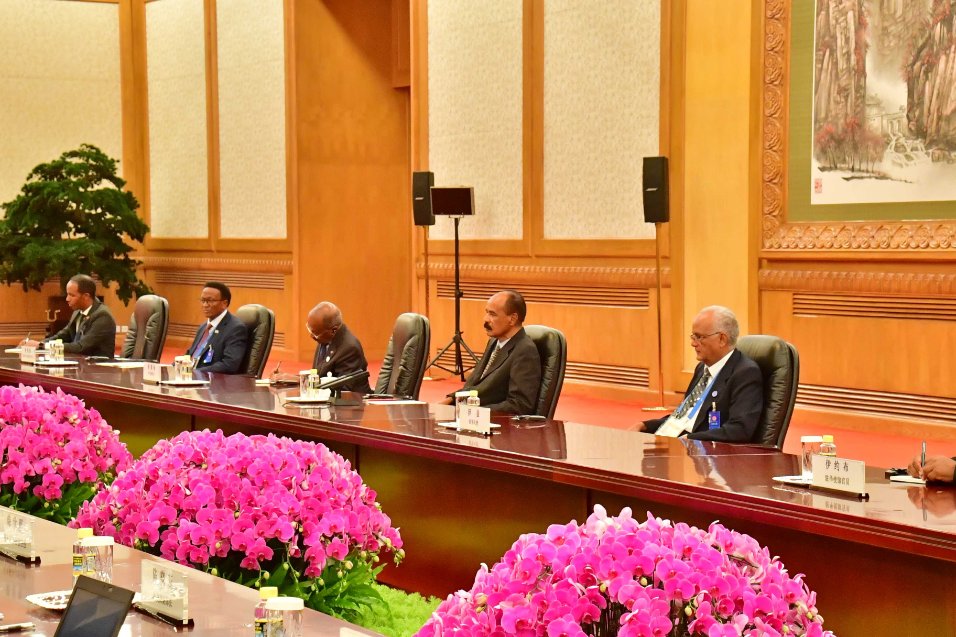
President Isaias Afwerki met this afternoon with his host, President Xi Jinping, at the Great Hall of the People, for extensive discussions on consolidation of bilateral ties & other matters of mutual interest.
Underlining that the world is undergoing through a vital phase of transition which has engendered an earnest global quest for viable and enduring solutions, President Isaias indicated that China can potentially play a decisive role in the crystallization of the new dispensation on account of the exponential and all-rounded growth that it has achieved in the past decades.
President Isaias further expressed the hope that China's preeminent role would be appropriately leveraged in promoting cooperation and partenerships to the benefits of the countries and peoples of the world.
President Xi Jinping for his parts expressed his appreciation/gratitude for the participaton of President Isaias at the 9th FOCAC Summit and reiterated China's commitment to further enhance its solid and strong ties of cooperation with Eritrea.
🇨🇳🇪🇷 Chinese President Xi Jinping met with #Eritrea’s President Isaias Afwerki.
➡️Key points from Chinese side:
President Xi underscored the good results in implementing the important understandings reached during President Isaias’s state visit to China in May 2023.
China is ready to advance practical cooperation with Eritrea to share development progress together.
In the midst of the political chaos, ethnic strife, and interstate warmongering enveloping the Horn of Africa—from Sudan, through Egypt to Ethiopia, and Somalia—one country stands tall, an island of stability: ERITREA. What is Eritrea's secret? What lessons can the rest learn?