The MIT Department of Chemistry and @MIT_SCC are hiring! We are seeking candidates for a shared tenure-track Assistant Professor position. Applications due November 15, 2026.
Learn more and apply: https://t.co/stxArkzUKS
The MIT Schwarzman College of Computing, @ChemistryMIT, @MITBiology, have launched two shared faculty searches in AI and scientific discovery. We seek candidates who develop and apply frontier computational approaches to advance biology and chemistry.
➡️ https://t.co/5XfAoI4lhP
What happens when companies use the same #AI to screen job applicants? A new study from @MITLIDS PIs Brian Hedden and Manish Raghavan finds that “algorithmic monoculture” isn't always harmful to job seekers — and may even benefit them in some cases. More: https://t.co/DMtiWb4FvR
In an opinion piece for @WSJ, MIT Schwarzman College of Computing Dean Dan Huttenlocher argues that AI may act autonomously, but it cannot bear accountability. Those who deploy it must retain responsibility and provide oversight equal to the risks. https://t.co/0HnrGQXKy9
When #AI operates in the physical world, “pretty close” may not cut it. LIDS researchers developed HardFlow, a method that helps pretrained generative AI satisfy hard constraints while improving solution quality — without retraining. https://t.co/uJ8vywoF3x
Interested in the social and ethical challenges of computing? Apply to join the 2026–27 SERC Scholars cohort. Work with a SERC postdoc and students from across MIT on one of 15 interdisciplinary projects.
Learn + apply: https://t.co/dMJxUJkxsh
Inspired by pinecones, tree bark, and seedpods, MIT researchers developed a mathematical framework for designing manufacturable, adaptive materials that mimic complex behaviors found in nature — with applications from robotics to aerospace. https://t.co/StBbh9L77s
Using reason, again and again
A profile explores the work of LIDS PI Brian Hedden, whose research connects ethics and computing. From "Time-Slice Rationality" to MIT's SERC initiative, Hedden is helping shape a more thoughtful future for AI and computing. https://t.co/OZ24fV8DkH
Rachel Sava, a PhD student in @mit_hst, explores transformative improvements and dystopian risks of neural technology in her winning piece for the fourth annual Envisioning the Future of Computing Prize.
https://t.co/1sUx5OSTz8
Could AI help you find your lost keys?
@MITLIDS researchers developed Describe Anything Anywhere At Any Moment (DAAAM) a long-term memory framework that enables robots to remember objects & answer questions about their surroundings using natural language. https://t.co/BE26sqG2Ai
Helping tiny robots navigate tight spaces
RLE & LIDS researchers developed a new low-power chip that helps small robots to rapidly generate 3D maps, avoid obstacles, and navigate complex environments like HVAC systems for inspection and gas-leak detection. https://t.co/BPe6JDwKdq
The “power of three” may be key to understanding human preferences. LIDS @gabrfarina, Sobhan Mohammadpour, and collaborators show that two-way comparisons can't reveal preference correlations—but rankings of three alternatives can. A major advance in RUMs: https://t.co/pJuYttAgQ1
The MIT Ethics of Computing Research Symposium - hosted by SERC - gathered experts and researchers working at the heart of ethical and social impact in technology. https://t.co/mwl2zJFZ9l @MITPoliSci@MIT_SCC
Among all of the possible chemical compounds, it’s estimated that between 1020 and 1060 may hold potential as small-molecule drugs.
Evaluating each of those compounds experimentally would be far too time-consuming for chemists. So, in recent years, MIT Associate Professor Connor Coley PhD ’19 has been using artificial intelligence to help identify compounds that could make good drug candidates. https://t.co/KqUI5WSzP7
Games people — and machines — play 🎲
LIDS PI @gabrfarina combines concepts from game theory with such tools as machine learning, optimization, and statistics to advance theoretical and algorithmic foundations for decision-making.
Read a profile: https://t.co/WlWtXukzRH
MIT and IBM will expand our collaboration: The MIT-IBM Computing Research Lab will seek to leverage hybrid quantum and classical computing, with advanced algorithms and AI, to solve challenging problems in fundamentally new ways. https://t.co/2tIKRrAETY
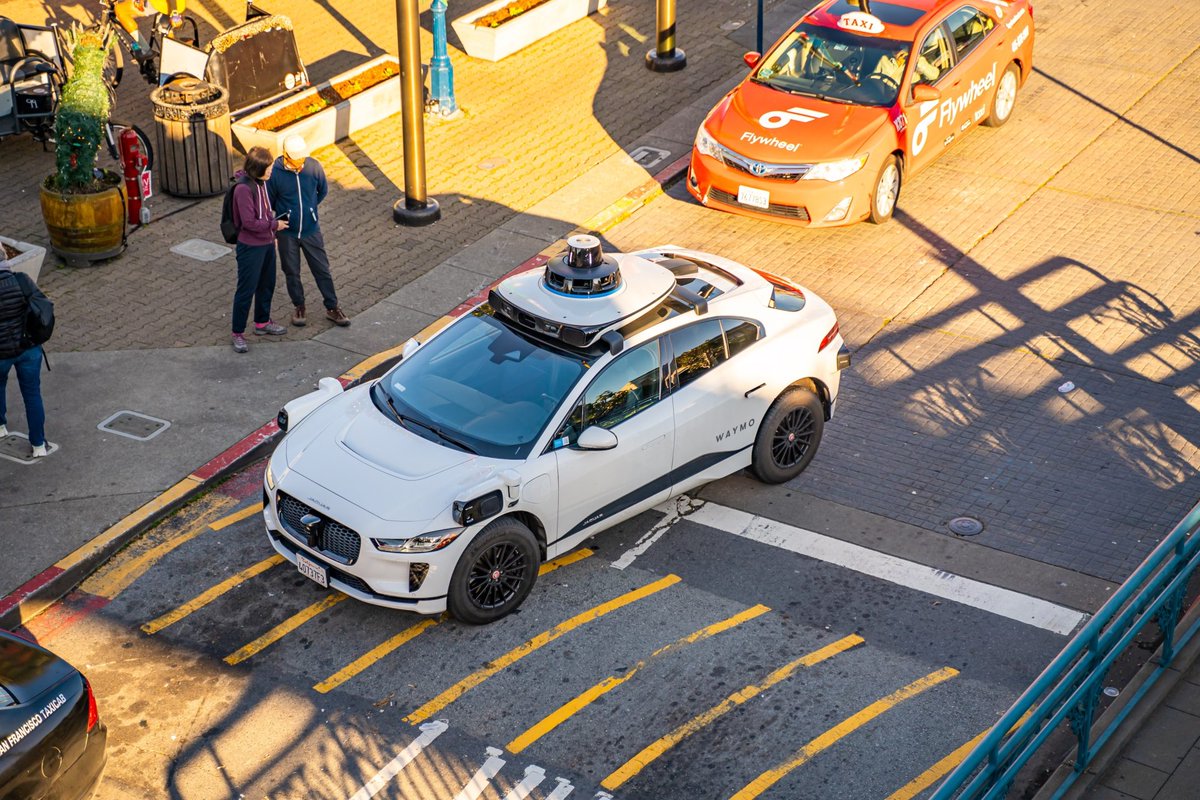
Before autonomous vehicles scale, the science behind them needs an upgrade. Researchers from @MITLIDS, @MIT_CEE, @MITdusp, and collaborators find mobility-on-demand studies often lack transparency and reproducibility—key for real-world decisions.
More: https://t.co/rLZOSNo2QF
Researchers at @MIT_CSAIL developed an intelligent system for balancing the tasks of storage devices inside a data center, which can extend the longevity of storage hardware and help a data center operate more efficiently.
https://t.co/WDg2VgRa6y