A team, including researchers in @MITAeroAstro, has conducted a study that highlights the need for a multiobservational approach in developing contrail identification and avoidance systems, necessary for reducing aviation’s climate impact.
https://t.co/rhin04X6PS
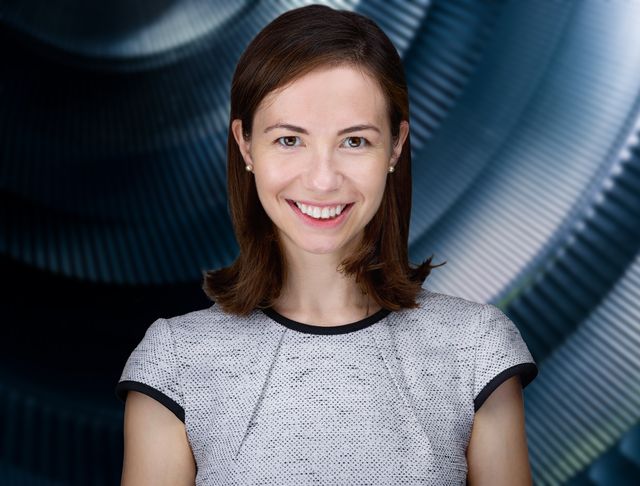
Meet new @MITAeroAstro faculty member, Professor Masha Folk! Her research focuses on sustainable aerospace technology driven by a deep desire to accelerate carbon-neutral aviation.
#NewFacultyFriday
https://t.co/BGSRz7MxY5
Teaching robots to map large environments 🤖🗺️LIDS student Dominic Maggio, postdoc Hyungtae Lim, and PI @lucacarlone1 have developed a new #AI-driven mapping approach that could help search-and-rescue robots navigate unpredictable, cluttered environments.
https://t.co/I3eFP01im6
Chloe Gentgen, a PhD student in @MITAeroAstro, co-authored a recent study from the Engineering Systems Lab, finding that @SpaceX’s Starship may enable a flagship mission to Uranus in half the flight time.
https://t.co/uZgCeUSzGV
Media Lab Prof. Danielle Wood (@space_enabled) and alum Dr. Joy Buolamwini (@jovialjoy) are among the MIT community members featured in The Genius Within, a new public art installation in Kendall Square (Cambridge, Massachusetts). https://t.co/u0fvrNdWCr
This winter, Zero Robotics—an education outreach program led by Prof. Danielle Wood, @space_enabled, and the Innovation Learning Center—invites teams of US high school students to program Astrobee robots to manage crops in microgravity! Team registration closes Nov. 21. Learn more at https://t.co/oRmVgFtHCy
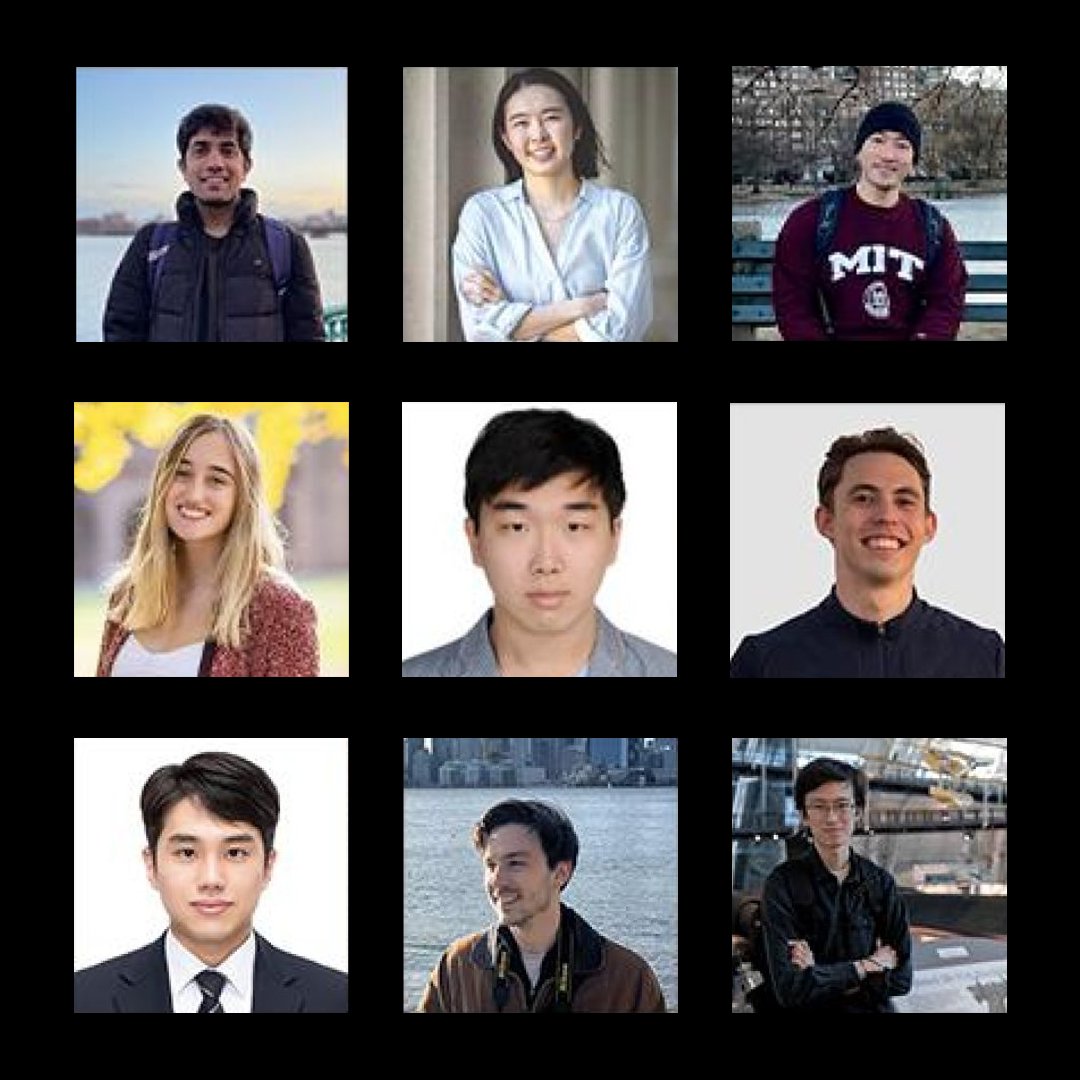
Nine MIT PhD students have been named Amazon AI Fellows to advance research in machine learning, computer vision and natural language processing. The fellowship will provide students with funding to conduct independent research at MIT and mentorship.
https://t.co/yJtbIgWn0W
Improving the reliability of fusion power plants. LIDS PI Chuchu Fan, grad student Oswin So, and colleagues have developed a prediction model that uses physics and machine learning to help tokamak reactors avoid damaging disruptions when powering down. https://t.co/1og7KC4Y3B
Congrats to AeroAstro alum Major Adam Fuhrmann (SB’11) on being selected as one of NASA’s 2025 Astronaut Candidates! Adam is one of 10 new candidates chosen from a pool of over 8,000 applicants from across the US.
Read NASA’s full announcement here: https://t.co/x9MvYRHNXx
In @Nature, Prof. @space_enabled makes the case for continuing to support NASA’s Earth-observation satellite programs, which are vital to understanding and protecting the environment. https://t.co/c9OFvxKClg
A team, including researchers from @MITAeroAstro, is designing robotic helpers that can learn from demonstration through a three-in-one training interface that enables a person to lead a robot through a task through any of three training methods.
https://t.co/k8c0QaQF6I
Aurelia Institute, founded by a team from MIT including former @MITAeroAstro students, serves as a research lab, an education and outreach center, and a policy hub for the space industry, with a mission of making space accessible to all people.
https://t.co/BsYryypwbX
Planets without water could still produce certain liquids, new experiments have found. These “ionic liquids” can form through common planetary processes and might be capable of supporting life even on waterless planets. https://t.co/at0Qh6n5W0
As the new associate dean of the MIT Schwarzman College of Computing, @MITAeroAstro Prof. Youssef Marzouk will work to foster a stronger community among bilingual computing faculty across MIT.
https://t.co/X2t6hWBCI8
A group of faculty, including @MITAeroAstro professor and LIDS director Sertac Karaman, founded MIT’s Mission Innovation X (MIx) to help innovators secure crucial early funding while giving defense agencies access to cutting-edge technologies.
https://t.co/n1JbAIkeFZ
🧠💻 New “smart coach” boosts AI’s problem-solving superpowers! CodeSteer, a smart assistant from Chuchu Fan, @YongchaoC, et al, guides LLMs on when to use text reasoning & when to switch to writing code, boosting LLM accuracy when solving complex problems https://t.co/0k3VI3UrWu
A team of researchers, including members of @MITAeroAstro and LIDS, is developing a system for predicting rare kinds of failures, which could be used in areas like air traffic scheduling or autonomous vehicles.
https://t.co/UlMDBw3tca