Beyoncé’s “Single Ladies,” Taylor Swift’s “1989” and music from Weezer, Reba McEntire and the video game “Doom” have been added to the National Recording Registry this year. https://t.co/h9Lw0vqG2z
Roughly aligns with my view on ASI and recursive self-improvement:
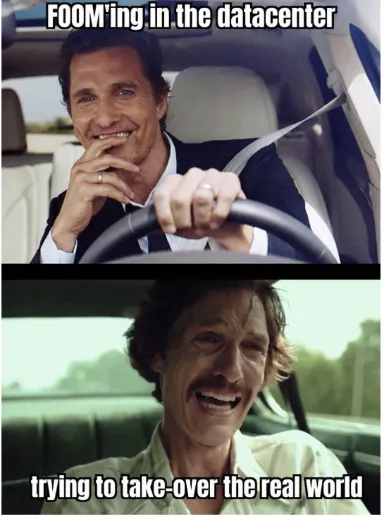
"Even if misaligned, the plans it concocts in the datacenter would be rapidly disappointed upon contact with reality."
If I'm right, this is great news for several reasons.
First, an out-of-nowhere superintelligence becomes much less likely.
Second, existing industries have a lot more leverage than they perhaps currently appreciate. Hopefully, this could mean that the benefits of AI are more widely distributed than they would be under a "software-only intelligence explosion" scenario.
Third, it means that we're less likely to collectively be overpowered by a misaligned AI that has recursively self-improved.
My suspicion is that the "superintelligence" created by isolated automated AI researchers would not be capable of all the maneouvres required for taking over the world. Even if misaligned, the plans it concocts in the datacenter would be rapidly disappointed upon contact with reality.
In my 2025 paper on extinction risk from AI, we asserted that p(doom) was just an inappropriate tool for policymaking contexts. This method from CSET would potentially create a more informative estimate that is still familiar to those who use p(doom).
https://t.co/4Z5HzDI87X
Highly recommend this CSET paper for anyone who, like me, has been frustrated with how p(doom) estimates have been used in debates and policymaking. He proposes a useful alternative method for assessing risk that is still quantitative and informative.
https://t.co/06TBn6GrOb
⭐️New Report⭐️
As AI introduces new risks, some potentially catastrophic or even existential, there is little data or detailed theory to assess them.
Our report helps to shed light on this challenge and offers helpful solutions for policymakers.
https://t.co/WhyJXiVRny
Last week I spoke to cryptographers and security architects from Oracle, IBM, and Microsoft about PQC, and I think we're cooked.
🔒 There is, allegedly, one guy doing all the crypto for all of Windows. ONEEEEEE!
🔒 Government is ahead of enterprise, which surprised me because when is that ever the case? CNSA 2.0 is forcing real migration timelines on federal systems. Rumor of an executive order post-Google/Oratomic paper too.
🔒 The cryptographers don't talk to the product engineers. Perfect math doesn't save you from bad implementations.
🔒 Formal verification of crypto software is still a young field. People think you can just "vibe code" security on PQC.
The org chart is the issue. C-O-O-K-E-D.
@segyges@nostalgebraist@jd_pressman@BerenMillidge I would also characterize this particular work from RAND as anti-doom. Is the risk real? Sure, we can't rule it out. Is it assured? Decidedly not.
https://t.co/4Z5HzDI87X
@deanwball Mostly agreed, and we called this out in our RAND report on the subject. "...predictions about the likelihood of extinction risks from AI are inappropriate as analytical tools given the deep uncertainties that preclude useful, policy-relevant predictions." https://t.co/4Z5HzDI87X
And it’s quite a shame.
If you’re truly bitter pilled about robotics you know it is an AGI hard problem and if you’re bitter pilled about AGI, you can see we are heading fast into a world where all knowledge work will get automated but manipulating atoms will still need humans.
We need to solve both knowledge work AND physical work, and the mechanisms and substrates of both - at least for now - share many commonalities.
@boazbaraktcs I think the (valid) counterargument here is that we don't keep the feature set constant. The total number of hackable bugs is not infinite, but it's also not static - it's constantly growing. TBD whether this favors offense or defense more in the end, though I think defense wins.
The connected devices debate started with who can see your data. With Huawei it was communications. With TikTok it was personal information. With connected vehicles it was a two-ton object in a lane of traffic.
With robots, it arrives at force. Who can direct the machines in your space.
Link in comments.
We @RANDCorporation wrote briefly about the security risk from converging trends in frontier AI and robotics last year, and Divyansh is doing excellent work in these posts describing details and issues we couldn't get to in our short paper.
https://t.co/diYp1Inqjy
"The question is not whether any particular robot has been compromised. The question is whether the system that produces and governs these robots is structured to permit compromise on request." Another great piece on robotics and security by @dkaushik96
https://t.co/NPNiYbYao0
@timhwang I don't understand - how else could or should we respond to the emergence of a powerful new general-purpose technology? Seems like this is the only viable high-level approach to it (though obviously lacking in detail).
@S_OhEigeartaigh I really enjoyed reading this excellent paper. You might be interested in similar work we did, which came out shortly after your paper:
https://t.co/4Z5HzDHAip
In a world with AGI, humanity must preserve its survival, capacity for agency, and strategic optionality.
That will require an ecosystem where humans and AI coexist while retaining human agency—and a global security architecture to support it.
New paper: https://t.co/9lwXWCURlA
@matthew_d_green Excellent thread. My RAND colleague Edward Parker had a great commentary a couple years ago on why 1) is the likeliest scenario.
https://t.co/S0CQv9CU3z