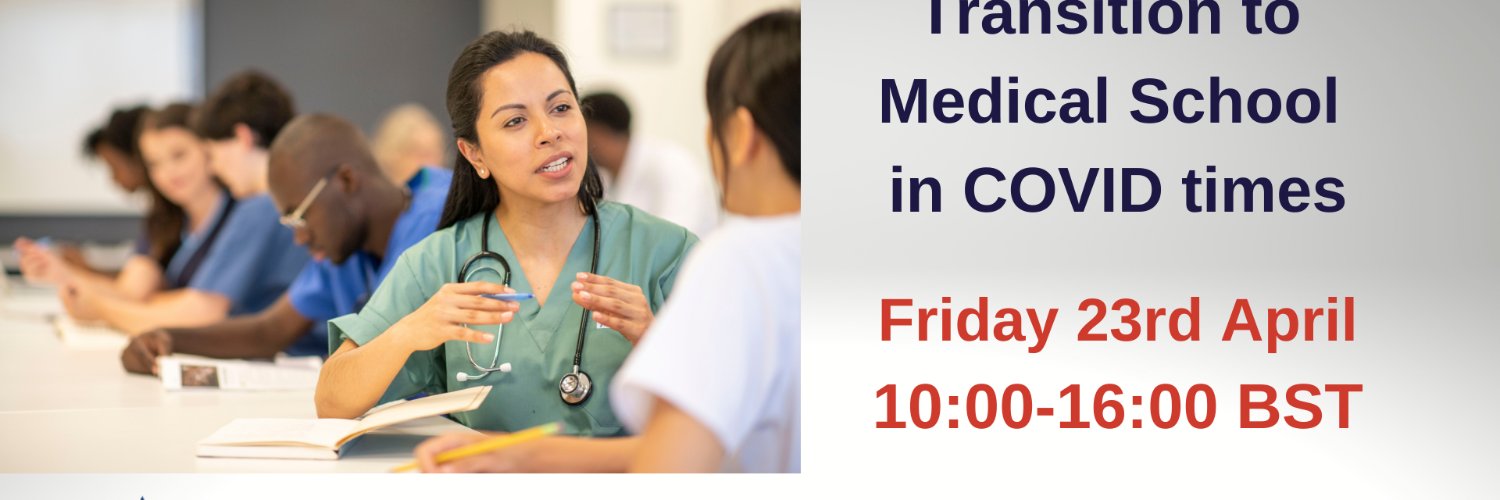
Med students w/ disabilities are 3x more likely to take a leave of absence (LOA)—especially those who are non-White & low-income. Reframing LOAs as standard & supported part of med ed training is critical #MedEd#DisabilityJustice@DocsWith@MytienTNguyen https://t.co/KOkc9jgTC9
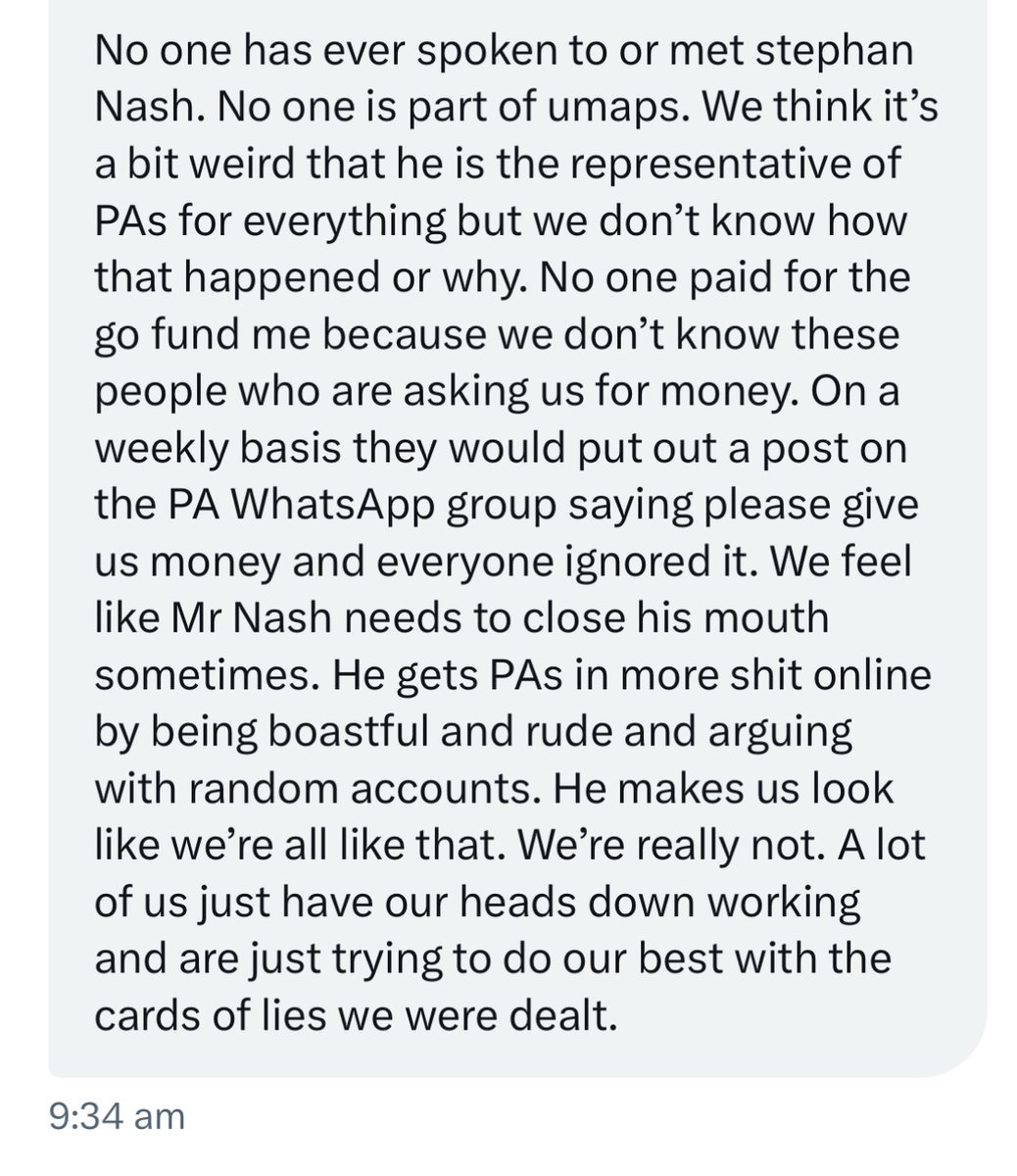
🏴☠️ Look at this excellent insight from one of the Physician Associates who were sold a big lie to join the quackery PA course:
An old American dude delivered a careers seminar and made it look as if doctors had asked for PAs to come in and help! 💀
⭕️ They said the job market was open and that everyone would be able to get whatever job they liked.
⭕️ They said we're generalists, so when you go work on a surgical ward, you can remind doctors and consultants about the medical side of the patients (as if they wouldn’t know).
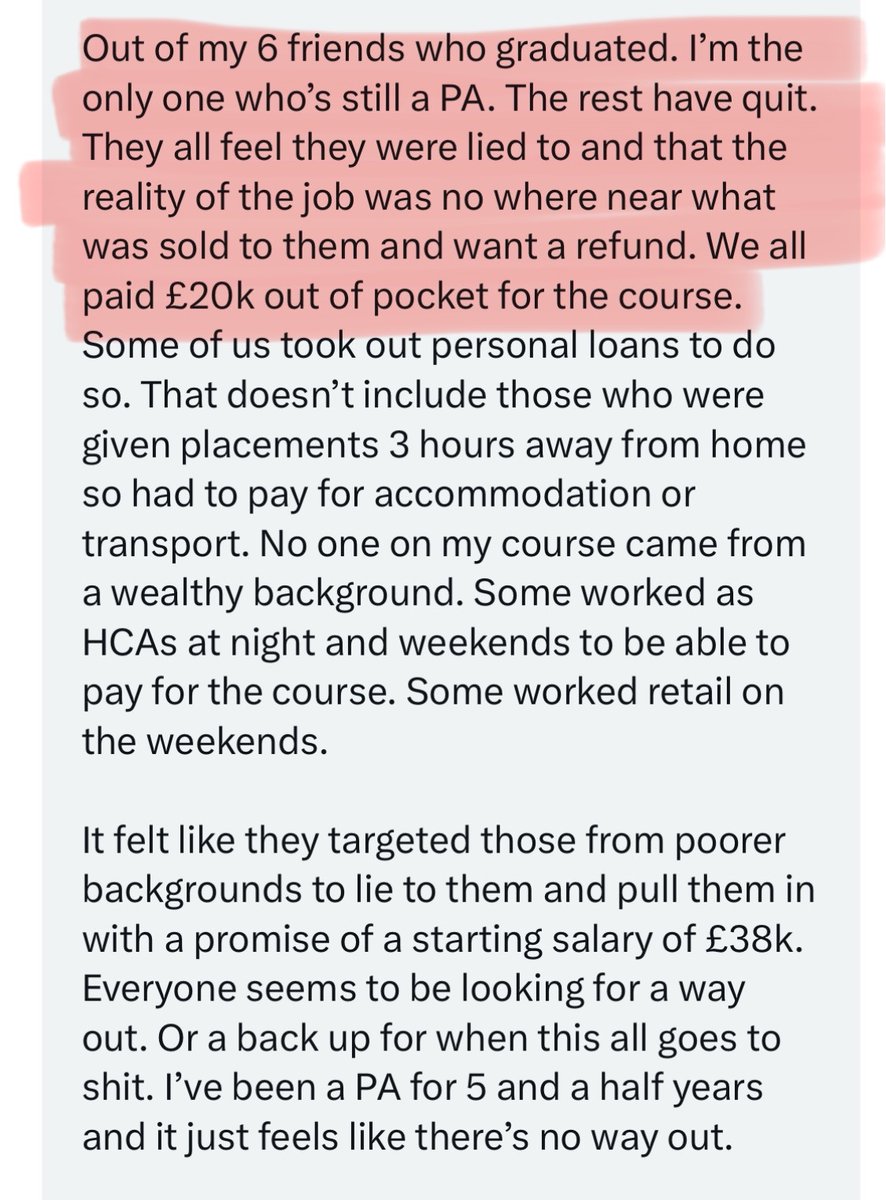
⭕️ Out of my 6 friends who graduated, I’m the only one who’s still a PA. The rest have quit.
⭕️ They all feel they were lied to, that the reality of the job was nowhere near what was sold to them, and they want a refund. We all paid £20k out of pocket for the course.
PAs clawed their way there with their nails falling off, desperate to get to that position, only to end up becoming Assistants?
Wes appealing to Resident Doctors
States that they have had a 28.9% pay increase in the past 3 years
Interesting analysis of the data there & just spinning the narrative
At least be honest & say you have done your best, not make up numbers - at best it’s 13%
@wesstreeting
@wesstreeting@wesstreeting@TheBMA@BBCNews@itvnews
Why are we not talking more about the number of resident doctors facing unemployment from August? Maybe we will listen when we see more change. But at this rate, none of us will want to work in your NHS anymore.
https://t.co/tuf9d26PKE
9. That’s why we have to end prosecuting parents for absenteeism. Yet in August, fines for non-attendance will rise. More people won’t be able to afford them. Prosecutions are likely to rise. Support @teamsquarepeg#3asks https://t.co/ae00ukmHwR pic Michelle Brittain
‘They Just Don’t Care’
I’m seeing lots of posts bemoaning that the Year 11s just don’t seem to care about their upcoming GCSEs. They aren’t motivated or worried about their speaking exams starting in two weeks time and nothing seems to make a difference.
This is exactly what would be predicted by the science of motivation. Motivation can come from the inside or the outside (or a mixture of the two). Standard schooling works on a principle of controlling children’s motivation. From the moment that children start school, adults are working to motivate them through rewards, sanctions, grades and approvals. They tell children that what they want to do is less important than what adults want them to do. They make them learn things which have no purpose to them, because they will be ‘important later on’.
This changes the purpose of learning. Young children learn because they want to find out and they are driven to explore the world. They ask questions because they are curious and want to participate. It’s hard to stop young children learning, and their learning is very individualised and frequently messy.
Adults try to make this linear, to make them follow a formal process. This isn’t how children naturally learn, and so they have to be controlled in order to do what is required. When we take away their choices and instead give them stickers and certificates to make them do what we want, then we turn learning into an exercise in compliance.
Now they aren’t learning because they want to find out, they are learning because they are being told that they have to. They don’t read because they love stories, they read because they have to do 15 minutes every night to tick it off. They are helpful because they might get an Achievement Point, or a 'Caught Being Kind' sticker.
The research shows that over time, this will damage their internal drive to learn and this is exactly what we see. They don’t ask why any more, they ask what will be on the test. They don’t choose a topic because they are interested, they choose whatever they think will be easiest. And over time, the stickers and stars lose their sparkle. It’s easy to control a five-year-old with a sticker, but 15-year-olds will laugh in your face.
When we focus on the cognitive science of learning, it’s easy to miss that the science of motivation is as important. Experimental studies on how adults learn often don’t even address this issue, because adults have some level of choice in what they do and that is assumed.
For children and teenagers, it’s different. They often have no choice at all. What they want to learn doesn’t matter. Understanding the science of learning is futile if the learner doesn’t want to know. Cognitive science doesn’t apply to forced learning. What the learner thinks, matters.
It’s easy to blame teenagers, or their parents, or even the pandemic. It’s deeply frustrating when you are trying to help people who just don’t care. But what if this is actually the predictable result of our education system?
We ignore the science of motivation and our young people pay the price.
@EM_HealthPsych Assume you are taking the sedge out??? Still trying to remove it here. Sustained effort for the past 5 years and every year brings many new sedgelings....
Whenever I talk about the effects that school can have on some children’s mental health, I’m told that there are many other reasons why our young people are distressed. Family problems, social media, inequality, substance misuse, trauma, poverty. It’s true, I couldn’t be a psychologist and be unaware of how difficult the lives of some young people are.
However, school is different to those things. It’s provided for young people by the state. It’s a deliberate intervention into childhood. It is designed to prepare young people for adult life. That means that it’s an opportunity for young people to experience something different. It can be something which counter balances the other stuff going on in their lives. Somewhere where they can learn to feel capable and valued, even if that isn’t what they get at home. Somewhere where they can learn that relationships can be supportive and that others care about them.
Some schools are like this for some young people. They prioritise relationships and well-being. Others are not, particularly for the young people who don’t comply with school expectations. They get into a cycle of increasingly heavy sanctions which don’t address their difficulties but make them feel worse about themselves and their capacity to do well. Those young people are seen as disruptive and non-compliant, as difficult. I’m sometimes told not to waste my sympathy on them, better to focus on the others whose education they are disrupting.
The thing is, those young people are not going anywhere. They are here with us and they have their whole lives ahead of them. They might be excluded from one school, but they’ll turn up in another.
School can make all the difference to them, either way. So when I hear about the distress which school causes some young people in the therapy room, I don’t think it’s the same as inequality, or poverty, or all the other things which go on in a teenager’s life. It’s a deliberate intervention into children’s lives, and it’s an opportunity to make a difference. Especially for those who aren’t going to be the academic successes. Those young people will always exist, the challenge is to work out how they can emerge from school without having learnt to think about themselves as failures.
For if we’re going to make them go to school, so the least we owe them is to make it somewhere that they can thrive.
I’ve been talking to young people who have struggled with school attendance. Sometimes called school refusers, or phobics, or those with emotionally based school avoidance (EBSA). Here’s what I’ve learnt. 1/
This...
Why can't the world be so much more of this...
Let's start supporting each other and not bringing each other down.
#ShineOn#BurnBrighter#RiseLikeAPhoenix
Read our research on post-diagnostic support for autistic young people, which was co-produced with autistic young people themselves.
Report launched today at the 'Life after an autism diagnosis' conference: https://t.co/EAYsB2v2tk
Med students, consider taking issues such as the dire NHS Bursary, concerns over apprenticeships, and more direct to government by writing to your MP:
Hopefully this tool will be useful for many, especially with a likely election soon (ish) and a (potential) change of government
🗞️***NEW PAPER***🗞️
Experiences of #ActuallyAutistic medical students
"Participants longed for understanding and support... [but] most felt themselves to be victims of the system... expected to adapt themselves... to appear non-autistic"
👇👇👇
Link: https://t.co/DLQEHPJrBG
We need to end discrimination towards autistic people seeking jobs. Nearly 9 in 10 autistic adults are unemployed, so there must be barriers we as a society have placed in their way. It's time to identify these barriers, and remove them https://t.co/B7gxolPE8S











![Autistic_Doc's tweet photo. 🗞️***NEW PAPER***🗞️
Experiences of #ActuallyAutistic medical students
"Participants longed for understanding and support... [but] most felt themselves to be victims of the system... expected to adapt themselves... to appear non-autistic"
👇👇👇
Link: https://t.co/DLQEHPJrBG https://t.co/LFLhDNia78](https://pbs.twimg.com/media/FxmSEjTXgAAhJWg.jpg)