Pathway’s BDH-CQ model redefines the Cost-Efficiency Frontier on ARC-AGI-1: $.0007 at 29.5%. This is made possible by in-context learning and latent reasoning. Welcome to the Post-Transformer Era.
Almost everyone knows about Germany’s crimes against the Jewish people and the murder of six million Jews during the Holocaust. Far fewer people, however, know the full extent of Germany’s crimes against the Polish people.
In Poland, this history remains part of family and national memory. Many Poles grew up hearing about relatives who were executed, deported, imprisoned, sent to forced labor, murdered in camps, or taken away by the Soviets and never returned. Yet in much of the West, Poland is remembered mainly as the place where the Holocaust occurred, while the deliberate destruction of Polish national life under both German and Soviet occupation receives far less attention.
From the first days of the invasion in September 1939, Germany did not seek merely to defeat the Polish army or occupy Polish territory. Its policies were designed to break Poland as a nation by destroying its leadership, culture, institutions, and ability to survive independently.
Polish professors, teachers, priests, officers, lawyers, doctors, writers, landowners, civil servants, community leaders, and ordinary citizens were arrested and murdered. Mass executions took place in forests, fields, prisons, town squares, and village streets. Entire communities were terrorized through public hangings, shootings, collective punishments, expulsions, and forced labor.
Polish children were taken from their families, examined according to German racial criteria, and in some cases sent away to be Germanized. Others were imprisoned, starved, or killed. Polish civilians were deported to work inside Germany, where they were treated as an inferior population and subjected to severe restrictions.
Villages were burned and their inhabitants murdered in retaliation for resistance activity, sometimes regardless of whether the victims had any connection to the resistance. Warsaw endured mass executions, the Wola massacre, deportations, and finally the deliberate destruction of much of the city after the Warsaw Uprising.
Auschwitz was originally established by Germany in occupied Poland primarily to imprison and terrorize Poles. Polish political prisoners were among its earliest inmates, and thousands died there before the camp became the largest center of the murder of European Jews.
Even less widely understood are the crimes committed against Poles by the Soviet Union.
On September 17, 1939, while Poland was already fighting the German invasion from the west, the Soviet Union invaded from the east. Poland was divided between two occupying powers, each determined to eliminate Polish independence and suppress anyone capable of resisting.
Soviet authorities arrested Polish officers, policemen, officials, teachers, landowners, intellectuals, clergy, and members of patriotic organizations. Countless people were imprisoned, interrogated, tortured, or executed.
In a series of mass deportations, Polish families were awakened during the night, given little time to gather their belongings, and forced into overcrowded freight cars. Men, women, elderly people, and children were transported for weeks into Siberia, Kazakhstan, and other distant regions of the Soviet Union.
They arrived in places of bitter cold, hunger, disease, and exhausting labor. Families were separated. Some disappeared into the Soviet camp system and were never heard from again.
At Katyń and other execution sites, the Soviet NKVD murdered thousands of Polish officers and members of the educated and professional classes. The killings were part of a broader attempt to remove those most capable of rebuilding and leading an independent Poland.
For many Polish families, the war meant suffering under two totalitarian occupations. Germany attacked from the west, while the Soviet Union attacked from the east and the Polish dead also had names, families, hopes, homes, and unfinished lives. Their stories deserve to be known, their suffering deserves to be acknowledged, and they, too, deserve to be remembered.
Pomijając już żarty z groteskowego zachowania pani poseł Bodnar, ta sprawa pokazuje porażający wręcz cynizm i hipokryzję.
W Polsce rybacy od lat mają zakaz połowu dorsza na Bałtyku. Niszczy się wielopokoleniowe tradycje, a armatorom płaci się za złomowanie własnych kutrów i likwidację miejsc pracy. Tymczasem politycy koalicji Tuska jadą do Hiszpanii, by dla rozrywki łowić 100-kilogramowe tuńczyki.
Tuńczyk błękitnopłetwy – najbardziej chroniona ryba, dosłownie na wyginięciu i patologiczna radość blondynki!!!
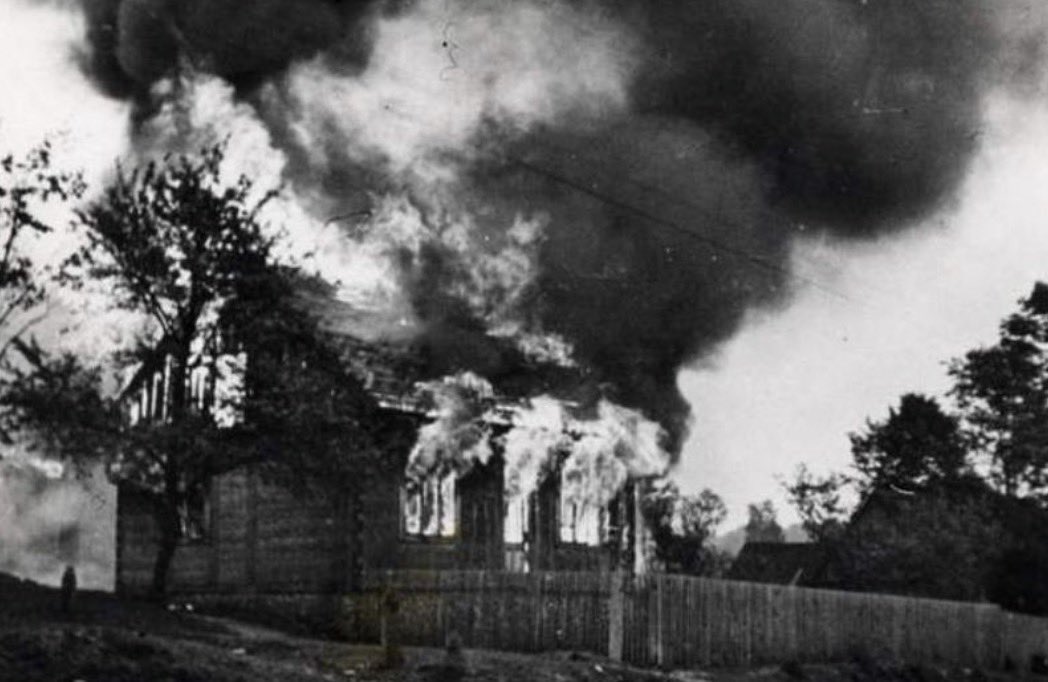
Although the killings ended on July 13 in Michniów, it was on July 14 that the full horror became undeniable. The smoke still rose from the ruins as the few survivors emerged to a village that had been all but erased. Homes had been burned to the ground, families had been exterminated, livestock slaughtered, and fields left silent. Entire generations had vanished in the span of two days.
What remained was not simply a destroyed village, but a warning deliberately crafted by the German occupiers. Michniów was intended to serve as an example to every Polish community: anyone who aided the Polish underground resistance would face total annihilation. This policy of collective punishment was repeated across occupied Poland, where hundreds of villages were burned and thousands of civilians murdered in similar “pacification” operations.
Yet the Germans failed in one important respect. They could destroy homes, but they could not extinguish the spirit of those who resisted. Michniów endured in memory, becoming one of the most powerful symbols of the suffering and courage of the Polish countryside during the Second World War.
Today, the Mausoleum of the Martyred Polish Villages stands in Michniów as a testament not only to the more than 200 victims murdered there, but also to the tens of thousands of men, women, and children from villages across occupied Poland who suffered the same fate. Their story reminds us that the war was fought not only on famous battlefields, but in quiet farming communities where ordinary people paid the ultimate price for helping others and refusing to surrender their humanity.
"To co się teraz dzieje wokół kopalni Solino w Inowrocławiu, to jest po prostu jakiś koszmar o którym większość ludzi nie ma bladego pojęcia. Przecież te kopalnie to nie są zwykłe dziury w ziemi, z których sypie się sól na stół. Pod ziemią w Inowrocławiu i Górze koło Janikowa znajdują się Podziemne Magazyny Ropy i Paliw. To są gigantyczne jaskinie, kilkaset metrów pod naszymi stopami. Sól ma to do siebie, że nie przepuszcza żadnych płynów ani gazów, więc państwo polskie trzyma tam strategiczne rezerwy ropy, benzyny i diesla dla całego kraju. Gdyby doszło do wojny, kryzysu geopolitycznego lub odcięcia dostaw z zagranicy, to właśnie stamtąd rurociągami tłoczona jest ropa do rafinerii w Płocku i Gdańsku.
I teraz zobaczcie, kto tu nagle wchodzi z butami. Niemiecki koncern K+S, ... tak! dokładnie ten sam, który za chwilę ma budować w Janikowie spalarnię odpadów niebezpiecznych. Górnicy i związki zawodowe z Solino ryczą już z bezsilności i protestują pod bramami bo wielki biznes za naszymi plecami kombinuje, jak oddać kontrolę nad tą solą i rurociągami w ręce niemieckiego kapitału. Oczywiście nikt w Orlenie nie jest głupi i nie podpisze papieru, że sprzedają magazyny ropy Niemcom, bo za to idzie się siedzieć. Gra toczy się sprytniej, czyli przez restrukturyzację i dzielenie firmy. Solino robi dwie rzeczy, pilnuje ropy i wydobywa solankę. A plan jest taki, żeby tę część solną i rurociągi odciąć od Orlenu i wpuścić tam jako zarządcę koncern K+S.
I tu dochodzimy do sedna sprawy, którego wielu mieszkańców nie rozumie, a górnicy doskonale znają. Te magazyny ropy nie mogą działać bez solanki i rurociągów. Aby wypompować ropę spod ziemi trzeba wpompować tam pod ogromnym ciśnieniem nasyconą solankę, która wypchnie paliwo do góry. I teraz najważniejsze. Jeśli infrastruktura solna i rurociągowa Solino zostanie uzależniona od prywatnego, zagranicznego kapitału, to państwo polskie będzie miało ropę pod ziemią, ale technologia do jej wypompowania będzie należała do obcego prywatnego kapitału. I tutaj powstaje bardzo ważne pytanie, czy Polska zachowa wtedy pełną niezależność operacyjną nad strategicznymi zapasami ropy w sytuacji kryzysowej.
Wygląda na to, że jeden wielki układ chce kontrolować naszą sól, rurociągi i strategiczne magazyny paliw pod Inowrocławiem, a w Janikowie chcą nam przejąć ogrzewanie domów i palić pod oknami przemysłową chemię i toksyczne odpady. Prawda jest taka, że nasze miasto zostało wessane w międzynarodową grę o miliardy, gdzie zdrowie mieszkańców Janikowa i bezpieczeństwo Polski są na samym szarym końcu.
Niestety, przeżywamy dziś największy dramat. Sprzedajemy dosłownie wszystko, co mamy, a ludzie zamiast patrzeć na ten gigantyczny problem, wolą patrzeć na barwy partyjne. Obrzucamy się w komentarzach błotem i wyzywamy, bo pod bramę Solino przyjechał ten czy tamten polityk. Nie wiem, jakie intencje mają tak naprawdę politycy z jakiejkolwiek partii. Ktokolwiek by dzisiaj czy jutro rządził, mógłby postąpić dokładnie tak samo i pójść na układ z wielką kasą. Tu nie chodzi o bronienie jednych czy drugich. Ta cała nasza klasa polityczna budzi we mnie głęboki niesmak. Chodzi o to, abyśmy my, zwykli ludzie, byli w końcu świadomi, co się tak naprawdę wokół nas dzieje i o co toczy się ta cała awantura.
I na koniec jeszcze ciekawostka. Po spaleniu chemii w Janikowie zostaną tony toksycznych pyłów z filtrów. Gdzieś trzeba je podziać. A wiecie, z czego słynie w Europie niemiecki koncern K+S? Z zarabiania miliardów na chowaniu najbardziej niebezpiecznych odpadów przemysłowych pod ziemię, w starych kopalniach soli. Jeśli położą łapę na Solino i naszej infrastrukturze solnej, będą mieli idealny, zamknięty biznes. Dalej uważacie, że wszystko jest okej?
#solino #kopalniasoli #spalarniaodpadów #Janikowo #Pakość #Inowrocław"
za Hubert Bednarz
Prezydent Karol Nawrocki ZAWSTYDZIŁ ukraińskie władze i wypięty do nich rząd Tuska.
"TYM, KTÓRZY MÓWIĄ O RACJI STANU CHCĘ PRZYPOMNIEĆ.
Śmierć 14-letniej Jadwigi Romanik z rąk UKRAIŃSKICH NACJONALISTÓW jest tą samą śmiercią, której doświadczają 14-letni Ukraińcy z rąk ROSYJSKICH BANDYTÓW.
Czym te śmierci się różnią?
Śmierć z wczoraj jest czymś łagodniejszym, niż śmierć z jutra?
Płacz i cierpienie rodzin? Ból? Upodlenie?
PAMIEĆ, HISTORIA I PRAWDA O LUDOBÓJSTWIE WOŁYŃSKIM KSZTAŁTUJE PRZYSZŁOŚĆ!
Jesteśmy dla przeszłości i PRZYSZŁOŚCI, która jest tutaj z nami!
DLA NASZYCH DZIECI!"
NIe mam pytań.
Tu nie ma w ogóle o czym dyskutować.
To miazga na władzach Ukrainy i Polski.
Bloody Sunday: When Volhynia Burned
On 11 July 1943, remembered by Poles as Bloody Sunday, one of the most horrific massacres of civilians during the Second World War reached its terrible climax. On that day, units of the Ukrainian Insurgent Army (UPA), often assisted by local collaborators, launched coordinated attacks on dozens of Polish villages across Volhynia. Many assaults began as families gathered for Sunday Mass, turning places of worship into scenes of unimaginable horror.
The attacks were part of a broader campaign of ethnic cleansing that sought to remove the Polish population from Volhynia and neighboring Eastern Galicia. Historians estimate that over 100,000 Polish civilians were killed during the massacres of 1943–1944. Men, women, children, and the elderly were murdered simply because they were Polish. Entire villages disappeared from the map, churches were burned, and generations of families were wiped out.
The brutality of the attacks left lasting scars on the survivors. One survivor, Janina Kalinowska, recalled:
“Everywhere there were flames. People were running, screaming, and falling. Those who could not escape were killed.”
Another survivor remembered the devastating silence that followed:
“There was no village anymore. Only smoke, ashes, and the bodies of our neighbors.”
These testimonies reflect the human suffering behind the statistics. Bloody Sunday was not merely a military operation but a deliberate assault on civilian communities.
The violence did not end on July 11. The campaign continued throughout 1943 and 1944. While some Polish underground units later carried out retaliatory attacks against Ukrainian civilians - acts that also deserve acknowledgment and condemnation, the initial campaign by the UPA was organized with the objective of driving the Polish population from the region.
For decades, communist censorship prevented open discussion of these crimes. Many survivors remained silent, and countless victims were buried in unmarked graves. Even today, many Polish families continue to seek the exhumation and proper burial of their loved ones, believing that every victim deserves dignity and remembrance.
When we consider Bloody Sunday, it is not about fostering hatred toward modern Ukrainians. Today’s generations are not responsible for the crimes of the past, but genuine reconciliation must rest on historical truth, not denial or the glorification of those who committed atrocities against civilians.
Bloody Sunday stands as a solemn reminder of the consequences of ethnic hatred and extremist ideology. The victims deserve more than a place in history books, they deserve to have their names remembered, their stories told, and their suffering acknowledged. Only by confronting the truth honestly can we honor those who were lost and strengthen our commitment that such horrors are never repeated.
There Is No Moral Defense for the Murder of Innocents:
The mass murder of well over a hundred thousand Polish civilians by the Ukrainian Insurgent Army (UPA) and associated nationalist formations in Volhynia and Eastern Galicia during World War II is one of the darkest chapters of twentieth-century European history. Men, women, children, and the elderly were deliberately targeted because they were Polish. Entire villages were destroyed. Families were exterminated. Many victims were subjected to extraordinary cruelty before being killed.
There is no historical context, political grievance, or nationalist aspiration that can justify these crimes. Every people has the right to seek freedom and independence, but no nation has the right to build that freedom upon the systematic murder of civilians.
Over the years, I have had countless conversations with Ukrainians and others about this and most have attempted to minimize them, deflect responsibility, justify them as retaliation, or celebrate the very individuals who led or inspired these crimes. That is deeply troubling.
A mature society does not become weaker by confronting its past. Germany did not honor the architects of the Holocaust. Historical reconciliation begins when nations acknowledge painful truths rather than excuse them.
No reasonable person should accept the glorification of those responsible for ethnic cleansing or mass murder. Honoring individuals implicated in atrocities sends a message that the suffering of innocent victims is secondary to nationalist mythology. It deepens old wounds instead of healing them.
Recognizing these crimes is not an attack on the Ukrainian people. Millions of Ukrainians had no involvement in these events, and many Ukrainians also suffered enormously during the Second World War. Distinguishing between a nation and those who committed atrocities is essential if history is to be understood honestly.
The Polish victims deserve the same dignity afforded to every other victim of genocide and ethnic cleansing. Their graves deserve to be found and properly marked. Their names deserve to be remembered. Their families deserve truth instead of denial.
History cannot become selective. If we condemn atrocities committed by one nation while excusing identical crimes committed by another, we abandon the very principles of justice we claim to defend. Compassion loses its meaning when it depends upon the identity of the victim.
The path toward genuine reconciliation is neither denial nor glorification. It is truth, remembrance, accountability, and the courage to say without qualification: the deliberate murder of innocent civilians was wrong, and there is no moral excuse for it.
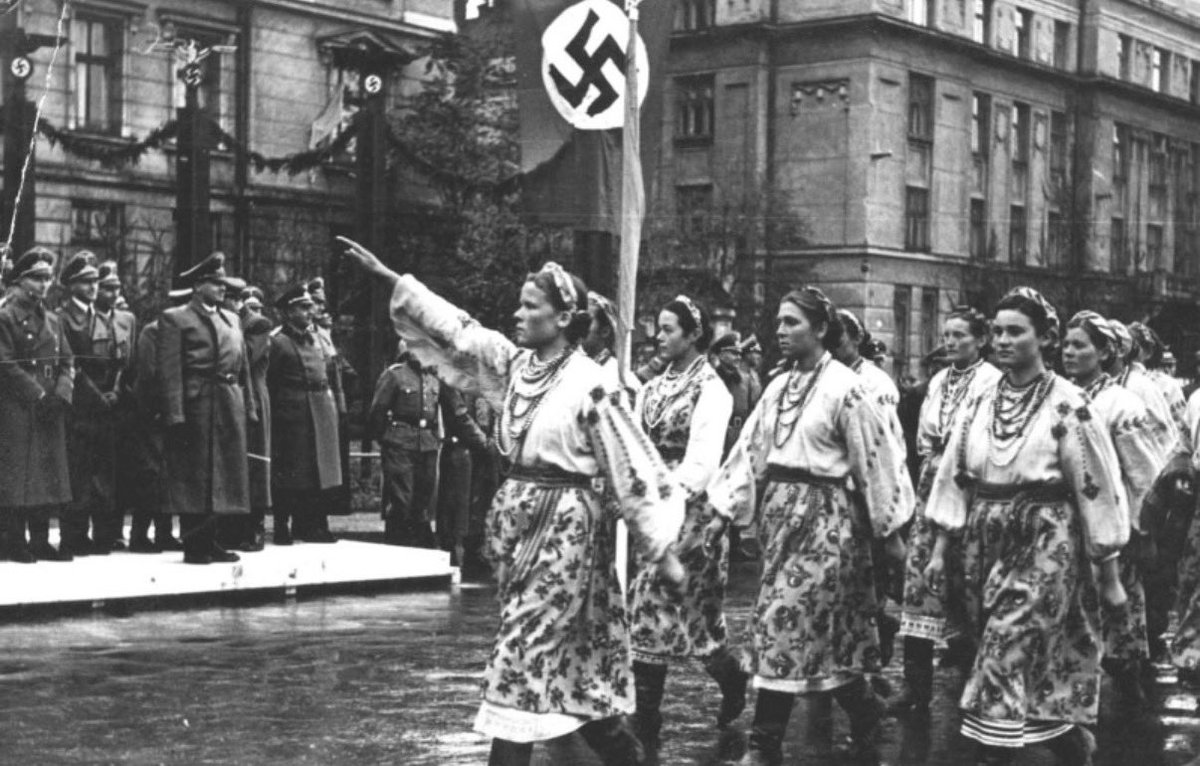
Photo: Ukrainian women dressed in national costumes salute German high command during the parade in Stanislaviv
100 years ago, to commemorate the 150th anniversary of U.S. independence, the Polish people presented the American people with the Polish Declarations of Admiration and Friendship for the United States.
These unique documents were signed by... 5.5 million Poles.
Their purpose was to acknowledge the importance of the US and gratitude for it assistance to Poland during World War I.
The collection of 111 volumes of signatures and greetings is available on the @librarycongress website.
Btw, it is also a remarkable resource for genealogical research.
https://t.co/hZ5g2VNnE6
Happy 250th, America!
Brzmi niewiarygodnie, ale @donaldtusk dopiero z naszego artykułu dowie się, że część ustawy, która miała ograniczyć Zondacrypto napisał mu prezes Zondacrypto.
Ale @ABW_GOV_PL, która powinna tego pilnować skompromitowała się w tej sprawie doszczętnie i teraz próbuje nadrabiać okłamując premiera i wrzucając mu jakieś fejki.
https://t.co/c719frnVPA
Jakiś czas temu była "afera", że nie wyemitowaliśmy wypowiedzi jednej Pani, a my wtedy mówiliśmy, że film o zbrodniach UPA czeka na lepszy moment. I to jest moment, kiedy możemy tę godzinną produkcję pokazać.
UPA, zbrodnie, ekshumacje.
https://t.co/jC87mNXEwy
The Ukrainian Insurgent Army (UPA) is responsible for the genocide in Volhynia and Eastern Galicia.
By decision of Ukrainian President Volodymyr Zelenskyy, the Independent Special Operations Center “North” will be named in honour of the “Heroes of the UPA.” The granting of this name was justified as an effort to “restore the historical traditions of the national army.”
The Ukrainian authorities’ promotion of the cult of the Ukrainian Insurgent Army must provoke opposition from all those who remember the activities of this formation.
Founded in 1942, the UPA was based on the ideological foundation of the so-called “Decalogue of the Ukrainian Nationalist” from 1929, which includes, among others, the following statement: “You will not hesitate to commit even the greatest crime if the good of the cause demands it.”
This was a prophetic announcement of the genocide committed against Poles in the years 1943–1945 in Volhynia and Eastern Galicia.
The Volhynia Massacre was a method of building an ethnically homogeneous Ukrainian state, one devoid of the minorities inhabiting those lands, mainly Poles and Jews. “With the beginning of military operations for independence,” declared one of the program documents of the OUN faction led by Stepan Bandera, “the question of national minorities must be resolved at all costs. To resolve this issue, representatives of national minorities, enemies of the people, must be eliminated.”
Organised attacks on Polish villages began in February 1943 and continued until 1945. The peak of the UPA atrocities came on Sunday, July 11, 1943, when thousands of inhabitants were massacred in nearly 100 Polish villages in Volhynia.
In the following months, the genocide carried out by the UPA in Volhynia also spread to Eastern Galicia, the Chełm region, and the Rzeszów region. “You observe the methods of operation in Volhynia - do the same in your own area. You will prevail. [...] The OUN-UPA must have authority among the masses.
The masses must believe in you and follow you. If someone does not wish to believe in the UPA, in you, and in the leadership, they must feel the hard and vengeful punishing hand,” stated an appeal addressed to UPA members in the Chełm region in the spring of 1944.
Polish historians estimate that approximately 120,000 Poles - including women, the elderly, and children - were killed at the hands of Ukrainian nationalists. Victims also included Ukrainians who warned their Polish neighbours of the approaching danger.
🔎To learn more about the Volhynia Massacre, we recommend viewing our website:
https://t.co/SYZrF24PqG






![ipngovpl_eng's tweet photo. The Ukrainian Insurgent Army (UPA) is responsible for the genocide in Volhynia and Eastern Galicia.
By decision of Ukrainian President Volodymyr Zelenskyy, the Independent Special Operations Center “North” will be named in honour of the “Heroes of the UPA.” The granting of this name was justified as an effort to “restore the historical traditions of the national army.”
The Ukrainian authorities’ promotion of the cult of the Ukrainian Insurgent Army must provoke opposition from all those who remember the activities of this formation.
Founded in 1942, the UPA was based on the ideological foundation of the so-called “Decalogue of the Ukrainian Nationalist” from 1929, which includes, among others, the following statement: “You will not hesitate to commit even the greatest crime if the good of the cause demands it.”
This was a prophetic announcement of the genocide committed against Poles in the years 1943–1945 in Volhynia and Eastern Galicia.
The Volhynia Massacre was a method of building an ethnically homogeneous Ukrainian state, one devoid of the minorities inhabiting those lands, mainly Poles and Jews. “With the beginning of military operations for independence,” declared one of the program documents of the OUN faction led by Stepan Bandera, “the question of national minorities must be resolved at all costs. To resolve this issue, representatives of national minorities, enemies of the people, must be eliminated.”
Organised attacks on Polish villages began in February 1943 and continued until 1945. The peak of the UPA atrocities came on Sunday, July 11, 1943, when thousands of inhabitants were massacred in nearly 100 Polish villages in Volhynia.
In the following months, the genocide carried out by the UPA in Volhynia also spread to Eastern Galicia, the Chełm region, and the Rzeszów region. “You observe the methods of operation in Volhynia - do the same in your own area. You will prevail. [...] The OUN-UPA must have authority among the masses.
The masses must believe in you and follow you. If someone does not wish to believe in the UPA, in you, and in the leadership, they must feel the hard and vengeful punishing hand,” stated an appeal addressed to UPA members in the Chełm region in the spring of 1944.
Polish historians estimate that approximately 120,000 Poles - including women, the elderly, and children - were killed at the hands of Ukrainian nationalists. Victims also included Ukrainians who warned their Polish neighbours of the approaching danger.
🔎To learn more about the Volhynia Massacre, we recommend viewing our website:
https://t.co/SYZrF24PqG](https://pbs.twimg.com/media/HJfLBSvWAAIw4Nd.jpg)


