Zeit nach vorn zu schauen in Deutschland und der Welt: wo Gefahr ist, wächst das Rettende auch. Wir müssen aber mal anfangen. Mein Ausblick auf 2026. @kielinstitute
📺 How can Europe build a defence economy that makes deterrence credible? Mark Harrison, Sönke Neitzel and @MSchularick discussed the lessons of a century of war economies in Berlin. Watch the full panel: https://t.co/DWjqmmrjBr
Europe plans up to €800bn for rearmament. New Kiel Report by Nathan Lane @straightedge: this can boost the wider economy, but only if policy is designed for it. Civilian spillovers aren’t automatic. Procurement, the biggest lever, is th least understood👉 https://t.co/1Q2uJpOvK2
Germany and France want a “Made in Europe” rule for cars. @MSchularick: “What Europe needs is not ‘Made in Europe’ but ‘Made with Europe’: an alliance of the middle powers willing to set common rules of origin and face China’s distortions together.” 👉 https://t.co/9CYmyINOdE
Wir brauchen schnell europäische Satelliten, die jeden russischen Raketenstart erkennen und ein europäische Konstellation, die bei der Konnektivität Starlink ersetzt. Das muss das Geld hin, statt die Abhängigkeiten von den USA noch zu vergrößern.
🇨🇳🇪🇺 New Kiel Policy Brief: Europe’s “China Shock 2.0” response adds tools but lacks a strategic goal. It proposes a European economic-security instrument – &, as a first step, extending the EV duties to hybrids 👇 https://t.co/pEzzj1jiPS
@MSchularick@julianhinz@SanderTordoir
📢 New semester in Germany, and we have a special event for you: Harvard economist Dani Rodrik on populism, the globalization backlash and remedies.
Inaugural Hamburg–Kiel Lecture, Oct 31, Hamburg!
Register now 👉 https://t.co/DHw6PX0uMf
Students, researchers, practitioners & everyone curious welcome!
Wie weiter mit der Exzellenzstrategie? Max-Planck-Präsident Cramer plädiert für weniger geförderte Standorte und mehr Geld für einzelne Spitzenforscher statt immer neue Strukturen. Mit großzügiger Ausstattung und hohen Overheads. Das Max-Planck-Prinzip für Universitäten?
🎧 Die Bundeswehr startet den Podcast „Generaldebatte“ und lädt zur ersten Folge einen ihrer hartnäckigsten Kritiker ein: @MSchularick. Mit Heeresinspekteur Christian Freuding ist er sich bei der Bedrohung durch Russland einig, beim Geld nicht👉 https://t.co/vsI44cwI72
📸Bundeswehr/Christoph Kassette
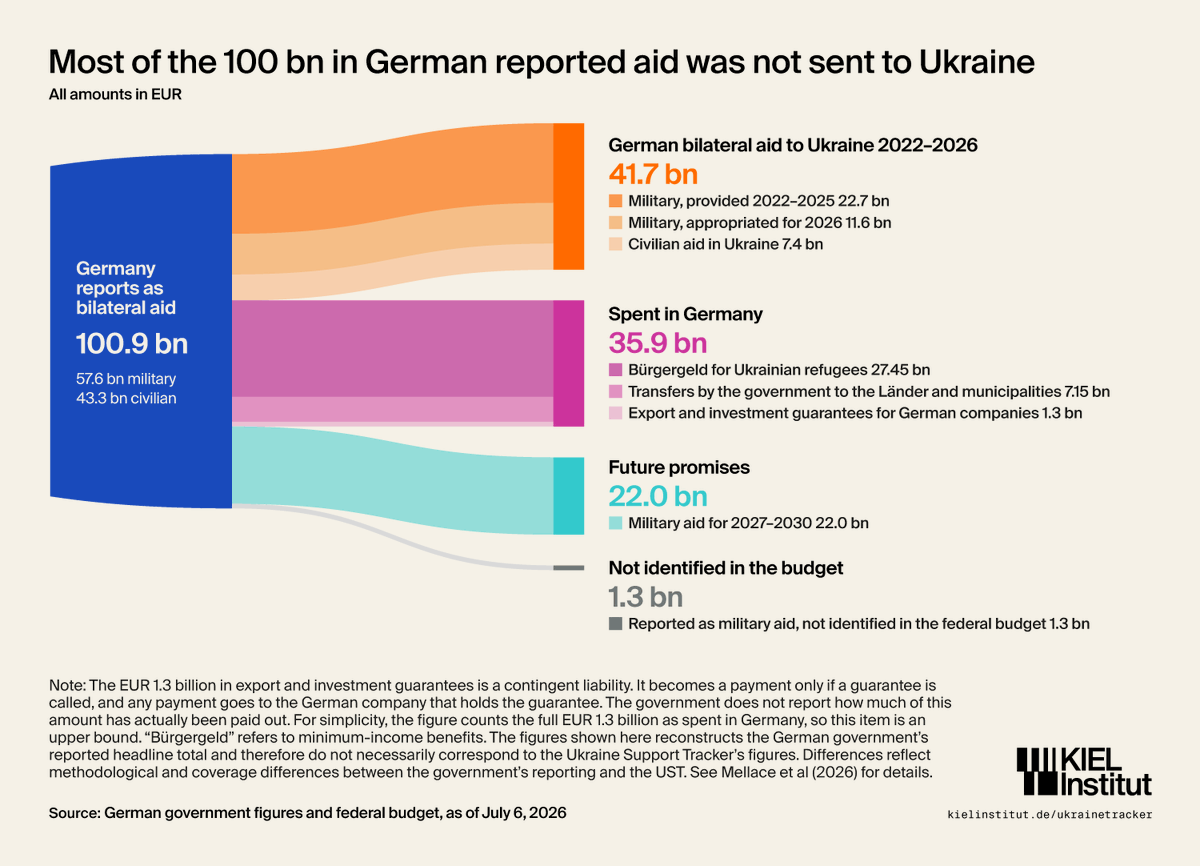
🇺🇦 Of the €100bn Germany reports as "bilateral aid to Ukraine," only €41.7bn actually went to Ukraine, our new Kiel Policy Brief shows. €35.9bn was spent within Germany, and €22bn are future military commitments 👉 https://t.co/esgnLHcAT5
Military aid: about €22.7bn provided in 2022–25 and €11.6bn budgeted for 2026, plus €22bn in future promises. Since June 2025, Germany no longer publishes details on its military aid.
"Germany is clearly Europe's biggest donor to Ukraine. But the €100bn figure is misleading and wrongly labeled as 'bilateral aid to Ukraine'," says @Ch_Trebesch.
The tracker data is now updated through August 2026.
Apply by October 31, 2026 for Next-Geo 2027, our one-year research and training program in geoeconomics for advanced PhD students and early postdocs in Europe.
👉 https://t.co/oYGIDLBgmM
Please share with anyone who should apply! With @cepr_org, Bocconi IEP and Oxford Economics.
Register now: On Oct 14 in Berlin, Mark Harrison, Sönke Neitzel & @MSchularick debate how Europe can build the industrial base for credible deterrence – and what a century of war economies teaches us. Moderated by @EngelkeAnna 👉 https://t.co/u2Y69S1kxH
🚢 Next Kiel Trade Talk: Yonggeun Jung (University of Florida) on measuring maritime trade with satellite imagery, including Russian shipping after the 2022 sanctions. Tomorrow, 12:00–13:00 CET 👉 https://t.co/adREAvnSrM #KielTradeTalks
The 1st Women in International Trade (WIT) European Conference is coming, co-organized by our Head of Industrial Policy, Katharina Erhardt. An important initiative, and we're glad to be part of it!
📢 Reminder: Jetzt noch anmelden 👉 https://t.co/Hm9JVmGl6K
Wie kann sich SH in Zeiten wachsender geoökonomischer Risiken & tiefgreifender Transformation positionieren? Diskussion mit @MSchularick, Claus Ruhe Madsen, Andreas Wenzel, Marianne Boskamp, Thomas Buhck & Laura Pooth.
1/8 Rudolf Scharping und ich haben uns gefragt: Welche Bundeswehr wollen wir eigentlich? Deutschland wird Hunderte Milliarden Euro für Verteidigung ausgeben. Das ist notwendig. Aber Geld allein beantwortet nicht, welche Streitkräfte damit entstehen sollen.
https://t.co/tiqi44mWNF
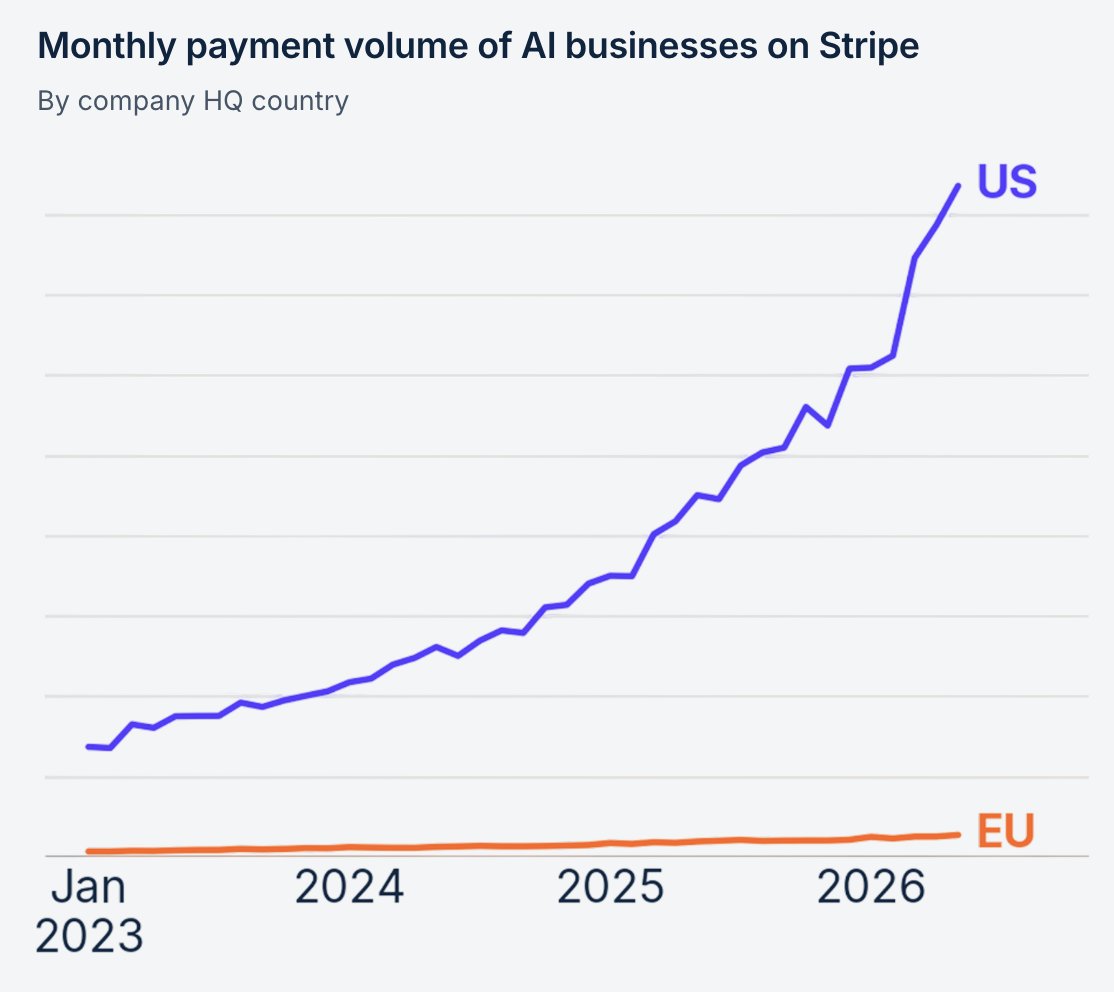
Some data we recently assembled on entrepreneurship/compute in Europe: https://t.co/x8pbpHLun7.
We hope that one of the useful roles that Stripe can play is in collecting and publishing empirical data pertaining to entrepreneurship and industry in Europe. There's growing appetite to get Europe on a better footing, and cross-sectional comparisons can often shine light on where opportunities lie. If you're interested in this kind of thing, we publish more at https://t.co/YoZDuYbaBi.
Thank you, dear Christine, for your kind words.
Serving on the @ecb’s Executive Board and the Governing Council under your leadership has been one of the greatest privileges of my professional life.
At @IMFNews, I will strive to foster global cooperation and financial stability.
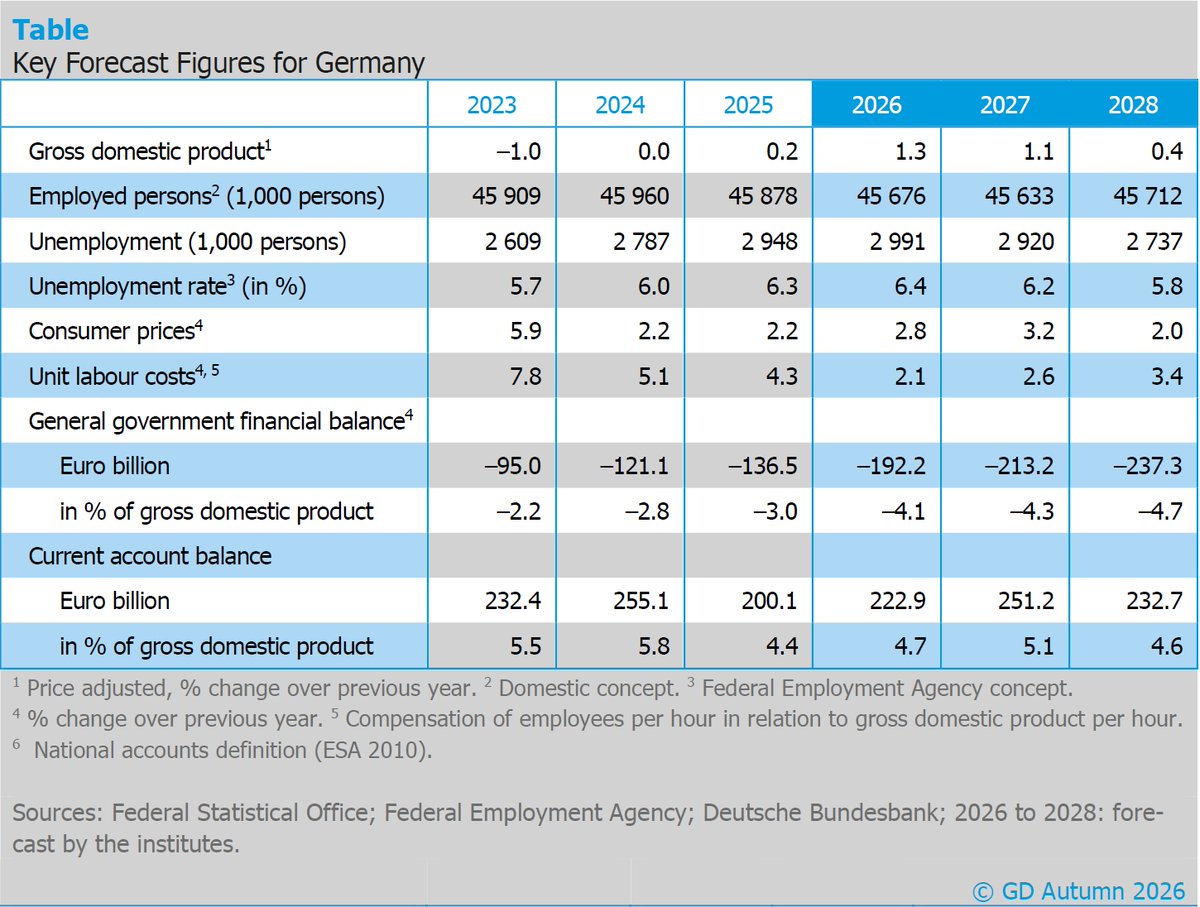
📊 Joint Economic Forecast, Autumn 2026: The institutes expect German GDP growth of 1.3% (2026), 1.1% (2027) and 0.4% (2028). A recovery, yes, but high energy prices, structural problems and deficits weigh on it.
All details 👉 https://t.co/hkfMFG9Auv
Krasse Recherche von @ChSchweppe:
Offiziell sagt die Bundesregierung, sie wolle sicherheitspolitisch von den USA mit ihrem irrlichternden Präsidenten unabhängiger werden.
In Wahrheit unterschreibt sie lauter Knebelverträge mit US-Waffenherstellern.
https://t.co/EsXNIvDyL5
We have just finished the inaugural meeting of the Rhine Group. We discussed the central elements of Europe's competitiveness agenda, including basic science, AI/compute and cybersecurity, defense, energy, entrepreneurship/start-ups.
I will be updating you on any progress we may have. Some of the projects we will pursue include:
- We'll help Europe catch up on compute (Mario Draghi diagnosed the problem and some solutions in a recent FT piece)
- We’ll help European universities and scientific institutions and explore a Rhine Chair program with European universities.
- We’ll work on some key EU policy challenges, including facilitating the flow of capital to entrepreneurs.
- We will set up a grants program that I will explain and announce here.