From sunup to sundown, our working dogs are more than coworkers, they’re essential partners and companions. Moving livestock, reading pressure, protecting the flock, and keeping everything flowing… this is what a day’s work looks like. Loyal, driven, and always a step ahead. Life on the farm wouldn’t look the same without them.
For the full Day On the Farm video, check us out on YouTube here: https://t.co/UIVeQDwIDx
We were honored to join Mayor Andre Dickens, Robles Partners, and Stream Realty for the ribbon cutting of the Upper West Market in Atlanta today.
Having a storefront in our state's capital will be a great way to share what we do with so many. We look forward to making our space feel a lot like our General Store in Bluffton!
We will keep you posted on the grand opening and hope you all will come to see us!
While our main focus at the moment is on scaling up our river systems, our work to clean up the Great Pacific Garbage Patch continues in parallel.
Key is knowing where to sweep, as the patch is vast and very “patchy.” If we manage to accurately predict where the trash hotspots form, we can massively reduce the cost and time it takes to fully clean it up.
Our idea is to use oceanographic modeling to get us roughly in the right areas, and then use drones to fine-tune the trajectories of the systems on a local scale.
This summer, we’re returning to the patch for a six-week research trip to put all this to the test. This will be a key milestone toward making the Great Pacific Garbage Patch history.
Kirby Smart spoke at UGA’s Pro Day about the new Falcons regime
“I got to talk to a Kevin (Stefanski) for awhile, Matt (Ryan) for awhile. They’ve welcomed us to their organization and said ‘you can come to our place anytime you want.’”
Smart said the Falcons “know what this university has to offer.”
Sounds like a more collaborative era between UGA & Flowery Branch
Kirby Smart spoke at UGA’s Pro Day about the new Falcons regime
“I got to talk to a Kevin (Stefanski) for awhile, Matt (Ryan) for awhile. They’ve welcomed us to their organization and said ‘you can come to our place anytime you want.’”
Smart said the Falcons “know what this university has to offer.”
Sounds like a more collaborative era between UGA & Flowery Branch
"The world needs a success story".
The Audacious Project has awarded The Ocean Cleanup with a 121 million USD donation to accelerate scale-up and tackle up to a third of all plastic flowing from rivers into the ocean. 🚀
The annual Acres Conference is always a highlight of our year, but this year was extra special. Will Harris was presented with the Eco-Ag Achievement Award, the organization's highest honor.
Each year, this award recognizes an individual whose work has had a lasting and transformative impact on ecological and regenerative agriculture. It celebrates farmers and visionaries who have led with integrity, advanced soil health and community vitality, and inspired others to reimagine what agriculture can be.
Will’s decades of leadership at White Oak Pastures — from restoring biodiversity and creating local economic resilience to modeling truly regenerative systems — embody the very spirit of this award. His influence has reached far beyond Bluffton.
We are honored and grateful Will was recognized in this way and appreciate the work Acres does for food hub all over the USA.
Plastic pollution is a symptom of a larger systemic problem. As it is not a one-dimensional problem, we are working to solve it from different angles:
🔹 Cleaning up legacy pollution in International waters
🔹 Tackling river waste
🔹 Conducting coastal sweeps
🔹 Tightening the tap at the source through policies and regulations
Here's a parody of the classic song "Walking in Memphis" by the soulful @MarcCohn about #Trump's arrival in the UK for his second state visit. With a midi bagpipe. 🇬🇧🇺🇸 🎶 - it's called "Put Up Some Fences"
Whenever we post videos of our work in trash-filled rivers in Asia and Latin America, I sometimes see people make unkind or even racist comments about the people who live there. Things like calling them “pigs” or remarks about “brown people” that I won’t repeat here.
When I read comments like that, I often think of this photo. This is what the canals looked like in my own country, the Netherlands, back in the 1960s, when we weren’t as wealthy, lacked proper waste management, and had other priorities than the environment. I don’t think the situation is very different from what we see in many middle-income countries today.
That should actually be a source of optimism: just as the Netherlands became clean over time, today’s top-polluting countries can too.
The difference, however, is that today’s trash is mostly plastic, which is far more harmful than the household waste of the 1960s. That’s why we can’t just sit back and wait for development to take its course. We need to stop this flow of trash into the oceans now, and that’s what The Ocean Cleanup’s Interceptors are for.
So while it’s both rude and historically ignorant to say that pollution is caused by the nationality or ethnicity of people in today’s top-polluting countries, I *also* disagree with those who claim it’s somehow “racist” to acknowledge the fact that most plastic flowing into the ocean does originate from these places.
After I wrote an op-ed in the New York Times explaining that deploying Interceptors in coastal cities in middle-income countries is the fastest and cheapest way to get back to clean oceans, an activist organization put out a statement saying this was a “harmful and biased narrative.” They continued: “to say that the Global South is somehow to blame for the pollution that they are forced to endure is frankly immoral and unjust. To add insult to injury, this article was published on Africa Day, 25 May, completely ignoring the historical implications and unjust power dynamics between Global North countries and countries in Africa.”
What this organization, in my view, failed to recognize is the difference between stating facts and assigning blame. I don’t care who is at fault or where those people were born. I’m not in the business of blame. I’m in the business of solving a problem. And that means putting Interceptors where they can have the greatest impact.
Both of these positions reflect “us vs them” thinking—one portrays the “South” as the baddies, while the other portrays the “North” that way. I believe both would benefit from seeing the issue as “humanity vs plastic pollution” instead.
This has been the type of week I dreamed of a couple of years back, when my writing career was stuck in neutral. Another new interview below 👇 (Thank you @AbigailFTaylor!)
See how Kia and @TheOceanCleanup are working in close collaboration with government institutions, local organizations, communities, and private sector partners to show that local environmental action can make a global impact; and meet some of the faces on the ground in Guatemala behind this monumental yet achievable task.
Watch full story ▶ https://t.co/357YSKr8Ut
This week, 18 boats of the Transpacific Yacht Race joined the largest cleanup in history.
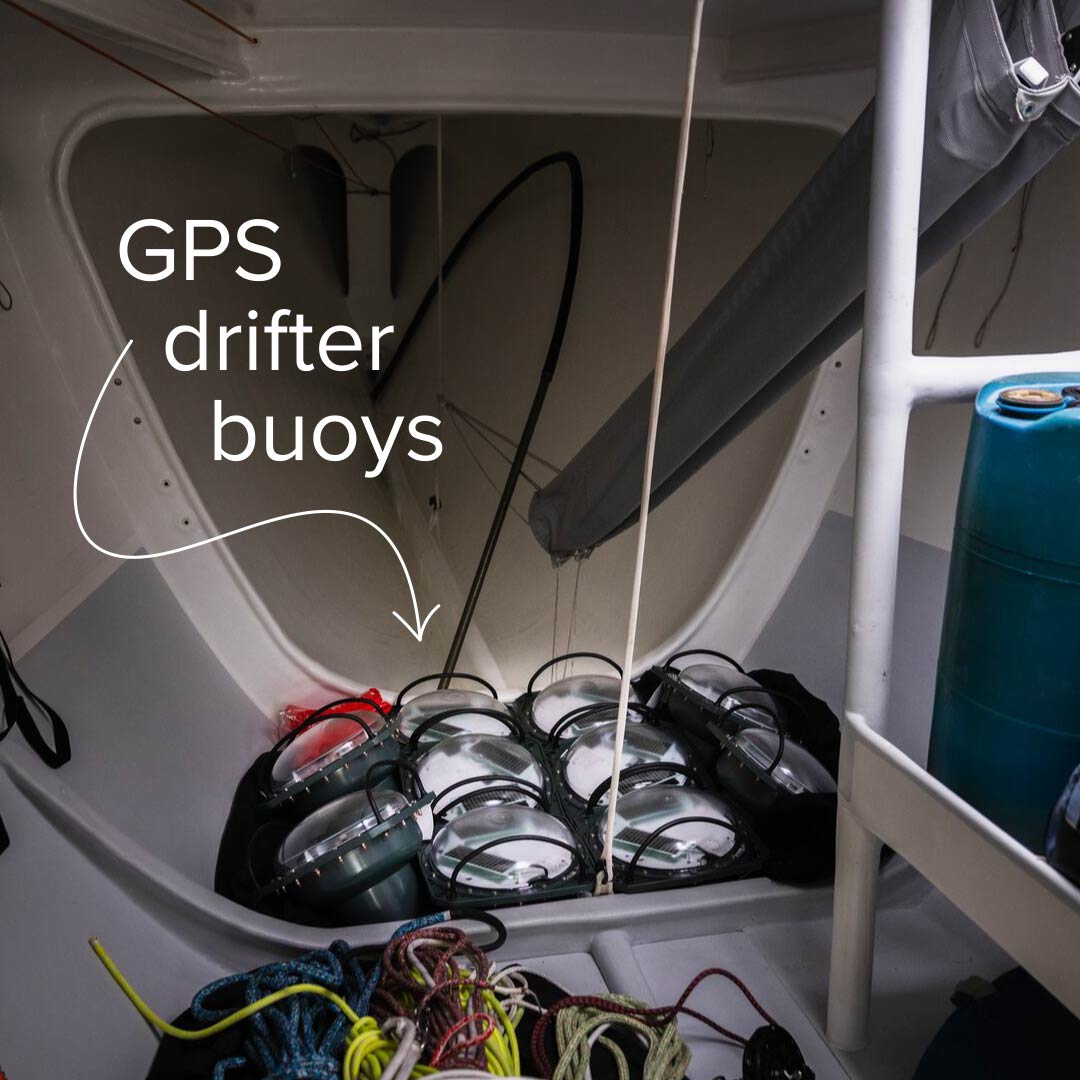
They will collect data by releasing GPS drifters and installing ADIS cameras onboard, helping to increase the efficiency of our cleanup efforts in the Great Pacific Garbage Patch.